
How does SBA Communications operate as a REIT owner of telecom towers and monetize site access for carriers?
SBA Communications owns and leases passive tower infrastructure, collecting long-term rents from wireless carriers and tower-mounted equipment providers. This model mattered in 2025 as carrier densification raised tenancy per tower, boosting revenue per site and supporting predictable cash flow. SBA Communications BCG Matrix Analysis
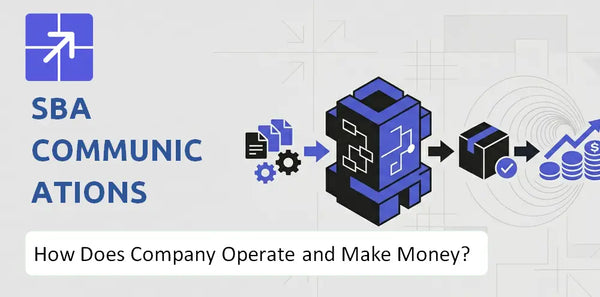
SBA scales by increasing tenancy and selling colocation services; densification in 2025 adds incremental ARPU per site, improving margins and free cash flow for reinvestment.
What Does SBA Communications Actually Sell?
SBA Communications sells vertical aperture space on roughly 39,700 towers across the United States, South America, and Africa, plus ground lease space for equipment and power. Customers also pay for Site Development Services – zoning, consulting, and construction management – that simplify network deployment and expansion.
 Primary Offerings: Tower Aperture and Site Services
SBA Communications sells tower leasing and colocation services: vertical antenna slots (apertures), rooftop and tower mount space, and ground compound leases for power and equipment. They also provide Site Development Services covering site acquisition, zoning, structural engineering, and construction management tied to 5G infrastructure rollouts.
Who Buys It: Wireless Carriers and Neutral Hosts
Major tenants include T – Mobile, AT&T, and Verizon plus regional carriers and neutral-host providers deploying private networks. Enterprise customers and municipalities use site development and small cell deployment services for densification and 5G projects.
Customer Value: Faster, Lower – Friction Network Deployments
Customers gain ready-made location capacity, predictable colocation pricing, and expedited permitting and construction. That reduces time-to-market for new radio equipment and 5G capacity, lowering incremental capital outlay for carriers.
Why SBA Communications Stands Out
SBA Communications combines a large global tower portfolio with integrated site development, creating a one-stop-shop for tower leasing and colocation. High lease renewal rates and a long-term revenue model tied to multi-year tower leasing agreements support predictable cash flows and scale advantages in 5G infrastructure buildouts. See industry customer segmentation in Target Customers and Market of SBA Communications Company.
SBA Communications SWOT Analysis
- Complete SWOT Breakdown
- Fully Customizable
- Editable in Excel & Word
- Professional Formatting
- Investor-Ready Format

How Does SBA Communications Run Its Business Day to Day?
SBA Communications runs a low-maintenance, high-operating-leverage model: build or acquire towers, then focus daily on colocation and lease amendments that drive recurring rent. Key systems track site inventory, tenant RF assets, ground leases, and master lease agreements for rapid tenant onboarding and pricing updates.

Operating model: asset-light recurring rent engine
Daily operations center on maximizing utilization of existing towers through tower leasing and colocation services; once sites are live, incremental costs are small while revenue per site grows as new tenants or upgrades attach.
Service delivery: colocation and amendments workflow
Customers (wireless carriers, private networks) request space or hardware upgrades; engineering, RF, and legal teams process site access, permit changes, and amend leases, converting equipment additions into higher monthly rent.
Production/sourcing: build or acquire sites
Site build teams manage civil, tower and radio installs; acquisitions teams secure portfolios and long-term ground leases and easements to control land under towers; procurement sources antennas, mounts, and power systems as needed.
Sales channels: carrier partnerships and master lease agreements
Sales are largely B2B via long-term carrier relationships and MLAs (master lease agreements) that standardize terms across thousands of sites; field account teams and commercial managers negotiate colocation pricing and renewals.
Key assets, systems, and partners: towers, ground leases, and OSS
Core assets are tower sites and long-term ground leases; operational systems include site inventory databases, RF planning tools, and lease-management platforms; major partners are national carriers, power vendors, and construction contractors.
Why the model works: low incremental cost, high margin growth
Adding a tenant or approving an amendment typically costs a fraction of the additional rent, creating high operating leverage; in 2025 colocation and amendment activity under MLAs remains the principal driver of same-site revenue growth.
Daily KPIs tracked include new colocations per month, amendment-driven rent increases, lease expiration roll rates, and site-level EBITDA; in 2025 management emphasizes MLA execution, with thousands of standardized sites under MLA coverage to speed deployments and price resets. See Competitive Landscape of SBA Communications Company
SBA Communications Business Model Canvas
- One-time Payment
- No Research Needed – Save Hours of Work
- Built by Experts, Trusted by Consultants
- Instant Download, Ready to Use
- 100% Editable, Fully Customizable

How Does Revenue Flow Through SBA Communications?
Revenue at SBA Communications flows mainly from long-term tower leases and from site development projects; demand for coverage and capacity converts into predictable rental cash flows and one-time construction fees.
Site Leasing: Core, Predictable Rental Income
Site leasing (tower leasing and colocation services) generates roughly 90% of total revenue through non-cancelable leases typically lasting 5 – 10 years with average annual escalators near 3% in the US; this creates high recurring cash flow and underpins an Adjusted EBITDA margin above 70% as of early 2026.
Site Development: Cyclical, Lead Indicator
Site development revenues are cyclical construction and engineering fees tied to new builds, upgrades, and small cell deployments; they signal future leasing growth because developers convert those sites into multi-tenant towers that drive long-term rent.
Monetization and Pricing Model
SBA Communications monetizes through long-term lease contracts with annual escalators, transactional site development fees, and colocation pricing; high incremental margins on add-on tenants mean nearly all new tenancy revenue drops to Adjusted EBITDA and then to AFFO.
Key Revenue Drivers
Revenue growth is driven by 5G infrastructure demand, tenant additions per tower (colocation), lease escalators, and site acquisitions; management converts AFFO into debt paydown, tower purchases, or share repurchases to sustain compounding cash returns. See also Sales and Marketing Strategy of SBA Communications Company.
SBA Communications Marketing Mix
- Complete Marketing Mix Analysis
- Effortlessly Communicate Your Business Strategy
- Investor-Ready Format
- 100% Editable and Customizable
- Clear and Structured Layout

What Makes SBA Communications's Model Sustainable or Fragile?
SBA Communications' model rests on high switching costs and regulatory moats that protect recurring tower leasing and colocation services, but it is exposed to carrier consolidation, tenant churn, and leverage sensitivity that can amplify interest-rate risk.
Built-in stickiness from high switching costs
Physically moving antennas or replicating coverage is costly for tenants, so carriers typically keep sites long-term. This creates steady recurring rental cash flows and supports SBA Communications business model and SBA Communications revenue model explained.
Strategic assets and scale
Large tower portfolio, national footprint, and established site-acquisition teams lower marginal costs for adding tenants and densifying for 5G infrastructure. Colocation services and long-term lease frameworks bolster predictable cash receipts.
Concentration and operational constraints
Revenue depends on a handful of major carriers; carrier consolidation can trigger decommissioning and churn. Local zoning and permitting slow new builds, limiting supply but also constraining rapid expansion of tower leasing and small cell deployment services.
Resilience outlook for 2025/2026
Professional judgment: stable-to-positive. Ongoing network densification for 5G and emerging AI-driven edge computing at sites create a structural floor for demand, while Net Debt to Annualized Adjusted EBITDA near 6.5x leaves refinancing sensitive to interest rates and credit markets.
Track lease renewal rates, tenant churn after mergers, capital expenditures and SBA Communications capital expenditures and growth outlook, and interest-cost trends to monitor fragility; see Ownership and Control of SBA Communications Company for governance context: Ownership and Control of SBA Communications Company
SBA Communications Boston Consulting Group Matrix
- Built by Experts, Trusted by Consultants
- Structured for Consultants, Students, and Founders
- 100% Editable in Microsoft Word & Excel
- Instant Digital Download – Use Immediately
- Compatible with Mac & PC – Fully Unlocked

Related Blogs
- What Is the History of SBA Communications Company and How Did It Evolve?
- What Is the Competitive Landscape of SBA Communications Company and How Does It Compete?
- What Is the Growth Outlook of SBA Communications Company and Where Is It Heading?
- How Does SBA Communications Company Reach Customers and Turn Demand into Sales?
- What Do the Mission, Vision, and Core Values of SBA Communications Company Reveal?
- Who Are the Core Customers in SBA Communications Company's Target Market?
- Who Owns SBA Communications Company Today and Who Holds Control?
Frequently Asked Questions
SBA Communications sells tower leasing and colocation services, including vertical antenna slots, rooftop and tower mount space, and ground compound leases for equipment and power. It also provides Site Development Services such as site acquisition, zoning, structural engineering, and construction management for network deployment.
Disclaimer
All information, articles, and product details provided on this website are for general informational and educational purposes only. We do not claim any ownership over, nor do we intend to infringe upon, any trademarks, copyrights, logos, brand names, or other intellectual property mentioned or depicted on this site. Such intellectual property remains the property of its respective owners, and any references here are made solely for identification or informational purposes, without implying any affiliation, endorsement, or partnership.
We make no representations or warranties, express or implied, regarding the accuracy, completeness, or suitability of any content or products presented. Nothing on this website should be construed as legal, tax, investment, financial, medical, or other professional advice. In addition, no part of this site - including articles or product references - constitutes a solicitation, recommendation, endorsement, advertisement, or offer to buy or sell any securities, franchises, or other financial instruments, particularly in jurisdictions where such activity would be unlawful.
All content is of a general nature and may not address the specific circumstances of any individual or entity. It is not a substitute for professional advice or services. Any actions you take based on the information provided here are strictly at your own risk. You accept full responsibility for any decisions or outcomes arising from your use of this website and agree to release us from any liability in connection with your use of, or reliance upon, the content or products found herein.