
How does Sharp Corporation generate profit by shifting from display manufacturing to branded products and services?
Sharp Corporation is refocusing from capital-heavy LCD panel fabrication to higher-margin branded appliances, B2B solutions, and IP licensing after Foxconn took majority control in 2016. This matters because Sharp reported restructuring gains and narrower panel exposure through 2025, improving cash-flow stability.
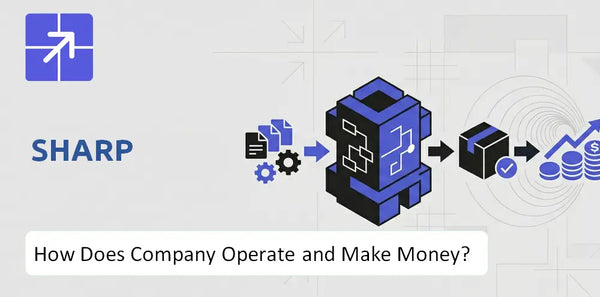
Track appliance sales, service contracts, and licensing revenue as core drivers; a practical insight: prioritize margins, not unit volumes, when forecasting Sharp's earnings recovery into 2026.
What Does Sharp Actually Sell?
Sharp Corporation sells consumer electronics, office solutions, and electronic components: TVs (Aquos), air purifiers (Plasmacluster), kitchen appliances (Healsio), MFPs, professional displays, digital signage, camera modules, sensors, small-to-medium displays, and residential/commercial solar systems. Customers pay for hardware plus integrated software, service contracts, and component supply agreements.
 Core product lines and solutions
Sharp Corporation business model centers on three revenue pillars: consumer electronics (Aquos TVs, Plasmacluster air purifiers, Healsio appliances), office solutions (multi-function printers, professional displays, digital signage plus workplace software integration), and electronic components (camera modules, image sensors, specialized displays) alongside solar energy systems sold to residential and commercial customers.
Primary buyer types
Buyers split between consumers (home electronics and appliances), businesses and public sector (MFPs, pro displays, digital signage, solar installations), and OEMs/contract manufacturers (camera modules, sensors, small displays sold B2B). Institutional buyers often prefer service and maintenance contracts with equipment purchases.
Customer value and monetization
Customers get integrated hardware plus software, after-sales service, and energy solutions that reduce operating costs. Sharp monetizes via product sales, recurring consumables and service contracts, component supply agreements, and project-based solar system installs; in FY2025 components and solutions drove higher margin mix after the 2024 exit from large-scale LCD fabs.
Competitive differentiation and ease of purchase
Sharp stands out through product integration (IoT-enabled appliances and Plasmacluster air tech), longstanding B2B relationships supplying camera modules and sensors, and a pivot to higher-value components and energy systems. Distribution spans retail, wholesale, direct B2B sales, and online channels, and licensing/partnerships augment revenue – see Competitive Landscape of Sharp Company for context.
Sharp SWOT Analysis
- Complete SWOT Breakdown
- Fully Customizable
- Editable in Excel & Word
- Professional Formatting
- Investor-Ready Format

How Does Sharp Run Its Business Day to Day?
Sharp Corporation runs day-to-day on an asset-light operating model: R&D, design, and product planning sit with Sharp while Foxconn handles large-scale manufacturing and logistics; daily work centers on product development, supply-chain coordination, and managing digital infrastructure conversions like Sakai into AI data centers.

Operating model: asset-light, partner-centric execution
Sharp Corporation business model emphasizes design, IP, and channel management while outsourcing heavy assembly to Foxconn; internal teams run R&D, quality control, and product roadmaps with ERP and PLM systems coordinating suppliers and global distribution.
Product and service delivery: omnichannel and B2B/B2C blend
Customers buy Sharp products through retail, e-commerce, and corporate contracts; daily operations include order management, fulfillment coordination with Foxconn logistics, and after-sales service for appliances, displays, and IoT systems.
Production, sourcing, and development: design-led, outsourced manufacture
Sharp develops product specs, firmware, and component designs in-house, sources semiconductors and panels via global suppliers, and uses Foxconn's plants for assembly; in 2025 Sharp accelerated converting legacy sites like Sakai into AI-driven data centers with partners SoftBank and KDDI.
Sales channels and distribution: global network with focus on scale
Daily sales ops route inventory through regional distribution centers to retail, wholesale, and enterprise clients; Sharp balances B2C appliance sales with B2B display and corporate contracts, and integrates online channels for direct-to-consumer demand spikes.
Key assets, systems, and partnerships: Foxconn, telco partners, and digital platforms
Core operational assets are IP, R&D labs, and global partnerships: Foxconn for manufacturing scale, SoftBank and KDDI for data-center projects, and cloud/CDN providers for IoT services; core systems include ERP, PLM, CRM, and data-center orchestration tools.
Practical mechanics: shift from assembly to digital infrastructure oversight
The day-to-day work has shifted: fewer lines on factory floors, more teams managing AI servers, edge-compute deployments, and component roadmaps; converting Sakai to a data center reduced heavy-manufacturing overhead and increased recurring revenue potential from infrastructure services.
Operational KPIs tracked daily include order fill rate, manufacturing yield (outsourced), R&D cycle time, and data-center utilization; in 2025 Sharp reported capital redeployments toward digital infrastructure while maintaining appliance and display sales to stabilize revenue streams – see Target Customers and Market of Sharp Company for customer segmentation and market context.
Sharp Business Model Canvas
- One-time Payment
- No Research Needed – Save Hours of Work
- Built by Experts, Trusted by Consultants
- Instant Download, Ready to Use
- 100% Editable, Fully Customizable

How Does Revenue Flow Through Sharp?
Revenue at Sharp Corporation flows from three segments: Smart Life and Energy, Smart Office, and Universal Network, converting product demand and B2B contracts into sales, recurring service fees, and licensing income.
Smart Office: High – margin recurring B2B revenue
Initial sales of printers, multifunction devices, and office displays generate one – time hardware revenue and trigger long – term contracts for maintenance, consumables (toner), and software subscriptions; this drives predictable, high – margin recurring cash flow and steady service margins.
Smart Life and Energy plus Consumer Sales
Consumer revenue comes from appliances, displays, air conditioners, and smart – home products sold via third – party retailers and direct channels, especially in Japan and Southeast Asia, where brand equity sustains unit demand and after – sales service revenue.
Pricing and Monetization Model
Sharp Corporation business model monetizes through hardware sales, subscription and maintenance contracts, consumables, and licensing fees; the company also licenses display and sensing patents to partners, creating low – cost, high – margin licensing income.
Primary Revenue Drivers
For fiscal 2025 Sharp targeted revenue recovery toward ¥2.4 trillion; the main drivers are B2B recurring contracts, regional consumer demand in Japan and Southeast Asia, and patent licensing in displays – these three combined determine cash flow stability and margin expansion.
Sharp company strategy balances capital sales with annuity – style services and intellectual – property monetization; see a compact corporate history for context: History and Background of Sharp Company
Sharp Marketing Mix
- Complete Marketing Mix Analysis
- Effortlessly Communicate Your Business Strategy
- Investor-Ready Format
- 100% Editable and Customizable
- Clear and Structured Layout

What Makes Sharp's Model Sustainable or Fragile?
Sharp Corporation's model is sustainable where brand strength in Asia and a strategic pivot to Smart Office and AI infrastructure reduce capital intensity and stabilize earnings, yet fragile due to Chinese price competition in appliances/TVs and execution risk on the AI data center pivot. Key structural strengths include predictable, recurring B2B contracts; risks center on commodity pressure and technology execution.
Brand strength and strategic pivot support resilience
Strong brand recognition in Asia and a clear shift away from LCD panel manufacturing toward Smart Office and AI infrastructure reduce exposure to volatile, capital-intensive segments. This improves predictability in Sharp Corporation business model and stabilizes near-term revenue streams.
Key assets and capabilities underpinning the model
Sharp retains proprietary sensing and imaging tech, a broad product portfolio across appliances and commercial displays, and partnerships/licensing that generate recurring fees. These assets support Sharp products and services and enable cross-selling into IoT and Smart Office deployments.
Dependencies and concentration risks
Revenue concentration in Asia and reliance on winning the AI data center pivot create execution risk; appliance and TV margins face intense price pressure from Chinese manufacturers. Supply-chain exposure in Japan manufacturing and partnerships for licensing also matter for Sharp revenue streams.
Durability assessment for 2025 – 2026
For fiscal 2025 management projects a stabilizing turnaround with an operating margin target around 3 percent to 4 percent. The model looks cautiously resilient if Sharp executes the AI/data-center pivot and preserves sensing/imaging leadership; failure to defend margins versus Chinese rivals or delayed AI traction would make the model fragile.
See strategic context in this company overview: Mission, Vision, and Values of Sharp Company
Sharp Boston Consulting Group Matrix
- Built by Experts, Trusted by Consultants
- Structured for Consultants, Students, and Founders
- 100% Editable in Microsoft Word & Excel
- Instant Digital Download – Use Immediately
- Compatible with Mac & PC – Fully Unlocked

Related Blogs
- What Is the History of Sharp Company and How Did It Evolve?
- What Is the Competitive Landscape of Sharp Company and How Does It Compete?
- What Is the Growth Outlook of Sharp Company and Where Is It Heading?
- How Does Sharp Company Reach Customers and Turn Demand into Sales?
- What Do the Mission, Vision, and Core Values of Sharp Company Reveal?
- Who Are the Core Customers in Sharp Company's Target Market?
- Who Owns Sharp Company Today and Who Holds Control?
Frequently Asked Questions
Sharp sells consumer electronics, office solutions, electronic components, and solar systems. Its lineup includes Aquos TVs, Plasmacluster air purifiers, Healsio appliances, MFPs, professional displays, digital signage, camera modules, sensors, and small-to-medium displays, with customers also paying for software, service contracts, and supply agreements.
Disclaimer
All information, articles, and product details provided on this website are for general informational and educational purposes only. We do not claim any ownership over, nor do we intend to infringe upon, any trademarks, copyrights, logos, brand names, or other intellectual property mentioned or depicted on this site. Such intellectual property remains the property of its respective owners, and any references here are made solely for identification or informational purposes, without implying any affiliation, endorsement, or partnership.
We make no representations or warranties, express or implied, regarding the accuracy, completeness, or suitability of any content or products presented. Nothing on this website should be construed as legal, tax, investment, financial, medical, or other professional advice. In addition, no part of this site - including articles or product references - constitutes a solicitation, recommendation, endorsement, advertisement, or offer to buy or sell any securities, franchises, or other financial instruments, particularly in jurisdictions where such activity would be unlawful.
All content is of a general nature and may not address the specific circumstances of any individual or entity. It is not a substitute for professional advice or services. Any actions you take based on the information provided here are strictly at your own risk. You accept full responsibility for any decisions or outcomes arising from your use of this website and agree to release us from any liability in connection with your use of, or reliance upon, the content or products found herein.