
How does Sunshine Insurance Group Company bundle life, property, and asset management to drive long-term premium and investment income?
Sunshine Insurance Group Company combines insurance underwriting, asset management, and bancassurance to convert premiums into an investment float that funds returns. This matters as Sunshine reported expanding investment income in 2025, reflecting a shift to yield optimization amid tighter regulation.
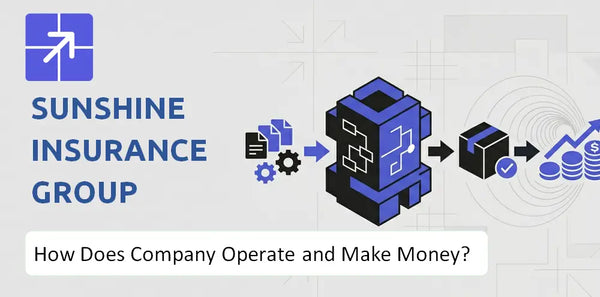
Focus pricing on persistency and reserve quality; monitor investment-duration mismatch. See product-level strategy in Sunshine Insurance Group BCG Matrix Analysis.
What Does Sunshine Insurance Group Actually Sell?
Sunshine Insurance Group sells risk transfer and capital appreciation products: long-term life, health, and endowment policies; auto, liability, credit, and commercial property insurance; and professional asset management for institutional and retail clients. Customers pay for guaranteed protection against mortality/morbidity, indemnity for losses, and portfolio-based wealth preservation.
 Core Products: Risk Transfer and Savings
Sunshine Insurance Group's Life segment sells long-term life, health, and endowment policies that combine mortality/morbidity cover with a savings component. The Property & Casualty segment focuses on automobile insurance plus liability, credit, and commercial property protection. The firm also offers asset management services to third parties, turning insurance float into investment returns.
Main Buyers: Individuals and Institutions
Retail customers buy life, health, endowment, and auto policies for personal protection and savings. Small and large businesses purchase commercial property, liability, and credit cover. Institutional clients and high-net-worth individuals use Sunshine Insurance Group's asset management services for professional portfolio management.
Customer Value: Financial Resilience and Wealth Preservation
Customers receive guaranteed payouts and indemnity protection that reduce household and business financial volatility, plus potential capital appreciation from endowment policies and managed portfolios. In 2025, Sunshine Insurance Group reported Life segment embedded value and investment returns that support solvency and policyholder guarantees, underpinning trust in payouts.
Differentiators: Integrated Underwriting and Investment Expertise
Sunshine Insurance Group combines underwriting discipline with asset management to optimize the insurance revenue model and investment income. Its distribution channels – agents, bancassurance, and digital platforms – plus reinsurance arrangements and a diversified investment portfolio help control loss ratios and enhance capital efficiency. See History and Background of Sunshine Insurance Group Company for context.
Sunshine Insurance Group SWOT Analysis
- Complete SWOT Breakdown
- Fully Customizable
- Editable in Excel & Word
- Professional Formatting
- Investor-Ready Format

How Does Sunshine Insurance Group Run Its Business Day to Day?
Sunshine Insurance Group runs daily via a multi-channel sales network, a real-time underwriting engine, and an investment-driven back office that funds liabilities; front-line agents and bancassurance drive sales, Sunshine 3.0 automates claims and service, and the investment arm manages assets to match reserve needs.

Operating model and workflow
Operations center on sales distribution, risk selection, and asset-liability management. Day-to-day, underwriting teams price new business using real-time data feeds while claims teams use Sunshine 3.0 to triage routine P&C claims, cutting cycle times and error rates.
Product and service delivery
Customers buy via individual agents, bancassurance with major Chinese banks, or digital channels. Policies are issued electronically, renewals auto-notified, and claims progress is tracked through automated workflows for faster payouts.
Product development and sourcing
Actuarial and product teams design coverage using loss data and market analytics; reinsurance is procured to transfer peak risks. New products are piloted regionally, then scaled via bancassurance and agency networks.
Sales channels and distribution
Primary channels are agent force and bancassurance partnerships with large Chinese banks, plus online platforms. Agents handle prospecting and advisory work; banks embed products in retail banking flows for volume sales.
Key assets, systems, and partners
Key assets include a fixed-income heavy investment portfolio exceeding 500 billion RMB, the Sunshine 3.0 digital framework, actuarial models, and bancassurance contracts. Partnerships with reinsurers and major banks underpin risk transfer and distribution.
What makes the model work in practice
Efficiency stems from automated claims and underwriting, scale from bancassurance and a large agent base, and solvency support from diversified investments; investment returns and disciplined pricing keep the insurance revenue model sustainable. Read the Growth Outlook of Sunshine Insurance Group Company for related context.
Sunshine Insurance Group Business Model Canvas
- One-time Payment
- No Research Needed – Save Hours of Work
- Built by Experts, Trusted by Consultants
- Instant Download, Ready to Use
- 100% Editable, Fully Customizable

How Does Revenue Flow Through Sunshine Insurance Group?
Revenue at Sunshine Insurance Group flows mainly from premiums and investment returns; demand for life and protection products converts into premium inflows, which are then invested to produce spread income and fees.
Main revenue from gross written premiums
Gross written premiums are the primary source, with life insurance representing approximately 70 percent of premium volume in fiscal 2025, making premium float the largest cash inflow and the base for investment returns.
Additional income: investment yield and asset management fees
Premium float is invested across fixed income and equities; investment returns plus management fees from the asset management subsidiary add non-premium revenue and grow as third – party assets under management expand.
Pricing and monetization model
Sunshine Insurance Group monetizes via insurance premiums (term and protection products), investment spread (yield on invested premiums minus liability cost), and asset management fees; distribution commissions and riders add incremental fee income.
What drives revenue most
Revenue growth is driven by higher-margin new business: New Business Value margins rose toward 15 to 20 percent in 2025 as the company shifted mix to long – term protection products, increasing lifetime premium and improving spread economics; underwriting discipline and investment yields also matter.
Key metrics: fiscal 2025 premium mix: life ~70 percent; New Business Value margin ~15 – 20 percent; premium float reinvested to capture spread between investment yield and liability cost. See related analysis on distribution and marketing in Sales and Marketing Strategy of Sunshine Insurance Group Company
Sunshine Insurance Group Marketing Mix
- Complete Marketing Mix Analysis
- Effortlessly Communicate Your Business Strategy
- Investor-Ready Format
- 100% Editable and Customizable
- Clear and Structured Layout

What Makes Sunshine Insurance Group's Model Sustainable or Fragile?
Sunshine Insurance Group's model rests on a diversified product mix and strong solvency buffers but depends on investment returns and persistency; low interest rates and equity volatility are the main fragilities that can compress margins and raise reinvestment risk.
Capital Resilience and Product Diversity Support Stability
Sunshine Insurance Group keeps a comprehensive solvency margin typically above 200 percent, supporting underwriting capacity across life, health, and property lines. A diversified product portfolio cushions underwriting shocks and lets Sunshine Insurance business model reallocate focus to higher-margin segments when needed.
Assets, Distribution and Operational Capabilities
Scale in bancassurance and agency channels, an expanding Insurance Plus ecosystem (healthcare and elderly care integrations), and a large fixed-income portfolio are core assets that keep the insurance revenue model viable. Technology upgrades and data-driven underwriting improve loss selection and claims handling efficiency.
Key Dependencies and Concentration Risks
Profitability depends on a 13-month policy persistency rate staying high; distribution concentration and exposure to Chinese government bond yields create reinvestment and spread compression risks. Equity market volatility affects mark-to-market gains and solvency through investment portfolio swings.
Durability Outlook for 2025 – 2026
For 2025 and into 2026, professional judgment sees Sunshine Insurance Group as a resilient mid-tier player if it sustains persistency and controls expense ratios; tightening oversight by the National Financial Regulatory Administration raises compliance costs and strategic constraints. See Ownership and Control of Sunshine Insurance Group Company for governance context: Ownership and Control of Sunshine Insurance Group Company
Sunshine Insurance Group Boston Consulting Group Matrix
- Built by Experts, Trusted by Consultants
- Structured for Consultants, Students, and Founders
- 100% Editable in Microsoft Word & Excel
- Instant Digital Download – Use Immediately
- Compatible with Mac & PC – Fully Unlocked

Related Blogs
- What Is the History of Sunshine Insurance Group Company and How Did It Evolve?
- What Is the Competitive Landscape of Sunshine Insurance Group Company and How Does It Compete?
- What Is the Growth Outlook of Sunshine Insurance Group Company and Where Is It Heading?
- How Does Sunshine Insurance Group Company Reach Customers and Turn Demand into Sales?
- What Do the Mission, Vision, and Core Values of Sunshine Insurance Group Company Reveal?
- Who Are the Core Customers in Sunshine Insurance Group Company's Target Market?
- Who Owns Sunshine Insurance Group Company Today and Who Holds Control?
Frequently Asked Questions
Sunshine Insurance Group sells life, health, and endowment policies, along with auto, liability, credit, and commercial property insurance. It also provides asset management services for institutional and retail clients. The article frames these offerings as risk transfer products plus savings and capital appreciation solutions.
Disclaimer
All information, articles, and product details provided on this website are for general informational and educational purposes only. We do not claim any ownership over, nor do we intend to infringe upon, any trademarks, copyrights, logos, brand names, or other intellectual property mentioned or depicted on this site. Such intellectual property remains the property of its respective owners, and any references here are made solely for identification or informational purposes, without implying any affiliation, endorsement, or partnership.
We make no representations or warranties, express or implied, regarding the accuracy, completeness, or suitability of any content or products presented. Nothing on this website should be construed as legal, tax, investment, financial, medical, or other professional advice. In addition, no part of this site - including articles or product references - constitutes a solicitation, recommendation, endorsement, advertisement, or offer to buy or sell any securities, franchises, or other financial instruments, particularly in jurisdictions where such activity would be unlawful.
All content is of a general nature and may not address the specific circumstances of any individual or entity. It is not a substitute for professional advice or services. Any actions you take based on the information provided here are strictly at your own risk. You accept full responsibility for any decisions or outcomes arising from your use of this website and agree to release us from any liability in connection with your use of, or reliance upon, the content or products found herein.