
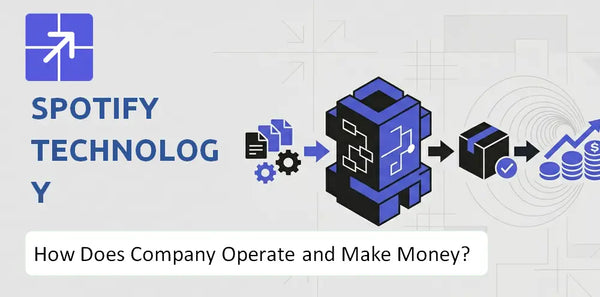
How does Spotify Technology Company connect creators and listeners while monetizing audio at scale?
Spotify Technology Company aggregates music, podcasts, and audiobooks, monetizing via subscriptions and ads while sharing revenue with rights holders. This matters because in 2025 Spotify faces margin pressure as it shifts toward higher-margin podcasts and audiobooks amid 660,000,000+ users worldwide and rising ad revenue.
Focus on margin mix: push subscriptions and ad formats, plus exclusive podcast deals, to reduce label cost share. See Spotify Technology BCG Matrix Analysis
What Does Spotify Technology Actually Sell?
Spotify Technology sells two core products: uninterrupted access via Premium subscriptions and targeted attention through its Ad-Supported tier. Customers pay for streaming, discovery, creator tools, and ad-reach rather than physical goods.
 Core Product: Subscriptions and Attention
Spotify sells Premium subscriptions offering ad-free listening, offline playback, higher audio quality, and access to a growing audiobook catalog of 300,000 titles to about 270 million subscribers as of 2025; it monetizes free users by selling their attention to advertisers via the Ad-Supported tier.
Who Buys It
Buyers include individual consumers (Premium, Family, Student plans), advertisers buying programmatic and targeted audio/video ads, and creators – artists and podcasters – using Spotify for Creators to monetize directly.
What Customers Actually Get
End users get on-demand streaming, algorithmic discovery (recommendation system), playlists, and offline listening; advertisers get targeted reach and measurement via the Spotify advertising platform; creators get tools for fan monetization and analytics.
Why This Offering Stands Out
Spotify's differentiation is its personalization algorithms (industry standard for discovery), large active base enabling ad targeting, and integrated creator monetization; these feed both the Spotify subscription model and ad revenue streams and support long-tail catalog monetization.
Spotify packs product, discovery, and advertising into its Spotify business model: subscriptions drive recurring revenue while the Spotify advertising platform monetizes non-payers; Spotify for Creators expands direct monetization. See Target Customers and Market of Spotify Technology Company for related market detail: Target Customers and Market of Spotify Technology Company
Spotify Technology SWOT Analysis
- Complete SWOT Breakdown
- Fully Customizable
- Editable in Excel & Word
- Professional Formatting
- Investor-Ready Format

How Does Spotify Technology Run Its Business Day to Day?
Spotify Technology Company runs daily as a high-throughput data and marketplace operation: global streaming delivery, personalization algorithms, label licensing flows, and an ad exchange power the user and revenue experience across free and paid tiers.

Operational backbone and delivery flow
Engineering maintains a global cloud stack that serves millions of concurrent streams across 180 markets; CDN, user state stores, and real-time telemetry ensure sub-second playback and logging for the Spotify algorithm recommendation system.
How customers access and use Spotify
Users access content via mobile, desktop, and embedded devices; subscribers pay under the Spotify subscription model (Premium, Family, Student) while free users access the Spotify freemium model explained through ad-supported streaming and intermittent track controls.
Content sourcing, development, and product evolution
Spotify secures licensed music from Universal, Sony, and Warner and acquires or produces podcasts; product teams iterate on Home and Discovery algorithms that process billions of data points daily to refine personalization and support Music-plus-Talk and audiobook rollouts in 2025 – 2026.
Sales channels, distribution, and the marketplace
Revenue flows through direct subscription billing, in-app purchases, telco bundles, and an automated advertising exchange that powers the Spotify advertising platform for the free tier; programmatic ads and self-serve buys run alongside direct label and publisher deals.
Key assets, systems, and partnerships
Critical assets include recommendation ML models, payment systems, a programmatic ad stack, CDN partnerships, and label agreements with Universal, Sony, and Warner; strategic moves in 2025 increased focus on audiobook distribution unit economics and Music-plus-Talk content.
Why the model scales and stays efficient
Scale comes from network effects: personalized discovery increases listening time, which raises ad inventory value and subscription conversion rates; in 2025 Spotify reported higher ad RPMs and continued investment in algorithms to improve retention and how Spotify works for listeners and advertisers.
For operational and commercial strategy detail see Sales and Marketing Strategy of Spotify Technology Company
Spotify Technology Business Model Canvas
- One-time Payment
- No Research Needed – Save Hours of Work
- Built by Experts, Trusted by Consultants
- Instant Download, Ready to Use
- 100% Editable, Fully Customizable

How Does Revenue Flow Through Spotify Technology?
Revenue flows through two main channels: recurring Premium subscriptions and advertising placements, converting user demand into cash via monthly fees and ad buys. Marketplace promotions and podcast ad sales have increased high-margin income, shifting the revenue mix.
Premium subscriptions as the primary revenue engine
Premium subscriptions generated roughly 87% of revenue as of early 2026, after 2024 – 25 price adjustments stabilized ARPU near $6.90 monthly on a blended basis. Subscriptions matter because they provide predictable, recurring cash and higher per-user margins than ad-supported listening.
Advertising and marketplace sales as complementary streams
Ad placements and the podcast advertising network (SPAN) account for the bulk of the remaining revenue, while Marketplace promotional placements sold to labels and artists grew materially in 2025, adding a high-margin layer to the Spotify revenue model and reducing reliance on rights-holder payouts.
Stream-share pricing and monetization mechanics
Spotify monetizes via subscriptions, ad sales, and Marketplace fees; the core stream-share model pays roughly 70% of streaming revenue to rights holders and retains ~30%. Podcast and Marketplace revenues are largely retained, boosting gross margins.
Key drivers pushing revenue growth
Growth in Marketplace placements in 2025 and scaling SPAN ad CPMs drove improvement toward a target gross margin above 30%. User growth, ARPU stabilization, targeted ad targeting and programmatic ads, plus Marketplace take-rates, are the primary levers for Spotify Technology Company revenue expansion; see the detailed Growth Outlook of Spotify Technology Company for context: Growth Outlook of Spotify Technology Company
Spotify Technology Marketing Mix
- Complete Marketing Mix Analysis
- Effortlessly Communicate Your Business Strategy
- Investor-Ready Format
- 100% Editable and Customizable
- Clear and Structured Layout

What Makes Spotify Technology's Model Sustainable or Fragile?
Spotify Technology's model is sustainable because massive user scale, curated libraries, and platform-agnostic access create high switching costs; it is fragile because recorded-music supply is concentrated among three major labels with pricing power and rising royalty costs. Structural strengths include network effects and data-driven personalization, while key risks are licensing concentration and potential bundling by big-tech rivals.
Platform scale and user lock-in
Large active user base and years of personalized playlists raise switching friction; in 2025 Spotify had 574 million MAUs and 236 million Premium subscribers, which supports long-term retention and monetization.
Assets and data-driven capabilities
Proprietary recommendation algorithms, vast listening data, and a growing podcast and audiobooks catalog diversify content; ad tech and programmatic ads helped advertising revenue reach roughly $3.4 billion in 2025, strengthening the Spotify advertising platform.
Dependencies on labels and licensing
Recorded-music licensing is concentrated: Universal, Sony, and Warner collectively control a majority of streamed catalogs and command royalty rates that pressure margins; music cost of revenue remained the largest line item, exceeding 40% of revenue in 2025.
Durability assessment for 2025/2026
Model looks cautiously durable: Spotify Technology shifted toward profitable-growth in 2025 with positive operating leverage and improved unit economics, yet remains exposed to label pricing and potential bundling by Apple or Amazon that can treat audio as a loss leader.
Strategic levers to strengthen resilience include expanding exclusive non-music content (podcasts, audiobooks), improving ad yield via better ad targeting and programmatic ads, and negotiating lower blended licensing rates; see more on Ownership and Control of Spotify Technology Company Ownership and Control of Spotify Technology Company.
Spotify Technology Boston Consulting Group Matrix
- Built by Experts, Trusted by Consultants
- Structured for Consultants, Students, and Founders
- 100% Editable in Microsoft Word & Excel
- Instant Digital Download – Use Immediately
- Compatible with Mac & PC – Fully Unlocked

Related Blogs
- What Is the History of Spotify Technology Company and How Did It Evolve?
- What Is the Competitive Landscape of Spotify Technology Company and How Does It Compete?
- What Is the Growth Outlook of Spotify Technology Company and Where Is It Heading?
- How Does Spotify Technology Company Reach Customers and Turn Demand into Sales?
- What Do the Mission, Vision, and Core Values of Spotify Technology Company Reveal?
- Who Are the Core Customers in Spotify Technology Company's Target Market?
- Who Owns Spotify Technology Company Today and Who Holds Control?
Frequently Asked Questions
Spotify Technology sells two main offerings: Premium subscriptions and ad-supported attention. Premium gives ad-free listening, offline playback, higher audio quality, and audiobook access, while the free tier monetizes listeners through targeted ads. It also offers creator tools and analytics for artists and podcasters.
Disclaimer
All information, articles, and product details provided on this website are for general informational and educational purposes only. We do not claim any ownership over, nor do we intend to infringe upon, any trademarks, copyrights, logos, brand names, or other intellectual property mentioned or depicted on this site. Such intellectual property remains the property of its respective owners, and any references here are made solely for identification or informational purposes, without implying any affiliation, endorsement, or partnership.
We make no representations or warranties, express or implied, regarding the accuracy, completeness, or suitability of any content or products presented. Nothing on this website should be construed as legal, tax, investment, financial, medical, or other professional advice. In addition, no part of this site - including articles or product references - constitutes a solicitation, recommendation, endorsement, advertisement, or offer to buy or sell any securities, franchises, or other financial instruments, particularly in jurisdictions where such activity would be unlawful.
All content is of a general nature and may not address the specific circumstances of any individual or entity. It is not a substitute for professional advice or services. Any actions you take based on the information provided here are strictly at your own risk. You accept full responsibility for any decisions or outcomes arising from your use of this website and agree to release us from any liability in connection with your use of, or reliance upon, the content or products found herein.