
How does SQLI deliver digital transformation services and generate recurring revenue from enterprise clients?
SQLI combines local consulting in Europe with offshore delivery centers to build unified commerce and customer experience platforms for legacy enterprises. This matters as 2025 client spend shifts toward CX platforms, with SQLI showing increased project wins in France and cross-border accounts.
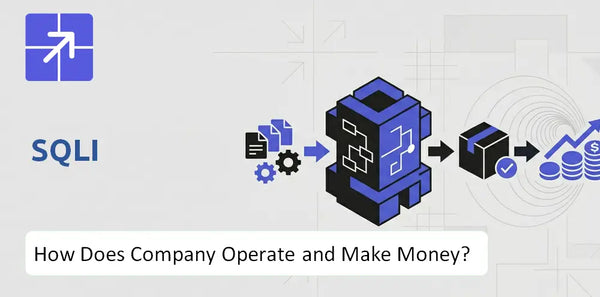
Focus on repeatable platform services, managed support, and partnerships to boost margins; see SQLI BCG Matrix Analysis for product-portfolio signals.
What Does SQLI Actually Sell?
SQLI sells digital transformation services centered on unified commerce and customer experience rather than a proprietary product; clients pay for consulting, platform implementation (Adobe, SAP Commerce Cloud, Salesforce, Microsoft), UX/UI design, and technical architecture. By 2025 the company emphasizes data intelligence and AI integration to convert consumer data into personalized shopping and automated marketing workflows.
 Core service offering: digital transformation and unified commerce
SQLI company business model centers on services: digital strategy, system integration, UX/UI, and managed services for third-party platforms (Adobe, SAP Commerce Cloud, Salesforce, Microsoft). Revenue comes from project fees, long-term retainers, and licensing-related implementation work.
Main buyers: enterprise retailers and B2B brands
Buyers are mid-to-large enterprises – retailers, manufacturers, luxury brands, and distributors – seeking omnichannel commerce, CX modernization, or legacy platform migration. Procurement and digital leads buy transformation projects; marketing teams fund personalization and AI use cases.
Customer value: measurable commerce and personalization outcomes
Clients receive end-to-end delivery: strategy to run-rate, faster time-to-market for storefronts, higher conversion via UX improvements, and data-driven personalization that increases average order value and retention – SQLI reports projects that lift conversion by up to 20% in case studies.
Differentiators: platform partnerships and AI-driven services
How SQLI works: through deep partnerships with Adobe, SAP, Salesforce, and Microsoft, plus specialized delivery teams that blend consulting and engineering. By 2025 SQLI pushes AI and data intelligence – selling the capability to operationalize consumer data into personalized journeys and automated marketing, which differentiates it from pure software vendors.
For governance and ownership context see Ownership and Control of SQLI Company
SQLI SWOT Analysis
- Complete SWOT Breakdown
- Fully Customizable
- Editable in Excel & Word
- Professional Formatting
- Investor-Ready Format

How Does SQLI Run Its Business Day to Day?
SQLI runs day to day on a Right-Shore delivery model: local European consultants handle client strategy and architecture while large-scale development and production work is routed to service centers in Morocco and Mauritius; daily throughput is monitored via utilization and sprint cadence to meet commercial milestones.

Right – Shore operating model
Local teams in Paris, London, and other hubs manage client relationships and solution design; offshore centers in Morocco and Mauritius deliver cost – efficient engineering and large production runs.
How customers access and buy services
Clients engage via direct sales and consulting proposals for digital transformation and e – commerce projects, then move to time & materials or fixed – price contracts with blended onshore/offshore teams.
Production, sourcing and development flow
Product development follows agile sprints for new features and long – term application management for BAU; code, QA, and platform operations are concentrated in service centers to scale delivery.
Sales channels and distribution
Sales combine direct enterprise account teams, partner channels, and targeted industry offers; recurring managed services and platform subscriptions drive client retention and predictable revenue.
Key assets, systems and partnerships
Core assets include delivery centers in Morocco and Mauritius, a European consulting bench of ~700 senior consultants, partnerships with major cloud and commerce platforms, and standardized DevOps toolchains.
What makes the model work in practice
Utilization rate – the % of the ~2,100 employees on billable projects – plus sprint discipline and Right – Shore cost differentials sustain margin and project velocity; project managers align delivery to client commercial milestones. Read a focused piece on go – to – market execution in Sales and Marketing Strategy of SQLI Company
SQLI Business Model Canvas
- One-time Payment
- No Research Needed – Save Hours of Work
- Built by Experts, Trusted by Consultants
- Instant Download, Ready to Use
- 100% Editable, Fully Customizable

How Does Revenue Flow Through SQLI?
Revenue at SQLI flows mainly from billable professional services and growing recurring contracts; demand converts to revenue via billed days or fixed project milestones plus recurring AMS fees. The mix shifts toward predictable maintenance and multi-year AMS to stabilize top-line cash.
Main revenue: billable hours and T&M contracts
SQLI company business model centers on time-and-materials (T&M) delivery where revenue = average daily rate (ADR) × billed days. In 2025 billable hours still account for the majority of revenue, driven by sustained demand for digital transformation and replatforming projects.
Additional revenue: Fixed-price, AMS, and maintenance
Fixed-price project engagements and Application Management Services (AMS) provide complementary income; multi-year maintenance contracts and AMS grew materially in 2025 to improve predictability and now represent a significant portion of recurring top-line.
Pricing and monetization model
SQLI monetizes through daily/weekly ADRs for consultants, fixed-price milestones for scoped projects, and subscription-like AMS fees for ongoing support. This mix lets the firm convert consulting engagements into multi-year revenue streams.
What drives revenue most
Revenue growth is led by expanding wallet share within large-cap European clients and winning cloud replatforming contracts as organisations modernize legacy systems. Cross-selling AMS and managed services into existing accounts increases lifetime value and reduces revenue volatility.
In 2025 key metrics: billable utilization and ADR determine near-term revenue; SQLI reports that recurring AMS and maintenance now constitute a larger share of revenue versus prior years, supporting margin stability. See a market-focused profile of clients and sectors in this article: Target Customers and Market of SQLI Company
SQLI Marketing Mix
- Complete Marketing Mix Analysis
- Effortlessly Communicate Your Business Strategy
- Investor-Ready Format
- 100% Editable and Customizable
- Clear and Structured Layout

What Makes SQLI's Model Sustainable or Fragile?
SQLI company business model is sustainable through deep vendor partnerships and an offshore cost base covering nearly 35 percent of the workforce, but fragile from wage inflation and Generative AI disruption that may cut implementation billable hours in 2026. Structural strengths include high client switching costs on enterprise commerce platforms; key risks are margin pressure and competition from global integrators.
What Supports the Model
Long-term contracts for commerce and digital experience platforms create high switching costs, making SQLI the default for maintenance and iterative projects. Recurring revenue from operational support and hosted services delivers predictable cash flow and contributes to free cash generation.
Key Assets or Capabilities
Partnerships with major software vendors and a skilled delivery organization enable end-to-end SQLI services overview, from consulting to development. Offshore delivery centers provide a cost arbitrage that supports competitive pricing and margin resilience.
Dependencies or Constraints
Model depends on vendor alliances, large enterprise clients, and maintaining 9 – 11 percent operating margins; concentrated client accounts or vendor shifts would materially affect revenue streams. Wage inflation for tech talent in 2025 and nearshoring trends reduce the benefit of current offshore cost structures.
How Durable the Model Looks
For 2025/2026 SQLI appears stable and cash-generative if it sustains operating margins in the 9 to 11 percent range and shifts toward higher-value consulting as AI compresses routine implementation hours. Monitor AI-enabled coding impact in 2026 and margin trends; if billable hours fall >20 percent without price or scope adjustment, profitability will be at risk.
See company context and evolution in this article: History and Background of SQLI Company
SQLI Boston Consulting Group Matrix
- Built by Experts, Trusted by Consultants
- Structured for Consultants, Students, and Founders
- 100% Editable in Microsoft Word & Excel
- Instant Digital Download – Use Immediately
- Compatible with Mac & PC – Fully Unlocked

Related Blogs
- What Is the History of SQLI Company and How Did It Evolve?
- What Is the Competitive Landscape of SQLI Company and How Does It Compete?
- What Is the Growth Outlook of SQLI Company and Where Is It Heading?
- How Does SQLI Company Reach Customers and Turn Demand into Sales?
- What Do the Mission, Vision, and Core Values of SQLI Company Reveal?
- Who Are the Core Customers in SQLI Company's Target Market?
- Who Owns SQLI Company Today and Who Holds Control?
Frequently Asked Questions
SQLI sells digital transformation services, not a proprietary product. Its work centers on consulting, platform implementation for Adobe, SAP Commerce Cloud, Salesforce, and Microsoft, plus UX/UI design, technical architecture, and managed services. By 2025, SQLI also emphasizes data intelligence and AI to support personalized journeys and automated marketing.
Disclaimer
All information, articles, and product details provided on this website are for general informational and educational purposes only. We do not claim any ownership over, nor do we intend to infringe upon, any trademarks, copyrights, logos, brand names, or other intellectual property mentioned or depicted on this site. Such intellectual property remains the property of its respective owners, and any references here are made solely for identification or informational purposes, without implying any affiliation, endorsement, or partnership.
We make no representations or warranties, express or implied, regarding the accuracy, completeness, or suitability of any content or products presented. Nothing on this website should be construed as legal, tax, investment, financial, medical, or other professional advice. In addition, no part of this site - including articles or product references - constitutes a solicitation, recommendation, endorsement, advertisement, or offer to buy or sell any securities, franchises, or other financial instruments, particularly in jurisdictions where such activity would be unlawful.
All content is of a general nature and may not address the specific circumstances of any individual or entity. It is not a substitute for professional advice or services. Any actions you take based on the information provided here are strictly at your own risk. You accept full responsibility for any decisions or outcomes arising from your use of this website and agree to release us from any liability in connection with your use of, or reliance upon, the content or products found herein.