
How does Staffing 360 Solutions drive growth by consolidating niche staffing firms?
Staffing 360 Solutions buys specialized staffing agencies and centralizes functions to scale revenue and margins. This matters because the 2025 push toward integration aims to lift EBITDA through shared back-office systems, amid softer UK hiring demand in Q2 2025.
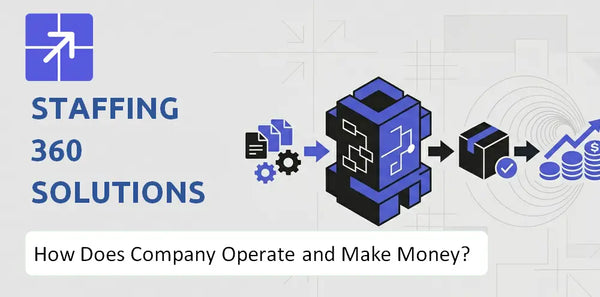
Focus on integration speed: faster ERP and payroll consolidation can raise cash conversion and reduce attrition. See Staffing 360 Solutions BCG Matrix Analysis for product fit and portfolio moves.
What Does Staffing 360 Solutions Actually Sell?
Staffing 360 Solutions sells access to a flexible, pre-vetted workforce across Professional and Commercial staffing categories, plus managed payroll and workforce administration; clients pay for labor-as-a-service, faster time-to-hire, and reduced employment risk.
 Core Offerings: Professional and Commercial Staffing
Staffing 360 Solutions supplies high-value professional talent in finance, accounting, information technology, and engineering, and light industrial, administrative, and manufacturing workers in its commercial segment. Revenue comes from markup on bill rates, managed services contracts, and placement fees under the Staffing 360 business model.
Who Buys It: Employers Needing Flexible Labor
Buyers include mid-market and enterprise clients in manufacturing, logistics, healthcare, financial services, and IT who need scaleable headcount for seasonal cycles, project work, or to avoid long-term hiring liabilities. Staffing 360 company profile shows a mix of recurring MSP (managed service provider) clients and one-off placements.
Value to Customers: Risk Reduction and Speed
Clients receive reduced employment risk (workers employed by Staffing 360 Solutions), faster time-to-hire – often cutting sourcing cycles by 30 – 50% for contingent roles – and operational flexibility to scale labor up or down. Payroll, compliance, and benefits administration are bundled to lower HR overhead.
Why It Stands Out: Integrated Services and M&A Growth
Differentiators include a combined professional/commercial offering, managed services capabilities, and a growth-through-acquisition strategy that expanded geographic coverage and margin mix; publicly reported activity shows Staffing 360 Solutions has pursued multiple add-on acquisitions to broaden service lines and client access. See the company timeline in this article: History and Background of Staffing 360 Solutions Company
Staffing 360 Solutions SWOT Analysis
- Complete SWOT Breakdown
- Fully Customizable
- Editable in Excel & Word
- Professional Formatting
- Investor-Ready Format

How Does Staffing 360 Solutions Run Its Business Day to Day?
Daily operations run on a dual-track recruitment and sales pipeline: recruiters keep a qualified bench using proprietary databases and AI sourcing, while account managers forecast client needs; centralized payroll, compliance, and workers' comp free units to focus on placements and client service, and automated matching shortens request-to-placement times.

Operating Model and Workflow
The Staffing 360 Solutions operating model pairs subsidiary brands such as Monroe Staffing and Key Resources under one corporate platform. Recruiters source and maintain candidate benches while account managers translate client forecasts into open orders; a centralized back office handles payroll, tax filings, benefits administration, and workers' compensation to ensure legal compliance and margin control.
Service Delivery and Client Access
Clients request talent through account teams or digital portals; automated matching platforms and AI reduce time-to-fill, enabling faster contractor onboarding. Staffing 360 Solutions bills clients via hourly, mark-up, or managed services contracts and collects timesheets through centralized payroll systems for accurate invoicing.
Talent Sourcing and Candidate Development
Recruiters use proprietary databases, third-party job boards, and AI-enhanced sourcing to keep a ready bench; ongoing screening, credentialing, and skills upskilling for healthcare and IT contractors are managed at the business-unit level. In 2025, automated assessment workflows cut manual vetting time by an estimated 30%.
Sales Channels and Client Distribution
Sales operate through direct enterprise sales, digital lead generation, and cross-selling across subsidiary brands. Key channels include national account teams for large enterprise clients, regional sales for SMBs, and referral pipelines from existing placements; channel mix increased digital-sourced revenue to roughly 40% of placements in 2025.
Key Assets, Systems, and Partnerships
Core assets include proprietary candidate databases, AI matching engines, centralized payroll and HRIS platforms, and insurance/wc carrier partnerships. Strategic M&A integrations expand geographic reach and specialty verticals; by end-2025 the company operates multiple niche brands to capture diversified recruitment services revenue streams.
What Makes the Model Work in Practice
Efficiency rests on centralized administration, AI-enabled sourcing to raise utilization of the contractor bench, and tight account-manager forecasting to minimize vacancy time. Higher utilization and faster placements drove improved gross margins in 2025, supported by cross-selling from acquisitions – see Sales and Marketing Strategy of Staffing 360 Solutions Company for related integration tactics.
Staffing 360 Solutions Business Model Canvas
- One-time Payment
- No Research Needed – Save Hours of Work
- Built by Experts, Trusted by Consultants
- Instant Download, Ready to Use
- 100% Editable, Fully Customizable

How Does Revenue Flow Through Staffing 360 Solutions?
Revenue flows through Staffing 360 Solutions primarily as spreads on billable hours and one-time placement fees; demand converts to revenue when clients request temporary or permanent hires and the firm invoices higher bill rates over contractor pay rates.
Primary revenue: Markup on temporary and contract staffing
Staffing 360 Solutions earns most revenue by paying contractors an hourly wage and billing clients a higher hourly rate that covers wages, payroll taxes, workers' comp, insurance, and a margin. For fiscal 2025 management targeted gross margins near 20 to 22 percent, driven by a shift toward higher-margin professional and healthcare roles across the US and UK.
Secondary revenue: Permanent placement and value-add services
Permanent placement fees generate high-margin income, typically 20 to 30 percent of a candidate's first-year salary on success. Complementary services – payroll processing, managed services, and specialty consulting – add recurring and one-off fees that improve overall profitability.
Pricing and monetization model: Spread-based billing and placement commissions
The monetization logic is the spread between client bill rates and worker pay rates; revenue scales with total billable hours across Staffing 360 Solutions' US and UK footprints. Permanent placements are invoiced as one-time commission fees tied to candidate salary, while add-on services are billed separately.
What drives revenue most: Billable hours mix and role mix
Revenue is most sensitive to total billable hours and the mix toward higher-margin professional roles; modest rate increases or a 5 percent shift from light industrial to professional placements materially lifts gross margin. See related governance and ownership context in Ownership and Control of Staffing 360 Solutions Company.
Staffing 360 Solutions Marketing Mix
- Complete Marketing Mix Analysis
- Effortlessly Communicate Your Business Strategy
- Investor-Ready Format
- 100% Editable and Customizable
- Clear and Structured Layout

What Makes Staffing 360 Solutions's Model Sustainable or Fragile?
Staffing 360 Solutions' model is sustainable if it converts acquisitive scale into steady organic revenue and lowers leverage; it is fragile because high debt and staffing cyclicality amplify downturn risk. Geographic diversification and recurring recruitment services help, but interest costs and margin pressure are central threats.
Geographic diversification and repeat revenue
Presence in the US and UK spreads demand risk between two large labor markets, and recurring temporary staffing and managed services create predictable billing cycles that support cash flow.
Scale from acquisitions boosts market access
Acquisition-led growth has increased headcount, client lists, and sector coverage, enabling cross-sell of healthcare and industrial staffing and improving utilization of recruiting infrastructure.
High leverage and interest-rate sensitivity
Staffing 360 Solutions carries significant acquisition-related debt; servicing that debt in a still-high rate environment constrains operating flexibility and raises refinancing risk into 2026.
Model durability in 2025/2026
Durability hinges on holding gross margins above 21 percent, reducing net debt via disciplined free-cash-flow conversion and targeted divestitures, and sustaining organic growth in core staffing segments.
Key near-term metrics to watch: 2025 EBITDA conversion, net debt/EBITDA trend, and gross margin percentage; operational execution and sale of non-core assets will determine whether the Staffing 360 business model moves from fragile to stable. See customer and market context here: Target Customers and Market of Staffing 360 Solutions Company
Staffing 360 Solutions Boston Consulting Group Matrix
- Built by Experts, Trusted by Consultants
- Structured for Consultants, Students, and Founders
- 100% Editable in Microsoft Word & Excel
- Instant Digital Download – Use Immediately
- Compatible with Mac & PC – Fully Unlocked

Related Blogs
- What Is the History of Staffing 360 Solutions Company and How Did It Evolve?
- What Is the Competitive Landscape of Staffing 360 Solutions Company and How Does It Compete?
- What Is the Growth Outlook of Staffing 360 Solutions Company and Where Is It Heading?
- How Does Staffing 360 Solutions Company Reach Customers and Turn Demand into Sales?
- What Do the Mission, Vision, and Core Values of Staffing 360 Solutions Company Reveal?
- Who Are the Core Customers in Staffing 360 Solutions Company's Target Market?
- Who Owns Staffing 360 Solutions Company Today and Who Holds Control?
Frequently Asked Questions
Staffing 360 Solutions sells access to a flexible, pre-vetted workforce across professional and commercial staffing, plus managed payroll and workforce administration. Clients pay for labor-as-a-service, faster time-to-hire, and lower employment risk. Its revenue comes from markups on bill rates, managed services contracts, and placement fees.
Disclaimer
All information, articles, and product details provided on this website are for general informational and educational purposes only. We do not claim any ownership over, nor do we intend to infringe upon, any trademarks, copyrights, logos, brand names, or other intellectual property mentioned or depicted on this site. Such intellectual property remains the property of its respective owners, and any references here are made solely for identification or informational purposes, without implying any affiliation, endorsement, or partnership.
We make no representations or warranties, express or implied, regarding the accuracy, completeness, or suitability of any content or products presented. Nothing on this website should be construed as legal, tax, investment, financial, medical, or other professional advice. In addition, no part of this site - including articles or product references - constitutes a solicitation, recommendation, endorsement, advertisement, or offer to buy or sell any securities, franchises, or other financial instruments, particularly in jurisdictions where such activity would be unlawful.
All content is of a general nature and may not address the specific circumstances of any individual or entity. It is not a substitute for professional advice or services. Any actions you take based on the information provided here are strictly at your own risk. You accept full responsibility for any decisions or outcomes arising from your use of this website and agree to release us from any liability in connection with your use of, or reliance upon, the content or products found herein.