
How does Thryv work as a SaaS platform converting legacy directory customers into recurring-revenue clients?
Thryv sells software and marketing services to small businesses, shifting customers from one-time ad buys to subscription SaaS and services. This matters because in 2025 Thryv's ARR growth and legacy revenue decline directly influence valuation and margin recovery.
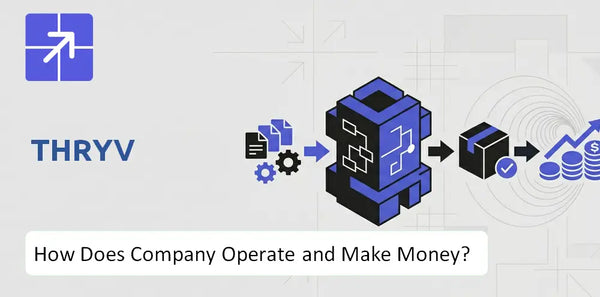
Focus on retention and ARPU expansion: cross-sell payments, CRM, and marketing tools to lift lifetime value while legacy print revenue falls; see Thryv BCG Matrix Analysis.
What Does Thryv Actually Sell?
Thryv sells a unified small-business operating system delivered mainly as SaaS: a dashboarded platform (Command Center, Business Center, Marketing Center) plus legacy marketing services and digital advertising; customers pay for CRM, automated marketing, appointment scheduling, reputation management, AI lead messaging, and integrated payments.
 Core product lineup
Thryv offers Thryv software as a subscription: the Command Center (operations and CRM), Business Center (appointments, payments), and Marketing Center (automated campaigns, reputation management). It also sells Marketing Services including legacy print Yellow Pages and digital display advertising, creating mixed SaaS and services revenue.
Who buys it
Primary buyers are US small and medium enterprises (SMEs) and local service businesses – contractors, salons, medical practices, and professional services – seeking consolidated tools and outsourced marketing. Channel buyers include agencies and resellers integrating Thryv platform features into client stacks.
What customers actually get
Customers receive a unified dashboard that replaces multiple point tools: Thryv CRM for contact and pipeline management, marketing automation (email, SMS, social), online appointment scheduling, reputation and review management, AI-driven lead communication, and integrated payment processing – reducing app fatigue and saving time.
Why this offering stands out
Thryv business model bundles software subscription revenue with legacy and digital marketing services, producing recurring revenue. By early 2026 the product added AI lead response and native payments, letting SMEs match larger competitors on responsiveness and cash flow – helpful for adoption and upsells. Read a focused market view: Growth Outlook of Thryv Company
Thryv SWOT Analysis
- Complete SWOT Breakdown
- Fully Customizable
- Editable in Excel & Word
- Professional Formatting
- Investor-Ready Format

How Does Thryv Run Its Business Day to Day?
Thryv runs day-to-day via a split model: a high-touch direct sales force targets legacy service providers while a cloud-based Thryv software delivery engine handles onboarding, recurring SaaS delivery, and customer success. The Command Center (freemium/low-cost entry) captures leads and usage data, feeding upsell motions and integrations with CRM, payments, and scheduling systems.

Dual operating model: sales-led plus cloud delivery
Daily ops split between a large direct sales team and a cloud operations stack. Sales drive acquisition and upsells; cloud systems deliver software, billing, analytics, and integrations for a recurring-revenue flow.
Command Center as the primary customer entry point
Customers access Thryv platform features via a freemium or low-cost Command Center that centralizes messages, appointments, and leads. Usage data from the Command Center triggers customer success outreach and paid upgrades.
Product development and technical integration
Thryv develops its SaaS stack internally and integrates with partners like QuickBooks and Google for bookkeeping and discovery. Engineering focuses on modular APIs, security, and incremental feature releases to support CRM, payments, and marketing automation.
Sales channels: direct field sales plus digital self-serve
A seasoned direct sales force upsells software to plumbers, HVAC, and law firms, while digital channels and inside sales convert Command Center users. Channel mix prioritizes retention and lifetime value over one-off acquisition.
Key assets: sales team, Command Center, integrations
Core assets include a large experienced salesforce, the cloud Thryv CRM and Command Center, integrations (QuickBooks, Google), and customer success teams handling onboarding and technical integration. These drive scale and recurring subscriptions.
Operational lever: customer success and legacy cash flow
Customer success minimizes churn via hands-on onboarding; if onboarding exceeds 14 days churn risk rises. Legacy directory printing remains a low-investment cash cow, with logistics and print cycles harvested to fund SaaS growth.
Daily workflow example: field reps call and meet prospects, Command Center trials onboard via customer success, integrations sync client data to Thryv CRM and QuickBooks, automated billing runs monthly, and analytics feed sales targets. Management monitors KPI dashboards – activation rate, net dollar retention, churn, and upsell conversion – to align sales and product priorities; in 2025 Thryv reported that recurring-revenue trends and retention were central to valuation and growth planning.
See further context on ownership and strategic control in this piece: Ownership and Control of Thryv Company
Thryv Business Model Canvas
- One-time Payment
- No Research Needed – Save Hours of Work
- Built by Experts, Trusted by Consultants
- Instant Download, Ready to Use
- 100% Editable, Fully Customizable

How Does Revenue Flow Through Thryv?
Revenue flows into Thryv through recurring SaaS subscriptions and transactional Marketing Services; demand converts to revenue via per-seat and per-location fees, plus transaction take-rates on payments and one-time marketing engagements.
Recurring SaaS subscriptions as the primary value driver
Thryv software now derives most enterprise value from SaaS subscriptions billed monthly or annually per seat and per location; by FY2025 management pushed ARPU toward $400 per month via cross-sells of advanced Thryv platform features, making subscription revenue the stable core.
Transactional and marketing services as additional revenue
Marketing Services generate front-loaded cash from campaigns, website builds, and lead-gen, while payment processing yields recurring take-rates tied to GMV flowing through the Thryv CRM and payments stack; these streams complement but decline relative to SaaS.
Pricing and monetization mechanics
Thryv pricing blends per-seat and per-location subscription fees, commissions on payment processing (a percentage of GMV), and fixed fees for Marketing Services; upsells and add-on modules raise ARPU and drive Net Dollar Retention improvements.
What most strongly drives revenue
Revenue growth today depends on subscription expansion: cross-selling higher-tier Thryv features and increasing seat/location penetration. FY2025 NDR tracked near 96%, showing existing customers expand spend enough to offset churn; payment take-rates and declining but meaningful Marketing Services cash flow supplement ARR.
See the History and Background of Thryv Company for context on product evolution and prior go-to-market shifts.
Thryv Marketing Mix
- Complete Marketing Mix Analysis
- Effortlessly Communicate Your Business Strategy
- Investor-Ready Format
- 100% Editable and Customizable
- Clear and Structured Layout

What Makes Thryv's Model Sustainable or Fragile?
Thryv's model is sustainable if it sustains a high LTV to CAC ratio while converting legacy Marketing Services cash into recurring SaaS revenue; it is fragile because of heavy debt and a declining Marketing Services segment that funds interest and operations.
High Switching Costs Anchor Retention
Thryv software benefits from embedded customer history, payments, and scheduling data that create operational friction for customers to leave, supporting high LTV per account and persistent subscription revenue.
Platform Stickiness and Cross-Sell Scope
The Thryv platform features CRM, payments, marketing automation, and listings in one suite, enabling cross-sell and upsell that raise average revenue per user (ARPU) and shorten payback on customer acquisition.
Debt, Cash Flow, and Legacy Dependence
Thryv carries substantial leverage; interest and principal depend on Marketing Services cash flow, which fell year-over-year through 2024 – 2025 – exposing the model if SaaS revenue growth lags.
Competitive and Market Risks
Competitors like HubSpot and vertical specialists pressure pricing and feature parity; if CAC rises or churn increases, the LTV to CAC ratio compresses, weakening sustainability.
Critical SaaS Revenue Threshold
Professional judgment projects Thryv needs to exceed $450,000,000 in annual SaaS revenue by late 2026 to replace declining Marketing Services cash flows and cover debt costs without capital raises.
Assessment of Durability in 2025/2026
As of 2025, the model is viable but high-leverage and exposed: durable where Thryv CRM retention and onboarding keep LTV high, fragile where debt servicing and Marketing Services decline outpace SaaS ramp.
See related market and customer positioning in this piece on Target Customers and Market of Thryv Company: Target Customers and Market of Thryv Company
Thryv Boston Consulting Group Matrix
- Built by Experts, Trusted by Consultants
- Structured for Consultants, Students, and Founders
- 100% Editable in Microsoft Word & Excel
- Instant Digital Download – Use Immediately
- Compatible with Mac & PC – Fully Unlocked

Related Blogs
- What Is the History of Thryv Company and How Did It Evolve?
- What Is the Competitive Landscape of Thryv Company and How Does It Compete?
- What Is the Growth Outlook of Thryv Company and Where Is It Heading?
- How Does Thryv Company Reach Customers and Turn Demand into Sales?
- What Do the Mission, Vision, and Core Values of Thryv Company Reveal?
- Who Are the Core Customers in Thryv Company's Target Market?
- Who Owns Thryv Company Today and Who Holds Control?
Frequently Asked Questions
Thryv sells a unified small-business operating system delivered mainly as SaaS. Customers can use the Command Center, Business Center, and Marketing Center for CRM, automated marketing, appointment scheduling, reputation management, AI lead messaging, and integrated payments. It also includes legacy marketing services and digital advertising.
Disclaimer
All information, articles, and product details provided on this website are for general informational and educational purposes only. We do not claim any ownership over, nor do we intend to infringe upon, any trademarks, copyrights, logos, brand names, or other intellectual property mentioned or depicted on this site. Such intellectual property remains the property of its respective owners, and any references here are made solely for identification or informational purposes, without implying any affiliation, endorsement, or partnership.
We make no representations or warranties, express or implied, regarding the accuracy, completeness, or suitability of any content or products presented. Nothing on this website should be construed as legal, tax, investment, financial, medical, or other professional advice. In addition, no part of this site - including articles or product references - constitutes a solicitation, recommendation, endorsement, advertisement, or offer to buy or sell any securities, franchises, or other financial instruments, particularly in jurisdictions where such activity would be unlawful.
All content is of a general nature and may not address the specific circumstances of any individual or entity. It is not a substitute for professional advice or services. Any actions you take based on the information provided here are strictly at your own risk. You accept full responsibility for any decisions or outcomes arising from your use of this website and agree to release us from any liability in connection with your use of, or reliance upon, the content or products found herein.