
How does Totally plc convert NHS demand into outsourced urgent and elective care revenue?
Totally plc operates as an NHS delivery partner, winning fixed-term contracts to run urgent and elective services and earning revenue from activity-based and block contracts. This matters because NHS backlog pressures lifted 2025 contract volumes and shaped margin volatility after staff-cost inflation.
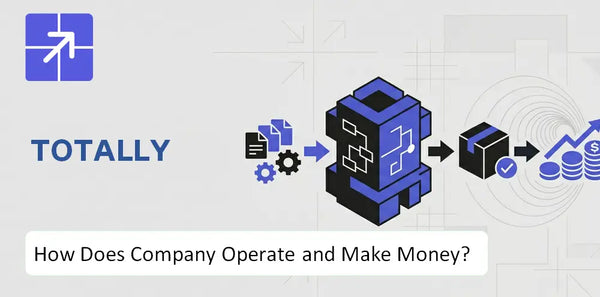
Focus on contract mix: activity-based deals scale with referrals, while block contracts cap upside; monitoring Totally BCG Matrix Analysis helps assess sensitivity to NHS policy changes.
What Does Totally Actually Sell?
Totally plc sells clinical capacity and patient-management solutions: urgent care triage, elective care insourcing/outsourcing, and specialist health services. Customers pay for reduced waiting lists, rapid clinical staffing, and measurable delivery against NHS care targets.
 Core products and services
Totally plc offers NHS 111 call-handling and GP out-of-hours urgent-care services, elective care insourcing (mobile surgical teams, diagnostic clinics) and outsourcing (running hospital lists), plus specialist health pathways for scoped conditions.
Main buyers and contracting routes
Primary buyers are regional NHS Integrated Care Boards (ICBs), NHS trusts, and hospital sites contracting for capacity; secondary buyers include local authorities and private clinics seeking short-term surgical capacity.
Customer value and KPIs delivered
Customers receive immediate cuts in waiting times, faster RTT (referral-to-treatment) throughput, and help meeting statutory targets; Totally reported that elective services contributed materially to revenue, with urgent-care volumes stabilizing call-handling income in 2025.
Why this offering stands out
Totally's model is operationally flexible: deployable clinical teams, short lead times, and revenue tied to activity and contracts rather than capital investment – supporting ICBs to hit targets without permanent hires and aligning incentives via performance-linked contracts; see Competitive Landscape of Totally Company for market context.
Totally SWOT Analysis
- Complete SWOT Breakdown
- Fully Customizable
- Editable in Excel & Word
- Professional Formatting
- Investor-Ready Format

How Does Totally Run Its Business Day to Day?
Totally plc runs daily by mobilising a large clinical workforce and operating high-volume digital triage systems that route patients to urgent or elective care; managers monitor service flow, clinician rosters, and KPI compliance to meet contracted targets and avoid penalties.

Operating model and delivery flow
Totally Company business model relies on two parallel streams: urgent care triage (digital-first intake, clinician assessment, disposition) and elective care logistics (scheduling surgical teams into NHS theatres). Daily ops focus on throughput, clinician shift management, and real-time queueing systems to keep wait times and conversion rates within contract KPIs.
Product and service delivery to patients and commissioners
Patients access urgent care via digital triage, phone lines, or walk-ins; commissioners contract services with volume- and outcome-based payments. For elective services, NHS trusts and Integrated Care Boards book weekend/evening lists; Totally Company invoices per-procedure or per-session under agreed tariffs.
How clinical capacity and logistics are sourced
Clinical staff are sourced through a mix of employed clinicians and a vetted bank of locums; theatre time is booked within existing NHS facilities under service-level agreements. The company maintains credentialing, indemnity checks, and rostering systems to deploy teams on short notice.
Sales channels and contracting
Primary customers are NHS commissioners and hospital trusts who award contracts via procurement rounds and tenders; account teams manage renewals and KPIs. Some services are spot-booked by trusts for capacity gaps, creating short-term revenue spikes.
Key assets, tech and partnerships
Key assets include digital triage platforms, rostering and ERP systems, and partnerships with NHS trusts and staffing agencies. The tech stack supports high-volume call handling – Totally Company recorded over hundreds of thousands of patient interactions annually in recent years – while partnerships secure theatre access and clinical supply chains.
What drives efficiency and reliability day to day
Efficiency rests on scale (large clinician pools), standardized protocols, and KPI-driven performance management; contractual compliance is central because missing KPIs can trigger financial penalties or lost bidding eligibility. Real-time monitoring dashboards and weekly operational huddles keep service levels aligned with contract SLAs.
For context on the company's evolution and contracts referenced here, see History and Background of Totally Company
Totally Business Model Canvas
- One-time Payment
- No Research Needed – Save Hours of Work
- Built by Experts, Trusted by Consultants
- Instant Download, Ready to Use
- 100% Editable, Fully Customizable

How Does Revenue Flow Through Totally?
Revenue flows mainly from multi-year government contracts and activity billing: urgent care fixed-fee or per-contact payments, and elective care per-procedure charges. Demand converts to cash when services are delivered under contract terms or when activity-based invoices are raised.
Main revenue: Urgent Care contracts
Multi-year Business-to-Government (B2G) contracts provide the largest share of revenue, with the Urgent Care segment accounting for the majority of 2025 turnover through fixed availability fees or volume-based payments per patient contact.
Additional streams: Elective and specialist services
Elective Care uses activity-based billing – paid per procedure or diagnostic – while higher-margin specialist services and ancillary diagnostics have grown in 2025/2026 to offset inflation on high-volume urgent care contracts.
Pricing and monetization model
Monetization mixes fixed-fee B2G contracts, volume-based per-contact payments, and activity-based billing per procedure; margins improve where specialist services command premium fees and higher utilization efficiency lowers unit cost.
Primary revenue driver: utilization efficiency
Revenue hinges on delivering care below contracted cost while meeting clinical standards – so utilization efficiency, case mix (specialist vs urgent), and contract mix drive margins; in 2025 the pivot to specialist services increased EBITDA contribution per case.
For 2025 fiscal-year context: urgent care contributed the majority of turnover, elective activity bills rose mid-single digits year-on-year, and specialist services increased gross margin by an estimated 200 – 400 basis points versus baseline urgent care; see the company mission and strategy in Mission, Vision, and Values of Totally Company.
Totally Marketing Mix
- Complete Marketing Mix Analysis
- Effortlessly Communicate Your Business Strategy
- Investor-Ready Format
- 100% Editable and Customizable
- Clear and Structured Layout

What Makes Totally's Model Sustainable or Fragile?
The Totally Company business model sits on a guaranteed market need from the UK health system but is exposed by concentration risk and labor-cost pressure. Structural demand from the NHS waiting list supports revenue, yet reliance on a single payer and thin margins make the model fragile.
Structural Demand from NHS Waiting Lists
With the NHS elective waiting list near 7.6 million in early 2026, Totally Company revenue model benefits from steady, policy-driven demand for private elective capacity. That structural deficit underpins recurring contracts and predictable utilization for services and products focused on elective care.
Operational Capabilities and Insourcing Focus
Totally Company strategy shifted toward insourcing in 2025 to reduce capital-intensive outsourcing and improve control over service delivery. Established partnerships with NHS trusts, clinical governance systems, and site-level operational teams are key assets that support scaling and reliability in service delivery.
Single-Payer Concentration and Contract Risk
Most revenue derives from UK government-funded contracts, creating high customer concentration and policy sensitivity. Changes in public health policy, tender outcomes, or reprioritisation of NHS spending can materially affect cash flows and growth drivers of Totally Company growth.
Resilience Rating for 2025/2026
My professional judgment is that Totally Company is a stable, low-margin utility play for 2025/2026: essential to social infrastructure but with limited pricing power. The 2024/2025 restructuring trimmed loss-making contracts and the leaner corporate structure improved margins, yet wage inflation for clinical staff remains a persistent fragility.
Key quantifiers: post-restructure headcount and SG&A cuts reduced overheads in 2025, while margin recovery remains modest; operating margin is likely to hover at low-single digits absent pricing changes or productivity gains. See governance and ownership dynamics in Ownership and Control of Totally Company.
Totally Boston Consulting Group Matrix
- Built by Experts, Trusted by Consultants
- Structured for Consultants, Students, and Founders
- 100% Editable in Microsoft Word & Excel
- Instant Digital Download – Use Immediately
- Compatible with Mac & PC – Fully Unlocked

Related Blogs
- What Is the History of Totally Company and How Did It Evolve?
- What Is the Competitive Landscape of Totally Company and How Does It Compete?
- What Is the Growth Outlook of Totally Company and Where Is It Heading?
- How Does Totally Company Reach Customers and Turn Demand into Sales?
- What Do the Mission, Vision, and Core Values of Totally Company Reveal?
- Who Are the Core Customers in Totally Company's Target Market?
- Who Owns Totally Company Today and Who Holds Control?
Frequently Asked Questions
Totally sells clinical capacity and patient-management solutions. Its services include urgent care triage, elective care insourcing and outsourcing, and specialist health services. Customers pay for reduced waiting lists, faster clinical staffing, and delivery against NHS care targets, with primary buyers including NHS Integrated Care Boards, trusts, and hospital sites.
Disclaimer
All information, articles, and product details provided on this website are for general informational and educational purposes only. We do not claim any ownership over, nor do we intend to infringe upon, any trademarks, copyrights, logos, brand names, or other intellectual property mentioned or depicted on this site. Such intellectual property remains the property of its respective owners, and any references here are made solely for identification or informational purposes, without implying any affiliation, endorsement, or partnership.
We make no representations or warranties, express or implied, regarding the accuracy, completeness, or suitability of any content or products presented. Nothing on this website should be construed as legal, tax, investment, financial, medical, or other professional advice. In addition, no part of this site - including articles or product references - constitutes a solicitation, recommendation, endorsement, advertisement, or offer to buy or sell any securities, franchises, or other financial instruments, particularly in jurisdictions where such activity would be unlawful.
All content is of a general nature and may not address the specific circumstances of any individual or entity. It is not a substitute for professional advice or services. Any actions you take based on the information provided here are strictly at your own risk. You accept full responsibility for any decisions or outcomes arising from your use of this website and agree to release us from any liability in connection with your use of, or reliance upon, the content or products found herein.