
How does Tracsis integrate rail hardware and software to generate recurring revenue?
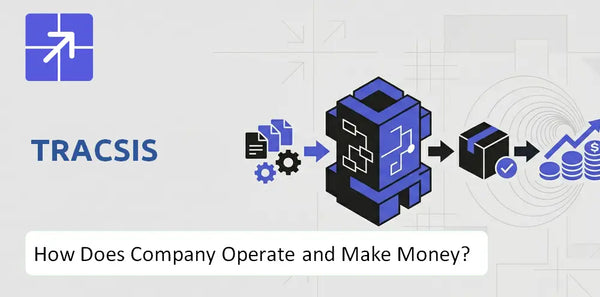
Tracsis sells software and hardware-enabled services to rail operators, turning legacy signals and sensors into data-driven operations. This matters because by 2025 Tracsis expanded international contracts and saw software contributions rise, signaling higher-margin, recurring revenue.
Focus on scalable SaaS modules and maintenance contracts; monitor contract lengths and churn as durability signals. See product detail: Tracsis BCG Matrix Analysis
What Does Tracsis Actually Sell?
Tracsis plc sells mission-critical transport software, remote monitoring hardware, and data-led consultancy that optimise rail and road networks; customers pay for scheduling, asset health, traffic analytics, and integration services that reduce delays and costs.
 Core products and platforms
Tracsis plc offers resource management software for crew rostering and asset scheduling, remote condition monitoring sensors and IoT gateways for rail infrastructure, and traffic data-collection platforms with event management and analytics. Many offerings are delivered as SaaS with on-premise integrations and professional services.
Primary buyers
Buyers include national and regional rail operators, infrastructure owners, light-rail and tram networks, highway authorities, and large private transport firms. Also local governments and event organisers purchase traffic analytics and temporary event-management services.
Tangible customer value
Customers gain lower operational costs via optimized crew and asset utilisation, fewer delay minutes through predictive maintenance, and improved passenger throughput from traffic analytics; Tracsis case work has shown up to 15% reductions in crew-related costs and measurable punctuality gains in pilot projects.
Why this offering stands out
Tracsis transportation technology combines rail analytics software with specialized IoT sensors and consulting to deliver end-to-end solutions – reducing integration friction and providing actionable dashboards. Pricing mixes subscription SaaS, hardware sales, and consultancy fees, creating recurring revenue plus project income; see Mission, Vision, and Values of Tracsis Company for more context.
Tracsis SWOT Analysis
- Complete SWOT Breakdown
- Fully Customizable
- Editable in Excel & Word
- Professional Formatting
- Investor-Ready Format

How Does Tracsis Run Its Business Day to Day?
Tracsis plc runs day-to-day via integrated software hubs and field data teams: engineers deliver SaaS and enterprise integrations while mobile sensor teams gather real-time transport intelligence to feed analytics and operations. Delivery flows from project onboarding to continuous platform integration, supported by embedded client teams for event and infrastructure work.

Operating model: blended SaaS and field services
Tracsis plc combines a classic SaaS delivery model with high-touch field services. Engineers integrate rail analytics software with legacy systems while data teams continuously collect and validate transport scheduling data.
Product or service delivery: subscription plus deployment
Customers access Tracsis transportation technology via licensed SaaS subscriptions and project-based deployments. Onboarding includes system integration, sensor installation, and service-level agreements for real-time operations.
Production, sourcing, or development: in-house engineering and hardware partners
Software platforms and analytics are developed in-house; sensor arrays and IoT devices are sourced from specialist hardware partners. Daily sprints and field calibration cycles keep products aligned with client systems.
Sales channels and distribution: direct B2B and contracts
Tracsis sells direct to rail operators, transport authorities, and event managers via account teams and framework contracts. Renewals and upsells (analytics, predictive maintenance, ticketing modules) drive recurring revenue.
Key assets, systems, or partnerships: integrations and field fleet
Core assets include cloud-based rail analytics software, sensor fleets, and integration connectors to Network Rail and Class I systems. Strategic partnerships with hardware vendors and transport authorities underpin scale.
What makes the model work in practice: embedded teams and real-time data
Embedded client teams, continuous data collection, and tight integration to operational workflows deliver measurable ROI: operators report improved punctuality and optimized staffing using Tracsis workforce management and predictive maintenance tools. See Sales and Marketing Strategy of Tracsis Company
Tracsis Business Model Canvas
- One-time Payment
- No Research Needed – Save Hours of Work
- Built by Experts, Trusted by Consultants
- Instant Download, Ready to Use
- 100% Editable, Fully Customizable

How Does Revenue Flow Through Tracsis?
Revenue flows through Tracsis plc mainly via recurring software licenses and project fees; demand converts through multi-year frameworks so adoption leads to sustained income. Recurring SaaS and long-term rail contracts form the backbone, while hardware, surveys and consultancy bring one-off and entry sales that upsell into software.
Core recurring software and SaaS licenses
Tracsis transportation technology earns most from high-margin rail analytics software and SaaS for rail and public transport; as of the 2025 fiscal year 40 – 50% of revenue is recurring from Rail Technology long-term contracts, so predictability and margin concentrate here.
Project, hardware and consultancy sales
Secondary revenue streams include hardware sales, traffic surveys, ticketing and revenue management solutions, and consultancy projects that often act as pilots; these convert customers into larger software engagements and account for the remaining 50 – 60% of 2025/2026 revenue mix.
Pricing, licensing and service monetization
Tracsis business model monetizes via subscription licensing, multi-year support fees, per-project professional services and hardware margins; frameworks and volume contracts with national operators push multi-year billing and low churn for transport scheduling solutions.
What most strongly drives revenue
Revenue is driven by scale adoption: capturing a small share of operator budgets via workforce management for trains and predictive maintenance gives outsized ROI – a 1% efficiency gain in large rail networks often justifies system costs and cements long-term contracts. See Ownership and Control of Tracsis Company for governance context Ownership and Control of Tracsis Company
Tracsis Marketing Mix
- Complete Marketing Mix Analysis
- Effortlessly Communicate Your Business Strategy
- Investor-Ready Format
- 100% Editable and Customizable
- Clear and Structured Layout

What Makes Tracsis's Model Sustainable or Fragile?
Tracsis plc's model is sustainable due to regulated, mission-critical transport systems and high barriers to entry from proprietary IP, but fragile because of dependence on government spending cycles, a few large contracts, and competition as it shifts toward software-led offerings.
Essential, regulated services sustain demand
Tracsis business model benefits from the essential nature of transport safety, scheduling, and ticketing: operators must comply with regulation, creating recurring demand for rail analytics software and transport scheduling solutions. This underpins predictable revenue from long-term contracts and SaaS for rail and public transport.
Proprietary IP, data assets, and installed base
Tracsis transportation technology rests on proprietary algorithms, historical operations data, and on-network integrations that raise switching costs. Installed systems for ticketing and revenue management solutions, workforce management for trains, and predictive maintenance position the firm for upsell and cross-sell, supporting margin resilience.
Concentration on government-linked contracts
Revenue concentration in the UK and a handful of large public-sector clients creates exposure: if infrastructure budgets fall or procurement priorities shift, Tracsis revenue streams and services could decline. Expansion into North America reduces but does not eliminate this constraint.
Resilience outlook for 2025/2026
Professional judgment for 2025/2026 indicates a stable outlook: management guidance and market evidence point to growing international sales and a software-heavy mix. Analysts price an enterprise value to EBITDA multiple reflecting transition to a pure-play tech provider; however, dependency on a few large contracts and slower-than-expected digital adoption in rail make the model somewhat exposed.
Key action: monitor UK infrastructure budgets, pace of rail digital adoption, and wins in North America; see a recent market analysis for more context Growth Outlook of Tracsis Company.
Tracsis Boston Consulting Group Matrix
- Built by Experts, Trusted by Consultants
- Structured for Consultants, Students, and Founders
- 100% Editable in Microsoft Word & Excel
- Instant Digital Download – Use Immediately
- Compatible with Mac & PC – Fully Unlocked

Related Blogs
- What Is the History of Tracsis Company and How Did It Evolve?
- What Is the Competitive Landscape of Tracsis Company and How Does It Compete?
- What Is the Growth Outlook of Tracsis Company and Where Is It Heading?
- How Does Tracsis Company Reach Customers and Turn Demand into Sales?
- What Do the Mission, Vision, and Core Values of Tracsis Company Reveal?
- Who Are the Core Customers in Tracsis Company's Target Market?
- Who Owns Tracsis Company Today and Who Holds Control?
Frequently Asked Questions
Tracsis sells mission-critical transport software, remote monitoring hardware, and data-led consultancy. Its offerings focus on scheduling, asset health, traffic analytics, and integration services for rail and road networks, helping customers reduce delays, improve operations, and lower costs.
Disclaimer
All information, articles, and product details provided on this website are for general informational and educational purposes only. We do not claim any ownership over, nor do we intend to infringe upon, any trademarks, copyrights, logos, brand names, or other intellectual property mentioned or depicted on this site. Such intellectual property remains the property of its respective owners, and any references here are made solely for identification or informational purposes, without implying any affiliation, endorsement, or partnership.
We make no representations or warranties, express or implied, regarding the accuracy, completeness, or suitability of any content or products presented. Nothing on this website should be construed as legal, tax, investment, financial, medical, or other professional advice. In addition, no part of this site - including articles or product references - constitutes a solicitation, recommendation, endorsement, advertisement, or offer to buy or sell any securities, franchises, or other financial instruments, particularly in jurisdictions where such activity would be unlawful.
All content is of a general nature and may not address the specific circumstances of any individual or entity. It is not a substitute for professional advice or services. Any actions you take based on the information provided here are strictly at your own risk. You accept full responsibility for any decisions or outcomes arising from your use of this website and agree to release us from any liability in connection with your use of, or reliance upon, the content or products found herein.