
How does Trustmark Corporation combine banking, insurance, and wealth management to generate stable returns?
Trustmark Corporation blends retail and commercial banking with a top-tier insurance brokerage and wealth management to diversify revenue and dampen lending-cycle swings. This matters as 2025 revenue mix shifts toward fee income amid regional deposit repricing and loan growth pressures, signaling resilience.
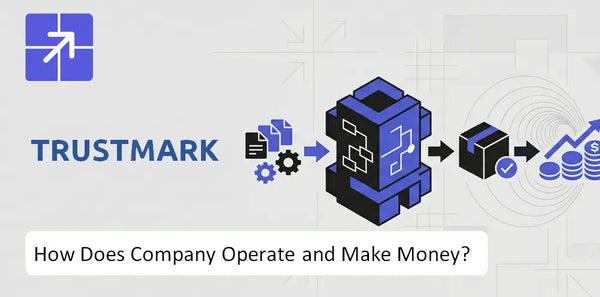
Also note Trustmark's cross-sell strategy: insurance and wealth fees offset net interest margin compression; see product insight at Trustmark BCG Matrix Analysis.
What Does Trustmark Actually Sell?
Trustmark Corporation sells liquidity, credit, deposit accounts, insurance, and wealth services; customers pay for loans, interest-bearing and demand deposits, commercial and personal insurance, and fiduciary and investment management.
 Main financial products and services
Trustmark company provides commercial and industrial loans, residential mortgages, consumer credit lines, and cash management accounts. It also offers commercial property & casualty, employee benefits, and personal insurance via Fisher Brown Bottrell Insurance, plus trust and wealth management services.
Main buyer groups
Buyers include small and mid-size businesses seeking C&I loans and insurance, mortgage borrowers, retail depositors, high-net-worth individuals needing fiduciary services, and employer groups purchasing employee benefits and voluntary benefits.
Customer value delivered
Customers receive liquidity and credit access, insured cash management, risk transfer through commercial and personal insurance, and fiduciary expertise for estate and institutional asset management. Net interest income and fee income drive measurable financial outcomes.
Why this offering stands out
Trustmark business model combines banking margins with insurance fee streams and wealth management AUM fees, creating diversified revenue streams; its scale in bank-owned insurance and employer-distribution channels strengthens distribution and cross-sell. See Growth Outlook of Trustmark Company for context.
Trustmark SWOT Analysis
- Complete SWOT Breakdown
- Fully Customizable
- Editable in Excel & Word
- Professional Formatting
- Investor-Ready Format

How Does Trustmark Run Its Business Day to Day?
Trustmark Company runs daily on a relationship-led delivery model across five states, combining a physical branch network and growing digital platforms to originate loans, sell insurance and deliver wealth services. Local relationship managers source opportunities, centralized risk and product teams underwrite and process, and operations teams handle policy servicing, claims intake, and digital transactions.

Relationship-led operating model
Trustmark Company uses local branch relationship managers to originate deposits, consumer and commercial loans, and insurance leads, then routes files to centralized risk committees and processing centers for final approval and execution.
How customers use products and services
Customers access Trustmark business model offerings via in-branch visits, online and mobile banking, broker/advisor meetings for group and voluntary benefits, or direct enrollment portals for employee benefit plans and wealth accounts.
Product development and underwriting workflow
Product teams design insurance products and wealth offerings in coordination with global carriers and asset managers; underwriting follows standardized credit and risk rules with local intake, automated scoring engines, and centralized exception review.
Sales channels and distribution
Distribution mixes include approximately 160 branches, direct digital channels, broker and advisor networks, and employer partnerships for group benefits and voluntary products across Mississippi, Alabama, Tennessee, Texas, and Florida.
Key systems, infrastructure, and partners
Core banking platforms, a centralized loan origination system, digital banking apps, automated wealth-advisory tools deployed in 2025, and carrier integrations for insurance enable scale; strategic broker and employer partnerships extend reach.
Operational levers that drive efficiency
Trustmark's daily efficiency gains come from shifting transaction volume to digital channels, optimizing the branch footprint (ongoing in 2025 – 2026), and deploying automated advisory and underwriting tools to lower cost-to-serve and improve the efficiency ratio.
Daily credit activity includes front-line relationship sourcing, automated credit scoring for routine cases, and centralized risk committee review for exceptions and larger transactions; claims processing for insurance uses parallel intake queues with carrier handoffs and SLA monitoring to maintain turnaround targets.
In wealth and benefits, advisors run consultative meetings, renewals and enrollment cycles; automated tools introduced in 2025 reduced advisor processing time per client by a material margin, while branch rationalization lowered fixed branch costs versus 2024 levels.
Operational metrics tracked daily include deposit flows, loan pipeline counts, delinquency rates, insurance premium retention, policy renewal rates, digital adoption percentage, and efficiency ratio; these feed weekly portfolio reviews and monthly executive risk committees to protect asset quality and margins.
See related analysis on sales and channel strategy: Sales and Marketing Strategy of Trustmark Company
Trustmark Business Model Canvas
- One-time Payment
- No Research Needed – Save Hours of Work
- Built by Experts, Trusted by Consultants
- Instant Download, Ready to Use
- 100% Editable, Fully Customizable

How Does Revenue Flow Through Trustmark?
Revenue at Trustmark Corporation flows through two main channels: Net Interest Income from lending-deposit spreads and Non-Interest Income from fees, commissions, and wealth-management charges. Demand for loans, deposits, insurance, and AUM services converts into recurring interest and fee revenue across multiple customer touchpoints.
Net Interest Income: Core Lending Spread
Net Interest Income is the primary driver, produced by interest on approximately $13.5 billion in loans and securities versus interest paid on a $15.5 billion deposit base. Trustmark targets a net interest margin between 3.20% and 3.40% as of early 2026, so loan demand and deposit cost management directly translate into core revenue.
Non-Interest Income: Fees, Insurance, and Wealth
Non-interest income makes up nearly 30% of total revenue and includes recurring commission income from insurance premiums, service charges on deposit accounts, and asset-based fees on over $6 billion in assets under management in the wealth division. These streams convert customer relationships into repeatable revenue beyond lending.
Monetization Model: Spread, Fees, and Commissions
Trustmark monetizes through interest spreads (loans minus deposit costs), recurring commissions on insurance premiums, and percentage-based asset management fees; it also collects service and transactional fees on deposit accounts. Distribution uses direct channels plus brokers and employer partnerships to scale sales.
Primary Revenue Drivers: Mix, Rates, and Cross-Sell
Revenue is most strongly driven by net interest margin, loan growth, deposit cost control, and cross-sell penetration of insurance and wealth products into existing customer relationships. A higher AUM or insurance premium base and stable deposit funding each lift recurring revenue and improve profitability; see company culture and distribution in this Mission, Vision, and Values of Trustmark Company.
Trustmark Marketing Mix
- Complete Marketing Mix Analysis
- Effortlessly Communicate Your Business Strategy
- Investor-Ready Format
- 100% Editable and Customizable
- Clear and Structured Layout

What Makes Trustmark's Model Sustainable or Fragile?
Trustmark company's model rests on diversified fee income – notably insurance brokerage and employee benefits – that cushions net interest income swings, but it is vulnerable to Southeast concentration, CRE exposure, and regional catastrophe risk.
Steady fee income from benefits and brokerage
Trustmark business model earns recurring non-interest revenue from Trustmark insurance products and employee benefits, with brokerage and voluntary benefits smoothing earnings when the federal funds rate shifts. In 2025, fee income comprised a material portion of total revenue, helping decouple earnings from short-term rate moves.
Key assets: distribution and underwriting
How Trustmark works relies on a broad broker and employer distribution network plus in-house claims processing and underwriting capabilities; these drive scale in Trustmark group benefits explained and reduce third-party costs. Proprietary underwriting and claims tech also support margins on insurance products.
Dependencies: geography and commercial real estate
Concentration in the Southeast ties revenue to regional employment and migration trends, and exposure to commercial real estate loans elevates sensitivity to office market weakness. Trustmark distribution channels and brokers focus in Sunbelt states, so local economic downturns or severe weather weigh on premiums and claims.
Durability in 2025/2026: cautious but resilient
Professional judgment for 2025/2026 views Trustmark Corporation as a conservative operator: capital ratios and liquidity buffers remain solid, non-performing asset ratio holds below 0.50 percent, and diversified fee streams provide a buffer. Still, growth is tied to corporate migration into the Sunbelt and CRE cycles, making upside moderate and downside concentrated.
For distribution and target-market context see Target Customers and Market of Trustmark Company
Trustmark Boston Consulting Group Matrix
- Built by Experts, Trusted by Consultants
- Structured for Consultants, Students, and Founders
- 100% Editable in Microsoft Word & Excel
- Instant Digital Download – Use Immediately
- Compatible with Mac & PC – Fully Unlocked

Related Blogs
- What Is the History of Trustmark Company and How Did It Evolve?
- What Is the Competitive Landscape of Trustmark Company and How Does It Compete?
- What Is the Growth Outlook of Trustmark Company and Where Is It Heading?
- How Does Trustmark Company Reach Customers and Turn Demand into Sales?
- What Do the Mission, Vision, and Core Values of Trustmark Company Reveal?
- Who Are the Core Customers in Trustmark Company's Target Market?
- Who Owns Trustmark Company Today and Who Holds Control?
Frequently Asked Questions
Trustmark sells liquidity, credit, deposit accounts, insurance, and wealth services. Its offerings include commercial and industrial loans, residential mortgages, consumer credit lines, cash management accounts, commercial and personal insurance, plus trust and wealth management services for different customer groups.
Disclaimer
All information, articles, and product details provided on this website are for general informational and educational purposes only. We do not claim any ownership over, nor do we intend to infringe upon, any trademarks, copyrights, logos, brand names, or other intellectual property mentioned or depicted on this site. Such intellectual property remains the property of its respective owners, and any references here are made solely for identification or informational purposes, without implying any affiliation, endorsement, or partnership.
We make no representations or warranties, express or implied, regarding the accuracy, completeness, or suitability of any content or products presented. Nothing on this website should be construed as legal, tax, investment, financial, medical, or other professional advice. In addition, no part of this site - including articles or product references - constitutes a solicitation, recommendation, endorsement, advertisement, or offer to buy or sell any securities, franchises, or other financial instruments, particularly in jurisdictions where such activity would be unlawful.
All content is of a general nature and may not address the specific circumstances of any individual or entity. It is not a substitute for professional advice or services. Any actions you take based on the information provided here are strictly at your own risk. You accept full responsibility for any decisions or outcomes arising from your use of this website and agree to release us from any liability in connection with your use of, or reliance upon, the content or products found herein.