
How does Ultralife Corporation embed mission-critical power and communications into long-term government and medical programs?
Ultralife Corporation designs and manufactures engineered batteries and comms for defense and medical customers, creating high switching costs through certifications and multi-year contracts. This matters as 2025 defense awards and medical device approvals underpin predictable revenue streams.
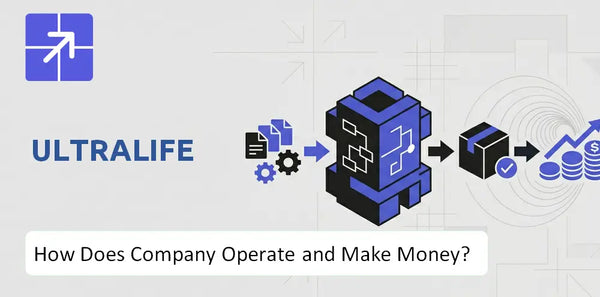
Focus on contract pipelines and certification renewals; monitor backlog trends and win rates to gauge near-term revenue visibility. See product positioning in this analysis: Ultralife BCG Matrix Analysis
What Does Ultralife Actually Sell?
Ultralife Corporation sells high-performance energy solutions and ruggedized communications equipment, including primary and secondary lithium batteries, wearable and pack batteries for medical and military use, and RF amplifiers and vehicle integration kits for tactical radios. Customers pay for energy density, durability in extreme environments, and OEM-ready integration that supports mission-critical systems.
 Core energy and communications products
Ultralife products include primary (non-rechargeable) lithium batteries and secondary (rechargeable) lithium packs such as the Conformal Wearable Battery (CWB), specialized power packs for ventilators, infusion pumps, and surgical robots, plus RF amplifiers, power supplies, and vehicle integration kits for tactical radios.
Primary buyers and channels
Buyers are defense agencies and prime contractors, medical device OEMs and hospitals, and industrial OEMs needing rugged power and communications; sales mix skews toward government procurement and long-term OEM contracts.
Customer value and use cases
Customers get higher energy density, reliability in extreme temperatures and shock, compact form factors like the CWB for soldiers, and certified integration that reduces time-to-deploy for medical devices and tactical communications – driving repeat and contracted revenue.
Differentiators and buying friction
Ultralife company stands out for ruggedized engineering, OEM integration support, and compliance with military standards; long sales cycles exist but are offset by multiyear government contracts and recurring aftermarket sales for replacements and repair parts. Read more on corporate direction in Mission, Vision, and Values of Ultralife Company
Ultralife SWOT Analysis
- Complete SWOT Breakdown
- Fully Customizable
- Editable in Excel & Word
- Professional Formatting
- Investor-Ready Format

How Does Ultralife Run Its Business Day to Day?
Ultralife Company runs daily as a high-mix, low-to-medium volume manufacturer serving medical, industrial, and defense customers, balancing steady commercial production with project-based defense work and IDIQ task orders; core systems include ERP-driven production scheduling, quality management, and DoD contract management to convert orders into delivered battery and power solutions.

Operating model: mixed commercial and defense manufacturing
Ultralife company runs a dual-mode operating model: steady-state commercial manufacturing for medical and industrial clients and project-driven defense production under IDIQ frameworks. Day-to-day work focuses on converting purchase orders and DoD task orders into scheduled work packages using ERP systems and MRP (material requirements planning).
Product and service delivery: contract-led fulfillment
Customers access Ultralife batteries and Ultralife products via direct contracts, OEM supply agreements, and government task orders; deliveries follow indexed production runs, lot tracking, and certified shipping. Medical customers and industrial OEMs place recurring orders while defense task orders drive batch production and prioritized lead times.
Production, sourcing, and development: regional facilities and controlled suppliers
Manufacturing is distributed across the United States, United Kingdom, and China with precision quality control, supplier-managed components, and in-house assembly for cells, packs, and power systems. Daily activities include incoming inspection, PCB assembly, cell integration, environmental testing, and documentation for regulatory compliance (medical and military standards).
Sales channels and distribution: direct, OEM, and government procurement
Main channels are direct sales to medical and industrial OEMs, government procurement via IDIQ contracts, and aftermarket spare parts and service agreements. Logistics teams manage lot-traceable distribution, drop shipments to OEMs, and prioritized dispatch for DoD task orders.
Key assets, systems, and partnerships: facilities, ERP, and DoD relationships
Key assets include production plants in the US, UK, and China, test labs, and certified clean assembly lines; systems include ERP/MRP, QMS (quality management system), and lot-traceability software. Strategic OEM partnerships and long-standing DoD IDIQ agreements support recurring revenue and capacity planning.
What makes the model work in practice: quality, contract structure, and flexibility
The model depends on stringent quality control, regulatory compliance, and IDIQ contract predictability; these drive steady cash flow from defense work and recurring commercial orders. Daily discipline in lot tracking, first-article inspections, and task-order fulfillment keeps throughput reliable and supports Ultralife financials and Ultralife revenue streams.
Operational metrics monitored daily include yield rates, first-pass inspection rates, backlog versus IDIQ ceiling, and inventory days; for 2025 Ultralife recorded year-to-date revenue of $136.2 million (most recent fiscal reporting) with defense and medical segments representing the majority of recurring contract value – see related market detail in Target Customers and Market of Ultralife Company.
Ultralife Business Model Canvas
- One-time Payment
- No Research Needed – Save Hours of Work
- Built by Experts, Trusted by Consultants
- Instant Download, Ready to Use
- 100% Editable, Fully Customizable

How Does Revenue Flow Through Ultralife?
Revenue for Ultralife Company flows mainly from two segments: Battery & Energy Products and Communications Systems, turning contracts and design-ins into production sales as orders convert. Demand is monetized via direct government and Tier 1 defense contractor sales plus long-term OEM supply agreements that create recurring streams.
Primary revenue: Battery & Energy Products
Ultralife batteries represent the largest revenue source, supplying military-grade and commercial lithium solutions to government procurement and Tier 1 defense contractors; these contracts drive high-ticket, often multi-year orders and account for the bulk of Ultralife revenue streams in 2025.
Secondary revenue: Communications Systems
Communications Systems sales and related services provide complementary income, including radios and mission-critical subsystems sold to defense and commercial clients, plus aftermarket spare parts and integration work that extend lifetime customer value.
Pricing and monetization model
Ultralife monetizes via direct product sales, contract pricing for government and defense programs, and fixed-volume supply agreements with medical device OEMs; pricing reflects certification, customization, and long-term supply commitments that lock recurring revenue.
What drives revenue most
The key driver is the design-in process: engineers specifying Ultralife batteries during product development converts into multi-year production revenue. Financial health is tracked via book-to-bill and backlog metrics; in FY2025 total backlog stabilized above $100,000,000, giving a visible roadmap for revenue conversion as production milestones are met. See Competitive Landscape of Ultralife Company for context on market positioning.
Ultralife Marketing Mix
- Complete Marketing Mix Analysis
- Effortlessly Communicate Your Business Strategy
- Investor-Ready Format
- 100% Editable and Customizable
- Clear and Structured Layout

What Makes Ultralife's Model Sustainable or Fragile?
Ultralife company's model is sustainable through deep embedding in military programs of record and long-term medical OEM contracts, creating high switching costs and steady recurring orders; it is fragile due to sensitivity to US defense budget swings and lithium-ion supply disruptions. Structural strengths include certification barriers and program longevity; key risks are raw-material inflation and contract concentration.
Program of record anchoring
Being on military programs of record gives Ultralife batteries multi-year demand visibility and bidding advantage; replacement requires costly re-certification, raising competitors' entry costs and supporting steady Ultralife revenue streams.
OEM certification moat
Long-standing certifications with medical OEMs lock Ultralife products into device lifecycles, creating durable service and aftermarket spare-parts revenue while limiting churn.
Dependency on defense funding
Ultralife's fiscal health depends materially on US defense procurement; a 1% shift in defense allocations to related programs can materially change contract timing and Ultralife financials for a fiscal year.
Supply-chain and raw-material risk
Exposure to lithium-ion cell pricing and concentrate availability makes margins volatile; management must control input inflation to preserve target operating margins near 10% to 12% in 2025/2026 as production scales for next-gen wearable soldier technology.
Scale-up and margin pressure
Current growth phase in 2025/2026 involves scaling manufacturing capacity for wearable soldier systems; revenue growth is visible but operating margins must absorb inflationary input costs and near-term ramp costs to reach historical targets.
Resilience outlook for 2025/2026
Overall the Ultralife business model looks cautiously resilient: strong program ties and OEM locks support recurring revenue, while concentration in defense and lithium supply-chain exposure make it somewhat fragile unless procurement diversity and input-cost hedges improve; see Growth Outlook of Ultralife Company for detailed context.
Ultralife Boston Consulting Group Matrix
- Built by Experts, Trusted by Consultants
- Structured for Consultants, Students, and Founders
- 100% Editable in Microsoft Word & Excel
- Instant Digital Download – Use Immediately
- Compatible with Mac & PC – Fully Unlocked

Related Blogs
- What Is the History of Ultralife Company and How Did It Evolve?
- What Is the Competitive Landscape of Ultralife Company and How Does It Compete?
- What Is the Growth Outlook of Ultralife Company and Where Is It Heading?
- How Does Ultralife Company Reach Customers and Turn Demand into Sales?
- What Do the Mission, Vision, and Core Values of Ultralife Company Reveal?
- Who Are the Core Customers in Ultralife Company's Target Market?
- Who Owns Ultralife Company Today and Who Holds Control?
Frequently Asked Questions
Ultralife sells high-performance energy solutions and ruggedized communications equipment. Its products include primary and secondary lithium batteries, wearable and pack batteries for medical and military use, RF amplifiers, power supplies, and vehicle integration kits for tactical radios. The focus is on energy density, durability, and OEM-ready integration.
Disclaimer
All information, articles, and product details provided on this website are for general informational and educational purposes only. We do not claim any ownership over, nor do we intend to infringe upon, any trademarks, copyrights, logos, brand names, or other intellectual property mentioned or depicted on this site. Such intellectual property remains the property of its respective owners, and any references here are made solely for identification or informational purposes, without implying any affiliation, endorsement, or partnership.
We make no representations or warranties, express or implied, regarding the accuracy, completeness, or suitability of any content or products presented. Nothing on this website should be construed as legal, tax, investment, financial, medical, or other professional advice. In addition, no part of this site - including articles or product references - constitutes a solicitation, recommendation, endorsement, advertisement, or offer to buy or sell any securities, franchises, or other financial instruments, particularly in jurisdictions where such activity would be unlawful.
All content is of a general nature and may not address the specific circumstances of any individual or entity. It is not a substitute for professional advice or services. Any actions you take based on the information provided here are strictly at your own risk. You accept full responsibility for any decisions or outcomes arising from your use of this website and agree to release us from any liability in connection with your use of, or reliance upon, the content or products found herein.