
How does Vertex Inc. calculate and remit indirect taxes while serving enterprise finance teams?
Vertex Inc. automates indirect-tax calculation, reporting, and remittance for global enterprises, reducing audit risk and errors. This matters as 2025 sees accelerating digital tax mandates and expanded VAT coverage across APAC and EU, raising compliance costs for multinationals.
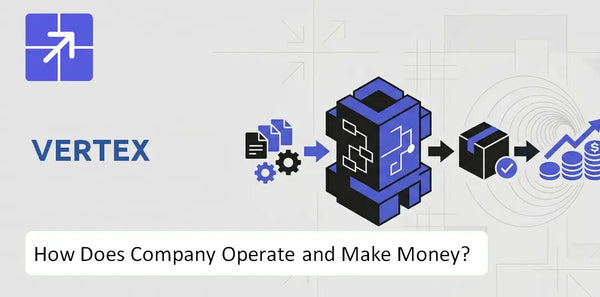
Vertex Inc. sells cloud and on-premise tax engines, integration services, and managed compliance; focus on scalability drove a 2025 uptick in cloud deployments. See Vertex BCG Matrix Analysis for product positioning.
What Does Vertex Actually Sell?
Vertex Inc. sells enterprise-grade tax automation software and managed tax services. Customers pay for real-time tax calculation engines, a proprietary database of tax rules, SaaS and on-premise platforms, e-invoicing and tax-reporting modules, plus optional end-to-end filing and remittance managed services.
 Core tax automation platform and components
Vertex Inc. offers a real-time tax calculation engine integrated into ERP, e-commerce and POS systems; cloud SaaS and on-premise deployments; specialized e-invoicing, tax reporting modules, and a proprietary tax-rule database with over 300 million rules across more than 19,000 jurisdictions.
Who buys Vertex Inc.'s solutions
Buyers include multinational retailers, manufacturers, B2B distributors, financial services firms, and highly regulated industries (pharma, telecom) that need compliant cross-border tax calculations and reporting at scale.
Value customers receive
Customers gain reduced tax compliance risk, automated correct-rate application per transaction, faster close cycles, and lower audit exposure; large customers report process savings and accuracy improvements that justify subscription and implementation costs.
Why Vertex Inc.'s offering stands out
Vertex Inc. differentiates via scale of its tax-rule database, real-time integration capabilities, hybrid deployment (SaaS and on-premise), and optional managed remittance services – making adoption easier for global enterprises and regulated sectors; see additional context on ownership here: Ownership and Control of Vertex Company
Vertex SWOT Analysis
- Complete SWOT Breakdown
- Fully Customizable
- Editable in Excel & Word
- Professional Formatting
- Investor-Ready Format

How Does Vertex Run Its Business Day to Day?
Vertex Inc. runs daily on real-time tax content updates, high-availability cloud tax engines, and deep integrations with enterprise ERPs and e-commerce platforms to deliver low-latency tax calculation and compliance services.

Operating model: continuous content + platform uptime
Vertex Inc. teams of tax researchers, policy analysts, and engineers monitor legislation and update a central tax content repository so client systems always reference current rates and rules. Daily ops prioritize platform availability and millisecond response SLAs to avoid checkout or invoicing delays.
Product delivery: API-first, embedded in back-office systems
Customers access Vertex Inc. via REST/JSON APIs, SaaS portals, and certified connectors for ERP/e-commerce systems. Contracts are subscription or consumption-based, with enterprise SLAs and tiered support for global tax footprints.
Development: content engineering and cloud ops
Tax content is curated by legal and tax experts, then encoded into rules engines by software teams. Platform engineering runs auto-scaling cloud clusters and CI/CD pipelines to push content and code safely across regions multiple times per day.
Sales channels: partnerships and direct enterprise sales
Vertex Inc. sells through direct enterprise sales, channel partners, and certified integrations embedded in SAP, Oracle, and Microsoft ecosystems, making it the default tax solution when customers upgrade ERP or expand geographies.
Key assets: tax content, integrations, cloud infrastructure
Core assets include a proprietary tax content database, certified connectors to SAP/Oracle/Microsoft, and globally distributed cloud compute. Strong partnerships with ERP vendors drive renewals and new-client adoption.
Why it works: accuracy, low latency, and ecosystem locks
Accuracy of tax content reduces audit risk; millisecond latency preserves checkout conversion; deep ERP integrations create high switching costs, yielding predictable recurring revenue and durable customer relationships. See History and Background of Vertex Company for more context: History and Background of Vertex Company
Vertex Business Model Canvas
- One-time Payment
- No Research Needed – Save Hours of Work
- Built by Experts, Trusted by Consultants
- Instant Download, Ready to Use
- 100% Editable, Fully Customizable

How Does Revenue Flow Through Vertex?
Vertex Inc. converts demand into revenue mainly via recurring subscriptions tied to software usage and cloud deployments, with professional services and one-time implementation fees adding variability. Subscriptions drive predictable cash flow and scale with customer transaction volume, module count, and geography.
Main revenue stream: Recurring subscriptions
Subscription fees made up approximately 86 percent of total revenue as of early 2026, coming from multi-year contracts priced by transaction volume, module usage, and geographic scope. Recurring revenue provides high predictability and underpins valuation multiples for Vertex Inc.
Additional revenue: Services and one-time fees
Professional services generate one-time revenue for complex implementations and configurations, especially for large enterprises migrating tax processes. There are also upgrade, integration, and training fees that complement subscription income.
Pricing and monetization: Usage and modular pricing
Vertex monetizes primarily via subscription contracts with tiered pricing based on transaction volumes, number of modules, and geographic coverage; cloud deployments are charged on a SaaS basis. Multi-year deals and volume tiers reduce churn and increase lifetime value.
What drives revenue most: Cloud growth and net retention
Cloud-based deployments have grown at annual rates above 27 percent, and Net Revenue Retention remains consistently above 110 percent, indicating strong upsell and cross-sell as customers expand into new tax jurisdictions. These two metrics are the primary levers for recurring revenue expansion; see related market context in Competitive Landscape of Vertex Company.
Vertex Marketing Mix
- Complete Marketing Mix Analysis
- Effortlessly Communicate Your Business Strategy
- Investor-Ready Format
- 100% Editable and Customizable
- Clear and Structured Layout

What Makes Vertex's Model Sustainable or Fragile?
Vertex Inc.'s model is sustainable due to high switching costs and a decades-long proprietary tax dataset, yet fragile because it depends on ERP partners and successful cloud migration. Structural tailwinds like real-time tax reporting and e-invoicing mandates support growth, while native tax tools from SAP or Oracle and failure to migrate legacy on – prem clients pose clear risks.
Moat: Integration and Compliance Risk Aversion
Clients embed Vertex Inc. into global ERP systems because replacing tax engines creates compliance risk. That creates high switching costs and recurring revenue from maintenance, licensing, and compliance updates.
Key Assets: Proprietary Tax Data and Partner Ecosystem
Vertex Inc. controls decades of tax-rate, jurisdiction, and ruling data plus integrations with SAP, Oracle, and Microsoft. These assets, plus professional services, support deployment and sticky enterprise contracts.
Dependencies: ERP Partners and Regulatory Tailwinds
Revenue depends on ERP ecosystems (SAP, Oracle) and on mandates like e-invoicing in Europe/Latin America driving demand. Concentration risk exists if partners develop native tax tooling or change integration terms.
Durability in 2025 – 2026: Cautiously Resilient
For 2025 and 2026, the professional judgment is Vertex Inc. is positioned for steady growth if it completes cloud migrations and defends enterprise accounts against mid-market rivals like Avalara. If cloud migration stalls or SAP/Oracle launch native competition, margin pressure could follow.
Relevant metrics: as of fiscal 2025, migration progress and cloud ARR conversion rate will determine near-term margin expansion; monitor renewal rates, R&D spend vs. revenue, and partner integration roadmap. See related company context in Mission, Vision, and Values of Vertex Company
Vertex Boston Consulting Group Matrix
- Built by Experts, Trusted by Consultants
- Structured for Consultants, Students, and Founders
- 100% Editable in Microsoft Word & Excel
- Instant Digital Download – Use Immediately
- Compatible with Mac & PC – Fully Unlocked

Related Blogs
- What Is the History of Vertex Company and How Did It Evolve?
- What Is the Competitive Landscape of Vertex Company and How Does It Compete?
- What Is the Growth Outlook of Vertex Company and Where Is It Heading?
- How Does Vertex Company Reach Customers and Turn Demand into Sales?
- What Do the Mission, Vision, and Core Values of Vertex Company Reveal?
- Who Are the Core Customers in Vertex Company's Target Market?
- Who Owns Vertex Company Today and Who Holds Control?
Frequently Asked Questions
Vertex sells enterprise-grade tax automation software and managed tax services. Its offerings include a real-time tax calculation engine, a proprietary tax-rule database, SaaS and on-premise platforms, e-invoicing and tax-reporting modules, and optional filing and remittance services for enterprises that need compliant tax handling at scale.
Disclaimer
All information, articles, and product details provided on this website are for general informational and educational purposes only. We do not claim any ownership over, nor do we intend to infringe upon, any trademarks, copyrights, logos, brand names, or other intellectual property mentioned or depicted on this site. Such intellectual property remains the property of its respective owners, and any references here are made solely for identification or informational purposes, without implying any affiliation, endorsement, or partnership.
We make no representations or warranties, express or implied, regarding the accuracy, completeness, or suitability of any content or products presented. Nothing on this website should be construed as legal, tax, investment, financial, medical, or other professional advice. In addition, no part of this site - including articles or product references - constitutes a solicitation, recommendation, endorsement, advertisement, or offer to buy or sell any securities, franchises, or other financial instruments, particularly in jurisdictions where such activity would be unlawful.
All content is of a general nature and may not address the specific circumstances of any individual or entity. It is not a substitute for professional advice or services. Any actions you take based on the information provided here are strictly at your own risk. You accept full responsibility for any decisions or outcomes arising from your use of this website and agree to release us from any liability in connection with your use of, or reliance upon, the content or products found herein.