
How does White Mountains Insurance Group, Ltd. deploy permanent capital to build and monetize insurance and financial services businesses?
White Mountains Insurance Group, Ltd. uses its balance sheet as permanent capital to buy, grow, and sell insurance and financial-services subsidiaries, aiming to raise adjusted book value per share over time. This matters because in 2025 the firm reported capital allocation gains tied to strategic exits and investment income, signaling active portfolio management.
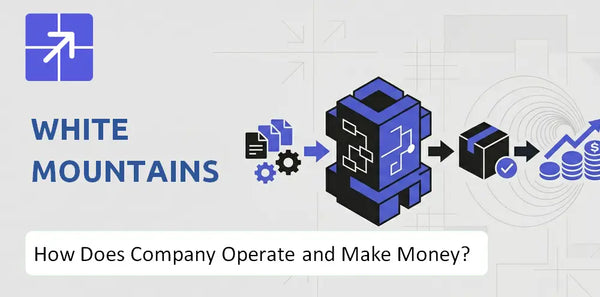
Focus on underwriting margins and investment returns; a short-term loss can be offset by strategic exits that boost adjusted book value. See White Mountains BCG Matrix Analysis for a portfolio view.
What Does White Mountains Actually Sell?
White Mountains Insurance Group sells risk capacity, financial guarantees, and long-term capital solutions via operating subsidiaries; customers pay for risk transfer, credit enhancement, and patient capital that stabilizes balance sheets and lowers financing costs.
 Core Risk and Capital Solutions
White Mountains Insurance Group's largest platform, Ark, markets specialty property and casualty insurance and reinsurance for complex risks such as marine, energy, casualty, and aviation; Build America Mutual (BAM) offers financial guaranty insurance for US municipal bonds; Kudu provides passive, long-term capital to boutique asset managers in return for a share of fees and performance.
Primary Buyers and Counterparties
Buyers include global insurers and reinsurers seeking capacity, corporate and specialty-risk clients needing tailored P&C coverage, US municipal issuers using BAM to lower borrowing costs, and boutique asset managers that take Kudu capital to scale fee income and AUM.
Value Delivered to Customers
Clients receive financial security through risk transfer and credit enhancement, access to White Mountains Insurance Group's capital and balance-sheet strength, and flexible multi-year financing that aligns incentives – translating to lower debt costs, predictable claims handling, and scalable fee revenue for managers.
Differentiators in the Market
White Mountains company business model combines specialty underwriting (Ark), public finance guarantees (BAM), and passive capital investments (Kudu), creating diversified revenue streams; in 2025 Ark reported material premium growth while BAM leverages a high-rated guarantee to cut muni borrowing costs, and Kudu captures fee upside – together supporting White Mountains financial performance and underwriting profit sources. See Competitive Landscape of White Mountains Company for context: Competitive Landscape of White Mountains Company
White Mountains SWOT Analysis
- Complete SWOT Breakdown
- Fully Customizable
- Editable in Excel & Word
- Professional Formatting
- Investor-Ready Format

How Does White Mountains Run Its Business Day to Day?
White Mountains Insurance Group runs as a capital allocator and decentralized insurance holding; a lean parent team sets strategy and capital moves while subsidiaries execute underwriting, asset management, and municipal guarantees day to day via specialist workflows and tight risk controls.

Decentralized operating model and capital steering
The operating model centers on a small executive team at White Mountains Insurance Group that focuses on M&A sourcing, capital management, and share buybacks when market price is below intrinsic value; subsidiaries run with operational autonomy under capital and governance limits set by the parent.
How customers access insurance and investment products
Customers reach Ark's specialty Lloyd's products through broker networks, municipal issuers access BAM's guarantees via public finance channels, and asset managers partner with Kudu through minority-stake agreements that keep client-facing investment teams intact.
Underwriting, credit monitoring, and asset stakes
Underwriters at Ark price specialty risks daily within Lloyd's syndicates; BAM's team continuously monitors credit of over 3,000 US municipal issuers to protect its guaranteed bond book; Kudu holds >20 minority stakes and supports distribution and governance without directing daily investment decisions.
Sales channels and distribution networks
Distribution runs via Lloyd's brokers for specialty lines, municipal finance advisors and underwriters for BAM guarantees, and partner networks and institutional platforms for Kudu-backed managers; parent-level investor relations and strategic M&A sourcing supplement deal flow.
Key assets, systems, and capital resources
Key assets include White Mountains Insurance Group's investment portfolio (fixed income and equities), Lloyd's platform access for Ark, BAM's municipal guarantee infrastructure, and Kudu's minority stakes; centralized treasury and reinsurance relationships provide liquidity and risk transfer.
Why the model is effective day to day
The model works because specialized subsidiaries keep focused cultures and technical expertise while the parent supplies deep capital reserves, active capital allocation (including opportunistic buybacks), and conservative risk governance that stabilizes underwriting cycles and supports growth.
See operational roles and market focus in more detail in this related piece: Target Customers and Market of White Mountains Company
White Mountains Business Model Canvas
- One-time Payment
- No Research Needed – Save Hours of Work
- Built by Experts, Trusted by Consultants
- Instant Download, Ready to Use
- 100% Editable, Fully Customizable

How Does Revenue Flow Through White Mountains ?
Revenue flows into White Mountains Insurance Group, Ltd. through underwriting, structured municipal finance, and asset-management earnings; demand for insurance and financing converts into premiums, fees, and profit-share distributions that fund operations and investments.
Ark underwriting: core premium engine
Ark produces the largest revenue volume, with managed gross written premiums exceeding 2,000,000,000 dollars annually as of early 2026. Ark monetizes that volume by keeping the combined ratio consistently below 90%, turning premium inflows into underwriting profit and underwriting cash flow.
BAM municipal finance and upfront fees
BAM generates revenue via upfront premiums and member surplus contributions from municipal bond issuers; those one-time and recurring capital contributions convert demand for municipal credit into immediate cash and improved capital cushions for underwriting risk.
Kudu and asset-manager earnings share
Kudu supplies steady cash through its share of earnings from partner asset managers who manage tens of billions in assets under management; fee and profit-share streams provide recurring operating cash independent of underwriting cycles.
Investment portfolio: interest and capital gains
White Mountains maintains an investment portfolio with approximately 1,500,000,000 dollars in cash and fixed-income securities; interest income and realized/unrealized capital gains supplement underwriting and fee revenue and are routinely reinvested into new businesses or deployed for capital management.
Pricing and monetization mechanics
Revenue is monetized through insurance premiums (periodic and upfront), municipal surplus contributions, management fees, and profit-share distributions; effective combined ratios and investment yield translate top-line premiums into net income.
Primary revenue drivers
Underwriting profitability (combined ratio), premium growth at Ark, municipal origination volume at BAM, and asset-manager AUM growth for Kudu are the strongest revenue levers; investment yields on the 1.5 billion portfolio amplify returns during low-claim periods. See Sales and Marketing Strategy of White Mountains Company for related go-to-market context: Sales and Marketing Strategy of White Mountains Company
White Mountains Marketing Mix
- Complete Marketing Mix Analysis
- Effortlessly Communicate Your Business Strategy
- Investor-Ready Format
- 100% Editable and Customizable
- Clear and Structured Layout

What Makes White Mountains 's Model Sustainable or Fragile?
White Mountains Insurance Group's model is sustainable due to a fortress balance sheet and a dominant municipal-bond insurance franchise, yet fragile from catastrophe exposure at Ark and interest-rate sensitivity that affects investment income and guarantee valuations.
Fortress capital and opportunistic divestments
White Mountains Insurance Group keeps resilience through high capital adequacy and investment-grade assets; historically it has realized multi-billion dollar exits by selling subsidiaries at peak prices, preserving optionality and shareholder value.
Dominant municipal bond franchise (BAM)
BAM often holds greater than 50 percent market share of insured new municipal issues, creating a durable competitive moat that generates steady fees and guarantees supporting White Mountains company business model and White Mountains insurance operations.
Key assets and capabilities
Deep insurance underwriting teams, a diversified investment portfolio tilted to high-quality fixed income, and substantial dry powder allow disciplined deployment in a high-rate environment; management targets 12 to 15 percent annual growth in adjusted book value per share for 2025/2026.
Dependencies and concentration risks
The model depends on municipal market health, BAM's continued market share, and low-loss reinsurance availability; catastrophe exposure at Ark and concentrated insured portfolios create tail risk that can spike loss ratios and capital strain.
Interest-rate and valuation sensitivity
Rising or volatile interest rates change investment income and mark-to-market values of municipal guarantees; a prolonged rate shift could compress underwriting margins and alter White Mountains investment strategy outcomes materially.
Durability assessment for 2025/2026
For 2025/2026 the professional judgment is the model looks resilient: strong capital, dominant BAM position, and disciplined capital allocation outweigh near-term risks, though a cluster of major catastrophes or sustained adverse rate moves would expose fragility in underwriting profit sources and reinsurance strategy.
See practical context in the company's mission and governance in this piece: Mission, Vision, and Values of White Mountains Company
White Mountains Boston Consulting Group Matrix
- Built by Experts, Trusted by Consultants
- Structured for Consultants, Students, and Founders
- 100% Editable in Microsoft Word & Excel
- Instant Digital Download – Use Immediately
- Compatible with Mac & PC – Fully Unlocked

Related Blogs
- What Is the History of White Mountains Company and How Did It Evolve?
- What Is the Competitive Landscape of White Mountains Company and How Does It Compete?
- What Is the Growth Outlook of White Mountains Company and Where Is It Heading?
- How Does White Mountains Company Reach Customers and Turn Demand into Sales?
- What Do the Mission, Vision, and Core Values of White Mountains Company Reveal?
- Who Are the Core Customers in White Mountains Company's Target Market?
- Who Owns White Mountains Company Today and Who Holds Control?
Frequently Asked Questions
White Mountains sells risk capacity, financial guarantees, and long-term capital solutions through its operating subsidiaries. That includes specialty insurance and reinsurance at Ark, financial guaranty insurance at BAM, and passive capital for boutique asset managers through Kudu. Customers pay for risk transfer, credit enhancement, and patient capital that can improve financing terms.
Disclaimer
All information, articles, and product details provided on this website are for general informational and educational purposes only. We do not claim any ownership over, nor do we intend to infringe upon, any trademarks, copyrights, logos, brand names, or other intellectual property mentioned or depicted on this site. Such intellectual property remains the property of its respective owners, and any references here are made solely for identification or informational purposes, without implying any affiliation, endorsement, or partnership.
We make no representations or warranties, express or implied, regarding the accuracy, completeness, or suitability of any content or products presented. Nothing on this website should be construed as legal, tax, investment, financial, medical, or other professional advice. In addition, no part of this site - including articles or product references - constitutes a solicitation, recommendation, endorsement, advertisement, or offer to buy or sell any securities, franchises, or other financial instruments, particularly in jurisdictions where such activity would be unlawful.
All content is of a general nature and may not address the specific circumstances of any individual or entity. It is not a substitute for professional advice or services. Any actions you take based on the information provided here are strictly at your own risk. You accept full responsibility for any decisions or outcomes arising from your use of this website and agree to release us from any liability in connection with your use of, or reliance upon, the content or products found herein.