
How does Xponential Fitness package and scale boutique fitness brands to generate franchise royalties and brand fees?
Xponential Fitness bundles niche workout concepts into franchisable brands, selling franchises and collecting royalties to capture high-margin, asset-light income. This matters because by 2025 Xponential reported expanding franchise locations and rising royalty revenue, validating the model.
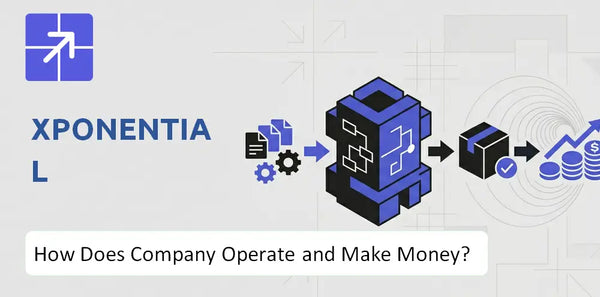
Xponential's growth hinges on franchisee recruitment, retention, and IP licensing; improving franchise unit economics lifts royalties and valuation. See Xponential BCG Matrix Analysis for product-level positioning.
What Does Xponential Actually Sell?
Xponential Fitness sells franchise licenses for a portfolio of boutique fitness brands, turnkey studio setup packages, and a centralized tech and services platform; customers pay for branded studio rights, specialized classes, equipment, and recurring membership access.
 Branded Franchise Licenses and Studio Systems
Xponential Fitness offers franchise licenses across 10 distinct brands including Club Pilates, StretchLab, and Rumble, plus a proprietary operational playbook. It sells complete studio turnkeys: site selection support, equipment packages, branded retail and apparel, and build-out guidance tied to the xponential franchise model.
Who Buys It
Primary buyers are franchise entrepreneurs and multi-unit investors seeking recurring revenue and brand rollout scale; secondary buyers are consumers purchasing memberships and class passes for specialized, instructor-led programming. Institutional partners and landlords also buy studio rollouts through strategic leases and acquisitions.
Practical Value for Customers
Franchisees get a repeatable business model, centralized tech (bookings, CRM, retention analytics), marketing playbooks, and vendor-negotiated equipment bundles that shorten time-to-revenue. Consumers get specialty classes with high-touch instruction, community accountability, and predictable membership pricing under the xponential membership model and pricing.
Why the Offering Stands Out
Xponential stands out by combining a diversified brands portfolio with centralized services that scale franchise growth and reduce operational friction; centralized royalties and franchise fees fund national marketing and tech enhancements. See more on corporate origins in History and Background of Xponential Company
Xponential SWOT Analysis
- Complete SWOT Breakdown
- Fully Customizable
- Editable in Excel & Word
- Professional Formatting
- Investor-Ready Format

How Does Xponential Run Its Business Day to Day?
Xponential Company runs day-to-day as a centralized franchisor hub: it manages brand standards, marketing, real-time data analytics, and franchisee support while franchise owners run individual studios. Daily workflows include performance monitoring, lead-generation optimization, instructor certification, and coordinating global equipment logistics to keep over 3,000 studios operating.

Centralized franchisor operating model
The Xponential Company operating model concentrates brand management, franchise sales, and corporate services at headquarters so franchisees focus on studio operations; corporate systems handle marketing, pricing strategy, and compliance across the portfolio.
Customer access and membership delivery
Customers join via studio sales teams, the Xponential app, or web portals; membership pricing and promotions are informed by company-wide analytics and local lead funnels to maximize conversion and lifetime value.
Equipment sourcing and instructor development
Corporate sources Pilates reformers, bikes, and boxing gear through centralized procurement and global logistics; daily training is delivered via Master Trainer programs and standardized curriculum to ensure consistent class quality.
Franchise sales and distribution channels
Primary distribution occurs through franchising, with corporate supporting site selection, lease negotiation, and grand-opening marketing – plus digital channels for class bookings and virtual offerings to expand reach.
Key systems, partnerships, and assets
Core assets include a centralized CRM, studio performance dashboard, supply-chain vendors, Master Trainer network, and strategic partnerships for equipment and software – enabling scale and lower per-studio marketing costs.
Why the model works day to day
Economies of scale in advertising, centralized analytics across >3,000 global studios, and franchisor-led training reduce unit-level costs and improve retention – so franchisees get proven pricing, lead-gen, and operational playbooks that boost revenue per studio.
On a daily basis corporate teams review studio KPIs – average monthly membership, class-fill rate, and churn – and adjust digital ads, offers, and pricing. The franchisor collects initial franchise fees and ongoing royalties, supports equipment deliveries, and runs Master Trainer certifications to keep instructor quality uniform across the Xponential brands portfolio; see Mission, Vision, and Values of Xponential Company for more context.
Xponential Business Model Canvas
- One-time Payment
- No Research Needed – Save Hours of Work
- Built by Experts, Trusted by Consultants
- Instant Download, Ready to Use
- 100% Editable, Fully Customizable

How Does Revenue Flow Through Xponential?
Revenue for Xponential Fitness flows from upfront franchise fees, recurring royalties and marketing contributions, plus equipment and merchandise sales that convert franchise growth into corporate revenue. Demand for studios becomes revenue through initial territory fees, ongoing percentage-based royalties, and closed-loop product sales.
Main revenue: Recurring royalties and marketing fees
Most of Xponential company revenue comes from ongoing royalties – typically 7% of studio gross sales – plus a 2% national marketing contribution. As of early 2026, recurring streams represent about 75% of total income, supported by system-wide sales above $1.6 billion.
Additional revenue: Franchise fees, equipment & merchandise
Xponential Fitness collects an upfront franchise fee when awarding a new territory – typically around $60,000 – and earns high-margin revenue as the exclusive supplier of branded equipment and merchandise, creating a closed-loop revenue stream tied to studio openings and expansions.
Pricing and monetization model
The business monetizes through a mixed model: upfront licensing (franchise fees), percentage-based commissions (royalties and marketing levies), and product sales; this blends subscription-like recurring income with transactional equipment margins and licensing cash-ins.
What drives revenue most
Revenue is driven primarily by studio same-store sales and unit growth: higher system-wide gross sales raise royalty income, while new openings trigger franchise fees and equipment purchases. Franchisee unit economics and membership retention determine recurring revenue strength; expansion pace and branded product attach rates amplify corporate top-line growth. See Target Customers and Market of Xponential Company for customer and market context: Target Customers and Market of Xponential Company
Xponential Marketing Mix
- Complete Marketing Mix Analysis
- Effortlessly Communicate Your Business Strategy
- Investor-Ready Format
- 100% Editable and Customizable
- Clear and Structured Layout

What Makes Xponential's Model Sustainable or Fragile?
The Xponential company model is sustainable through brand diversification and high recurring revenue but fragile due to tight franchisee unit economics and sensitivity to consumer discretionary spending. Structural strengths include scalable franchisor margins near 40% in 2025 and a diversified portfolio that cushions against single-trend declines; risks include rising labor/rent pressure and potential over-leveraging during international expansion.
Portfolio Diversification Supports Resilience
Xponential company benefits from multiple boutique fitness brands that spread demand risk: if indoor cycling softens, Pilates or functional training brands often pick up slack. Recurring membership revenue and franchise royalties create a steady cash-generative core that stabilizes cash flow across cycles.
Scalable Franchisor Economics and Systems
The Xponential fitness business model leverages a low-capex franchisor role, tech-enabled franchise onboarding, and centralized marketing to drive operating margins near 40% in 2025. Network effects from brand recognition and a growing studio count lower customer-acquisition costs per studio over time.
Franchisee Unit Economics Are a Key Dependency
Unit-level profitability depends on labor, rent, and local demand; margin compression at studios reduces franchisee cash flow and can stall openings. The Xponential franchise model therefore hinges on franchisee EBITDA staying attractive enough to fund new openings and sustain royalties.
Durability Assessment for 2025/2026
As of 2025, the model appears robust and cash-generative provided management protects franchisee profitability and avoids heavy leverage during international expansion. Still, exposure to consumer discretionary cycles and local cost inflation makes the model moderately fragile without ongoing franchisee support and prudent capital allocation.
Sales and Marketing Strategy of Xponential Company
Xponential Boston Consulting Group Matrix
- Built by Experts, Trusted by Consultants
- Structured for Consultants, Students, and Founders
- 100% Editable in Microsoft Word & Excel
- Instant Digital Download – Use Immediately
- Compatible with Mac & PC – Fully Unlocked

Related Blogs
- What Is the History of Xponential Company and How Did It Evolve?
- What Is the Competitive Landscape of Xponential Company and How Does It Compete?
- What Is the Growth Outlook of Xponential Company and Where Is It Heading?
- How Does Xponential Company Reach Customers and Turn Demand into Sales?
- What Do the Mission, Vision, and Core Values of Xponential Company Reveal?
- Who Are the Core Customers in Xponential Company's Target Market?
- Who Owns Xponential Company Today and Who Holds Control?
Frequently Asked Questions
Xponential sells franchise licenses for boutique fitness brands, turnkey studio setup packages, and a centralized tech and services platform. Buyers pay for branded studio rights, specialized classes, equipment, and recurring membership access. The offer is built around franchise support, studio systems, and a repeatable operating model for both owners and members.
Disclaimer
All information, articles, and product details provided on this website are for general informational and educational purposes only. We do not claim any ownership over, nor do we intend to infringe upon, any trademarks, copyrights, logos, brand names, or other intellectual property mentioned or depicted on this site. Such intellectual property remains the property of its respective owners, and any references here are made solely for identification or informational purposes, without implying any affiliation, endorsement, or partnership.
We make no representations or warranties, express or implied, regarding the accuracy, completeness, or suitability of any content or products presented. Nothing on this website should be construed as legal, tax, investment, financial, medical, or other professional advice. In addition, no part of this site - including articles or product references - constitutes a solicitation, recommendation, endorsement, advertisement, or offer to buy or sell any securities, franchises, or other financial instruments, particularly in jurisdictions where such activity would be unlawful.
All content is of a general nature and may not address the specific circumstances of any individual or entity. It is not a substitute for professional advice or services. Any actions you take based on the information provided here are strictly at your own risk. You accept full responsibility for any decisions or outcomes arising from your use of this website and agree to release us from any liability in connection with your use of, or reliance upon, the content or products found herein.