
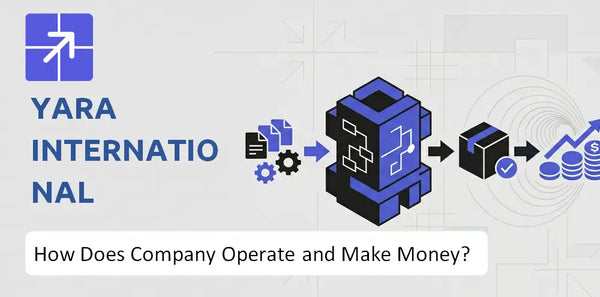
How does Yara International convert energy into fertilizer and earn revenue from global agriculture markets?
Yara International turns natural gas into nitrogen fertilizers, selling to farmers and distributors worldwide. This matters because fertilizer margins track gas prices and crop demand, and by late 2025 Yara accelerated low-carbon ammonia projects amid policy shifts toward decarbonization.
Focus on feedstock and carbon intensity: track natural gas contracts and Yara's low-carbon ammonia pilots to gauge margin resilience; see Yara International BCG Matrix Analysis.
What Does Yara International Actually Sell?
Yara International sells crop productivity and industrial chemicals: mainly nitrogen fertilizers (urea, nitrates, NPK), industrial agents (AdBlue, nitrogen for mining, water – treatment chemicals) and, increasingly, digital agronomy, precision – farming services, and clean ammonia for low – carbon fuel and feedstock.
 Core product mix: fertilizers, industrial chemicals, digital farming
Yara International sells nitrogen fertilizers (urea, ammonium nitrate, calcium ammonium nitrate, NPK blends), nitric acid and ammonia derivatives, AdBlue (DEF) for diesel emissions control, water – treatment agents, and industrial nitrogen solutions for mining. It also sells precision – agriculture platforms and agronomic advisory services and markets clean or green ammonia projects for shipping and industry.
Who buys Yara's products
Customers include arable and specialty farmers, agricultural cooperatives and distributors, commodity traders, mining and industrial firms, fleet operators using AdBlue, and energy/chemical companies buying ammonia or partnering on green – ammonia projects.
Customer value: yield, compliance, and margin protection
Farm customers pay for increased yield and nutrient efficiency; industrial clients pay for nitrogen – based process inputs and emissions compliance (AdBlue). Digital services sell lower input costs and targeted application that can boost net margins by improving nutrient use efficiency and cutting over – application.
Why Yara's offering stands out
Yara pairs large-scale fertilizer manufacturing and global logistics with agronomic data and advisory services, plus investments in green ammonia; this vertical mix supports integrated sales channels, risk – managed trading, and differentiated low – carbon products that address regulatory and sustainability demands.
Key 2025 facts: Yara reported fertilizer and industrial sales driven by nitrogen volumes of approximately 16 – 18 million tonnes nutrient equivalent in recent years across products, while digital revenue and services grew double digits; the company advanced green ammonia projects targeting hundreds of kilotonnes annual capacity in pilot and early commercial phases. See History and Background of Yara International Company for context on assets and strategy: History and Background of Yara International Company
Yara International SWOT Analysis
- Complete SWOT Breakdown
- Fully Customizable
- Editable in Excel & Word
- Professional Formatting
- Investor-Ready Format

How Does Yara International Run Its Business Day to Day?
Yara International runs daily as an integrated fertilizer and chemical producer with global production, logistics, and sales teams coordinating plant output, inventory moves, and customer delivery to match seasonal demand and energy markets.

Operating model: centralized production, regional balancing
Yara International runs 26 major production sites and sells into 160 countries; operations centrally schedule ammonia and fertilizer production to shift volumes between regions based on energy price signals and seasonal demand.
Product delivery: terminals and distributor network
Customers buy through direct sales, regional distributors, and digital channels; Yara moves product via >200 terminals and warehouses and ships by rail, road, and sea to hit planting windows in each hemisphere.
Production: Haber-Bosch at scale
Core chemistry uses the Haber-Bosch process where natural gas delivers hydrogen and energy to fix nitrogen into ammonia; ammonia then feeds downstream nitric acid and NPK fertilizer lines at integrated plants.
Sales channels: trade, direct, digital
Main channels include direct corporate agronomy sales, wholesale distributors, and digital farming services; trading desks arbitrage regional price spreads and manage merchant sales and industrial gas contracts.
Key assets: plants, terminals, and IT systems
Critical assets are 26 production sites, >200 terminals/warehouses, global shipping contracts, and digital agronomy platforms; energy procurement systems and maintenance teams protect uptime and margins.
What makes it work: energy, logistics, and timing
Energy cost management is central – fuel can account for 70 – 80 percent of variable production costs – so day-to-day focus is on feedstock deals, production switching, and moving inventory to meet peak planting seasons while reducing idle capacity.
Operational KPIs tracked daily include plant utilization, ammonia inventory in tonnes, terminal fill rates, regional FOB margins, and energy cost per tonne; recent 2025 metrics showed global ammonia availability prioritized to high-margin markets while green ammonia pilot volumes remained limited but growing. Read more on Ownership and Control of Yara International Company Ownership and Control of Yara International Company
Yara International Business Model Canvas
- One-time Payment
- No Research Needed – Save Hours of Work
- Built by Experts, Trusted by Consultants
- Instant Download, Ready to Use
- 100% Editable, Fully Customizable

How Does Revenue Flow Through Yara International?
Revenue at Yara International flows from selling crop nutrients and related products; demand converts to revenue via long-term distributor contracts and spot sales to growers, with margins tied to natural gas costs and nutrient prices.
Main revenue: Fertilizers and nutrient spreads
Yara International recorded approximately 15.8 billion USD in revenue in fiscal 2025, led by Fertilizers where spread between raw material (mainly natural gas) and nutrient market prices determines gross margin.
Additional revenue: Specialty products and industrial gases
Value-added lines – specialty nitrates, industrial gases, and low-carbon ammonia – deliver higher margins and diversify income beyond commodity urea and seasonal agricultural cycles.
Pricing and monetization model: Contracts, spot sales, and premium pricing
Yara monetizes through long-term supply contracts with distributors, spot-market sales to growers, and premium pricing for specialty products; roughly two-thirds of sales in 2025 were channelled via contractual agreements and trade flows.
What drives revenue most: Feedstock spreads and product mix
Primary drivers are the natural gas-to-nutrient price spread and product mix shift toward specialty and low-carbon offerings; Yara Clean Ammonia began contributing meaningful revenue in 2025, supporting decarbonization-linked price premia. Read more on corporate direction in Mission, Vision, and Values of Yara International Company.
Yara International Marketing Mix
- Complete Marketing Mix Analysis
- Effortlessly Communicate Your Business Strategy
- Investor-Ready Format
- 100% Editable and Customizable
- Clear and Structured Layout

What Makes Yara International's Model Sustainable or Fragile?
Yara International's model is sustainable because global food demand makes nitrogen fertilizer inelastic, while scale and early green ammonia moves lower carbon risk; it's fragile due to acute sensitivity to natural gas prices and European geopolitical exposure.
Scale and Market Necessity Support the Model
Global need for crop nutrition creates inelastic demand for Yara fertilizers; in 2025 the nutrient market remained tight with global nitrogen demand near pre-adjustment levels, underpinning steady revenue from fertilizer sales and industrial gases.
Key Assets and Early Green Ammonia Leadership
Yara International's integrated production footprint, large trading desk, and existing ammonia plants plus investments in green ammonia projects give operational scale and first-mover advantage in decarbonization, reducing long-term carbon-price exposure.
Dependencies: Gas Prices, Europe, and Supply Chains
The model depends heavily on natural gas feedstock costs – natural gas can represent >50% of marginal production cost for ammonia – so volatile gas-to-food price correlation drives earnings swings; European geopolitical risks and logistics constraints add concentration risk to Yara supply chain and logistics.
Durability Assessment for 2025/2026
For 2026 the outlook is robust but complex: the EU Carbon Border Adjustment Mechanism (CBAM) creates a protective moat in Europe while raising compliance costs; professional judgment rates Yara International as a high-quality cyclical play de-risking emissions but still exposed to volatile gas-driven margins.
See detailed context and figures in this recent analysis: Growth Outlook of Yara International Company
Yara International Boston Consulting Group Matrix
- Built by Experts, Trusted by Consultants
- Structured for Consultants, Students, and Founders
- 100% Editable in Microsoft Word & Excel
- Instant Digital Download – Use Immediately
- Compatible with Mac & PC – Fully Unlocked

Related Blogs
- What Is the History of Yara International Company and How Did It Evolve?
- What Is the Competitive Landscape of Yara International Company and How Does It Compete?
- What Is the Growth Outlook of Yara International Company and Where Is It Heading?
- How Does Yara International Company Reach Customers and Turn Demand into Sales?
- What Do the Mission, Vision, and Core Values of Yara International Company Reveal?
- Who Are the Core Customers in Yara International Company's Target Market?
- Who Owns Yara International Company Today and Who Holds Control?
Frequently Asked Questions
Yara International sells nitrogen fertilizers, industrial chemicals, and digital farming services. Its mix includes urea, nitrates, NPK blends, AdBlue, mining nitrogen solutions, water-treatment agents, and clean ammonia projects. It also provides agronomic advisory and precision-agriculture platforms that aim to improve yield, efficiency, and compliance.
Disclaimer
All information, articles, and product details provided on this website are for general informational and educational purposes only. We do not claim any ownership over, nor do we intend to infringe upon, any trademarks, copyrights, logos, brand names, or other intellectual property mentioned or depicted on this site. Such intellectual property remains the property of its respective owners, and any references here are made solely for identification or informational purposes, without implying any affiliation, endorsement, or partnership.
We make no representations or warranties, express or implied, regarding the accuracy, completeness, or suitability of any content or products presented. Nothing on this website should be construed as legal, tax, investment, financial, medical, or other professional advice. In addition, no part of this site - including articles or product references - constitutes a solicitation, recommendation, endorsement, advertisement, or offer to buy or sell any securities, franchises, or other financial instruments, particularly in jurisdictions where such activity would be unlawful.
All content is of a general nature and may not address the specific circumstances of any individual or entity. It is not a substitute for professional advice or services. Any actions you take based on the information provided here are strictly at your own risk. You accept full responsibility for any decisions or outcomes arising from your use of this website and agree to release us from any liability in connection with your use of, or reliance upon, the content or products found herein.