
How does Zensar Technologies generate revenue and where does its competitive edge lie as a technology services firm?
Zensar Technologies sells digital engineering, experience-led design, and data-analytics services to enterprises, earning fees from project delivery and managed services. This matters because in 2025 Zensar's shift to AI-infused offerings and verticalized solutions drove renewed margin expansion and client wins.
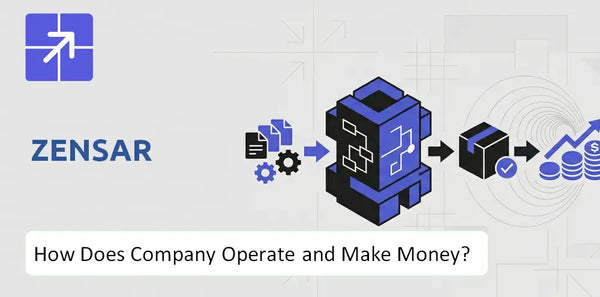
Zensar's practical edge is faster delivery in niche verticals and platform-led services; track platform adoption and client retention as short-term performance signals. See Zensar BCG Matrix Analysis for product-level positioning.
What Does Zensar Actually Sell?
Zensar Technologies sells digital transformation as a service: application services, data engineering, cloud infrastructure management, Experience Services via Foolproof, Foundation Services for legacy-to-cloud migration, and Zensar Air, a Generative AI-led suite that automates development and boosts enterprise productivity.
 Core offerings: what Zensar sells
Zensar company packages technical labor plus strategy: application development and maintenance, data engineering, cloud and hybrid IT operations, UX and product design via Foolproof, and Zensar Air, a Generative AI platform launched in the 2025-2026 fiscal cycle to automate software development life cycles and increase delivery velocity.
Who buys it
Enterprise buyers in retail, banking, healthcare, and manufacturing; CIOs and digital leads buying digital transformation services Zensar style; and partners needing managed cloud and software engineering capacity for large-scale programs.
Customer value delivered
Clients pay for faster time-to-market, productivity gains, and specialized engineering talent rather than simple labor arbitrage; Zensar cites productivity uplifts from Zensar Air and reduced release cycles, supporting wins in digital transformation case studies that report up to 30% faster delivery on pilot projects in 2025.
Why this offering stands out
Zensar business model combines outcome-focused consulting, productized platforms (Zensar Air), and UX-led Experience Services via Foolproof, making purchases predictable and outcome-oriented; this go-to-market mixes managed services, project engagements, and platform subscriptions, which drive diversified Zensar revenue streams.
For a detailed look at route-to-market and sales motions, see Sales and Marketing Strategy of Zensar Company.
Zensar SWOT Analysis
- Complete SWOT Breakdown
- Fully Customizable
- Editable in Excel & Word
- Professional Formatting
- Investor-Ready Format

How Does Zensar Run Its Business Day to Day?
Zensar Technologies runs day-to-day through a global delivery model anchored in offshore development centers in India, with nearshore and onshore teams in the United States, United Kingdom, and South Africa; cross-functional pods deliver client programs while AI systems optimize staffing and utilization.

Global pod-based operating model
Engineers, data scientists, and designers are assigned to client accounts in stable pods to ensure continuity and reduce ramp-up time; daily standups, sprint planning, and account-level SLAs coordinate work across time zones.
How customers consume services
Clients access Zensar company services via managed engagements, fixed-price projects, and outcome-based contracts; sales and account teams focus on account mining, which drives over 90 percent of quarterly revenue.
Development and delivery mechanics
Most delivery is software engineering, cloud migrations, and data optimization executed from India centers; code reviews, CI/CD pipelines, and cloud-native practices are standard, with ecosystem-specific migrations for hyperscalers.
Sales channels and account management
Direct enterprise sales, strategic partnerships, and account mining are primary channels; on average, cross-sell and upsell within existing clients account for the bulk of Zensar revenue streams and quarterly bookings.
Key assets, systems, and partners
Core assets include offshore delivery centers, an AI-driven talent management platform, CI/CD toolchains, and partnerships with AWS, Microsoft Azure, and Google Cloud that underpin most cloud and data projects.
Operational levers that make the model work
Daily efficiency rests on a target utilization of about 82 percent managed by AI-driven resource allocation to balance margins and burnout; cross-functional pods and hyperscaler alliances reduce delivery risk and speed time-to-value.
For a focused look at growth and financial context tied to these operational practices, see Growth Outlook of Zensar Company.
Zensar Business Model Canvas
- One-time Payment
- No Research Needed – Save Hours of Work
- Built by Experts, Trusted by Consultants
- Instant Download, Ready to Use
- 100% Editable, Fully Customizable

How Does Revenue Flow Through Zensar?
Revenue flows mainly from client projects billed under Time and Material and Fixed-Price contracts, with growing outcome-based deals in digital engineering where payments tie to milestones. Demand converts to revenue via billable-hours, milestone receipts, and upsells into cybersecurity and analytics.
Main revenue stream: Project and outcome-based services
Most revenue comes from IT services projects billed as Time and Material or Fixed-Price contracts; by early 2026 Zensar Technologies increased outcome-based pricing in digital engineering, linking payments to delivery milestones and performance metrics, which raises average contract value.
Additional revenue streams: Managed services and specialized upsells
Secondary streams include managed services, cloud migration, cybersecurity, and advanced analytics sold into existing infrastructure contracts; these high-margin add-ons boost lifetime value and cross-sell opportunities.
Pricing and monetization model: mix of T&M, fixed-price and outcome-based
Monetization relies on Time and Material hourly billing and Fixed-Price milestones, increasingly supplemented by outcome-based fees; high billable-hour utilization and tiered pricing for senior architects drive revenue per project.
What drives revenue most: geography, vertical mix, and billable efficiency
The United States accounts for roughly 69 percent of topline, followed by Europe and South Africa; revenue is split across Banking, Financial Services & Insurance; Manufacturing & Consumer Services; and Hi – Tech. Operating margins are managed around 14.8 to 15.6 percent via a pyramid workforce that uses junior staff for execution and charges premium rates for senior architects, enabling high-billable-hour efficiency and upsell conversion.
See related context on governance and ownership in this piece: Ownership and Control of Zensar Company
Zensar Marketing Mix
- Complete Marketing Mix Analysis
- Effortlessly Communicate Your Business Strategy
- Investor-Ready Format
- 100% Editable and Customizable
- Clear and Structured Layout

What Makes Zensar's Model Sustainable or Fragile?
Zensar company's model is sustainable due to a net-cash positive balance sheet with zero debt and strong South African market share, yet fragile because top-10 client concentration (~36% of revenue) and margin pressure from commoditizing cloud and maintenance services risk revenue shocks and margin erosion.
Balance Sheet Strength and Market Position
Zensar business model benefits from a net-cash positive balance sheet and zero debt, which funds strategic moves and cushions downturns; deep penetration in South Africa gives pricing leverage and repeat revenue from large enterprise clients.
Key Assets and Capabilities Driving Delivery
Zensar's software engineering teams, managed services tooling, and partnerships with hyperscalers support digital transformation services Zensar offers; mid-cap agility allows faster decision-making and more personalized client service than many Tier-1 peers.
Client Concentration and Margin Pressure
Zensar revenue streams show high client concentration: the top 10 clients account for nearly 36 percent of revenue, creating exposure to localized budget cuts; meanwhile rapid commoditization of cloud and application maintenance services compresses margins across the IT services provider Zensar portfolio.
Durability Outlook for 2025/2026
Professional judgement for 2025/2026 is cautiously optimistic: Zensar can capture GenAI-driven spending and expand software engineering services pricing, but long-term durability depends on keeping attrition near 12.5 percent and reskilling the workforce into higher-value AI-augmented roles before legacy maintenance revenue erodes materially. See History and Background of Zensar Company for context: History and Background of Zensar Company
Zensar Boston Consulting Group Matrix
- Built by Experts, Trusted by Consultants
- Structured for Consultants, Students, and Founders
- 100% Editable in Microsoft Word & Excel
- Instant Digital Download – Use Immediately
- Compatible with Mac & PC – Fully Unlocked

Related Blogs
- What Is the History of Zensar Company and How Did It Evolve?
- What Is the Competitive Landscape of Zensar Company and How Does It Compete?
- What Is the Growth Outlook of Zensar Company and Where Is It Heading?
- How Does Zensar Company Reach Customers and Turn Demand into Sales?
- What Do the Mission, Vision, and Core Values of Zensar Company Reveal?
- Who Are the Core Customers in Zensar Company's Target Market?
- Who Owns Zensar Company Today and Who Holds Control?
Frequently Asked Questions
Zensar sells digital transformation services rather than standalone products. Its offerings include application services, data engineering, cloud infrastructure management, Experience Services via Foolproof, Foundation Services for legacy-to-cloud migration, and Zensar Air, a Generative AI-led suite for automating development and improving productivity.
Disclaimer
All information, articles, and product details provided on this website are for general informational and educational purposes only. We do not claim any ownership over, nor do we intend to infringe upon, any trademarks, copyrights, logos, brand names, or other intellectual property mentioned or depicted on this site. Such intellectual property remains the property of its respective owners, and any references here are made solely for identification or informational purposes, without implying any affiliation, endorsement, or partnership.
We make no representations or warranties, express or implied, regarding the accuracy, completeness, or suitability of any content or products presented. Nothing on this website should be construed as legal, tax, investment, financial, medical, or other professional advice. In addition, no part of this site - including articles or product references - constitutes a solicitation, recommendation, endorsement, advertisement, or offer to buy or sell any securities, franchises, or other financial instruments, particularly in jurisdictions where such activity would be unlawful.
All content is of a general nature and may not address the specific circumstances of any individual or entity. It is not a substitute for professional advice or services. Any actions you take based on the information provided here are strictly at your own risk. You accept full responsibility for any decisions or outcomes arising from your use of this website and agree to release us from any liability in connection with your use of, or reliance upon, the content or products found herein.