
How does Zeon Corporation convert specialty polymers into high-margin industrial solutions and revenue?
Zeon Corporation makes specialty elastomers and advanced materials sold to industries like EV batteries, optics, and automotive, earning higher margins than commodity chemicals. In 2025 Zeon reported portfolio shifts toward battery binders and optical films, signaling strategic upmarket movement.
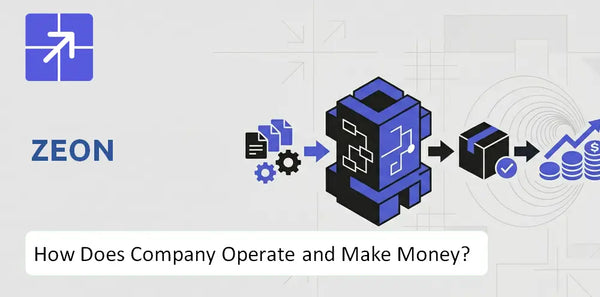
Focus on product-led differentiation and customer stickiness; prioritize scale in battery components where Zeon's 2025 sales mix rose toward specialty applications. See product context: Zeon BCG Matrix Analysis
What Does Zeon Actually Sell?
Zeon Corporation sells high-performance specialty materials: synthetic rubbers, specialty resins, and battery binders used by automotive, electronics, and medical customers. Buyers pay for material performance, reliability, and tailored formulations that enable end-product functionality.
 Core product lines: specialty rubbers and resins
Zeon Company's portfolio centers on Zetpol synthetic rubber for heat and oil resistance in engine parts, and Cyclo Olefin Polymers sold as ZEONEX and ZEONOR for high-transparency optics and low moisture uptake. The company also supplies anode and cathode binders for lithium – ion batteries, a fast-growing revenue driver.
Main buyers: OEMs, electronics and medical suppliers
Customers include automotive OEMs and tier – 1 suppliers, smartphone and VR/AR optics manufacturers, medical device makers (syringes, diagnostic parts), and battery cell producers for EVs. Procurement focuses on long – term supply agreements and quality certification.
Customer value: performance, consistency, and scale
Buyers get materials that raise product durability and optical clarity while reducing failure rates. For EV cells, Zeon binders improve cycle life and structural integrity, directly impacting battery performance and warranty costs; this segment contributed a growing portion of sales in 2025.
Differentiators: proprietary chemistries and integrated manufacturing
Zeon business model relies on proprietary formulations, IP-backed products, and localized manufacturing across Asia, Europe, and the Americas to shorten lead times. Its focus on R&D and high-margin specialty polymers separates it from commodity chemical peers and supports higher ASPs (average selling prices).
For company mission and strategic framing see Mission, Vision, and Values of Zeon Company
Zeon SWOT Analysis
- Complete SWOT Breakdown
- Fully Customizable
- Editable in Excel & Word
- Professional Formatting
- Investor-Ready Format

How Does Zeon Run Its Business Day to Day?
Zeon Company runs daily via an integrated research-to-production pipeline: R&D teams feed formulation changes into production hubs in Japan, Singapore, and North America, while operations focus on quality control, supply continuity, and co-development with B2B OEMs to meet custom specifications and delivery schedules.

Operating model: integrated R&D-to-production workflow
Zeon Company operates a centralized technical backbone that links lab development, scale-up, and commercial production. Daily cycles prioritize formula iterations, pilot runs, and technical trials with customers, supported by ERP and LIMS (lab information management systems) for traceability and order-to-cash execution.
Product and service delivery: B2B, specification-driven shipments
Customers access Zeon products through direct sales teams, regional distributors, and long-term supply contracts; bespoke orders trigger co-development sprints and qualification batches. Logistics teams manage scheduled bulk shipments and JIT (just-in-time) deliveries for high-volume battery and automotive OEMs.
Production, sourcing, and development: polymer chemistry at scale
Manufacturing centers in Japan, Singapore, and North America run polymer extrusion lines, continuous reactors, and compounding units. Procurement secures butadiene and specialty monomers through strategic contracts; target capacity utilization is maintained above 80% to control unit costs.
Sales channels and distribution: direct OEM partnerships and regional sales
Zeon Corporation overview shows sales flow through dedicated account teams, technical service groups, and selected distributors in Asia, Europe, and North America. Long-term contracts and multi-year supply agreements drive predictable revenue and lower sales volatility.
Key assets, systems, and partnerships: IP, plants, and OEM co-development
Core assets include proprietary polymer synthesis IP, pilot and commercial plants, and in-house analytical labs. Zeon R&D and innovation strategy emphasizes joint development with battery manufacturers and chemical distributors; partnerships reduce time-to-market for new binder and elastomer products.
What makes the model work: high R&D intensity and tight quality controls
Zeon sustains a high R&D-to-sales ratio – typically near 6 – 8% of revenue in recent years – to keep formulations hard to replicate. Rigorous QC, customer-side technical embedding, and secured raw-material contracts underpin stable margins and high switching costs for buyers.
For operational history and strategic context, see History and Background of Zeon Company
Zeon Business Model Canvas
- One-time Payment
- No Research Needed – Save Hours of Work
- Built by Experts, Trusted by Consultants
- Instant Download, Ready to Use
- 100% Editable, Fully Customizable

How Does Revenue Flow Through Zeon?
Revenue flows through Zeon Company via high-volume elastomers and high-margin specialty materials; industrial demand and raw-material spreads convert production into cash, while long-term contracts with electronics and automotive buyers stabilize receipts.
Main revenue engine: Elastomer volume sales
The Elastomer Business generates large sales volumes of synthetic rubber and latex sold into tires, hoses, and industrial goods; revenue swings with industrial demand and monomer feedstock spreads, so margins depend heavily on raw material costs versus product pricing.
Additional revenue: Specialty Materials and contracts
Specialty Materials supply proprietary chemicals for semiconductors and displays and capture higher margins per unit; long-term supply agreements and technical service contracts with global electronics firms and automotive Tier 1s add recurring, predictable revenue streams.
Pricing and monetization: value and spread-driven
Zeon Corporation monetizes via spot and contract sales: elastomers follow commodity-like spread pricing tied to feedstock, while specialty items use value-based pricing and premium contracts; for fiscal 2025 Zeon targets net sales of 430 billion to 450 billion yen.
Primary revenue driver: product mix and contract coverage
Most revenue is driven by product mix shift toward specialty materials: they now contribute about 45 percent of total operating income despite lower volumes, so margin expansion comes from higher-value chemicals and stable long-term contracts rather than raw-volume growth; see Growth Outlook of Zeon Company for context.
Zeon Marketing Mix
- Complete Marketing Mix Analysis
- Effortlessly Communicate Your Business Strategy
- Investor-Ready Format
- 100% Editable and Customizable
- Clear and Structured Layout

What Makes Zeon's Model Sustainable or Fragile?
Zeon Company's model balances durable niche dominance in cyclo olefin polymers and EV battery materials with exposure to volatile feedstock costs and cyclical end markets; strengths in pricing power and R&D are offset by concentration in smartphone and automotive demand and butadiene price risk.
Dominant niche positions drive pricing power
Zeon Company holds leading global share in cyclo olefin polymers and early-mover status in EV battery binder and electrolyte additives, which support resilient margins and pricing power across specialized product lines.
Key assets and manufacturing scale
Zeon Corporation overview shows integrated upstream elastomer plants and specialty polymer facilities in Japan and Asia, plus R&D investment exceeding JPY 20 billion in FY2025, underpinning product development and scale advantages.
Dependencies: feedstock and end-market concentration
Zeon revenue model is sensitive to butadiene price swings; elastomer margins can compress if costs rise faster than pass-through. Customer concentration in smartphones and auto OEMs links revenue to global consumer cycles and EV adoption timing.
Durability outlook for 2025 – 2026
Professional judgment: Zeon Company looks positioned for growth in 2025 and 2026 driven by EV battery materials demand and higher-spec optics for AI hardware, provided it sustains R&D lead and hedges feedstock or passes costs – see Competitive Landscape of Zeon Company for rivals.
Zeon Boston Consulting Group Matrix
- Built by Experts, Trusted by Consultants
- Structured for Consultants, Students, and Founders
- 100% Editable in Microsoft Word & Excel
- Instant Digital Download – Use Immediately
- Compatible with Mac & PC – Fully Unlocked

Related Blogs
- What Is the History of Zeon Company and How Did It Evolve?
- What Is the Competitive Landscape of Zeon Company and How Does It Compete?
- What Is the Growth Outlook of Zeon Company and Where Is It Heading?
- How Does Zeon Company Reach Customers and Turn Demand into Sales?
- What Do the Mission, Vision, and Core Values of Zeon Company Reveal?
- Who Are the Core Customers in Zeon Company's Target Market?
- Who Owns Zeon Company Today and Who Holds Control?
Frequently Asked Questions
Zeon sells high-performance specialty materials. Its core products include synthetic rubbers, specialty resins, and battery binders for automotive, electronics, medical, and EV battery customers. Buyers pay for reliability, tailored formulations, and performance that helps their end products work better.
Disclaimer
All information, articles, and product details provided on this website are for general informational and educational purposes only. We do not claim any ownership over, nor do we intend to infringe upon, any trademarks, copyrights, logos, brand names, or other intellectual property mentioned or depicted on this site. Such intellectual property remains the property of its respective owners, and any references here are made solely for identification or informational purposes, without implying any affiliation, endorsement, or partnership.
We make no representations or warranties, express or implied, regarding the accuracy, completeness, or suitability of any content or products presented. Nothing on this website should be construed as legal, tax, investment, financial, medical, or other professional advice. In addition, no part of this site - including articles or product references - constitutes a solicitation, recommendation, endorsement, advertisement, or offer to buy or sell any securities, franchises, or other financial instruments, particularly in jurisdictions where such activity would be unlawful.
All content is of a general nature and may not address the specific circumstances of any individual or entity. It is not a substitute for professional advice or services. Any actions you take based on the information provided here are strictly at your own risk. You accept full responsibility for any decisions or outcomes arising from your use of this website and agree to release us from any liability in connection with your use of, or reliance upon, the content or products found herein.