
How does Addus HomeCare Corporation's sales and marketing model convert referrals and payers into repeat homecare revenue?
Addus targets patients via referral networks, payers, and state contracts, scaling through organic census growth and acquisitions. This matters because Addus reported revenue growth in 2025 tied to expanded Medicaid-managed care contracts and increased referral volumes.
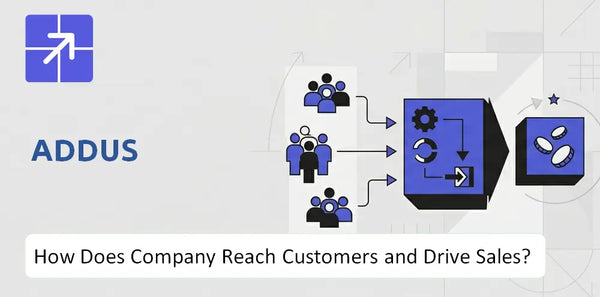
Addus leans on local clinical reputation and payer relationships to shorten sales cycles and boost retention; prioritize referral-source outreach and payer contracting to raise census. See Addus BCG Matrix Analysis.
Who Does Addus Want to Sell To?
Addus HomeCare Corporation targets high-acuity seniors and individuals with functional disabilities whose needs can be met at home to avoid institutional care; the actual payers are state Medicaid, Managed Care Organizations (MCOs), and Medicare Advantage plans. The company aims to win by proving cost savings and clinical outcomes that matter to payers and care managers.
 Primary customer: dual-eligible, high-acuity beneficiaries
Addus focuses on dual-eligibles (both Medicare and Medicaid) and high-acuity seniors who require assistance with activities of daily living; as of 2025 dual-eligibles make up a concentrated share of high-cost cases, and Addus targets them because they drive the greatest per-patient spend and utilization risk for payers.
Additional targets: payers, discharge planners, and family caregivers
Primary buyer groups are state Medicaid programs, Managed Care Organizations, and Medicare Advantage plans; Addus also pursues referral partnerships with hospitals, post-acute care providers, discharge planners, and family caregivers to capture home care lead generation and referrals.
Market positioning: front door to value-based home care
Addus positions its personal care, hospice, and home health services as the front door to a value-based care continuum, emphasizing reduced institutional admissions, lower total cost of care, and integrated care coordination – messages aligned with Addus HomeCare marketing and Addus sales strategy aimed at payers.
Why this positioning works: payer-focused ROI and measurable outcomes
By quantifying avoided institutional days and reduced readmissions, Addus sells cost-savings to MCOs and Medicaid programs; this payer-first approach supports Addus customer acquisition through referral partnerships for home care, local SEO strategies for Addus HomeCare locations, and targeted home care digital marketing that emphasizes measurable ROI.
Target Customers and Market of Addus Company
Addus SWOT Analysis
- Complete SWOT Breakdown
- Fully Customizable
- Editable in Excel & Word
- Professional Formatting
- Investor-Ready Format

How Does Addus Get in Front of Customers?
Addus HomeCare Corporation reaches customers mainly via decentralized referral networks, institutional partnerships, and acquisitions that onboard existing client bases; it builds awareness through provider relationships, targeted data-sharing with MCOs, and local market presence to convert referrals into billed services.

Institutional Referral Partnerships Drive Volume
Addus HomeCare marketing centers on direct partnerships with hospital discharge planners, primary care physicians, and community social workers who refer patients needing post-acute or long-term care; in 2025 these referral channels accounted for the majority of admissions in key states such as Texas, Illinois, and Ohio.
Digital Presence and Targeted Outreach
Addus sales strategy uses local SEO, paid search, and targeted social campaigns to capture family caregivers and self-referrals; in 2025 the company expanded home care digital marketing and appointment booking capabilities to reduce intake time and boost online leads.
Distribution via Local Acquisitions
The buy-and-build approach is a primary sales channel: acquiring smaller providers instantly adds thousands of clients and entrenched referral pipelines, lowering marginal customer acquisition cost while scaling market access in high-growth states.
Demand Generation Tactics with Institutional Data
Addus HomeCare marketing leverages data-sharing agreements with managed care organizations (MCOs) to identify at-risk members pre-hospitalization and runs targeted outreach and care navigation programs; these tactics increase referral conversion and reduce acute admissions.
Customer Acquisition Efficiency Metrics
Efficiency is driven by referral-to-admission conversion and acquisition via M&A; management reported improving referral conversion rates and reduced onboarding time in 2025 as integrated EMR data-sharing and standardized intake lowered cost per referral.
Most Important Reach Advantage in 2025
The strongest reach advantage is the combined decentralized referral network plus buy-and-build scale: local trust from acquired brands plus institutional ties to hospitals and MCOs enables rapid, scalable customer acquisition across multiple states. Read a market-focused analysis in Growth Outlook of Addus Company
Addus Business Model Canvas
- One-time Payment
- No Research Needed – Save Hours of Work
- Built by Experts, Trusted by Consultants
- Instant Download, Ready to Use
- 100% Editable, Fully Customizable

How Does Addus Turn Attention Into Sales?
Addus HomeCare Corporation turns attention into sales by rapidly converting referrals into billable caregiver hours through a tight intake-to-authorization workflow and automated matching that prioritizes caregiver supply. The core mechanics are fast referrals, automated scheduling, mobile caregiver dispatch, and clinical upsell into higher – margin services.
Intake-to-Billable Sales Model
Addus primarily uses a referral-and-contracted care model: referrals from hospitals, physicians, and payors funnel into a centralized intake team that authorizes services and books caregivers. Rapid caregiver matching via mobile apps converts referrals into the first billable hour, so sales are supply-constrained rather than demand-constrained.
Pricing and Monetization Logic
Addus monetizes through fee-for-service home care, private-pay and managed-care contracts, plus higher-margin hospice and home health services as clinical needs escalate. In 2025, revenue mix shifted toward agency-provided skilled home health and hospice, increasing average revenue per patient episode compared with baseline personal care.
Conversion and Purchase Drivers
Key drivers are speed of authorization, caregiver fill rate, and trust from referral partners. Addus improved conversion by automating scheduling and using mobile caregiver platforms to lift authorized – hours fill rates; the company reported operational improvements in 2025 that shortened referral-to-first-visit timelines and reduced lost referrals due to staffing gaps.
Repeat Revenue and Customer Expansion
Care coordination drives upsell: personal care clients are monitored and transitioned into home health or hospice as conditions change, extending lifetime value and lowering churn. In 2025, cross – service conversions and longer episodes increased per – patient revenue, with care coordination contributing materially to retention and margin expansion.
Addus HomeCare marketing and Addus sales strategy emphasize referral partnerships for home care, local SEO strategies for Addus HomeCare locations, and home care digital marketing to generate qualified leads; measurable KPIs in 2025 included improved fill rates for authorized hours, faster appointment booking, and higher conversion from referrals to billable hours. Read a market overview here: Competitive Landscape of Addus Company
Addus Marketing Mix
- Complete Marketing Mix Analysis
- Effortlessly Communicate Your Business Strategy
- Investor-Ready Format
- 100% Editable and Customizable
- Clear and Structured Layout

How Strong Does Addus's Commercial Engine Look Going Forward?
Addus HomeCare Corporation's commercial engine looks strong heading into 2026, driven by scale, acquisitions, and sustained mid-single-digit organic growth; main supports are reimbursement leverage and the Hospital-at-Home tailwind, while labor cost volatility and state budget shifts could weaken margins.
What Supports Future Demand
The company's national footprint and integrated referral partnerships for home care give Addus HomeCare marketing and Addus customer acquisition clear reach; 2025 revenue approached $1.48 billion after acquisitions, and projected 2026 revenue nears $1.6 billion, supporting sustained demand from managed Medicaid expansion and Hospital-at-Home programs. See History and Background of Addus Company for context.
Channel and Marketing Effectiveness
Addus sales strategy combines referral relationships with hospitals and discharge planners, local SEO strategies for Addus HomeCare locations, and targeted home care digital marketing; referral-driven leads plus digital advertising and telehealth touchpoints keep conversion rates steady and lower customer acquisition cost versus smaller rivals.
Risks to Commercial Performance
Main risks include labor cost inflation – nursing and personal care wage pressure – and variability in state Medicaid reimbursements; 2025 adjusted EBITDA margin was approximately 10.5%, so sustained margin erosion from wage spikes or unfavorable state rate decisions could compress profitability quickly.
The Overall Sales and Marketing Outlook
Outlook for 2025/2026 is strong and adaptable: scale enables negotiation of reimbursement increases and efficient home care lead generation, while integrated Addus HomeCare digital advertising strategies for leads and patient referral program details and benefits should sustain mid-single-digit organic growth; still, monitor labor and state budget trends closely.
Addus Boston Consulting Group Matrix
- Built by Experts, Trusted by Consultants
- Structured for Consultants, Students, and Founders
- 100% Editable in Microsoft Word & Excel
- Instant Digital Download – Use Immediately
- Compatible with Mac & PC – Fully Unlocked

Related Blogs
- What Is the History of Addus Company and How Did It Evolve?
- What Is the Competitive Landscape of Addus Company and How Does It Compete?
- What Is the Growth Outlook of Addus Company and Where Is It Heading?
- How Does Addus Company Work and What Drives Its Business Model?
- What Do the Mission, Vision, and Core Values of Addus Company Reveal?
- Who Are the Core Customers in Addus Company's Target Market?
- Who Owns Addus Company Today and Who Holds Control?
Frequently Asked Questions
Addus primarily targets high-acuity seniors and people with functional disabilities whose care can be delivered at home. The actual buyers are state Medicaid programs, Managed Care Organizations, and Medicare Advantage plans. Addus focuses on proving lower total cost of care and better outcomes for those payers and care managers.
Disclaimer
All information, articles, and product details provided on this website are for general informational and educational purposes only. We do not claim any ownership over, nor do we intend to infringe upon, any trademarks, copyrights, logos, brand names, or other intellectual property mentioned or depicted on this site. Such intellectual property remains the property of its respective owners, and any references here are made solely for identification or informational purposes, without implying any affiliation, endorsement, or partnership.
We make no representations or warranties, express or implied, regarding the accuracy, completeness, or suitability of any content or products presented. Nothing on this website should be construed as legal, tax, investment, financial, medical, or other professional advice. In addition, no part of this site - including articles or product references - constitutes a solicitation, recommendation, endorsement, advertisement, or offer to buy or sell any securities, franchises, or other financial instruments, particularly in jurisdictions where such activity would be unlawful.
All content is of a general nature and may not address the specific circumstances of any individual or entity. It is not a substitute for professional advice or services. Any actions you take based on the information provided here are strictly at your own risk. You accept full responsibility for any decisions or outcomes arising from your use of this website and agree to release us from any liability in connection with your use of, or reliance upon, the content or products found herein.