
How does Ampol's sales and marketing model convert fuel and convenience traffic into sustained revenue?
Ampol uses a vertically integrated refinery-to-retailer sales and marketing model to control supply, pricing, and site-level promotions, boosting margins and loyalty. In 2025 Ampol reported growing convenience sales and pilot EV charging rollouts, signaling retail diversification.
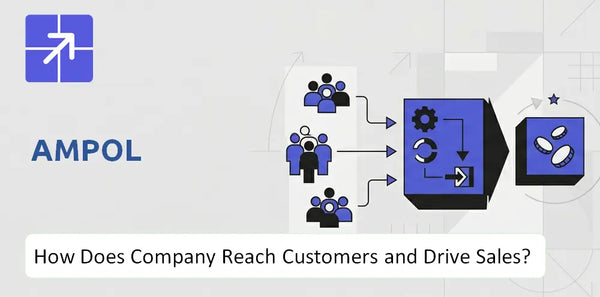
Ampol pairs site-level loyalty offers, wholesale contracts, and forecourt promotions to drive frequency and basket size; focus on convenience and charging upsells raises per-visit revenue. See Ampol BCG Matrix Analysis.
Who Does Ampol Want to Sell To?
Ampol targets two high-value groups: B2B industrial clients needing large-volume, contract-secured energy and lubricants, and premium retail consumers who prioritize convenience and quality at Ampol's 1,800-site network. The aim is to convert demand into repeat sales through tailored contracts, premium fuels, and integrated retail offers.
 Primary: B2B industrial and fleet customers
Ampol focuses on mining, aviation, agriculture, and heavy transport fleets that need energy security and specialized lubricants via multi-year supply contracts. These clients drive predictable revenue and represent high average contract values, with some corporate fuel agreements exceeding $10 million annually in large mining and logistics accounts.
Secondary: Premium retail commuters and local shoppers
Ampol targets time-poor commuters and neighborhood shoppers who choose convenience and quality over lowest price, buying Pulsar fuels plus grab-and-go food and groceries. Retail sales rely on station-level conversion – average convenience-store spend per visit has risen where bundled fuel-and-store promotions run, increasing basket size by up to 15% in pilot sites.
Market positioning: Premium convenience and reliable B2B partner
Ampol positions itself as a premium fuel and convenience retailer for consumers and a reliable, scalable fuel partner for businesses. The company leverages a dense Ampol retail network and tailored corporate sales channels to support both high-frequency retail transactions and large B2B contracts.
Why this positioning works
The dual focus reduces revenue volatility: B2B contracts secure base volumes while retail convenience and the Ampol loyalty program drive repeat visits and higher per-transaction revenue. Ampol's omnichannel marketing, digital promotions and targeted site selection lift conversion rates and unit economics, aligning with findings in Mission, Vision, and Values of Ampol Company.
Ampol SWOT Analysis
- Complete SWOT Breakdown
- Fully Customizable
- Editable in Excel & Word
- Professional Formatting
- Investor-Ready Format

How Does Ampol Get in Front of Customers?
Ampol reaches customers through a dense retail network, a tiered channel mix of forecourts and convenience anchors, a high-usage mobile app, and loyalty integration that funnels grocery shoppers to its sites. Visibility, digital reach, and targeted loyalty mechanics convert fuel and convenience demand into point-of-sale transactions.

Forecourt network as primary acquisition channel
Ampol relies on a massive physical footprint that reaches nearly 80 percent of the Australian population, making forecourts and AmpolFoodary sites the main driver of foot traffic and customer acquisition.
Digital marketing and the Ampol App
The Ampol App serves as a digital gateway with over 1.5 million active users by 2025, supporting push offers, coupons, and personalized promotions as part of Ampol digital marketing and mobile app promotions and coupons.
Distribution via loyalty and retail partnerships
Strategic integration with the Woolworths Everyday Rewards program funnels millions of grocery shoppers to Ampol forecourts, strengthening Ampol loyalty program acquisition and Ampol retail network access.
Demand generation tactics
Ampol runs targeted pricing promotions, in-store merchandising, app coupons, and seasonal campaigns to boost fuel and convenience sales, linking offers to Everyday Rewards to increase conversion rates at service stations.
Customer acquisition efficiency
High physical density combined with the Woolworths partnership and app-driven offers yields efficient customer acquisition; app users and loyalty-linked shoppers drive repeat visits and higher basket values.
Most important reach advantage in 2025/2026
The dominant advantage is the integrated omnichannel approach: near-national station coverage plus the Everyday Rewards funnel and a 1.5 million user app, ensuring scale in Ampol customer acquisition and Ampol sales strategy.
For distribution and market context see Target Customers and Market of Ampol Company
Ampol Business Model Canvas
- One-time Payment
- No Research Needed – Save Hours of Work
- Built by Experts, Trusted by Consultants
- Instant Download, Ready to Use
- 100% Editable, Fully Customizable

How Does Ampol Turn Attention Into Sales?
Ampol turns attention into sales by converting forecourt and digital traffic into higher-margin non-fuel purchases and locked-in commercial volumes; primary mechanics are convenience retail optimization at sites and the AmpolCard ecosystem for fleets, which shifts revenue mix away from fuel price competition toward services and data-driven retention.
Core sales model: Convenience-led retail plus B2B fuel contracts
Ampol sells through a retail network of service stations and direct B2B channels. In-store retail (fresh food, quick-service partners) and self-serve forecourts capture walk-in consumers, while AmpolCard and commercial contracts secure recurring, high-volume corporate sales.
Pricing and monetization logic: Margin mix and value-added fees
Fuel pricing follows market-driven per-litre margins; non-fuel items use higher gross margins to lift EBIT contribution. Ampol monetizes via retail mark-ups, branded food partnerships (royalties/retail splits), and payment/telematics services bundled with AmpolCard for fleets.
Conversion and purchase drivers: Convenience, fresh food, and integrated payments
Short dwell time converts to sales by enhancing impulse triggers: fresh food ranges, quick-service restaurants and targeted in-store promos. Digital marketing, mobile app promotions and coupons drive foot traffic and immediate redemption at point-of-sale.
Repeat revenue and expansion: AmpolCard retention and site optimization
Ampol achieves repeat revenue via AmpolCard analytics, which increased commercial account retention and encouraged volume locking through invoicing, payment terms and telematics. Site selection and loyalty offers push average basket size and frequency.
Ampol reported in FY2025 that non-fuel retail accounted for approximately 27% of group EBIT, while convenience store sales per site rose mid-single digits year-on-year; AmpolCard supports over hundreds of thousands of commercial transactors and contributes materially to recurring revenue through payment and data services. See Growth Outlook of Ampol Company for broader context: Growth Outlook of Ampol Company
Ampol Marketing Mix
- Complete Marketing Mix Analysis
- Effortlessly Communicate Your Business Strategy
- Investor-Ready Format
- 100% Editable and Customizable
- Clear and Structured Layout

How Strong Does Ampol's Commercial Engine Look Going Forward?
Ampol's commercial engine enters 2025/2026 with clear momentum: synergies from the Z Energy acquisition are fully realized and shop gross margins rising offset flat petrol volumes. Key supports are its retail network scale, disciplined capex, and a balance sheet with leverage near the 2.0x – 2.5x EBITDA target; risks include slower EV adoption and fuel demand decline.
What Supports Future Demand
Ampol customer acquisition benefits from a combined Australasian retail network of roughly 2,200 sites post-Z Energy, broadening channel reach and boosting brand strength. Shop gross margin expansion – projected to exceed 35 percent in 2026 – provides margin resilience as petrol volumes plateau. See History and Background of Ampol Company for context: History and Background of Ampol Company
Channel and Marketing Effectiveness
Ampol's omnichannel marketing approach mixes in-store promotions, mobile app promotions and coupons, and digital marketing to drive repeat visits; the Ampol loyalty program and targeted digital advertising lift conversion rates at service stations. Fleet sales and corporate fuel solutions continue to anchor B2B revenue, while convenience store merchandising tactics increase average basket value.
Risks to Commercial Performance
Fuel demand decline and faster-than-expected EV adoption could erode pump volumes and lower fuel retail pricing strategy flexibility. Competition on price and site location strategy may compress margins; regulatory changes or supply disruptions could raise costs. If capex to convert sites to charging hubs runs over budget, returns could weaken.
The Overall Sales and Marketing Outlook
Overall, the Ampol sales strategy and marketing strategy look strong and adaptable into 2026: balance-sheet-backed dividends and leverage near 2.0x – 2.5x EBITDA enable steady investment in the retail network and EV charging rollout. Execution risks persist, but merchandising, loyalty program benefits for customers, and digital engagement should convert fuel demand into sales and sustain revenue growth.
Ampol Boston Consulting Group Matrix
- Built by Experts, Trusted by Consultants
- Structured for Consultants, Students, and Founders
- 100% Editable in Microsoft Word & Excel
- Instant Digital Download – Use Immediately
- Compatible with Mac & PC – Fully Unlocked

Related Blogs
- What Is the History of Ampol Company and How Did It Evolve?
- What Is the Competitive Landscape of Ampol Company and How Does It Compete?
- What Is the Growth Outlook of Ampol Company and Where Is It Heading?
- How Does Ampol Company Work and What Drives Its Business Model?
- What Do the Mission, Vision, and Core Values of Ampol Company Reveal?
- Who Are the Core Customers in Ampol Company's Target Market?
- Who Owns Ampol Company Today and Who Holds Control?
Frequently Asked Questions
Ampol targets two main groups: B2B industrial and fleet customers, and premium retail consumers. The B2B side includes mining, aviation, agriculture, and heavy transport clients that need large-volume energy and lubricants. The retail side focuses on commuters and local shoppers who value convenience, quality, and bundled fuel-and-store offers.
Disclaimer
All information, articles, and product details provided on this website are for general informational and educational purposes only. We do not claim any ownership over, nor do we intend to infringe upon, any trademarks, copyrights, logos, brand names, or other intellectual property mentioned or depicted on this site. Such intellectual property remains the property of its respective owners, and any references here are made solely for identification or informational purposes, without implying any affiliation, endorsement, or partnership.
We make no representations or warranties, express or implied, regarding the accuracy, completeness, or suitability of any content or products presented. Nothing on this website should be construed as legal, tax, investment, financial, medical, or other professional advice. In addition, no part of this site - including articles or product references - constitutes a solicitation, recommendation, endorsement, advertisement, or offer to buy or sell any securities, franchises, or other financial instruments, particularly in jurisdictions where such activity would be unlawful.
All content is of a general nature and may not address the specific circumstances of any individual or entity. It is not a substitute for professional advice or services. Any actions you take based on the information provided here are strictly at your own risk. You accept full responsibility for any decisions or outcomes arising from your use of this website and agree to release us from any liability in connection with your use of, or reliance upon, the content or products found herein.