
How does Blink Charging Co.'s sales and marketing model convert site partners and fleet customers into recurring revenue?
Blink Charging Co. targets site hosts and fleet operators with a two-track model: upfront charger sales plus recurring network services. This matters because the 2025 shift to margin-focused execution improved utilization and stabilized service revenues, signaling investment-grade operational discipline.
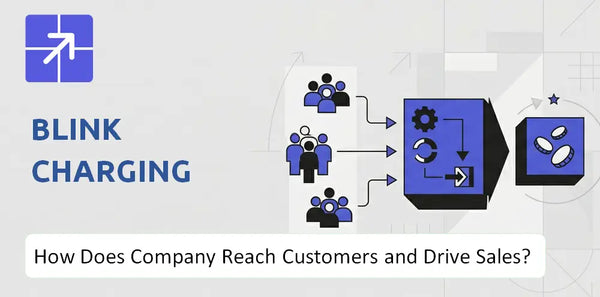
Blink pairs direct sales teams with channel partners and performance-based install agreements to drive placement and uptime. See product economics in Blink Charging BCG Matrix Analysis.
Who Does Blink Charging Want to Sell To?
Blink Charging Co. sells primarily to high-density, high-dwell customers: multifamily property owners, fleet operators, large workplaces/retail REITs, and public/healthcare institutions. The company targets site hosts where predictable EV dwell time drives utilization above 15%, using direct sales, partner programs, and targeted incentives to convert demand into installations.
 Core buyer: Multifamily property managers & developers
Multifamily residential is the top priority because residents create predictable, long dwell times and recurring charging need; Blink Charging marketing strategy emphasizes turnkey hardware, site-host revenue shares, and leasing/financing to meet state-mandated amenity requirements. In 2025 Blink reported concentrating deployments on apartment complexes and condo developments where utilization targets exceed 15%.
Secondary buyers: Fleet operators and municipal fleets
Fleet operators – last-mile delivery, utility fleets, and city vehicles – need integrated hardware and fleet software (telemetry, scheduling, billing). Blink Charging customer acquisition for fleets centers on bundled solutions, OCPP-compatible chargers, and managed services to shorten the B2B sales cycle; fleet pilots often convert to scaled rollouts when total cost of ownership improves by double-digit percentages.
Additional targets: Commercial landlords and large workplaces
Large employers, office campuses, and retail REITs are pursued for daytime, predictable charging demand; Blink Charging sales strategy leverages workplace charging programs, revenue-share models, and partnerships with facility managers. Targeting high-turnover retail parking and workplace hubs increases port throughput and improves ROI per port.
Public sector & healthcare institutions
Hospitals, universities, and municipal sites offer reliable foot traffic and long dwell times; Blink Charging direct sales to businesses process focuses on grant/consortium-funded projects and compliance-driven installs. These sites often access incentives and rebates, lowering upfront costs and shortening payback to meet utilization goals.
Market positioning: High-turnover, utilization-first deployment
Blink positions itself as a full-stack EV charging partner – hardware, network, and software – targeting hosts where each port can reach a utilization benchmark above 15%. The pricing and financing options Blink Charging offers customers include capital lease, revenue share, and subscription plans to lower adoption barriers and accelerate installations.
Why this positioning works: Predictable demand and measurable ROI
Focusing on segments with predictable dwell times improves utilization, shortens payback, and simplifies site economics – key selling points in Blink Charging sales strategy. Local marketing strategies, partner programs for property owners, and targeted incentives drive lead generation and conversion; see Growth Outlook of Blink Charging Company for context on 2025 deployment focus and financials.
Blink Charging SWOT Analysis
- Complete SWOT Breakdown
- Fully Customizable
- Editable in Excel & Word
- Professional Formatting
- Investor-Ready Format

How Does Blink Charging Get in Front of Customers?
Blink Charging Co. reaches customers via a multi-channel distribution mix: enterprise RFP sales, third-party distributors and electrical contractors, the Blink Network digital platform, and OEM partnerships that bundle charging hardware with vehicle sales to convert demand into installations.

Enterprise RFPs and Fleet Contracts Drive Large-Scale Wins
Blink Charging Co. deploys a dedicated enterprise sales force to win federal, state, and municipal RFPs, including ongoing USPS fleet infrastructure expansions; these contracts accounted for a material portion of commercial deployments in 2025 and create predictable, high-value revenue streams.
Blink Network as a Demand and Visibility Platform
The Blink Network functions as both a customer acquisition tool and visibility layer for EV drivers, routing charging sessions, enabling reservations, and generating leads for site hosts – helping convert digital demand into on-site installations.
Third-Party Distributors and Contractor Channel
Blink Charging Co. leverages a nationwide network of distributors and electrical contractors who act as local sales agents and installers, preserving low fixed payroll while scaling reach into retail, property management, and commercial accounts.
OEM Partnerships as a Primary Lead Source
By March 2026, strategic partnerships with automotive OEMs emerged as a primary lead source, with manufacturers bundling Blink Charging Co. home and commercial solutions to streamline buyer experience and accelerate residential and commercial conversions.
Digital Marketing and Platform Distribution
Blink combines search, paid media, email, app features, and the Blink Network platform to drive visibility; SEO and localized digital campaigns target property owners and fleets while in-app promotions nudge EV drivers toward partner sites.
Demand Generation Tactics
Main tactics include targeted RFP outreach, OEM co-marketing, localized installer promotions, incentive and rebate guidance for site hosts, and event or fleet demos that shorten the Blink Charging customer acquisition cycle.
Customer Acquisition Efficiency
Using channel partners and OEM bundling lowers customer acquisition cost per install versus direct-only models; enterprise contracts yield higher lifetime value, while the Blink Network improves conversion rates by converting app visibility into installations.
Most Important Reach Advantage in 2025/2026
The combination of enterprise RFP wins plus OEM partnerships provides the strongest scale advantage: institutional contracts secure large deployments and OEM bundling supplies steady, high-intent consumer and commercial leads.
Key 2025/2026 metrics supporting reach: Blink Charging Co.'s network-enabled installations rose year-over-year, enterprise contract wins contributed materially to commercial booking pipelines, and OEM partnership leads became a top source of residential and commercial orders; see operational context in How Blink Charging Company Works and Makes Money.
Blink Charging Business Model Canvas
- One-time Payment
- No Research Needed – Save Hours of Work
- Built by Experts, Trusted by Consultants
- Instant Download, Ready to Use
- 100% Editable, Fully Customizable

How Does Blink Charging Turn Attention Into Sales?
Blink Charging converts attention into sales by offering flexible ownership models that remove upfront capex barriers and by monetizing installed hardware with a recurring SaaS backbone and maintenance subscriptions. The mix of Host-Owned and Blink-Owned deals, plus Blink Network billing and Blink Care upkeep, turns leads into immediate hardware revenue and predictable recurring income.
Flexible ownership drives closes
Blink Charging sales strategy centers on two commercial paths: Host-Owned, where property owners buy equipment, and Blink-Owned, where Blink retains assets and pays hosts a revenue share. This lets sales teams close deals with both cash-rich private developers and cash-constrained municipalities.
Pricing and monetization logic
Revenue combines one-time hardware sales (Host-Owned) and recurring streams: usage fees via Blink Network SaaS, network transaction commissions on charging sessions, and Blink-Owned revenue shares. Blink Care adds subscription fees for maintenance and uptime guarantees.
Conversion and purchase drivers
Key drivers: removal of capex through Blink-Owned leases, clear ROI modeling for hosts (projected payback and utilization), streamlined permitting/install via dealer and installer networks, and incentives/rebates that lower net cost. Sales teams use targeted Blink Charging marketing strategy and local outreach to accelerate decisions.
Repeat revenue and customer expansion
After install, Blink secures recurring income via Blink Network SaaS billing and energy management plus Blink Care maintenance subscriptions providing a 99 percent uptime guarantee. Upsells include additional stations, software features, and fleet management – driving account expansion and higher lifetime value.
Sales execution mixes direct sales to businesses, partner-led deals with property owners and municipalities, and digital lead funnels – using Blink Charging customer acquisition metrics: closing Host-Owned hardware for immediate margin and growing recurring ARR from Blink Network and Blink Care; see Mission, Vision, and Values of Blink Charging Company for strategic context.
Blink Charging Marketing Mix
- Complete Marketing Mix Analysis
- Effortlessly Communicate Your Business Strategy
- Investor-Ready Format
- 100% Editable and Customizable
- Clear and Structured Layout

How Strong Does Blink Charging's Commercial Engine Look Going Forward?
Blink Charging Company's commercial engine looks strong heading into 2025/2026, backed by higher-margin software and service mix and adjusted EBITDA break-even in late 2024. Key supports include a projected >$185 million 2026 revenue run rate and gross margins near 35%, while NACS standardization and legacy competitor pressure could weaken traction.
What Supports Future Demand
Higher-margin software and services now represent about 25 to 30 percent of revenue, improving unit economics and recurring revenue predictability. A revenue run rate above $185 million for 2026 and stabilized gross margins near 35 percent give Blink Charging marketing strategy and customer acquisition efforts more budget and credibility.
Channel and Marketing Effectiveness
Direct sales to businesses, partner programs for property owners, and dealer/installer networks combine for diversified go-to-market reach; digital marketing channels and local outreach support site-host lead generation. Maintaining a 20 percent annual growth in networked charging stations depends on continued effectiveness of Blink Charging customer acquisition and charging station partnership strategy.
Risks to Commercial Performance
Rapid NACS standardization in North America shifts technical requirements and could raise retrofit costs and churn among OEM-aligned networks. Legacy energy firms and large EV charging roll-ups increase pricing pressure and may compress margins, challenging Blink Charging sales strategy and electric vehicle charging sales tactics.
The Overall Sales and Marketing Outlook
The professional judgment is a Strong Performance rating for 2025/2026, conditional on sustaining network growth (~20% year-over-year) and converting higher-margin service revenue. Execution risks remain from market consolidation, but Blink Charging direct sales to businesses process and partner programs for property owners position it to convert EV charging demand into installations if it preserves channel effectiveness and pricing flexibility.
See company context in the History and Background of Blink Charging Company: History and Background of Blink Charging Company
Blink Charging Boston Consulting Group Matrix
- Built by Experts, Trusted by Consultants
- Structured for Consultants, Students, and Founders
- 100% Editable in Microsoft Word & Excel
- Instant Digital Download – Use Immediately
- Compatible with Mac & PC – Fully Unlocked

Related Blogs
- What Is the History of Blink Charging Company and How Did It Evolve?
- What Is the Competitive Landscape of Blink Charging Company and How Does It Compete?
- What Is the Growth Outlook of Blink Charging Company and Where Is It Heading?
- How Does Blink Charging Company Work and What Drives Its Business Model?
- What Do the Mission, Vision, and Core Values of Blink Charging Company Reveal?
- Who Are the Core Customers in Blink Charging Company's Target Market?
- Who Owns Blink Charging Company Today and Who Holds Control?
Frequently Asked Questions
Blink Charging focuses on high-density, high-dwell customers. Its main targets are multifamily property owners, fleet operators, large workplaces, retail REITs, and public or healthcare institutions. The company prioritizes sites where EV dwell time can drive strong utilization, then uses direct sales, partners, and incentives to turn that demand into installations.
Disclaimer
All information, articles, and product details provided on this website are for general informational and educational purposes only. We do not claim any ownership over, nor do we intend to infringe upon, any trademarks, copyrights, logos, brand names, or other intellectual property mentioned or depicted on this site. Such intellectual property remains the property of its respective owners, and any references here are made solely for identification or informational purposes, without implying any affiliation, endorsement, or partnership.
We make no representations or warranties, express or implied, regarding the accuracy, completeness, or suitability of any content or products presented. Nothing on this website should be construed as legal, tax, investment, financial, medical, or other professional advice. In addition, no part of this site - including articles or product references - constitutes a solicitation, recommendation, endorsement, advertisement, or offer to buy or sell any securities, franchises, or other financial instruments, particularly in jurisdictions where such activity would be unlawful.
All content is of a general nature and may not address the specific circumstances of any individual or entity. It is not a substitute for professional advice or services. Any actions you take based on the information provided here are strictly at your own risk. You accept full responsibility for any decisions or outcomes arising from your use of this website and agree to release us from any liability in connection with your use of, or reliance upon, the content or products found herein.