
How does Bread Financial Holdings convert retail partnerships and embedded finance into repeat sales through its sales and marketing model?
Bread Financial Holdings embeds credit and payments into partners' checkout to capture intent and lift conversion; this matters as its 2025 digital rollout increased merchant integrations and shifted revenue mix toward fee income. See product analysis for strategic context: Bread Financial Holdings BCG Matrix Analysis
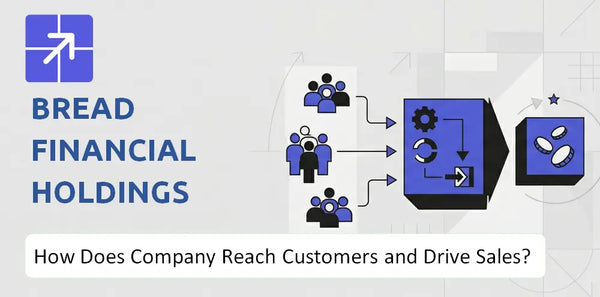
Bread Financial Holdings uses merchant APIs, co-branded marketing, and data-driven offers to convert shoppers into borrowers; prioritize partner onboarding speed to sustain growth and protect credit margins under 2025 rate pressures.
Who Does Bread Financial Holdings Want to Sell To?
Bread Financial Holdings targets two core audiences: enterprise retail partners – mid-to-large specialty retailers needing private label or co-brand credit – and individual consumers, primarily moderate-to-prime borrowers and younger, tech-savvy shoppers who prefer installment pay. The firm also seeks rate-sensitive depositors via Bread Savings to diversify funding and lower cost of capital.
 Primary customer: enterprise retail partners
Bread Financial Holdings focuses on mid-to-large specialty retailers in home furnishings, apparel, and electronics with annual sales above $100 million. It sells private label credit cards and co-brand programs designed to raise average order value, repeat purchases, and loyalty.
Additional target: individual consumers
Bread Financial targets moderate-to-prime credit consumers and, via Bread Pay, younger, digital-first shoppers who prefer installment lending over revolving credit. Acquisition channels emphasize digital onboarding and promo financing to boost conversion.
Market positioning: payment and financing partner for retailers
Bread Financial positions itself as a merchant-focused payment solutions and consumer financing provider that integrates private label credit cards, installment loans, and loyalty programs to increase merchant sales and customer lifetime value.
Why this positioning works
Retailers gain higher average order value and repeat purchase rates; consumers get flexible payment options. Bread Financial uses data-driven marketing, targeted promotions, and omnichannel customer acquisition tactics to convert demand into sales and increase ROI.
Bread Financial customer acquisition blends affiliate and co-brand marketing, email and SMS campaigns, and merchant integrations; management reported consumer receivables of $2.1 billion and merchant services revenue growth of 18% year-over-year in fiscal 2025, underscoring traction with target segments. For a broader strategic read, see Growth Outlook of Bread Financial Holdings Company.
Bread Financial Holdings SWOT Analysis
- Complete SWOT Breakdown
- Fully Customizable
- Editable in Excel & Word
- Professional Formatting
- Investor-Ready Format

How Does Bread Financial Holdings Get in Front of Customers?
Bread Financial Holdings reaches customers via two tracks: enterprise B2B partnerships and embedded B2C finance. It pairs a dedicated sales force with checkout-level integrations and digital marketing to capture purchase intent and convert demand into sales.

B2B Enterprise Partnerships Drive Scale
Bread Financial Holdings deploys a specialized enterprise sales team to sign multi-year partnerships with retailers and brands, positioning private label credit and co-branded cards as tools for customer acquisition and retention. These deals include merchant-funded marketing, shared data agreements, and long-term credit programs that lock in checkout placement and loyalty integrations.
Embedded Finance and Platform Integrations
Bread Financial Holdings embeds consumer financing directly in online and in-store checkouts via integrations with major commerce platforms such as Shopify and BigCommerce, capturing shoppers at point of intent. This omnichannel approach reduces friction and increases conversion rates by offering payment solutions and installment options where customers already shop.
Retail, Co-Brand, and POS Distribution
Distribution includes private label credit cards, co-branded cards, and point-of-sale (POS) financing in physical stores, plus direct retail partnerships and marketplace placements. Bread Financial Holdings leverages merchant relationships to secure prominent in-store and online placement that drives adoption and repeat spend.
Targeted Digital Performance and Aggregator Presence
Bread Savings uses targeted digital performance marketing, paid search, and competitive rate listings on financial aggregator sites to acquire deposits direct-to-consumer. As of early 2026 deposits and other funding sources contributed to over 18 billion in total funding, with direct digital channels supplying a measurable share.
Demand Generation: Promotions and Loyalty
Bread Financial marketing strategy includes targeted promotions, limited-time financing offers, and loyalty program tie-ins that boost cart conversion and repeat purchases. Merchant-funded promotions and personalized offers sent via email and SMS lift activation and transaction frequency.
Acquisition Efficiency and Data-Driven Targeting
Customer acquisition focuses on high-intent moments (checkout) to lower cost-per-acquisition versus broad top-of-funnel ads. Bread Financial customer acquisition relies on partner-funded marketing, analytics-driven targeting, and embedded conversion paths to improve ROI and reduce payback periods.
Primary Reach Advantage: Checkout Placement
The most important reach advantage is embedded checkout placement across retail partners and platforms, which captures demand at the point of purchase and converts it into sales. For examples of ownership and strategic structure supporting these channels see Ownership and Control of Bread Financial Holdings Company.
Bread Financial Holdings Business Model Canvas
- One-time Payment
- No Research Needed – Save Hours of Work
- Built by Experts, Trusted by Consultants
- Instant Download, Ready to Use
- 100% Editable, Fully Customizable

How Does Bread Financial Holdings Turn Attention Into Sales?
Bread Financial Holdings turns attention into sales via a near-instant, low-friction digital apply-and-buy flow plus risk-based pricing and a multi-product checkout that captures shoppers who would otherwise drop out. Proprietary underwriting and personalized loyalty programs drive initial approval, activation, and repeat use, converting interest into revenue across card and installment portfolios.
Core sales model: partner-led digital checkout and direct consumer finance
Bread Financial Holdings sells through retail and e-commerce partners via embedded private label credit cards, co-branded cards, and point-of-sale financing. The model combines partner-led selling at checkout with direct digital acquisition for Bread Pay split-pay and installment products.
Pricing and monetization logic: risk-based interest, fees, and merchant economics
Revenue comes from interest income on an average managed portfolio of $18.5 billion, interchange and merchant fees on payment solutions, and consumer fees on installment plans; pricing is dynamic and tied to credit risk and partner economics.
Conversion and purchase drivers: instant approvals, frictionless UX, and alternative pay options
Near-instant underwriting decisions reduce cart abandonment and lift conversion rates; offering split-pay and installment options captures shoppers who decline traditional credit. Data-driven targeted promotions and optimized checkout flows increase authorization-to-sale ratios.
Repeat revenue and customer expansion: personalized marketing and loyalty
After onboarding, Bread Financial marketing strategy deploys personalized email, SMS, and in-app offers plus loyalty incentives to drive repeat usage and card spend. Cross-sell between private label credit cards and Bread Pay products expands wallet share and reduces churn.
Bread Financial customer acquisition and conversion rest on proprietary underwriting models that deliver near-instant credit decisions, reducing checkout friction and improving merchant sales lift; targeted promotions and loyalty programs then convert approvals into repeat revenue. See a company analysis for context: Competitive Landscape of Bread Financial Holdings Company
Bread Financial Holdings Marketing Mix
- Complete Marketing Mix Analysis
- Effortlessly Communicate Your Business Strategy
- Investor-Ready Format
- 100% Editable and Customizable
- Clear and Structured Layout

How Strong Does Bread Financial Holdings's Commercial Engine Look Going Forward?
Bread Financial Holdings' commercial engine looks resilient into 2025/2026, driven by a digital-first platform, broader non-private label mix, and tighter underwriting; regulatory pressure on late fees and credit normalization remain the main headwinds.
Digital-first platform and product diversification support demand
Bread Financial Holdings' shift toward non-private label products and Bread Pay expands addressable payment solutions and merchant services, improving conversion and cross-sell. The company reports deposit growth and Bread Pay volume gains that help replace lost late-fee revenue.
Channel and marketing effectiveness – data-driven and omnichannel
Bread Financial marketing strategy emphasizes digital marketing, targeted promotions, email and SMS conversion tactics, and retailer partnerships that leverage analytics for personalized offers. Omnichannel customer acquisition tactics and affiliate/co-brand marketing sustain steady new account flow.
Regulatory and credit risks to commercial performance
State and federal scrutiny of late fees compresses fee income; credit normalization could widen delinquencies if unemployment rises. Marketing ROI may decline if acquisition costs increase amid tighter credit and merchant discount repricing.
Overall sales and marketing outlook for 2025/2026
Outlook is cautiously optimistic: management projects a stabilized net interest margin around 10% – 11% for 2026, driven by repriced merchant discount rates and proactive credit tightening. Digital feedback loops improve risk pricing and customer onboarding, so the sales engine appears adaptable if volume growth in Bread Pay and direct deposits continues.
See related analysis on target customers and market in this piece: Target Customers and Market of Bread Financial Holdings Company
Bread Financial Holdings Boston Consulting Group Matrix
- Built by Experts, Trusted by Consultants
- Structured for Consultants, Students, and Founders
- 100% Editable in Microsoft Word & Excel
- Instant Digital Download – Use Immediately
- Compatible with Mac & PC – Fully Unlocked

Related Blogs
- What Is the History of Bread Financial Holdings Company and How Did It Evolve?
- What Is the Competitive Landscape of Bread Financial Holdings Company and How Does It Compete?
- What Is the Growth Outlook of Bread Financial Holdings Company and Where Is It Heading?
- How Does Bread Financial Holdings Company Work and What Drives Its Business Model?
- What Do the Mission, Vision, and Core Values of Bread Financial Holdings Company Reveal?
- Who Are the Core Customers in Bread Financial Holdings Company's Target Market?
- Who Owns Bread Financial Holdings Company Today and Who Holds Control?
Frequently Asked Questions
Bread Financial Holdings primarily targets mid-to-large specialty retailers and individual consumers. On the business side, it sells private label and co-brand credit programs to retailers in home furnishings, apparel, and electronics. On the consumer side, it reaches moderate-to-prime borrowers and younger shoppers who prefer installment financing.
Disclaimer
All information, articles, and product details provided on this website are for general informational and educational purposes only. We do not claim any ownership over, nor do we intend to infringe upon, any trademarks, copyrights, logos, brand names, or other intellectual property mentioned or depicted on this site. Such intellectual property remains the property of its respective owners, and any references here are made solely for identification or informational purposes, without implying any affiliation, endorsement, or partnership.
We make no representations or warranties, express or implied, regarding the accuracy, completeness, or suitability of any content or products presented. Nothing on this website should be construed as legal, tax, investment, financial, medical, or other professional advice. In addition, no part of this site - including articles or product references - constitutes a solicitation, recommendation, endorsement, advertisement, or offer to buy or sell any securities, franchises, or other financial instruments, particularly in jurisdictions where such activity would be unlawful.
All content is of a general nature and may not address the specific circumstances of any individual or entity. It is not a substitute for professional advice or services. Any actions you take based on the information provided here are strictly at your own risk. You accept full responsibility for any decisions or outcomes arising from your use of this website and agree to release us from any liability in connection with your use of, or reliance upon, the content or products found herein.