
How does Delaware North's sales and marketing model convert venue traffic into repeat, high-margin sales?
Delaware North sells convenience and experience to venue owners, turning foot traffic into average spend gains via targeted merchandising, dynamic pricing, and operational scale. This matters as 2025 revenue of 5.4 billion dollars shows scale, and 2026 analytics integration improves real-time demand forecasting.
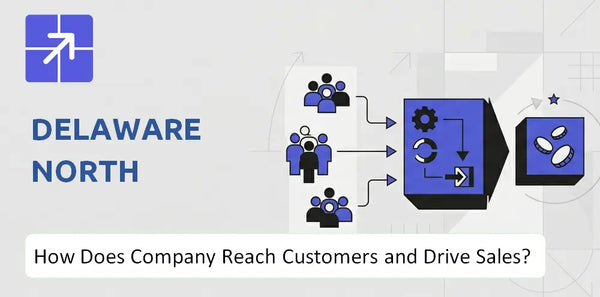
Focus pricing, staffing, and assortment where sensors and POS data show peak capture; a practical step is A/B testing menu bundles to raise per-capita spend.
See product analysis: Delaware North BCG Matrix Analysis
Who Does Delaware North Want to Sell To?
Delaware North targets two core groups: institutional B2B partners – sports franchises, airport authorities, and federal agencies – and high-intent B2C consumers present at venues, especially experience-seeking travelers and luxury-suite patrons. The company wins them through operational reliability, revenue-share deals, and premium food, beverage, and gaming offers that drive discretionary spend.
 Primary Institutional Buyers: Sports, Airports, and Parks
Delaware North focuses on professional sports franchises (e.g., TD Garden partners), municipal airport authorities (e.g., Hartsfield-Jackson concessions), and federal agencies such as the National Park Service; these clients prioritize uptime, compliance, and revenue-sharing optimization. Winning long-term contracts with stadiums and airports supports steady B2B revenue streams and larger contract values per venue – contracts often range from multimillion-dollar annual arrangements to long-term concession agreements exceeding $10 million annually at major venues.
High-Intent B2C Consumers at Venues
The B2C target is the captive audience inside venues: suite holders, event attendees, and transient travelers. Delaware North targets experience-seekers with high discretionary spend – luxury-suite guests, corporate buyers, and travelers whose dwell time increases average transaction value; average per-cap spend at major stadiums and airports can exceed $35 – $75 per visit depending on event and location.
Additional Target Segments: Gamers, Tourists, and Corporate Clients
Adjacent segments include casino and gaming patrons, national-park visitors buying food and retail, tourist groups, and corporate clients using catering and premium services. Targeting these groups increases ancillary revenue – retail and gaming can add 20 – 30% incremental margin to base food and beverage sales.
Market Positioning: Reliable Operator and Experience Seller
Delaware North positions itself as a full-service hospitality operator emphasizing consistent operations, compliance, and premium guest experience. The firm markets turnkey concession management, merchandising strategy, and digital ordering to partners seeking predictable revenue and reduced operational risk.
Why the Positioning Works: Data, Partnerships, and Premium Execution
The message that resonates is operational certainty plus sales upside: Delaware North uses data analytics for demand forecasting and dynamic merchandising, loyalty and mobile ordering to convert foot traffic to sales, and partnership marketing with sports teams to drive traffic. Case examples show mobile ordering and loyalty can lift transaction frequency by 10 – 25%. See this company overview for context: How Delaware North Company Works and Makes Money
How This Maps to Sales and Marketing Tactics
Sales strategy blends B2B contract negotiations with B2C activation: concession sales strategies, brand partnerships and sponsorships, pricing strategies, and omnichannel sales approach (online ordering, mobile apps, in-venue kiosks). Training and sales techniques for staff plus targeted seasonal promotions drive conversion; in large venues these tactics help achieve higher per-guest spend and measurable marketing ROI.
Delaware North SWOT Analysis
- Complete SWOT Breakdown
- Fully Customizable
- Editable in Excel & Word
- Professional Formatting
- Investor-Ready Format

How Does Delaware North Get in Front of Customers?
Delaware North reaches customers through a dominant physical footprint in premium venues, digital channels that engage fans pre-arrival, and branded high-street restaurants and loyalty programs that drive repeat visits. Its strategy blends venue exclusivity, mobile apps, and targeted loyalty marketing to convert built-in venue demand into sales.

Venue-first Acquisition via Exclusive Concession Rights
Delaware North marketing strategy centers on operating in over 200 venues across four continents, often holding exclusive or primary service rights that guarantee access to captured audiences drawn by stadiums, airports, and parks. This physical footprint turns venue foot traffic into predictable concession sales and hospitality revenue.
Digital Marketing and Mobile Engagement
Delaware North digital marketing campaigns case study shows growth in mobile reach through proprietary ordering apps and integrations with mobile sports betting platforms; by 2026 these channels engage fans before arrival and lift in-venue order frequency. Email, paid social, and app push campaigns feed pre-game orders and upsell premium concessions.
Retail and Partnership Distribution
Sales strategy uses Patina Restaurant Group to build a high-street presence in New York and Los Angeles, creating brand equity beyond venues, while partnerships with teams and venue operators secure long-term distribution agreements that limit competitive entry in high-barrier locations.
Demand Generation: Events, Promotions, and Loyalty
Demand generation tactics include event-driven promotions, seasonal menu rollouts, and targeted promotions tied to team schedules; gaming uses loyalty programs reaching over 3,000,000 active players to drive repeat visits and promotional redemption.
Customer Acquisition Efficiency and ROI
Acquisition is highly efficient because many customers are venue-captive; blended CAC (customer acquisition cost) is lower than typical retail because venue-driven demand obviates broad top-of-funnel spend. Use of loyalty data and targeted offers improves conversion and average ticket size.
Key Reach Advantage: Exclusive Venue Access
The strongest reach advantage in 2025/2026 is venue exclusivity – operating in over 200 venues creates a high barrier to entry, predictable customer flow, and scale for concession sales strategies, merchandising, and cross-promotion with teams and sponsors. See more on Ownership and Control of Delaware North Company Ownership and Control of Delaware North Company.
Delaware North Business Model Canvas
- One-time Payment
- No Research Needed – Save Hours of Work
- Built by Experts, Trusted by Consultants
- Instant Download, Ready to Use
- 100% Editable, Fully Customizable

How Does Delaware North Turn Attention Into Sales?
Delaware North turns attention into sales by combining high-velocity transaction tech with tiered pricing that captures both volume and margin; autonomous checkout and AI frictionless systems speed throughput while loyalty and premium services drive higher-profit conversions.
Core sales model: Omnichannel, event-driven retail and hospitality
Delaware North sells via on-site retail and concessions, direct hospitality contracts, digital ordering, and partner-led stadium and venue operations. High-volume, self-serve points and staffed premium services coexist to serve different customer segments.
Pricing and monetization logic: Tiered margins and dynamic pricing
Revenue mixes one-time transaction fees at concessions with recurring revenue from premium suites and catering contracts; dynamic and tiered pricing boosts per-customer yield, while volume concessions supply base throughput.
Conversion and purchase drivers: Speed, convenience, and loyalty
Conversion rises from reduced wait times via autonomous checkout and AI-driven frictionless tech, clear price tiers, mobile ordering, and visible premium offerings; trust from venue partnerships and trained staff also increases impulse and planned spend.
Repeat revenue and customer expansion: Loyalty and cross-channel integration
Integrated loyalty programs and mobile interfaces convert one-time visitors into recurring customers, upsell seats to suites, and reroute retail buyers to online channels; gaming loyalty links in-person play to mobile betting for lifetime value expansion.
By early 2026, Delaware North deployed autonomous checkout and AI frictionless tech across roughly 50 percent of high-volume concessions, cutting queue times and raising per-event transaction volume by an average of 22 percent versus legacy POS; that uplift directly increased concession revenue per event and improved throughput for premium upsells. Loyalty-driven gaming integrations steer foot traffic into repeat mobile activity, creating steady, recurring intake from bettors and frequent visitors. See more on company origins: History and Background of Delaware North Company
Delaware North Marketing Mix
- Complete Marketing Mix Analysis
- Effortlessly Communicate Your Business Strategy
- Investor-Ready Format
- 100% Editable and Customizable
- Clear and Structured Layout

How Strong Does Delaware North's Commercial Engine Look Going Forward?
Delaware North's commercial engine looks resilient into 2025/2026, driven by high contract retention and diversified revenue streams, while labor inflation and capex for digital upgrades are key headwinds.
Contract Durability and Portfolio Diversification Support Future Demand
With a reported contract retention rate exceeding 95 percent, Delaware North's marketing strategy and brand partnerships and sponsorships anchor predictable concession sales strategies and hospitality marketing across stadiums, airports, and gaming venues.
Channel and Marketing Effectiveness: Omnichannel Reach
Delaware North's omnichannel sales approach – mobile ordering, venue POS, and onsite merchandising – supports customer acquisition and conversion of foot traffic to sales; online ordering and mobile apps drive repeat visits and higher average tickets, helping sales strategy execution.
Risks to Commercial Performance: Cost and Capital Intensity
Primary risks include ongoing labor inflation (wage pressure in 2025 linked to tight labor markets) and significant capital spend for digital upgrades; these compress margins despite demand tailwinds from events like the 2026 World Cup.
Overall Sales and Marketing Outlook for 2025/2026
The outlook is strong: professional judgment forecasts mid-single-digit organic revenue growth in 2025/2026 with superior cash flow stability and an expected EBITDA margin expansion of 150 – 200 basis points over 24 months as autonomous service models and data analytics for demand forecasting scale.
See operational context and customer targeting in this companion piece: Target Customers and Market of Delaware North Company
Delaware North Boston Consulting Group Matrix
- Built by Experts, Trusted by Consultants
- Structured for Consultants, Students, and Founders
- 100% Editable in Microsoft Word & Excel
- Instant Digital Download – Use Immediately
- Compatible with Mac & PC – Fully Unlocked

Related Blogs
- What Is the History of Delaware North Company and How Did It Evolve?
- What Is the Competitive Landscape of Delaware North Company and How Does It Compete?
- What Is the Growth Outlook of Delaware North Company and Where Is It Heading?
- How Does Delaware North Company Work and What Drives Its Business Model?
- What Do the Mission, Vision, and Core Values of Delaware North Company Reveal?
- Who Are the Core Customers in Delaware North Company's Target Market?
- Who Owns Delaware North Company Today and Who Holds Control?
Frequently Asked Questions
Delaware North targets two main groups: institutional B2B partners and high-intent B2C customers at venues. Its B2B buyers include sports franchises, airport authorities, and federal agencies, while its B2C focus is captive venue audiences such as suite holders, event attendees, travelers, gamers, and tourists who are ready to spend.
Disclaimer
All information, articles, and product details provided on this website are for general informational and educational purposes only. We do not claim any ownership over, nor do we intend to infringe upon, any trademarks, copyrights, logos, brand names, or other intellectual property mentioned or depicted on this site. Such intellectual property remains the property of its respective owners, and any references here are made solely for identification or informational purposes, without implying any affiliation, endorsement, or partnership.
We make no representations or warranties, express or implied, regarding the accuracy, completeness, or suitability of any content or products presented. Nothing on this website should be construed as legal, tax, investment, financial, medical, or other professional advice. In addition, no part of this site - including articles or product references - constitutes a solicitation, recommendation, endorsement, advertisement, or offer to buy or sell any securities, franchises, or other financial instruments, particularly in jurisdictions where such activity would be unlawful.
All content is of a general nature and may not address the specific circumstances of any individual or entity. It is not a substitute for professional advice or services. Any actions you take based on the information provided here are strictly at your own risk. You accept full responsibility for any decisions or outcomes arising from your use of this website and agree to release us from any liability in connection with your use of, or reliance upon, the content or products found herein.