
How does DraftKings' sales and marketing model convert sports fans into paying customers?
DraftKings uses targeted digital acquisition, promo-funded trials, and CRM-led reactivation to drive deposits and frequency. This matters because DraftKings reported sustained 25% CAGR in revenue through 2025 while improving Adjusted EBITDA margins in early 2026, signaling efficient unit economics.
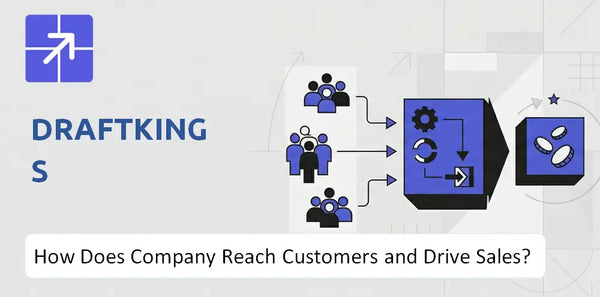
Prioritize promo ROI, channel mix, and first-30-day LTV metrics; test reduced bonus intensity to protect margin while keeping acquisition velocity. See product insight: DraftKings BCG Matrix Analysis
Who Does DraftKings Want to Sell To?
DraftKings wants to sell to digitally engaged sports fans and recreational gamers aged 21 – 45 with mobile-first habits and disposable income, plus new lottery players after the 2024 Jackpocket acquisition; it aims to win high-LTV cohorts through targeted acquisition, conversion optimization, and cross-sell into sportsbook, DFS, and iGaming.
 Core mobile sports bettors and DFS players
DraftKings targets high-frequency Daily Fantasy Sports legacy users and high-volume Sportsbook bettors aged 21 – 45, focusing on mobile-first engagement where average session length and bet frequency drive revenue; in 2025 mobile accounted for over 85% of active user sessions across products.
Adjacent segments: iGaming and lottery entrants
Post-Jackpocket, DraftKings courts lottery enthusiasts as a lower-cost entry point; it also pursues high-margin iGaming users (casino slots, table games) to lift ARPU – iGaming revenue contributed ~22% of US revenue in fiscal 2025 for comparable operators, signaling material upside.
Market positioning: omnichannel digital sports-entertainment leader
DraftKings positions itself as an integrated sports betting, DFS, and iGaming platform with national brand reach and local regulatory compliance; disciplined geographic expansion into new regulated US jurisdictions has driven market share gains and stable CAC trends in 2025.
Why this positioning converts customers
The combined offer, aggressive sportsbook promotions, personalization in CRM, and onboarding optimization raise conversion and retention – DraftKings reports cohort retention lifts from email automation and push campaigns, while loyalty rewards and cross-sell drive Lifetime Value; see Competitive Landscape of DraftKings Company for context Competitive Landscape of DraftKings Company.
DraftKings SWOT Analysis
- Complete SWOT Breakdown
- Fully Customizable
- Editable in Excel & Word
- Professional Formatting
- Investor-Ready Format

How Does DraftKings Get in Front of Customers?
DraftKings gets in front of customers through omnichannel marketing: large-scale media partnerships, aggressive digital performance channels, and a proprietary database of millions of payers that drives targeted re-engagement. It blends national sports sponsorships with localized influencer and regional campaigns to build awareness, generate demand, and convert users into bettors and fantasy players.

Main acquisition: proprietary database and performance marketing
DraftKings relies on a proprietary database of millions of monthly payers – many from Daily Fantasy Sports – to seed campaigns and re-activate users. This first-party data plus aggressive performance marketing keeps acquisition costs low and lifetime value high.
Digital marketing and online reach
DraftKings runs deep-funnel SEO, paid search (PPC), programmatic social buys, email automation, and app push campaigns to capture and convert intent. Mobile app retention and onboarding optimization are central to DraftKings conversion strategy and mobile betting app retention.
Sales channels and distribution partnerships
Strategic partnerships with the NFL, NBA, and major broadcasters position DraftKings inside the sports viewing experience and drive direct traffic to sportsbook and DFS products. Affiliate partnerships and platform distribution (app stores) extend reach and channel diversification.
Demand generation tactics
DraftKings uses sportsbook promotions, bonus offers, event-driven campaigns, and influencer-led local activations to spur sign-ups. In 2025 the firm increased regional influencer partnerships and localized promos, which supported promotions and bonus offers to convert users.
Customer acquisition efficiency
In 2025 DraftKings reduced Customer Acquisition Cost by approximately 12 percent year-over-year through localization and better targeting, while holding a dominant 33 percent share of the online sports betting market. Programmatic targeting and CRM personalization improved payback periods and trial-to-deposit conversion.
Most important reach advantage in 2025
The strongest reach advantage is DraftKings marketing scale combined with first-party data: millions of unique payers plus league/media partnerships deliver high-frequency placement during live sports and enable precise DraftKings targeted advertising and programmatic ads.
For strategic context on brand positioning and league deals see the article Mission, Vision, and Values of DraftKings Company
DraftKings Business Model Canvas
- One-time Payment
- No Research Needed – Save Hours of Work
- Built by Experts, Trusted by Consultants
- Instant Download, Ready to Use
- 100% Editable, Fully Customizable

How Does DraftKings Turn Attention Into Sales?
DraftKings turns attention into sales by using a machine-learning promotional engine and a cross-sell flywheel that shifts users from low-margin fantasy/lottery to higher-margin Sportsbook and iGaming, driving higher lifetime value and frequency.
Core Sales Model: Multi-Vertical, Product-Led Conversion
DraftKings sells through a mobile-first, self-serve model across Daily Fantasy, Lottery, Sportsbook, and iGaming verticals; partner-led channels (affiliates, leagues) and programmatic ads feed app installs and registrations.
Pricing and Monetization Logic: Margin Migration and Yielding Bets
Revenue comes from hold on wagers, rake/entry fees on fantasy contests, and iGaming stakes; dynamic odds, in-play pricing, and paid features (parlays, boosts) increase per-user monetization.
Conversion and Purchase Drivers: Personalization and Live Offers
Conversion relies on ML-driven personalized offers, real-time live betting boosts, and same-game parlay suggestions delivered via push, email automation, and in-app prompts to shorten time-to-wager.
Repeat Revenue and Customer Expansion: Cross-Sell Flywheel
DraftKings expands value by migrating users into Sportsbook and iGaming; as of early 2026, multi-vertical users generate nearly 3x the revenue of single-vertical users, supporting higher retention and ARPU.
Operationally, DraftKings marketing uses targeted advertising, SEO, PPC, affiliate programs, and partnerships with teams/leagues to acquire users; onboarding funnels then apply promotional optimization to convert interest into frequent wagering. The promotional engine replaces one-size-fits-all bonuses with tailored boosts and time-sensitive same-game parlay suggestions, improving conversion rates and hold percentage. Real-time personalization, combined with email marketing campaigns and push notifications, raises short-term conversion and lifetime frequency; internal metrics show cross-vertical activation materially lifts average revenue per user and reduces churn. Read more on company evolution in this article: History and Background of DraftKings Company
DraftKings Marketing Mix
- Complete Marketing Mix Analysis
- Effortlessly Communicate Your Business Strategy
- Investor-Ready Format
- 100% Editable and Customizable
- Clear and Structured Layout

How Strong Does DraftKings's Commercial Engine Look Going Forward?
DraftKings' commercial engine enters 2026 with clear momentum: scale-driven margins and diversified revenue from sportsbook, iGaming, and Jackpocket reduce seasonality and support consistent sales and marketing returns; regulatory tax pressures and intense competition remain the main downside risks.
Scale and product mix that support future demand
DraftKings marketing benefits from $1,000,000,000 plus 2025 Adjusted EBITDA, broader iGaming revenue after Jackpocket integration, and a year-round mix that smooths sportsbook seasonality; these factors bolster brand strength, loyalty, and product-market fit for sustained customer acquisition and monetization.
Channel and marketing effectiveness
Paid search, programmatic ads, affiliate channels, and social media marketing strategies show high conversion efficiency; mobile app onboarding and conversion optimization plus CRM personalization and targeted email marketing campaigns drive retention and lift lifetime value for newly acquired users.
Regulatory and competitive risks to commercial performance
State-level tax increases and market-specific regulatory shifts can compress net take rates and CAC economics; well-capitalized incumbents and aggressive sportsbook promotions could force higher marketing spend and slow unit-margin expansion.
Overall sales and marketing outlook for 2025/2026
Outlook is strong: management's guidance and 2025 performance imply DraftKings can deliver >20 percent top-line growth and expanding margins through 2026, driven by cross-sell, upsell, in-play betting promotions, and iGaming scale while maintaining disciplined DraftKings customer acquisition and conversion strategy.
Relevant reads: How DraftKings Company Works and Makes Money
DraftKings Boston Consulting Group Matrix
- Built by Experts, Trusted by Consultants
- Structured for Consultants, Students, and Founders
- 100% Editable in Microsoft Word & Excel
- Instant Digital Download – Use Immediately
- Compatible with Mac & PC – Fully Unlocked

Related Blogs
- What Is the History of DraftKings Company and How Did It Evolve?
- What Is the Competitive Landscape of DraftKings Company and How Does It Compete?
- What Is the Growth Outlook of DraftKings Company and Where Is It Heading?
- How Does DraftKings Company Work and What Drives Its Business Model?
- What Do the Mission, Vision, and Core Values of DraftKings Company Reveal?
- Who Are the Core Customers in DraftKings Company's Target Market?
- Who Owns DraftKings Company Today and Who Holds Control?
Frequently Asked Questions
DraftKings wants to sell to digitally engaged sports fans and recreational gamers aged 21-45 who use mobile first and have disposable income. It also targets new lottery players after the Jackpocket acquisition, then tries to grow value through sportsbook, DFS, and iGaming cross-sell.
Disclaimer
All information, articles, and product details provided on this website are for general informational and educational purposes only. We do not claim any ownership over, nor do we intend to infringe upon, any trademarks, copyrights, logos, brand names, or other intellectual property mentioned or depicted on this site. Such intellectual property remains the property of its respective owners, and any references here are made solely for identification or informational purposes, without implying any affiliation, endorsement, or partnership.
We make no representations or warranties, express or implied, regarding the accuracy, completeness, or suitability of any content or products presented. Nothing on this website should be construed as legal, tax, investment, financial, medical, or other professional advice. In addition, no part of this site - including articles or product references - constitutes a solicitation, recommendation, endorsement, advertisement, or offer to buy or sell any securities, franchises, or other financial instruments, particularly in jurisdictions where such activity would be unlawful.
All content is of a general nature and may not address the specific circumstances of any individual or entity. It is not a substitute for professional advice or services. Any actions you take based on the information provided here are strictly at your own risk. You accept full responsibility for any decisions or outcomes arising from your use of this website and agree to release us from any liability in connection with your use of, or reliance upon, the content or products found herein.