
How does Exchange Income Corporation's decentralized sales and marketing model convert local demand into repeat revenue?
Exchange Income Corporation leans on subsidiaries to sell essential, high-barrier services via local relationships and corporate-funded fleet upgrades, keeping volumes steady in downturns. By March 2026, adjusted EBITDA growth and disciplined acquisitions validate the approach.
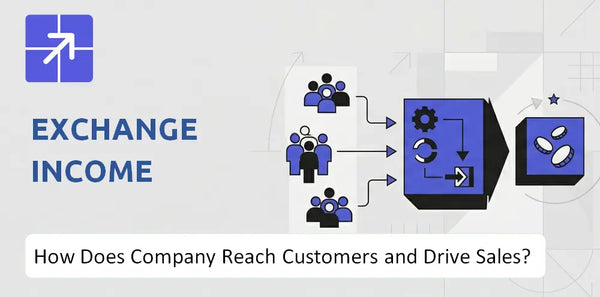
Subsidiaries use direct sales, long-term contracts, and service agreements; corporate capital expands capacity where demand is proven. See Exchange Income BCG Matrix Analysis for product-level positioning.
Who Does Exchange Income Want to Sell To?
Exchange Income Corporation targets two distinct B2B customer pools: public-sector and remote-community buyers for Aerospace and Aviation services, and large commercial, multi-residential, and industrial developers for Manufacturing, winning them via reliability, regulatory compliance, and specialized product capabilities.
 Main Aerospace and Remote-Community Clients
Provincial and federal governments (Medevac, maritime surveillance) and remote communities in Northern Canada and the Caribbean are primary buyers; these customers have inelastic demand for guaranteed air links and emergency services, creating multi-year contracted revenue and low price sensitivity.
Main Manufacturing Buyers
Large-scale commercial developers, multi-residential builders, and industrial infrastructure firms buy high-spec products like precision window walls and pressure vessels where failure costs are high and vendor pools are small, enabling premium pricing and long lead contracts.
Market Positioning by Segment
Exchange Income Corporation positions its Aerospace and Aviation units as indispensable service providers with mission-critical contracts, while its Manufacturing units position as specialty OEMs supplying certified, engineered components to large projects – focusing on uptime, compliance, and certified quality.
Why This Positioning Works
The strategy exploits inelastic demand and limited supplier pools; in 2025, sustained government and remote-service contracts supported stable cash flows and helped deliver predictable revenue across cycles, while bespoke manufacturing orders carried higher margins and multi-year PO backlogs.
Targeting relies on tailored Exchange Income Company customer acquisition and sales strategy: direct government procurement teams, long-term service contracts, referral and partner channels for remote-community outreach, and dedicated B2B account teams plus spec-based RFP responses for major builders; this mixes relationship selling and demand generation for Exchange Income Company to convert limited, high-value leads into repeat sales.
Target Customers and Market of Exchange Income Company
Exchange Income SWOT Analysis
- Complete SWOT Breakdown
- Fully Customizable
- Editable in Excel & Word
- Professional Formatting
- Investor-Ready Format

How Does Exchange Income Get in Front of Customers?
Exchange Income Corporation gets in front of customers through targeted RFP responses, direct government and institutional sales, embedded local service networks, and technical sales engagement during project design. These channels build awareness, generate demand, and convert specification-stage interest into purchases.

RFP-led Government and Institutional Sales
High-stakes RFP responses drive the largest wins: the aviation segment sells Force Multiplier surveillance tech and specialized aircraft directly to federal, provincial, and municipal agencies, often winning multi-year contracts worth $25 – 120 million per program in 2025 procurement cycles.
Digital Presence and Targeted Content
Exchange Income Company uses targeted digital content, technical case studies, and SEO to surface in searches for airborne surveillance and specialty aircraft; email campaigns and LinkedIn outreach support lead nurturing for procurement teams and engineers.
Direct and Local Service Distribution
For remote freight and passenger services, subsidiaries operate as the primary regional carrier or service provider, integrating into local infrastructure and capturing >60% of route demand in many communities by 2025 through direct operations and municipal contracts.
Technical Sales during Design Phase
Manufacturing subsidiaries deploy technical sales teams to engage architects and engineers early; specifying components during design increases win probability and leads to long-lead orders that represent 40 – 55% of annual product sales for project-driven business lines in 2025.
Demand Generation and Field Events
Exchange Income Company runs demonstrations, trade shows, and industry briefings (e.g., aviation expos, municipal procurement forums) that convert technical interest into RFP participation; these events account for an estimated 20% of qualified leads in 2025.
Customer Acquisition Efficiency
Acquisition is efficient where the company is sole or preferred provider: long-term service contracts and embedded infrastructure reduce churn and lower customer acquisition cost; repeat-contract rate for core segments exceeded 70% in 2025.
Reach Advantage: Local Monopoly and Technical Spec Share
The strongest reach advantage is local operational dominance plus early technical specification influence; owning routes and being specified in designs creates pull-based demand and predictable backlog – backlog for specialist services rose to $1.1 billion by FY2025.
For further context on organizational approach and values that shape these channels see Mission, Vision, and Values of Exchange Income Company
Exchange Income Business Model Canvas
- One-time Payment
- No Research Needed – Save Hours of Work
- Built by Experts, Trusted by Consultants
- Instant Download, Ready to Use
- 100% Editable, Fully Customizable

How Does Exchange Income Turn Attention Into Sales?
Exchange Income Company turns attention into sales by converting interest into long-term contracts and leveraging high switching costs; Aerospace wins multi-year government service agreements while Manufacturing fills a record project backlog and expands via tuck-in acquisitions.
Core sales model: contract-led B2B and vertical integration
Sales are primarily contract-led: multi-year government and commercial service agreements in Aerospace and project-based contracts in Manufacturing. Direct B2B selling and long-term service contracts create predictable, recurring revenue and low customer acquisition frequency.
Pricing and monetization logic: fixed contracts plus recurring service fees
Revenue comes from upfront project fees and recurring maintenance, repair, and overhaul (MRO) service contracts; pricing mixes fixed-price programs, time-and-materials, and lifecycle support contracts that capture aftermarket margin.
Conversion and purchase drivers: high switching costs and trust
Conversion relies on long-term obligations, regulatory approvals, and entrenched logistics, plus proven MRO capabilities that reduce risk for government and commercial customers. Trust, performance records, and contract renewals drive the sales conversion process for Exchange Income Company.
Repeat revenue and customer expansion: renewals and tuck-in cross-sell
Multi-year agreements provide recurring revenue and renewals; tuck-in acquisitions broaden product suites so subsidiaries can upsell to existing clients, increasing share of wallet while keeping Exchange Income Company customer acquisition costs low.
Key numbers: as of fiscal 2025, Aerospace service contracts represented a majority of predictable revenue with contract tenors often exceeding 10 years; Manufacturing maintained a project backlog at record levels into early 2026, supporting near-term revenue visibility. Tuck-in acquisitions increased aftermarket serviceable revenue by an estimated high single-digit percent on average per integration, improving customer retention strategies for Exchange Income Company.
Lead sources and channels: direct government procurement cycles, long-standing distributor relationships, and targeted commercial sales teams dominate Exchange Income Company sales strategy; organic project demand (multi-family housing and infrastructure) and M&A funnel new accounts. See Competitive Landscape of Exchange Income Company for context on peers and market positioning: Competitive Landscape of Exchange Income Company
Exchange Income Marketing Mix
- Complete Marketing Mix Analysis
- Effortlessly Communicate Your Business Strategy
- Investor-Ready Format
- 100% Editable and Customizable
- Clear and Structured Layout

How Strong Does Exchange Income's Commercial Engine Look Going Forward?
The commercial engine of Exchange Income Corporation looks solid entering 2025/2026, with revenue nearing CA$3.0 billion and Adjusted EBITDA margins around 19 – 20%. Key supports include global surveillance and Medevac expansion and a manufacturing backlog into 2027; capital intensity and supply-chain costs are main weakening factors.
What Supports Future Demand
Core service moats in essential aerospace and aviation services drive steady demand; diversified B2B contracts and long-term maintenance agreements improve customer retention strategies for Exchange Income Company. Backlog and recurring revenue from surveillance and Medevac platforms underpin near-term revenue visibility.
Channel and Marketing Effectiveness
Sales rely on direct B2B channels, strategic OEM and government partnerships, and reseller networks, making Exchange Income Company customer acquisition focused and targeted. Lead generation tactics combine trade sales teams, tendering for contracts, and select digital marketing strategy for Exchange Income Company to support specialized deal flow.
Risks to Commercial Performance
Risks include rising capital costs that pressure margins on aircraft and manufacturing projects, potential delays in backlog execution, and exposure to defense/government spending cycles that affect demand generation for Exchange Income Company. Currency and supply-chain volatility can raise customer acquisition cost at Exchange Income Company and extend sales conversion process timelines.
The Overall Sales and Marketing Outlook
The sales and marketing outlook for 2025/2026 is strong and adaptable: diversified revenue streams, disciplined leverage at 2.0x – 2.5x net debt/EBITDA, and a manufacturing backlog through 2027 support stability and opportunistic acquisitions. See Growth Outlook of Exchange Income Company for related analysis and case study context.
Exchange Income Boston Consulting Group Matrix
- Built by Experts, Trusted by Consultants
- Structured for Consultants, Students, and Founders
- 100% Editable in Microsoft Word & Excel
- Instant Digital Download – Use Immediately
- Compatible with Mac & PC – Fully Unlocked

Related Blogs
- What Is the History of Exchange Income Company and How Did It Evolve?
- What Is the Competitive Landscape of Exchange Income Company and How Does It Compete?
- What Is the Growth Outlook of Exchange Income Company and Where Is It Heading?
- How Does Exchange Income Company Work and What Drives Its Business Model?
- What Do the Mission, Vision, and Core Values of Exchange Income Company Reveal?
- Who Are the Core Customers in Exchange Income Company's Target Market?
- Who Owns Exchange Income Company Today and Who Holds Control?
Frequently Asked Questions
Exchange Income targets two main B2B customer groups. Its Aerospace and Aviation business serves public-sector buyers and remote communities, while its Manufacturing business serves large commercial, multi-residential, and industrial developers. The company wins these customers through reliability, regulatory compliance, and specialized product capabilities.
Disclaimer
All information, articles, and product details provided on this website are for general informational and educational purposes only. We do not claim any ownership over, nor do we intend to infringe upon, any trademarks, copyrights, logos, brand names, or other intellectual property mentioned or depicted on this site. Such intellectual property remains the property of its respective owners, and any references here are made solely for identification or informational purposes, without implying any affiliation, endorsement, or partnership.
We make no representations or warranties, express or implied, regarding the accuracy, completeness, or suitability of any content or products presented. Nothing on this website should be construed as legal, tax, investment, financial, medical, or other professional advice. In addition, no part of this site - including articles or product references - constitutes a solicitation, recommendation, endorsement, advertisement, or offer to buy or sell any securities, franchises, or other financial instruments, particularly in jurisdictions where such activity would be unlawful.
All content is of a general nature and may not address the specific circumstances of any individual or entity. It is not a substitute for professional advice or services. Any actions you take based on the information provided here are strictly at your own risk. You accept full responsibility for any decisions or outcomes arising from your use of this website and agree to release us from any liability in connection with your use of, or reliance upon, the content or products found herein.