
How does General Electric Company's sales and marketing model convert aerospace demand into long-term service revenue?
General Electric Company sells engines and locks customers into multi-decade services contracts, so initial propulsion system wins drive aftermarket margin. In 2025 GE Aerospace's service backlog and spare-parts demand supported a premium valuation and high-margin recurring cash flow.
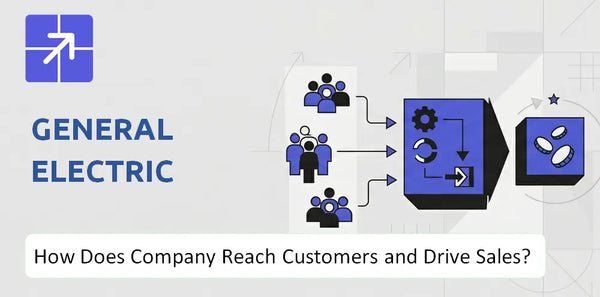
Practical insight: prioritize spare-parts availability and MRO capacity to shorten lead times and protect service revenue; the 2025 backlog shows demand outpacing current throughput.
Read product context: General Electric BCG Matrix Analysis
Who Does General Electric Want to Sell To?
General Electric Company targets three core buyer tiers: commercial airframe OEMs, global airline operators, and government defense agencies, aiming to win large, long-term contracts and aftermarket service revenue through superior propulsion efficiency, reliability, and lifecycle support.
 Main customer group: Original Equipment Manufacturers (OEMs)
GE Aerospace pursues engine of choice status with Boeing and Airbus for narrow-body and wide-body platforms; securing OEM slots drives multi – year airframe build-rate revenue and aftermarket spares that represent a high-margin revenue stream.
Additional targets: Major global airlines
Carriers such as Southwest, Delta, and Air India prioritize fuel efficiency and lower total cost of ownership; GE converts demand via fleet-level service agreements, spare-part contracts, and performance-based logistics (PBL) offerings.
Market positioning: Technology-led, lifecycle partner
General Electric marketing strategy positions GE Aerospace as a long-term lifecycle partner delivering engines, digital health monitoring, and MRO (maintenance, repair, overhaul) services to lock in recurring aftermarket revenue and increase customer retention.
Why the positioning works: Performance, scale, and service
GE wins on measurable gains – fuel burn reductions, dispatch reliability, and lower total cost of ownership – backed by global service footprint and digital analytics, which appeal to OEMs, airlines, and defense buyers alike; see Competitive Landscape of General Electric Company for context.
General Electric SWOT Analysis
- Complete SWOT Breakdown
- Fully Customizable
- Editable in Excel & Word
- Professional Formatting
- Investor-Ready Format

How Does General Electric Get in Front of Customers?
General Electric Company reaches customers through a mix of embedded technical sales, the CFM International joint venture, and a global field network that ties R&D milestones and real-time fleet analytics to procurement cycles; awareness is built via service hubs, OEM partnerships, and data-driven outreach to airlines and MROs.

Embedded Technical Sales and JV Channel
CFM International and GE's direct sales engineers sit inside airline fleet planning and MRO decision cycles, converting demand into orders by advising on total lifecycle cost and performance; this channel drives major engine placements and long-term service agreements.
Digital Marketing and Data-Driven Outreach
GE uses real-time flight-data telemetry and predictive analytics from its 44,000+ commercial engine installed base to target airline procurement via personalized dashboards, email briefings, and technical content, supporting GE digital marketing initiatives and CRM lead conversion tactics.
Global Service Hubs and Field Distribution
Service hubs at aviation crossroads and a global network of sales engineers provide direct sales channels, aftermarket parts distribution, and local MRO partnerships, forming the backbone of General Electric sales channels and channel partners strategy.
Demand Generation via R&D and Events
GE drives demand through publicized R&D milestones – like the RISE program targeting 20 percent better fuel efficiency – trade shows, white papers, and technical seminars that position GE as thought leader in aviation and support its content marketing and thought leadership efforts.
Customer Acquisition Efficiency
Embedding in procurement timelines and using predictive maintenance signals shortens sales cycles and boosts win rates; fleet-usage insights convert early interest into service agreements, improving GE customer acquisition efficiency versus traditional cold outreach.
Most Important Reach Advantage
The installed base of over 44,000 commercial engines plus real-time analytics is GE's strongest reach lever in 2025, enabling proactive offers to airlines before refresh or MRO events and amplifying GE B2B go-to-market strategy across regions; see Mission, Vision, and Values of General Electric Company for context.
General Electric Business Model Canvas
- One-time Payment
- No Research Needed – Save Hours of Work
- Built by Experts, Trusted by Consultants
- Instant Download, Ready to Use
- 100% Editable, Fully Customizable

How Does General Electric Turn Attention Into Sales?
General Electric Company turns attention into sales by winning initial engine placements via competitive bids and performance guarantees, then converting installed bases into high-margin recurring revenue through service contracts and parts. The model emphasizes lifecycle capture – selling engines, then monetizing spare parts, shop visits, and long-term service agreements.
Core sales model: razor-and-blade plus B2B contracts
General Electric marketing strategy centers on direct OEM sales to airlines and leasing firms, supported by partner-led service networks. Initial GE customer acquisition comes from competitive bidding, technical guarantees, and fleet trials that secure engine placements.
Pricing and monetization logic: per-flight-hour and lifecycle pricing
Pricing relies on one-time engine sales plus recurring LTSAs priced largely on a per-flight-hour basis, spare-parts margins, and paid shop visits. In 2025 roughly 70 percent of the commercial engine fleet is covered by LTSAs, locking in predictable revenue.
Conversion and purchase drivers: technical performance and service guarantees
Conversion is driven by demonstrable fuel efficiency, lower maintenance costs, and performance guarantees in contracts. Sales execution uses field teams, trade shows, and OEM partnerships; digital channels and CRM track leads and shorten procurement cycles.
Repeat revenue and customer expansion: LTSAs and lifecycle capture
General Electric sales channels focus on upselling LTSAs, spare-parts contracts, and MRO (maintenance, repair, overhaul) services. For GE9X and LEAP engines in 2025 the company is shifting from share capture to securing full lifecycle spend on proprietary parts and shop visits, increasing service take-rates and margin per engine.
Sales mechanics blend GE B2B go-to-market strategy, GE digital marketing initiatives, and channel partners to convert interest into purchases; see further operational context in How General Electric Company Works and Makes Money.
General Electric Marketing Mix
- Complete Marketing Mix Analysis
- Effortlessly Communicate Your Business Strategy
- Investor-Ready Format
- 100% Editable and Customizable
- Clear and Structured Layout

How Strong Does General Electric's Commercial Engine Look Going Forward?
General Electric Company's commercial engine enters 2026 well positioned, backed by a total backlog above 150 billion and 2025 operating profits scaling toward 7.5 billion – 8.0 billion. Key supports include expanding shop capacity, strong spare-parts demand, and an aerospace aftermarket tailwind; specialized castings and forgings supply constraints remain a tactical headwind.
Demand Drivers Supporting Future Sales
Aftermarket strength from an aging global fleet and rising air travel is lifting spare-parts revenue and services margins; shop visit capacity grew about 20 percent in 2025, boosting conversion of demand into billings. Large backlog (> 150 billion) and multi-year commercial engine contracts sustain forward revenue visibility.
Channel and Marketing Effectiveness
General Electric marketing strategy blends direct OEM sales, channel partners, and digital channels for customer engagement; GE customer acquisition relies on field sales, OEM contracts, and digital lead funnels tied into CRM for high conversion. Targeted B2B go-to-market strategy and trade shows continue to feed the top of funnel while service contracts convert demand to recurring revenue.
Risks to Commercial Performance
Supply chain bottlenecks in specialized castings and forgings can delay deliveries and compress margins; cyclical OEM orders tied to airline capex and macro travel trends pose demand volatility. Competitive aftermarket pricing pressure and parts lead-times remain near-term risks to sales conversion.
Overall Sales and Marketing Outlook
The sales and marketing outlook for 2025/2026 appears strong and adaptable: free cash flow conversion is expected near 100 percent of adjusted net income, operating profit near 7.5 – 8.0 billion, and shop capacity up 20 percent, which together support conviction that General Electric Company is capturing the aerospace upcycle. See the company's broader positioning in this Growth Outlook of General Electric Company
General Electric Boston Consulting Group Matrix
- Built by Experts, Trusted by Consultants
- Structured for Consultants, Students, and Founders
- 100% Editable in Microsoft Word & Excel
- Instant Digital Download – Use Immediately
- Compatible with Mac & PC – Fully Unlocked

Related Blogs
- What Is the History of General Electric Company and How Did It Evolve?
- What Is the Competitive Landscape of General Electric Company and How Does It Compete?
- What Is the Growth Outlook of General Electric Company and Where Is It Heading?
- How Does General Electric Company Work and What Drives Its Business Model?
- What Do the Mission, Vision, and Core Values of General Electric Company Reveal?
- Who Are the Core Customers in General Electric Company's Target Market?
- Who Owns General Electric Company Today and Who Holds Control?
Frequently Asked Questions
General Electric targets commercial airframe OEMs, global airline operators, and government defense agencies. The company aims to win long-term contracts and aftermarket service revenue by emphasizing propulsion efficiency, reliability, and lifecycle support. Its positioning is built around engines, digital monitoring, and MRO services that keep customers tied into recurring support.
Disclaimer
All information, articles, and product details provided on this website are for general informational and educational purposes only. We do not claim any ownership over, nor do we intend to infringe upon, any trademarks, copyrights, logos, brand names, or other intellectual property mentioned or depicted on this site. Such intellectual property remains the property of its respective owners, and any references here are made solely for identification or informational purposes, without implying any affiliation, endorsement, or partnership.
We make no representations or warranties, express or implied, regarding the accuracy, completeness, or suitability of any content or products presented. Nothing on this website should be construed as legal, tax, investment, financial, medical, or other professional advice. In addition, no part of this site - including articles or product references - constitutes a solicitation, recommendation, endorsement, advertisement, or offer to buy or sell any securities, franchises, or other financial instruments, particularly in jurisdictions where such activity would be unlawful.
All content is of a general nature and may not address the specific circumstances of any individual or entity. It is not a substitute for professional advice or services. Any actions you take based on the information provided here are strictly at your own risk. You accept full responsibility for any decisions or outcomes arising from your use of this website and agree to release us from any liability in connection with your use of, or reliance upon, the content or products found herein.