
How does Hawaiian Electric Industries' sales and marketing model convert regulated utility demand and banking customers into revenue?
Hawaiian Electric Industries sells essential grid services via regulated rates and cross-sells banking products through American Savings Bank. This matters because 2025 investor focus centers on post-Maui grid resilience spending and retail deposit stability. Recent 2025 filings show CAPEX-led revenue visibility.
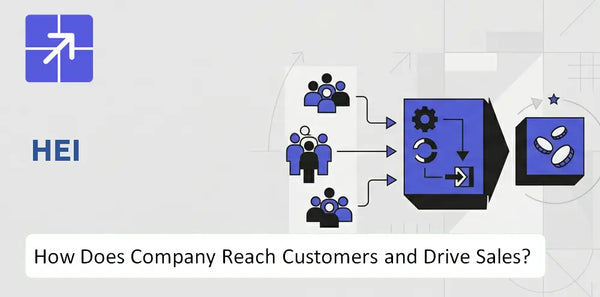
HEI leans on rate cases and community engagement to secure recovery and on branch/digital banking to grow deposits; prioritize transparent outage response and targeted banking promos. See HEI BCG Matrix Analysis for product positioning.
Who Does HEI Want to Sell To?
Hawaiian Electric Industries targets residential ratepayers, large commercial customers, and federal/military installations through its utility operations, while American Savings Bank focuses on middle-market businesses and retail borrowers with high credit quality to maintain a stable deposit and lending base.
 Main utility customer group
Hawaiian Electric Industries serves about 470,000 utility customers across Oahu, Maui, and Hawaii Island, covering 95% of the state population; residential households and large commercial ratepayers drive base demand and revenue stability.
Primary financial customers
American Savings Bank targets Hawaii's middle-market firms and retail consumers, prioritizing high-credit-quality borrowers to keep loss rates low and maintain a conservative loan-to-value mix in the bank's portfolio.
Market positioning: regulated utility plus community bank
Hawaiian Electric Industries positions itself as a near-monopoly regulated utility for essential electricity services while American Savings Bank positions as a community-focused lender, emphasizing local relationships and credit quality to reduce volatility.
Why this positioning works
Regulation and long-term contracts – notably with military bases – give revenue predictability for the utility; the bank's conservative underwriting and deposits from local customers support liquidity and credit metrics, lowering customer acquisition cost and improving lifetime value.
See the Competitive Landscape of HEI Company for context on market dynamics and customer segments discussed above.
HEI SWOT Analysis
- Complete SWOT Breakdown
- Fully Customizable
- Editable in Excel & Word
- Professional Formatting
- Investor-Ready Format

How Does HEI Get in Front of Customers?
Hawaiian Electric Industries reaches customers through its regulated utility footprint and a community-rooted bank network; it builds awareness via Integrated Grid Planning, digital portals, branch relationships, and localized marketing to convert demand into sales and deposits.

Regulated Utility Footprint Is the Primary Acquisition Channel
For Hawaiian Electric Industries' utility operations, the captive customer base on Oahu, Maui, Hawai'i island, and Lāna'i provides the main channel to reach end users; Integrated Grid Planning aligns investments with state 100% renewable energy policy to retain and shape load while meeting regulatory expectations.
Digital Marketing and Customer Portals Drive Engagement
HEI Company customer acquisition leverages online customer portals, mobile apps, email, and targeted content to manage demand, communicate outages, and promote programs like time-of-use rates; community notices on grid modernization and wildfire mitigation increase trust and uptake.
Branch Network and Local Partnerships for Distribution Access
American Savings Bank uses a high-touch physical network of approximately 40 branches plus mortgage and commercial channels to access customers; partnerships with local builders, municipal programs, and community groups extend HEI Company sales strategy into B2B and retail segments.
Demand Generation Through Community-First Campaigns
Demand generation focuses on localized campaigns, community events, bill inserts, and education on renewables and wildfire mitigation; bank promotions plus digital adoption campaigns drove a 14% increase in digital engagement for the banking suite by Q1 2026.
Customer Acquisition Efficiency and Metrics
HEI Company appears to acquire customers efficiently via regulated utility scale and branch trust; the utility's captive market reduces acquisition cost per customer while the bank measures digital adoption and deposit growth – digital engagement rose 14% by Q1 2026, improving lifetime value metrics.
Most Important Reach Advantage: Deep Regional Roots
The strongest reach advantage is HEI's local presence and brand familiarity across Hawai'i, which outcompetes national banks lacking island-specific expertise and lets HEI scale programs tied to statewide renewable goals; see Mission, Vision, and Values of HEI Company for context Mission, Vision, and Values of HEI Company.
HEI Business Model Canvas
- One-time Payment
- No Research Needed – Save Hours of Work
- Built by Experts, Trusted by Consultants
- Instant Download, Ready to Use
- 100% Editable, Fully Customizable

How Does HEI Turn Attention Into Sales?
HEI Company turns attention into sales by embedding utility rate recovery and bank net interest margins into predictable revenue flows; regulated rate-making and cross-selling to a captive depositor base convert interest and infrastructure investment into cash. The mechanics rely on authorized ROE recovery for Hawaiian Electric Industries and mortgage/CRE cross-sell for American Savings Bank.
Regulatory-backed utility sales model
Hawaiian Electric Industries monetizes attention through the regulatory rate-making process: capital expenditures enter rate base and are recovered via tariffs, while allowed Return on Equity moved toward 9.5% in 2025 filings, directly translating infrastructure spend into regulated revenue.
Banking monetization via net interest margin
American Savings Bank converts customer attention into interest income; net interest margin stabilized near 2.85% in early 2026, so deposit growth and loan mix (mortgages, CRE) drive top-line revenue while low local cost of funds sustains spread.
Conversion and purchase drivers
Conversion levers differ by segment: for Hawaiian Electric Industries, regulatory approvals, capital spend schedules, and utility commission rulings drive revenue recognition; for American Savings Bank, trust, high depositor retention, and cross-selling execution convert deposits into higher-yield loans.
Repeat revenue and customer expansion
Hawaiian Electric Industries sees repeat revenue via ongoing tariff recoveries and rate cases; American Savings Bank expands revenue by upselling mortgages and commercial real estate loans to an existing deposit base that retains higher balances than mainland peers, lowering funding costs and enabling margin expansion.
Key metrics: Hawaiian Electric Industries requested an authorized ROE target around 9.5% in 2025 filings, supporting recovery of recent capital investments; American Savings Bank reported NIM stabilization near 2.85% in early 2026, with deposit retention materially below typical mainland funding costs, aiding loan-to-deposit conversion. See the company context in History and Background of HEI Company
HEI Marketing Mix
- Complete Marketing Mix Analysis
- Effortlessly Communicate Your Business Strategy
- Investor-Ready Format
- 100% Editable and Customizable
- Clear and Structured Layout

How Strong Does HEI's Commercial Engine Look Going Forward?
Hawaiian Electric Industries' commercial engine looks cautiously stabilizing into 2026: near-universal smart-meter deployment and large-scale battery integration support operational efficiency, while the $4.037 billion Maui settlement and liquidity constraints limit marketing spend and capital agility. Future sales and marketing performance will hinge on regulatory rate-case outcomes, settlement payment execution, and targeted customer-acquisition efficiency.
What Supports Future Demand
Near-100% smart-meter rollout improves demand signals and enables targeted HEI Company customer acquisition and HEI Company demand generation; ~100% coverage by end of 2025 cuts meter-read costs and supports dynamic pricing pilots that boost conversion.
Channel and Marketing Effectiveness
Owned channels (billing, outage alerts, customer portal) plus targeted digital campaigns form an efficient HEI marketing channels mix; smart-meter data enables HEI Company digital marketing strategy and improved HEI Company sales funnel management for residential and B2B segments.
Risks to Commercial Performance
Settlement-related cash strain from the $4.037 billion Maui payout and potential unfavorable rate-case rulings impair marketing budgets and customer incentives; regulatory uncertainty and higher financing costs could raise customer acquisition cost and depress HEI Company demand generation.
The Overall Sales and Marketing Outlook
Outlook is mixed but adaptable: operational upgrades (smart meters, battery storage) support scalable HEI Company demand generation strategies for growth, while EPS recovery toward $1.85 – $2.15 by end-2026 depends on rate relief and settlement execution; see Growth Outlook of HEI Company for context: Growth Outlook of HEI Company
HEI Boston Consulting Group Matrix
- Built by Experts, Trusted by Consultants
- Structured for Consultants, Students, and Founders
- 100% Editable in Microsoft Word & Excel
- Instant Digital Download – Use Immediately
- Compatible with Mac & PC – Fully Unlocked

Related Blogs
- What Is the History of HEI Company and How Did It Evolve?
- What Is the Competitive Landscape of HEI Company and How Does It Compete?
- What Is the Growth Outlook of HEI Company and Where Is It Heading?
- How Does HEI Company Work and What Drives Its Business Model?
- What Do the Mission, Vision, and Core Values of HEI Company Reveal?
- Who Are the Core Customers in HEI Company's Target Market?
- Who Owns HEI Company Today and Who Holds Control?
Frequently Asked Questions
HEI primarily serves residential ratepayers, large commercial customers, and federal or military installations through its utility operations. Its bank also targets middle-market businesses and retail borrowers with high credit quality, helping keep the customer base stable and predictable.
Disclaimer
All information, articles, and product details provided on this website are for general informational and educational purposes only. We do not claim any ownership over, nor do we intend to infringe upon, any trademarks, copyrights, logos, brand names, or other intellectual property mentioned or depicted on this site. Such intellectual property remains the property of its respective owners, and any references here are made solely for identification or informational purposes, without implying any affiliation, endorsement, or partnership.
We make no representations or warranties, express or implied, regarding the accuracy, completeness, or suitability of any content or products presented. Nothing on this website should be construed as legal, tax, investment, financial, medical, or other professional advice. In addition, no part of this site - including articles or product references - constitutes a solicitation, recommendation, endorsement, advertisement, or offer to buy or sell any securities, franchises, or other financial instruments, particularly in jurisdictions where such activity would be unlawful.
All content is of a general nature and may not address the specific circumstances of any individual or entity. It is not a substitute for professional advice or services. Any actions you take based on the information provided here are strictly at your own risk. You accept full responsibility for any decisions or outcomes arising from your use of this website and agree to release us from any liability in connection with your use of, or reliance upon, the content or products found herein.