
How does HomeStreet, Inc. convert regional relationship banking and CRE lending into consistent sales through its sales and marketing model?
HomeStreet, Inc. leans on branch-based relationship teams and targeted commercial real estate (CRE) originations to source deposits and loans. This matters because in 2025 HomeStreet reported tightening liquidity metrics and leaned into CRE to lift yields, affecting net interest margin.
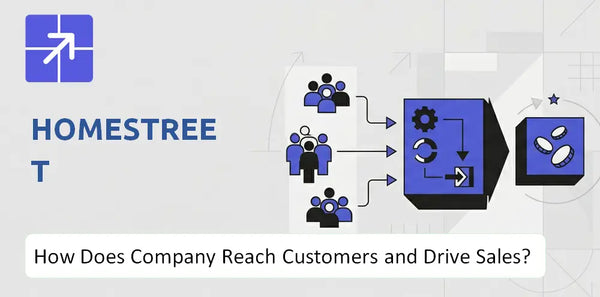
Focus marketing on referral networks, broker channels, and localized digital ads to shorten sales cycles; tie pricing incentives to deposit retention. See product fit in HomeStreet BCG Matrix Analysis
Who Does HomeStreet Want to Sell To?
HomeStreet, Inc. targets professional commercial real estate investors, small-to-medium enterprises, and mass-affluent retail households, using local decision-making and personalized service to convert demand into deposits and loans.
 Primary: Multi-family Real Estate Developers
Multi-family developers make up roughly 70 percent of HomeStreet, Inc.'s loan portfolio; the bank targets repeat, institutional and local developers in growth metros to drive loan originations and steady interest income.
Additional: SMEs and Business Owners
Small-to-medium enterprises in the Puget Sound, Southern California, and Hawaii are prioritized for commercial lending, treasury services, and deposit relationships, yielding higher fee income per client and cross-sell potential.
Additional: Mass-Affluent Retail Households
Mass-affluent consumers with above-average deposit balances are targeted for deposits, mortgage lending, and wealth-adjacent services via branches and digital channels to increase deposit stability and noninterest income.
Market Positioning
HomeStreet, Inc. positions itself as a regional, relationship-focused alternative to money-center banks, emphasizing local underwriting, fast decisions, and service in high-growth West Coast and island markets.
Why the Positioning Works
Local decision-making and tailored underwriting boost conversion rates for complex multi-family loans; deposits from mass-affluent households raise core funding, helping HomeStreet improve net interest margin and fund growth – see Growth Outlook of HomeStreet Company for context.
Relevant Metrics (FY2025)
As of fiscal 2025, multi-family loans represent about 70 percent of the loan book; target markets drive >50 percent of branch deposits; average core deposit balance per mass-affluent household in key markets exceeds $75,000, supporting liquidity and fee income growth.
HomeStreet SWOT Analysis
- Complete SWOT Breakdown
- Fully Customizable
- Editable in Excel & Word
- Professional Formatting
- Investor-Ready Format

How Does HomeStreet Get in Front of Customers?
HomeStreet, Inc. reaches customers via a dual-track approach: a physical branch network for deposits and visibility plus specialized direct sales teams for commercial lending, supported by a modern digital banking platform that drove new account growth in 2025.

Branch network as the primary acquisition hub
About 50 retail branches in key markets like Honolulu and Seattle serve as the main channel for HomeStreet customer acquisition and brand presence, converting foot traffic into deposit relationships and mortgage leads.
Digital marketing and online reach
HomeStreet digital banking outreach includes search, paid media, email, and a mobile app; the platform produced a 12 percent increase in new account openings in 2025, attracting customers who prefer remote access over branches.
Direct sales and relationship channels
Localized relationship managers focus on commercial lending through direct prospecting and referrals from real estate and legal partners, converting mortgage and CRE opportunities sourced via referral networks.
Demand generation tactics
HomeStreet uses targeted local campaigns, community banking events, email marketing for mortgage leads, and partnerships with real estate agents to drive pipeline; promotions and referral incentives boost short-term conversion.
Customer acquisition efficiency
Branch-driven customer conversion remains efficient in core markets where branch density is high; digital channels improved cost per acquisition in 2025 as online account openings rose 12 percent.
Most important reach advantage
The combined edge is local presence plus digital scale: branches deliver trust and referrals, while the modernized digital platform scales acquisition across geographies without proportional branch expansion.
See additional context in the article History and Background of HomeStreet Company
HomeStreet Business Model Canvas
- One-time Payment
- No Research Needed – Save Hours of Work
- Built by Experts, Trusted by Consultants
- Instant Download, Ready to Use
- 100% Editable, Fully Customizable

How Does HomeStreet Turn Attention Into Sales?
HomeStreet, Inc. turns attention into sales through a consultative, relationship-led approach that cross-sells products to commercial and consumer clients and uses fast local execution to win deals. The bank targets a minimum of three products per household or business and manages pricing to protect margin while accelerating conversions.
Consultative, Relationship Sales Model
HomeStreet uses local bankers and branch relationship teams for direct sales and partner-led referrals, supported by digital banking outreach and targeted advertising to capture mortgage and commercial leads.
Dynamic Pricing and Monetization
Pricing mixes loan yields, deposit spreads, and fees; in 2025 HomeStreet, Inc. actively managed deposit betas to protect net interest margin near 2.35 percent, while fee income from treasury, insurance, and investment services adds recurring revenue.
Conversion and Purchase Drivers
Faster loan certainty from decentralized decisioning, trust from long-term local relationships, and cross-sell pitches (treasury, insurance, investments) drive conversion; lead quality is boosted by CRM-driven follow-up and referral partnerships with real estate agents.
Repeat Revenue and Customer Expansion
HomeStreet pursues wallet share by requiring a minimum of three products per household/entity, using email marketing campaigns, mobile banking promotions, and branch cross-sell programs to lift retention and fee annuity streams.
Operationally, HomeStreet converts commercial loan interest into revenue by cross-selling treasury management and investment services at onboarding, shortening approval timelines relative to larger banks, and keeping net interest margin stable via active deposit beta management; see a broader operational overview in How HomeStreet Company Works and Makes Money.
HomeStreet Marketing Mix
- Complete Marketing Mix Analysis
- Effortlessly Communicate Your Business Strategy
- Investor-Ready Format
- 100% Editable and Customizable
- Clear and Structured Layout

How Strong Does HomeStreet's Commercial Engine Look Going Forward?
HomeStreet, Inc.'s commercial engine looks resilient but narrow into 2025 – 2026, supported by a strong Hawaii deposit franchise and shrinking non-performing assets; key risks are multi-family concentration and regional cap – rate moves. Future sales and marketing will hinge on loan – mix diversification, preserving low – cost core deposits, and improving digital acquisition efficiency.
What Supports Future Demand
HomeStreet customer acquisition benefits from a Hawaii deposit franchise that supplies stable, low – cost funding and supports mortgage and community banking sales. Ongoing reduction in non – performing assets to below 0.50 percent of total assets improves capital headroom for targeted lending and marketing.
Channel and Marketing Effectiveness
HomeStreet marketing channels combine branch presence, community events, and growing digital outreach to sustain lead flow; digital banking outreach and online mortgage application improvements can raise conversion rates. CRM-driven HomeStreet lead generation and targeted advertising for first – time homebuyers should lift cross – selling and retention.
Risks to Commercial Performance
Heavy concentration in multi – family lending creates sensitivity to regional cap – rate volatility and could compress margins or force tighter underwriting. If interest rates or cap rates reprice unexpectedly, ROAA pressure may return; 2026 projections show a recovery to about 0.70 percent ROAA, contingent on stable rates and asset quality.
The Overall Sales and Marketing Outlook
The sales and marketing outlook for 2025/2026 looks mixed but workable: resilient deposit economics and lower non – performing assets support disciplined growth, yet the path is narrow. Success depends on diversifying loan mix, enhancing HomeStreet mortgage marketing via digital channels, and converting branch and online leads into loans efficiently; see Mission, Vision, and Values of HomeStreet Company for cultural context.
HomeStreet Boston Consulting Group Matrix
- Built by Experts, Trusted by Consultants
- Structured for Consultants, Students, and Founders
- 100% Editable in Microsoft Word & Excel
- Instant Digital Download – Use Immediately
- Compatible with Mac & PC – Fully Unlocked

Related Blogs
- What Is the History of HomeStreet Company and How Did It Evolve?
- What Is the Competitive Landscape of HomeStreet Company and How Does It Compete?
- What Is the Growth Outlook of HomeStreet Company and Where Is It Heading?
- How Does HomeStreet Company Work and What Drives Its Business Model?
- What Do the Mission, Vision, and Core Values of HomeStreet Company Reveal?
- Who Are the Core Customers in HomeStreet Company's Target Market?
- Who Owns HomeStreet Company Today and Who Holds Control?
Frequently Asked Questions
HomeStreet primarily targets multi-family real estate developers, along with small-to-medium enterprises and mass-affluent retail households. The article says it uses local decision-making and personalized service to turn that demand into loans, deposits, and related banking relationships across its core markets.
Disclaimer
All information, articles, and product details provided on this website are for general informational and educational purposes only. We do not claim any ownership over, nor do we intend to infringe upon, any trademarks, copyrights, logos, brand names, or other intellectual property mentioned or depicted on this site. Such intellectual property remains the property of its respective owners, and any references here are made solely for identification or informational purposes, without implying any affiliation, endorsement, or partnership.
We make no representations or warranties, express or implied, regarding the accuracy, completeness, or suitability of any content or products presented. Nothing on this website should be construed as legal, tax, investment, financial, medical, or other professional advice. In addition, no part of this site - including articles or product references - constitutes a solicitation, recommendation, endorsement, advertisement, or offer to buy or sell any securities, franchises, or other financial instruments, particularly in jurisdictions where such activity would be unlawful.
All content is of a general nature and may not address the specific circumstances of any individual or entity. It is not a substitute for professional advice or services. Any actions you take based on the information provided here are strictly at your own risk. You accept full responsibility for any decisions or outcomes arising from your use of this website and agree to release us from any liability in connection with your use of, or reliance upon, the content or products found herein.