
How does Infratil's sales and marketing model convert infrastructure investments into recurring customer revenue?
Infratil targets sectors like decarbonization and data infrastructure, using active management to scale subsidiaries and lock in long-term contracts. By March 2026, its operational upgrades and contract wins drove visible NAV uplift and steadier dividends.
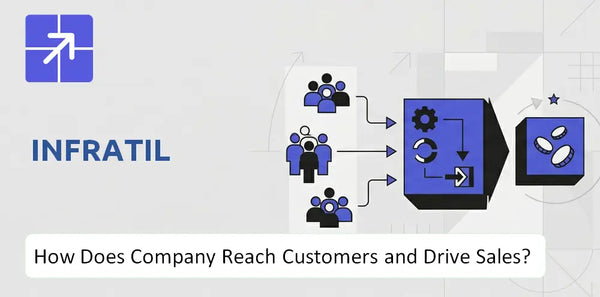
Focus sales on durable B2B contracts, channel partnerships, and project-led pilots to shorten sales cycles; emphasize performance guarantees and capex-light offers to win conservative buyers. See Infratil BCG Matrix Analysis
Who Does Infratil Want to Sell To?
Infratil targets three core buyer groups: hyperscale cloud and government clients for data centres, industrial and wholesale buyers for renewables, and retail plus enterprise customers via One NZ and Wellington Airport. The company wins them by offering reliable, secure infrastructure and long-term service availability rather than competing on lowest price.
 Primary: Hyperscale cloud and government agencies
CDC Data Centres targets hyperscale cloud providers and government agencies needing data sovereignty and high security. These customers sign multi-year contracts and drive stable revenue; Infratil leverages purpose-built facilities and compliance certifications to close large B2B deals, supporting its Infratil marketing strategy and Infratil customer acquisition efforts.
Secondary: Industrial off-takers and wholesale electricity markets
Manawa Energy and Gurin Energy sell to industrial off-takers, retailers, and wholesale markets seeking decarbonized baseload power. Long-term power purchase agreements (PPAs) and merchant market positions convert demand into sales; this is central to Infratil sales conversion and Infratil B2B sales strategies for energy and infrastructure.
Additional: Consumers and enterprises via One NZ and Wellington Airport
One NZ targets high-average revenue per user mobile customers and SMEs with bundled telecom services; Wellington Airport serves regional travelers and retail concession customers. Both rely on high retention and ancillary revenue (roaming, retail, parking), feeding Infratil retail customer acquisition for airports and transport assets and portfolio-level cross-selling.
Market positioning: Reliability and long-term availability over low cost
Infratil positions assets as mission-critical infrastructure where uptime and regulatory compliance matter more than price. This positioning supports higher contract lengths and predictable cash flows, underpinning Infratil go-to-market strategy and Infratil portfolio marketing focused on institutional buyers.
Why the positioning works: Sticky customers and long contracts
Sticky institutional and retail clients reduce churn and raise lifetime value; CDC, Manawa, Gurin, One NZ, and Wellington Airport commonly secure multi-year contracts or regulated revenue streams. For example, data centre leases and PPAs frequently exceed 5 – 10 years, generating steady EBITDA and enabling predictable Infratil marketing ROI and Infratil sales conversion.
How Infratil reaches and converts these buyers
Infratil combines direct sales teams, strategic partnerships, and digital channels to generate leads and close deals; CDC works with cloud vendors via technical RFPs, Manawa negotiates PPAs with corporates, and One NZ uses targeted digital campaigns for ARPU growth. See a deeper operational overview in How Infratil Company Works and Makes Money.
Infratil SWOT Analysis
- Complete SWOT Breakdown
- Fully Customizable
- Editable in Excel & Word
- Professional Formatting
- Investor-Ready Format

How Does Infratil Get in Front of Customers?
Infratil reaches customers via tailored channels per asset class: direct institutional deals and PPAs for energy, One NZ's digital-first marketing plus 270+ retail stores for connectivity, and Wellington Airport's aeronautical and commercial leasing for airlines and retailers. The group positions assets as essential bottlenecks to funnel demand and convert enquiries into multi-year contracts and transactions.

Institutional direct sales and long-term contracting
Infratil marketing strategy centers on direct-to-institutional sales for energy and digital infrastructure, using Power Purchase Agreements (PPAs) and service-level agreements (SLAs) to secure multi-year revenue streams and reduce churn risk.
Digital-first reach for connectivity
One NZ drives customer acquisition through search, paid media, social, email, apps, and an ecommerce platform while supporting conversion with a physical retail footprint; it reports over 2.5 million connections as a lead indicator of reach.
Sales channels and distribution mix
Across the portfolio, distribution includes direct sales to institutional buyers, retail outlets (One NZ's stores), airport commercial leasing (Wellington Airport), and partnerships with utilities and corporates to access end customers.
Demand generation tactics
Infratil generates demand via procurement cycles (PPAs), targeted digital campaigns for consumer connectivity, aeronautical pricing incentives for airlines, and leveraging scarcity/value of infrastructure assets to create urgency.
Customer acquisition efficiency
Acquisition is efficient where contracts lock customers long-term: PPAs and SLAs lower churn for energy assets, One NZ's blended digital+retail approach reduces acquisition cost per connection, and Wellington Airport's monopoly lowers sales effort for airlines.
Most important reach advantage in 2025
The strongest advantage is control of critical bottlenecks – regulated aeronautical slots, network access and fiber, and large-scale generation – allowing Infratil to convert demand into sales with multi-year contracts and captive customer bases.
For further context on Infratil customer-facing strategy and corporate purpose see Mission, Vision, and Values of Infratil Company
Infratil Business Model Canvas
- One-time Payment
- No Research Needed – Save Hours of Work
- Built by Experts, Trusted by Consultants
- Instant Download, Ready to Use
- 100% Editable, Fully Customizable

How Does Infratil Turn Attention Into Sales?
Infratil turns attention into sales by converting capacity interest into contracted usage and by monetizing clinical referrals through high-end diagnostics; sales hinge on capacity utilization, contract escalation, and land-and-expand moves in digital infrastructure.
Core sales model: contract-led, B2B and clinical service sales
Infratil uses direct, contract-led sales for large B2B clients (hyperscalers, telcos), and clinician/referral-driven sales in healthcare; airport and renewable segments use partner-led and concession contracts. Sales mix: long-term contracts, capacity reservations, and service billing across portfolio companies.
Pricing and monetization logic: CPI-linked contracts and usage fees
Pricing combines reservation fees, contracted usage charges, and CPI-linked escalators that protect margins versus inflation; healthcare revenue is per diagnostic event or procedure; digital infrastructure shifts from reserved to charged power consumption and premium services.
Conversion and purchase drivers: capacity, trust, and escalation clauses
Conversion depends on moving prospects from reserved capacity to contracted consumption, proven uptime and compliance, and CPI-linked escalation that reassures investors and customers. In data centres, CDC Data Centres is scaling toward > 1,200MW planned capacity, creating clear upgrade paths for customers.
Repeat revenue and expansion: land-and-expand and modality-led retention
Initial small deployments by hyperscalers commonly expand into multi-megawatt contracts; healthcare clinics convert referrals into recurring diagnostic events via advanced modality availability. Contract renewals and CPI escalation drive predictable revenue growth and higher lifetime value.
Sales conversion mechanics: capacity utilization x contract escalation = revenue growth; CPI-linked price escalators convert nominal sales into real growth, and land-and-expand yields large wallet share increases as cloud adoption matures. See related analysis on Target Customers and Market of Infratil Company.
Infratil Marketing Mix
- Complete Marketing Mix Analysis
- Effortlessly Communicate Your Business Strategy
- Investor-Ready Format
- 100% Editable and Customizable
- Clear and Structured Layout

How Strong Does Infratil's Commercial Engine Look Going Forward?
The commercial engine at Infratil looks robust into 2026, supported by data – centre commissioning and renewable cash flows, though higher rates and regulatory risk could temper valuation gains. Key drivers: accelerated capacity adds, strong liquidity, and durable demand across digital and energy assets.
Structural demand tailwinds supporting future sales
Generative AI and cloud growth drive hyperscale demand for data centres across Australia and New Zealand, helping Infratil convert bookings into contracted revenue; renewables benefit from the global energy transition and corporate offtake contracts. Recent commissioning schedules underpin higher utilisation and margin expansion.
Channel and marketing effectiveness across the portfolio
Infratil leverages direct B2B sales teams for data centres and corporate PPAs (power purchase agreements), channel partnerships for telco and airport customers, and digital lead gen for project enquiries; this hybrid Infratil go-to-market strategy yields efficient Infratil customer acquisition and high Infratil sales conversion for large-ticket deals.
Risks to commercial performance
Regulatory intervention in energy pricing or telecoms access could reduce revenue visibility; higher discount rates compress infrastructure valuations and slow M&A activity. Execution risks include commissioning delays for new data centre racks and transmission constraints for renewable offtakes.
Overall sales and marketing outlook for 2025/2026
The outlook is strong and adaptable: management guides a proportionate EBITDAF above NZ$1.1 billion for 2025/2026 driven by data – centre capacity and renewables, and balance – sheet liquidity of over NZ$1.5 billion in undrawn facilities and cash supports opportunistic bolt – on acquisitions. Sales funnels look healthy, with repeatable demand from enterprise cloud and corporate PPA markets.
How Infratil reaches customers across its portfolio relies on targeted customer segmentation and specialist B2B sales: enterprise sales for hyperscale data centre tenants, structured origination for renewable offtakes, airport retail partnerships for passenger monetisation, and wholesale telco agreements; digital channels and account-based marketing support lead nurturing and Infratil sales conversion metrics.
Performance metrics to watch: contracted revenue growth, utilisation rates in new data – centre builds, average PPA tenor and pricing, EBITDAF progression to NZ$1.1 billion+, and leverage after deployments; these will indicate whether Infratil's portfolio marketing and demand generation tactics turn into sustained capital appreciation. See History and Background of Infratil Company for context.
Infratil Boston Consulting Group Matrix
- Built by Experts, Trusted by Consultants
- Structured for Consultants, Students, and Founders
- 100% Editable in Microsoft Word & Excel
- Instant Digital Download – Use Immediately
- Compatible with Mac & PC – Fully Unlocked

Related Blogs
- What Is the History of Infratil Company and How Did It Evolve?
- What Is the Competitive Landscape of Infratil Company and How Does It Compete?
- What Is the Growth Outlook of Infratil Company and Where Is It Heading?
- How Does Infratil Company Work and What Drives Its Business Model?
- What Do the Mission, Vision, and Core Values of Infratil Company Reveal?
- Who Are the Core Customers in Infratil Company's Target Market?
- Who Owns Infratil Company Today and Who Holds Control?
Frequently Asked Questions
Infratil mainly sells to hyperscale cloud providers and government agencies, industrial off-takers and wholesale electricity buyers, and consumers plus enterprises through One NZ and Wellington Airport. The company wins these customers with reliable, secure infrastructure, long-term service availability, and contract structures that support stable revenue rather than low-price competition.
Disclaimer
All information, articles, and product details provided on this website are for general informational and educational purposes only. We do not claim any ownership over, nor do we intend to infringe upon, any trademarks, copyrights, logos, brand names, or other intellectual property mentioned or depicted on this site. Such intellectual property remains the property of its respective owners, and any references here are made solely for identification or informational purposes, without implying any affiliation, endorsement, or partnership.
We make no representations or warranties, express or implied, regarding the accuracy, completeness, or suitability of any content or products presented. Nothing on this website should be construed as legal, tax, investment, financial, medical, or other professional advice. In addition, no part of this site - including articles or product references - constitutes a solicitation, recommendation, endorsement, advertisement, or offer to buy or sell any securities, franchises, or other financial instruments, particularly in jurisdictions where such activity would be unlawful.
All content is of a general nature and may not address the specific circumstances of any individual or entity. It is not a substitute for professional advice or services. Any actions you take based on the information provided here are strictly at your own risk. You accept full responsibility for any decisions or outcomes arising from your use of this website and agree to release us from any liability in connection with your use of, or reliance upon, the content or products found herein.