
How does Inseego's sales and marketing model convert enterprise 5G demand into recurring revenue?
Inseego shifts from consumer hotspots to selling 5G edge hardware plus cloud management to enterprises, tying device sales to subscription software and services. This matters because 2025 revenue mix trends show rising service margins as private 5G deals scale.
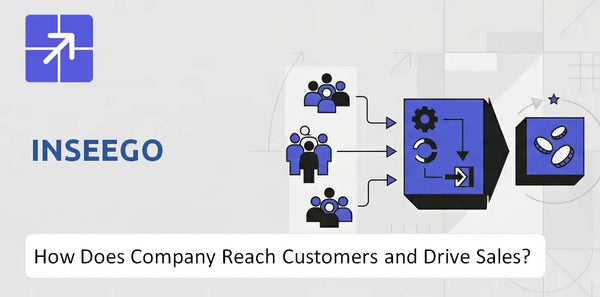
Focus sales on direct enterprise accounts and channel partners, bundle hardware with managed services to boost ARPU, and prioritize pilots that convert to multi-year contracts; see Inseego BCG Matrix Analysis for product positioning.
Who Does Inseego Want to Sell To?
Inseego targets three high-value segments: Tier-1 mobile network operators, enterprise IT organizations, and government agencies; it wins them by bundling 5G devices with operator contracts, selling secure edge networking to enterprises, and meeting compliance requirements for public-sector programs.
 Primary carrier partners: Tier-1 mobile network operators
Inseego focuses on selling 5G devices and CPE to major carriers such as Verizon and T-Mobile that bundle hardware with data plans; these partnerships drive the largest share of device volume and recurring revenue and form the top of the Inseego sales funnel and channel partner program details.
Secondary enterprise and government buyers
Mid-to-large enterprises buy secure SD-WAN failover, remote-work 5G hotspots, and industrial IoT gateways; government agencies purchase certified devices for resilient connectivity and emergency response, supporting Inseego customer acquisition via targeted RFPs and direct sales versus channel sales model.
Market positioning: 5G edge networking and FWA for enterprises
By 2025 Inseego sharpened its go-to-market strategy around enterprise Fixed Wireless Access (FWA) and edge 5G CPE, positioning as a replacement for wired broadband for businesses seeking high-performance, low-latency connectivity and managed service integrations.
Why this positioning works: performance, certifications, and carrier scale
Enterprises and carriers prioritize throughput, predictable SLAs, and security; Inseego leverages 5G performance, FIPS and Common Criteria certifications for government use, and established operator relationships to convert demand into sales through a mix of inbound content, outbound field sales, and reseller incentives – see Competitive Landscape of Inseego Company for context.
Inseego SWOT Analysis
- Complete SWOT Breakdown
- Fully Customizable
- Editable in Excel & Word
- Professional Formatting
- Investor-Ready Format

How Does Inseego Get in Front of Customers?
Inseego gets in front of customers primarily through carrier partnerships that place devices in retail and business portals, supported by Value-Added Resellers (VARs), global distributors, and growing digital marketplace presence. These channels build awareness, generate inbound demand for 5G and IoT solutions, and route enterprise leads into its sales funnel.

Carrier Partnerships as Primary Acquisition Channel
Carrier partners act as a large outsourced sales force, placing Inseego products in front of millions of consumer and business end-users via retail stores, online storefronts, and enterprise portals; in 2025 carriers accounted for the majority of device unit placements and initial demand capture.
Digital Marketing and Online Reach
Inseego expanded its digital marketplaces in 2025 – 2026, using paid search, targeted LinkedIn campaigns, technical content, and platform apps to capture inbound enterprise interest in low-latency 5G solutions; inbound web leads rose year-over-year, reflecting improved Inseego inbound marketing and content strategy.
Sales Channels and Distribution Access
Beyond carriers, Inseego sells via a specialized VAR network and global distributors to reach CIOs and network architects; direct enterprise engagements complement channel sales, supporting large deals for private wireless and fixed wireless access (FWA).
Demand Generation Tactics
Technical demos of the 5G portfolio at trade shows, targeted industry webinars, and pilot programs in smart city and enterprise connectivity projects drove qualified leads in 2025; campaigns emphasized low latency and security, aligning with IoT demand generation priorities.
Customer Acquisition Efficiency
Carrier-led placements lower cost-per-acquisition versus direct sales; combined channel metrics and recent digital investments shortened the Inseego sales funnel for mid-market deals, though large enterprise procurements remain longer and resource-heavy.
Most Important Reach Advantage
The carrier channel is the strongest reach advantage in 2025/2026, providing scale and immediate consumer/business touchpoints; VARs and distributors supply targeted enterprise access, while digital marketplaces and trade circuits convert technical interest into purchase intent.
Key numbers and facts: Inseego reported expanded carrier placements and increased device activations in fiscal 2025, with enterprise pilot wins rising as the company showcased private 5G and FWA solutions; its reseller network supports multi-region distribution and digital marketplace listings grew in 2025 – 2026 to support inbound enterprise connectivity sales strategy. Read more on corporate direction at Mission, Vision, and Values of Inseego Company.
Inseego Business Model Canvas
- One-time Payment
- No Research Needed – Save Hours of Work
- Built by Experts, Trusted by Consultants
- Instant Download, Ready to Use
- 100% Editable, Fully Customizable

How Does Inseego Turn Attention Into Sales?
Inseego turns attention into sales by pairing device purchases with its Inseego Connect cloud subscription, converting one-time hardware revenue into multi-year recurring income through tiered SaaS and channel-led contracts.
Core sales model: hardware-plus-software, channel and direct
Inseego customer acquisition mixes direct enterprise sales, carrier partnerships, and reseller channels to place 5G hotspots, gateways, and IoT routers. The Inseego sales funnel routes initial demand through carriers and distributors for volume deals, then to direct account teams for enterprise integrations.
Pricing and monetization logic: device sale plus subscription tiers
Upfront hardware creates the initial revenue spike; recurring monetization comes from Inseego Connect subscription tiers and add – on security and management features. By early 2026 software-related gross margins approached 70%, reflecting higher-margin SaaS revenue and tiered pricing for advanced analytics, security, and connectivity management.
Conversion and purchase drivers: trust, integration, and low switching cost
Purchase decisions hinge on carrier endorsements, SLAs in enterprise contracts, and product-fit for verticals such as smart cities and logistics. Inseego reduces friction with pre – certified carrier bundles, managed deployment services, and field trials that shorten sales cycles and improve close rates.
Repeat revenue and customer expansion: retention via platform lock-in
Inseego converts device buyers into recurring customers through Inseego Connect, which centralizes device visibility and security and raises switching costs. Expansion comes via upsells to premium tiers, add – ons (SLA, analytics), and multi-year contracts – driving average contract lifetimes beyond three years in many enterprise deals and boosting customer lifetime value.
Relevant tactics include targeted IoT demand generation, inbound content to feed the Inseego sales funnel, and channel partner enablement that increases reseller attach rates; see the company history for context: History and Background of Inseego Company
Inseego Marketing Mix
- Complete Marketing Mix Analysis
- Effortlessly Communicate Your Business Strategy
- Investor-Ready Format
- 100% Editable and Customizable
- Clear and Structured Layout

How Strong Does Inseego's Commercial Engine Look Going Forward?
Inseego's commercial engine looks more resilient entering 2025/2026 after a debt restructuring and a clearer shift to software-led offerings; growth drivers include expanding 5G Fixed Wireless Access (FWA) demand and stronger recurring revenue, while competition from large networking vendors and channel concentration remain headwinds.
What Supports Future Demand
Carrier-grade 5G hardware plus software subscriptions give Inseego a tighter product-market fit for service providers and enterprises; rising 5G FWA adoption – projected global FWA CAGR in low double-digits through 2026 – supports device and recurring revenue growth. The company's pivot toward SaaS and managed services should raise gross margins and stabilize Inseego customer acquisition economics.
Channel and Marketing Effectiveness
Inseego leverages a mixed go-to-market strategy: direct enterprise sales for smart-city and IoT projects and a reseller/distributor network for carrier deployments, improving reach and deal velocity. Digital demand generation and targeted enterprise outreach tighten the Inseego sales funnel, while partner programs amplify inbound leads and upsell opportunities.
Risks to Commercial Performance
Intense competition from diversified networking giants could pressure pricing and share, and concentration with a few large carriers raises revenue volatility; supply-chain delays and product certification timelines for 5G hotspots also risk GTM timing. If software monetization lags, the expected earnings stability and free-cash-flow improvements may be delayed.
The Overall Sales and Marketing Outlook
Outlook appears cautiously positive: a leaner sales organization focused on software-heavy revenue should reduce volatility and lift unit economics, supporting sustainable free cash flow in 2026. Execution on channel partner program details and consistent IoT demand generation tactics for enterprise connectivity sales strategy will decide whether growth accelerates or remains mixed; see this company overview for more context How Inseego Company Works and Makes Money.
Inseego Boston Consulting Group Matrix
- Built by Experts, Trusted by Consultants
- Structured for Consultants, Students, and Founders
- 100% Editable in Microsoft Word & Excel
- Instant Digital Download – Use Immediately
- Compatible with Mac & PC – Fully Unlocked

Related Blogs
- What Is the History of Inseego Company and How Did It Evolve?
- What Is the Competitive Landscape of Inseego Company and How Does It Compete?
- What Is the Growth Outlook of Inseego Company and Where Is It Heading?
- How Does Inseego Company Work and What Drives Its Business Model?
- What Do the Mission, Vision, and Core Values of Inseego Company Reveal?
- Who Are the Core Customers in Inseego Company's Target Market?
- Who Owns Inseego Company Today and Who Holds Control?
Frequently Asked Questions
Inseego targets Tier-1 mobile network operators, enterprise IT organizations, and government agencies. It sells 5G devices and CPE through carrier contracts, secure edge networking for enterprises, and certified devices that meet public-sector compliance requirements, which helps it match each segment with the right sales motion.
Disclaimer
All information, articles, and product details provided on this website are for general informational and educational purposes only. We do not claim any ownership over, nor do we intend to infringe upon, any trademarks, copyrights, logos, brand names, or other intellectual property mentioned or depicted on this site. Such intellectual property remains the property of its respective owners, and any references here are made solely for identification or informational purposes, without implying any affiliation, endorsement, or partnership.
We make no representations or warranties, express or implied, regarding the accuracy, completeness, or suitability of any content or products presented. Nothing on this website should be construed as legal, tax, investment, financial, medical, or other professional advice. In addition, no part of this site - including articles or product references - constitutes a solicitation, recommendation, endorsement, advertisement, or offer to buy or sell any securities, franchises, or other financial instruments, particularly in jurisdictions where such activity would be unlawful.
All content is of a general nature and may not address the specific circumstances of any individual or entity. It is not a substitute for professional advice or services. Any actions you take based on the information provided here are strictly at your own risk. You accept full responsibility for any decisions or outcomes arising from your use of this website and agree to release us from any liability in connection with your use of, or reliance upon, the content or products found herein.