
How does Installed Building Products convert its decentralized sales and marketing model into consistent branch-level sales?
Installed Building Products coordinates local branch sales teams with centralized procurement and capital to overcome labor shortages and logistics in US construction. This matters because in 2025 the firm reported rapid branch expansion and higher same-store sales, signaling effective demand capture.
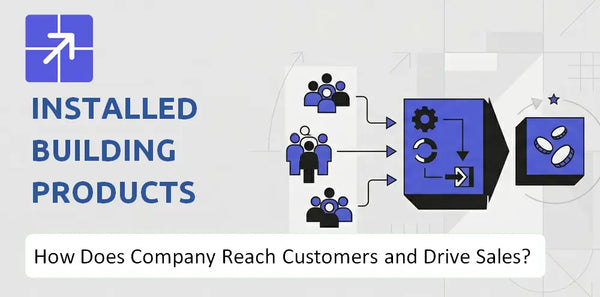
Branches use local account managers, installer pools, and OEM ties to convert contractor and builder demand into bookings; digital quoting shortens sales cycles. See Installed Building Products BCG Matrix Analysis for product positioning.
Who Does Installed Building Products Want to Sell To?
Installed Building Products, Inc. targets national and regional production homebuilders, custom homebuilders, and commercial general contractors, plus a growing retrofit/renovation homeowner segment; the company wins by offering scale, consistent scheduling, and high-margin retrofit services tied to energy incentives.
 Primary focus: Production Homebuilders
Installed Building Products company prioritizes national and regional production builders who need repeatable installation services across markets; this segment accounted for roughly ~60% of revenue in 2024 and remains core in 2025 as IBP leverages field sales best practices and channel partnerships for building products to secure long-term contracts.
Secondary: Custom Homebuilders and Commercial GCs
Custom homebuilders and commercial general contractors – especially multi-family and industrial projects needing fireproofing/waterproofing – drive project-value work; commercial projects contributed an estimated ~25% of 2025 contract value as IBP targets complex scopes and uses B2B sales tactics for building materials installers.
New emphasis: Retrofit and Renovation Homeowners
As of 2025, Installed Building Products sales strategy includes a sharpened push into high-margin retrofit/renovation work for homeowners seeking energy efficiency upgrades, driven by federal tax credits and rising utility costs; retrofit initiatives aim to lift gross margins by targeting projects averaging $8,000 – $15,000 ticket size.
Market positioning: Reliable scale and localized execution
Installed Building Products positions itself as a national installer with local footprints that ensure on-time performance; the positioning supports volume contracts with production builders and premium pricing on specialized commercial and retrofit work by combining field sales, local SEO for building products installers, and CRM-driven scheduling.
Why this positioning converts demand into sales
The message – consistent delivery across geographies plus retrofit cost-savings – resonates: Installed Building Products customer acquisition blends trade-show leads, showroom conversion strategies, and digital marketing strategies for installation companies; conversion improvements target reducing estimate-to-close time from industry averages to under 14 days.
Evidence and channels: how IBP reaches builders and homeowners
Field sales teams, national account managers, and partnerships with builders drive B2B growth while paid search, local SEO, and optimized online estimates boost consumer retrofit leads; see a sector overview in History and Background of Installed Building Products Company for context on scale and go-to-market evolution.
Installed Building Products SWOT Analysis
- Complete SWOT Breakdown
- Fully Customizable
- Editable in Excel & Word
- Professional Formatting
- Investor-Ready Format

How Does Installed Building Products Get in Front of Customers?
Installed Building Products company reaches customers through a hyper-local branch network of over 250 locations and a national sales footprint, leveraging B2B relationships with site managers and purchasing executives, targeted digital lead generation for residential services, and an active M&A pipeline that delivers immediate local accounts.

Hyper-local Branch Network and Field Sales
The branch model is the primary acquisition channel: local branches maintain direct relationships with builders, general contractors, and site superintendents, converting repeat commercial and residential project demand into consistent sales via field sales teams and local credibility.
Digital Marketing and Online Reach
Installed Building Products sales strategy uses targeted search and paid media to capture high-intent residential leads for insulation and garage door installation, supported by local SEO, content for remodel audiences, and online estimate/scheduling tools to boost conversion rates.
Sales Channels and Distribution Access
Access to customers flows through direct B2B contracts with builders, site-level procurement, and branch-based service delivery rather than retail; partnerships with regional contractors and material suppliers widen distribution into new projects.
Demand Generation Tactics
Demand generation is relationship-driven – trade outreach, on-site bids, and builder meetings – plus local promotions, targeted digital ads for homeowners, and acquisitions that import an existing book of business to jumpstart regional demand.
Customer Acquisition Efficiency
M&A accelerates customer acquisition by adding established revenues; per public filings in fiscal 2025, installed services growth was supported by acquisitions that contributed material local revenue and improved branch-level margins, lowering payback on acquisition spend.
Most Important Reach Advantage
The strongest reach advantage is the combination of 250+ branches plus an M&A pipeline that delivers immediate regional scale – this yields high touch B2B relationships with builders and rapid conversion of local demand into booked sales. See Target Customers and Market of Installed Building Products Company for more context: Target Customers and Market of Installed Building Products Company
Installed Building Products Business Model Canvas
- One-time Payment
- No Research Needed – Save Hours of Work
- Built by Experts, Trusted by Consultants
- Instant Download, Ready to Use
- 100% Editable, Fully Customizable

How Does Installed Building Products Turn Attention Into Sales?
Installed Building Products, Inc. converts attention into sales by bundling core insulation with complementary products and using proprietary bidding software for real-time, margin-protected quotes; operational reliability and installer labor support then lock builders into recurring work.
Core Sales Model: Local, Field-Led Cross-Sell
Installed Building Products company primarily sells through field sales and local account managers who partner with builders and remodelers; the model is partner-led selling with on-site estimates and project execution by local crews.
Pricing and Monetization Logic: Bundles and Project-Based Quotes
Pricing is one-time, project-based revenue with wallet-share expansion via bundled offerings (gutters, shelving, mirrors). Real-time bids factor current material costs and labor to preserve gross margins at sale.
Conversion and Purchase Drivers: Accurate Quotes and Embedded Operations
Conversion hinges on fast, accurate quoting using proprietary bidding software, trust from reliable installations, and mitigation of the installer labor shortage for builders – so builders choose Installed Building Products consistently.
Repeat Revenue and Customer Expansion: Recurring Builder Relationships
Retention comes from becoming an embedded production partner: recurring projects from repeat builders increase customer lifetime value, and cross-sell upsells grow average revenue per job – metrics that improved through 2025.
Installed Building Products sales strategy increased average revenue per completed project year-over-year through 2025; proprietary bidding and labor coverage reduced quote-to-close friction, and field sales plus bundled offerings drove higher wallet share and lower customer acquisition cost.
For operational context and company economics see How Installed Building Products Company Works and Makes Money
Installed Building Products Marketing Mix
- Complete Marketing Mix Analysis
- Effortlessly Communicate Your Business Strategy
- Investor-Ready Format
- 100% Editable and Customizable
- Clear and Structured Layout

How Strong Does Installed Building Products's Commercial Engine Look Going Forward?
Installed Building Products company's commercial engine looks resilient entering 2026, supported by a large backlog of housing completions and a tilt toward higher-value energy-efficiency products; mortgage-rate volatility and new-home starts remain key downside risks.
Backlog and product mix support future demand
Installed Building Products sales strategy benefits from a backlog estimated to cover a large portion of 2025 work, while expanding sales of insulation and energy-efficiency products raises average ticket sizes and margin profile, helping convert demand into sales.
Field channels and marketing effectiveness
Field sales, contractor relationships, and local showroom presence remain the core customer acquisition routes; digital marketing strategies for installation companies and CRM-driven follow-up improve lead-to-sale conversion and reduce sales cycle times.
Risks to commercial performance
Mortgage rate swings can compress new single-family starts and slow overall lead flow; competition in the fragmented installation services marketing space and integration risks from disciplined M&A pose execution and margin pressures.
Overall sales and marketing outlook for 2025/2026
Outlook is positive: management projects 2025 revenue to exceed $3.2 billion with adjusted EBITDA margin near 16 – 17%, supported by diversification into multi-family/commercial channels and pricing power from energy-code-driven demand; liquidity supports continued consolidation of the roughly $15 billion installation market.
For context on competitors and channel positioning, see Competitive Landscape of Installed Building Products Company
Installed Building Products Boston Consulting Group Matrix
- Built by Experts, Trusted by Consultants
- Structured for Consultants, Students, and Founders
- 100% Editable in Microsoft Word & Excel
- Instant Digital Download – Use Immediately
- Compatible with Mac & PC – Fully Unlocked

Related Blogs
- What Is the History of Installed Building Products Company and How Did It Evolve?
- What Is the Competitive Landscape of Installed Building Products Company and How Does It Compete?
- What Is the Growth Outlook of Installed Building Products Company and Where Is It Heading?
- How Does Installed Building Products Company Work and What Drives Its Business Model?
- What Do the Mission, Vision, and Core Values of Installed Building Products Company Reveal?
- Who Are the Core Customers in Installed Building Products Company's Target Market?
- Who Owns Installed Building Products Company Today and Who Holds Control?
Frequently Asked Questions
Installed Building Products targets national and regional production homebuilders, custom homebuilders, commercial general contractors, and a growing retrofit homeowner segment. The company focuses on repeatable installation services, project-value work, and higher-margin retrofit jobs tied to energy efficiency, while using scale and localized execution to win long-term business.
Disclaimer
All information, articles, and product details provided on this website are for general informational and educational purposes only. We do not claim any ownership over, nor do we intend to infringe upon, any trademarks, copyrights, logos, brand names, or other intellectual property mentioned or depicted on this site. Such intellectual property remains the property of its respective owners, and any references here are made solely for identification or informational purposes, without implying any affiliation, endorsement, or partnership.
We make no representations or warranties, express or implied, regarding the accuracy, completeness, or suitability of any content or products presented. Nothing on this website should be construed as legal, tax, investment, financial, medical, or other professional advice. In addition, no part of this site - including articles or product references - constitutes a solicitation, recommendation, endorsement, advertisement, or offer to buy or sell any securities, franchises, or other financial instruments, particularly in jurisdictions where such activity would be unlawful.
All content is of a general nature and may not address the specific circumstances of any individual or entity. It is not a substitute for professional advice or services. Any actions you take based on the information provided here are strictly at your own risk. You accept full responsibility for any decisions or outcomes arising from your use of this website and agree to release us from any liability in connection with your use of, or reliance upon, the content or products found herein.