
How does KCC Corporation's technical sales and channel strategy convert industrial demand into repeatable revenue?
KCC Corporation uses a high-touch technical sales model plus regional distributors to win large industrial contracts and aftermarket coating jobs. This matters as KCC in 2025 prioritized deleveraging while scaling Momentive's silicone margins, showing revenue mix shifts toward specialty chemicals.
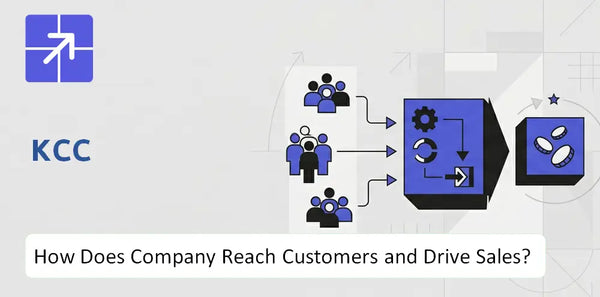
KCC leans on field engineers to specify products, then routes volume through direct contracts or distributor networks; focus on service raises switching costs and repeat orders. See KCC BCG Matrix Analysis
Who Does KCC Want to Sell To?
KCC Corporation targets three B2B buyer tiers: global Tier-1 automotive OEMs and shipbuilders, semiconductor and electronics firms, and large South Korean construction and infrastructure developers. KCC wins them with product performance, regulatory compliance, and long-term volume contracts that stabilize revenue and reduce retail-facing volatility.
 Main Customer Group: Automotive and Maritime OEMs
Global Tier-1 automotive OEMs and maritime shipbuilders are KCC Corporation's highest-value customers because they demand coatings and sealants that meet strict environmental and durability standards. KCC focuses on long-term supply agreements, technical qualification cycles, and regulatory compliance to secure contracts that often span multiple years and represent a large share of industrial coatings revenue.
Additional Target Segments: Semiconductors and Construction
KCC sells epoxy molding compounds and thermal interface materials to semiconductor and electronics firms supporting AI hardware, targeting chipmakers and packaging houses with high-margin, specification-driven sales. In South Korea, KCC dominates the construction materials market – gypsum board, glass, and insulation – targeting large developers and contractors who provide steady, volume-based business.
Market Positioning: B2B Performance and Reliability
KCC positions itself as a performance-focused B2B supplier emphasizing technical specs, environmental compliance (low-VOC and marine-grade standards), and reliable supply chains. This positioning supports premium pricing and reduces sensitivity to short-term retail cycles while enabling channel partnerships and OEM approvals that lock in demand.
Why the Positioning Works: Spec-Driven Wins and Volume Stability
OEMs and contractors prioritize qualified suppliers; KCC leverages rigorous R&D, on-site technical support, and compliance records to convert specs into purchase orders. As of fiscal 2025, KCC's industrial coatings and functional materials segments showed higher gross margins than commodity building materials, reflecting successful KCC customer acquisition and demand generation for KCC across its sales funnel.
See further segmentation and market detail in the Target Customers and Market of KCC Company article: Target Customers and Market of KCC Company
KCC SWOT Analysis
- Complete SWOT Breakdown
- Fully Customizable
- Editable in Excel & Word
- Professional Formatting
- Investor-Ready Format

How Does KCC Get in Front of Customers?
KCC Corporation reaches customers through a dual approach: technical spec-in for global industrial clients and broad domestic distribution via over 3,500 authorized dealers plus the HomeCC retail platform. Expanded digital procurement portals (live by March 2026) let global buyers place and track complex orders, turning demand into measurable sales.

Spec-in Engineering Partnerships
KCC company sales strategy centers on a spec-in model: engineering teams embed silicone and coatings into OEM design specs for autos and vessels so demand starts at R&D and procurement stages.
Digital Procurement and Portal Reach
KCC digital marketing strategy for growth includes upgraded portals launched by March 2026 that support multi-region orders with real-time lead-time tracking, improving order visibility and reducing procurement friction.
Dealer Network and HomeCC Retail
KCC distribution channels combine direct industrial sales with retail reach: over 3,500 authorized dealers and the HomeCC platform provide last-mile access to consumers and small contractors.
Demand Generation via Technical Content and Trade Engagement
Demand generation for KCC relies on technical seminars, specification workshops with OEMs, targeted trade shows, and content that demonstrates material performance – feeding the top of the spec-driven sales funnel.
Customer Acquisition Efficiency and Sales Funnel
Sales funnel optimization KCC shows efficiency: spec-in leads convert at higher win rates than open-market leads, and portal-enabled reorder cycles reduced lead-time variability by up to 20% in 2025 for key accounts, according to internal procurement metrics.
Key Reach Advantage: Technical Integration + Digital Ops
The most important reach advantage is combining deep technical integration with OEMs and global digital procurement: this creates locked-in specification demand while the portals scale order management across regions, improving conversion and retention.
For context on market positioning and competitors, see Competitive Landscape of KCC Company
KCC Business Model Canvas
- One-time Payment
- No Research Needed – Save Hours of Work
- Built by Experts, Trusted by Consultants
- Instant Download, Ready to Use
- 100% Editable, Fully Customizable

How Does KCC Turn Attention Into Sales?
KCC Corporation turns attention into sales by locking customers through high switching costs and vertical integration, converting interest into multi-year contracts and bundled procurement deals that protect margins and widen wallet share.
Core sales model: contract-led B2B with bundling
KCC company sales strategy centers on direct B2B selling via long-term supply agreements, technical account teams, and project-based contracts; in silicone, bespoke formulations create bespoke contracts; in building materials, bundled offers (glass, flooring, insulation) drive larger single-vendor procurements.
Pricing and monetization logic: pass-throughs and value pricing
Pricing uses raw-material pass-through clauses to preserve margins against silicon metal volatility, project-tier pricing for developers, and value-based pricing for custom silicones; revenue is mostly transactional with recurring elements from multi-year supply contracts.
Conversion and purchase drivers: switching costs and capacity
Conversion hinges on high switching costs from certified formulations (clients face re – certification expense) and KCC marketing strategy that emphasizes supply security via large domestic capacity; sales teams close deals by tying technical support to contracts.
Repeat revenue and customer expansion: bundling and renewals
Retention is driven by bundled procurement (increasing share of developer spend) and renewal of multi-year agreements; cross-selling from silicone to adjacent chemical products and scale advantages keep domestic operating margins near 10% in building materials.
Silicone accounts for approximately 58% of KCC Corporation consolidated revenue in fiscal 2025, and multi-year supply contracts with raw-material pass-throughs limit margin exposure to silicon metal price swings; the bundling strategy sustains sales funnel optimization KCC and higher average deal sizes. Read more on operations in How KCC Company Works and Makes Money.
KCC Marketing Mix
- Complete Marketing Mix Analysis
- Effortlessly Communicate Your Business Strategy
- Investor-Ready Format
- 100% Editable and Customizable
- Clear and Structured Layout

How Strong Does KCC's Commercial Engine Look Going Forward?
The KCC Corporation commercial engine looks solid heading into 2026, supported by a rebound in the global silicone cycle and a strategic shift into semiconductor materials; key strengths include high-margin EV silicone demand and expanding semiconductor capacity while South Korean construction remains a drag.
What Supports Future Demand
KCC company sales strategy now targets high-performance EV silicone and semiconductor materials, which drove consolidated revenue to 6.9 trillion KRW in fiscal 2025 and a 5 percent y/y increase; demand generation for KCC is strengthened by product-market fit in green energy and AI infrastructure.
Channel and Marketing Effectiveness
KCC marketing strategy combines direct B2B account teams, distribution channels into semiconductor fabs, and digital touchpoints for OEMs; KCC customer acquisition is aided by targeted account-based marketing and CRM-driven lead nurturing and conversion techniques that shorten the sales funnel.
Risks to Commercial Performance
Main risks: a soft South Korean construction market, cyclicality in global silicone pricing, and integration/competitive pressure from Momentive where EBITDA margins stabilized near 12 percent; capital allocation missteps could slow R&D linked to semiconductor materials.
The Overall Sales and Marketing Outlook
Outlook through 2026 appears strong and adaptable: reduced leverage (debt-to-equity at 105 percent in 2025) frees R&D and commercial investment, and Jeonju plant expansion supports capture of semiconductor demand; sales funnel optimization KCC and performance marketing campaigns should drive higher conversion and outperformance versus peers.
Reference: History and Background of KCC Company
KCC Boston Consulting Group Matrix
- Built by Experts, Trusted by Consultants
- Structured for Consultants, Students, and Founders
- 100% Editable in Microsoft Word & Excel
- Instant Digital Download – Use Immediately
- Compatible with Mac & PC – Fully Unlocked

Related Blogs
- What Is the History of KCC Company and How Did It Evolve?
- What Is the Competitive Landscape of KCC Company and How Does It Compete?
- What Is the Growth Outlook of KCC Company and Where Is It Heading?
- How Does KCC Company Work and What Drives Its Business Model?
- What Do the Mission, Vision, and Core Values of KCC Company Reveal?
- Who Are the Core Customers in KCC Company's Target Market?
- Who Owns KCC Company Today and Who Holds Control?
Frequently Asked Questions
KCC primarily sells to three B2B groups: global Tier-1 automotive OEMs and shipbuilders, semiconductor and electronics firms, and large South Korean construction and infrastructure developers. The company wins these buyers with product performance, compliance, and long-term contracts that support stable revenue and reduce retail volatility.
Disclaimer
All information, articles, and product details provided on this website are for general informational and educational purposes only. We do not claim any ownership over, nor do we intend to infringe upon, any trademarks, copyrights, logos, brand names, or other intellectual property mentioned or depicted on this site. Such intellectual property remains the property of its respective owners, and any references here are made solely for identification or informational purposes, without implying any affiliation, endorsement, or partnership.
We make no representations or warranties, express or implied, regarding the accuracy, completeness, or suitability of any content or products presented. Nothing on this website should be construed as legal, tax, investment, financial, medical, or other professional advice. In addition, no part of this site - including articles or product references - constitutes a solicitation, recommendation, endorsement, advertisement, or offer to buy or sell any securities, franchises, or other financial instruments, particularly in jurisdictions where such activity would be unlawful.
All content is of a general nature and may not address the specific circumstances of any individual or entity. It is not a substitute for professional advice or services. Any actions you take based on the information provided here are strictly at your own risk. You accept full responsibility for any decisions or outcomes arising from your use of this website and agree to release us from any liability in connection with your use of, or reliance upon, the content or products found herein.