
How does Krispy Kreme's sales and marketing model use its Hub-and-Spoke distribution to drive store sales and wholesale partnerships?
Krispy Kreme pairs centralized production hubs with retail spokes and wholesale channels to deliver fresh product quickly. This Delivered Fresh Daily approach boosts margin via higher throughput and consistent branding; in 2025 the company reported continued same-store sales recovery across key markets.
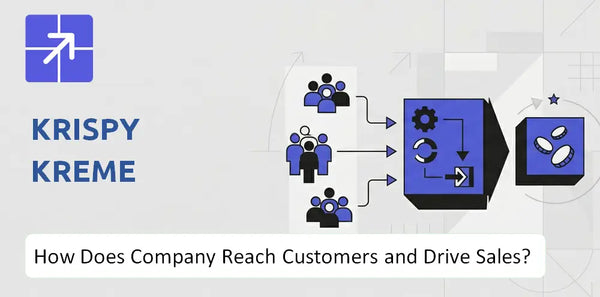
Krispy Kreme ties digital promotions, franchise marketing funds, and retail placement to hub output to convert demand into transactions. Track mid-2025 digital order growth and wholesale expansions as practical signals.
See product analysis: Krispy Kreme BCG Matrix Analysis
Who Does Krispy Kreme Want to Sell To?
Krispy Kreme wants to sell to Occasion-Based Givers – suburban families and office buyers who purchase multi-dozen, high-margin orders for gifting and events – and to Convenience-Driven Indulgers, especially Gen Z and Millennials reached via limited-time offers and digital channels. In 2025 the company also pushes into Routine Retail Shoppers by placing products in grocery, c-stores, and quick-service partners to capture incremental, non-destination sales.
 Primary audience: Occasion-Based Givers
Suburban families and office procurement teams drive bulk purchases – multi-dozen orders account for a disproportionate share of in-store ticket value. These buyers deliver higher average order values and predictable seasonal spikes that Krispy Kreme targets via holiday promotions and corporate gifting offers.
Additional targets: Convenience-Driven Indulgers
Gen Z and Millennials are courted with limited-time offers (LTOs), celebrity collaborations, and heavy social media activation – tactics that boost foot traffic and digital ordering. Routine Retail Shoppers – grocery and c-store buyers – are a fast-growing segment after 2025 distribution deals that put single-serve items in everyday channels.
Market positioning: Celebration brand plus daily convenience
Krispy Kreme positions itself as both an occasion-led premium treat and an everyday impulse buy. The blend of flagship stores, drive-thrus, retail distribution, and digital ordering supports a dual strategy across high-margin event sales and high-frequency convenience purchases.
Why this positioning works
The message – freshness, shareability, and limited-edition desirability – translates into measurable lifts: seasonal LTOs increase same-store sales during launches by double digits, loyalty and app promotions raise visit frequency, and retail placement captures shoppers who would not visit a shop. For deeper profile and channel detail, see Target Customers and Market of Krispy Kreme Company.
Krispy Kreme SWOT Analysis
- Complete SWOT Breakdown
- Fully Customizable
- Editable in Excel & Word
- Professional Formatting
- Investor-Ready Format

How Does Krispy Kreme Get in Front of Customers?
Krispy Kreme gets in front of customers through an expanded Points of Access network, a national McDonald's rollout, digital engagement via the Krispy Kreme Rewards app, and in-store visibility (branded cabinets, Hot Light alerts) driving impulse buys and repeat visits.

McDonald's partnership as the primary acquisition channel
The McDonald's national rollout provides hyper-local presence across nearly 13,500 U.S. locations, turning high-frequency QSR foot traffic into impulse and habitual purchases and multiplying Krispy Kreme marketing strategy reach overnight.
Digital marketing and online reach
Digital is the top-of-funnel driver: the Krispy Kreme Rewards program exceeds 16 million members and the app uses geo-fenced mobile notifications, Hot Light alerts, and targeted paid media to convert awareness into orders.
Sales channels and distribution access
Global Points of Access hit ~34,500 by early 2026, combining franchise stores, DFD logistics cabinets inside Walmart and Target, third-party retail placements, delivery platforms, and the McDonald's network to broaden Krispy Kreme sales channels.
Demand generation tactics
Campaigns use Hot Light triggers, seasonal limited-edition flavors, national advertising, in-app promo codes, and partnered promotions (e.g., retailer aisle displays) to create urgency and drive footfall and digital orders.
Customer acquisition efficiency
High POA density plus a 16 million-member loyalty base lowers CAC via repeat purchases and push notifications; geo-fenced offers and Hot Light alerts boost impulse conversion rates in minutes.
Most important reach advantage
The McDonald's distribution partnership is the scale lever in 2025/2026, delivering a nationwide, hyper-local footprint that, combined with digital engagement and DFD cabinet visibility, converts reach into measurable sales lift.
For operational and monetization context see How Krispy Kreme Company Works and Makes Money
Krispy Kreme Business Model Canvas
- One-time Payment
- No Research Needed – Save Hours of Work
- Built by Experts, Trusted by Consultants
- Instant Download, Ready to Use
- 100% Editable, Fully Customizable

How Does Krispy Kreme Turn Attention Into Sales?
Krispy Kreme turns attention into sales by using limited-time offers, premium bundling, and omnichannel access to push higher ticket orders and frequent repeat buys. Scarcity, digital partnerships, and a strict freshness cycle in DFD (display-for-deposit) retail convert visibility into measurable revenue.
Core Sales Model: Retail-first with omnichannel distribution
Krispy Kreme sells primarily through franchised and company-owned shops, supported by wholesale and DFD retail placements plus delivery partners. This hybrid retail model blends in-store impulse buying with partner-led digital order fulfilment to reach customers across touchpoints.
Pricing and Monetization Logic: Premium LTOs and bundle-led AOV uplift
The company prices seasonal limited-time-offers (LTOs) at roughly 25 percent premium to Original Glazed, driving higher average transaction value via themed bundles and multi-pack discounts. Digital orders and delivery incorporate service fees and platform commissions but carry higher average order values, improving monetization per sale.
Conversion and Purchase Drivers: Scarcity, convenience, and freshness
Conversion relies on scarcity from seasonal flavors (4 – 6 specialized doughnuts per LTO), premium bundling, and omnichannel convenience – especially high-intent delivery platforms. In 2025 the digital sales mix stabilized at 23 percent of total revenue, with DoorDash and UberEats showing materially higher AOVs than in-shop purchases.
Repeat Revenue and Customer Expansion: Loyalty, app features, and fast replenishment
Repeat purchases are driven by a rewards program, app ordering, and targeted email offers that boost frequency; app and loyalty promotions account for a growing share of transactions. The DFD model enforces a strict 24-hour replenishment cycle to protect freshness claims, converting passive retail foot traffic – convenience stores and nontraditional outlets – into incremental sales.
See how product, pricing, and channel work together in this company overview: Mission, Vision, and Values of Krispy Kreme Company
Krispy Kreme Marketing Mix
- Complete Marketing Mix Analysis
- Effortlessly Communicate Your Business Strategy
- Investor-Ready Format
- 100% Editable and Customizable
- Clear and Structured Layout

How Strong Does Krispy Kreme's Commercial Engine Look Going Forward?
Krispy Kreme's commercial engine looks notably stronger heading into 2025, driven by a shift to a capital-light distribution model, the McDonald's rollout, and margin gains from route density and automation. Key supports are expanded channel reach and higher-margin wholesale, while risks include execution of logistics and potential brand dilution during rapid retail expansion.
What Supports Future Demand
Brand recognition and a strong Krispy Kreme marketing strategy pair with the company's loyalty program and mobile app to boost customer engagement. The McDonald's DFD (doughnuts for delivery) integration and wholesale expansion increase reach and support the projected 10 – 12% CAGR in US DFD sales through 2026.
Channel and Marketing Effectiveness
Omnichannel efforts – drive-thru, retail stores, online ordering and delivery partnerships – are converting awareness into purchases; digital marketing Krispy Kreme initiatives and national advertising campaigns show measurable sales lift. Franchise sales strategy Krispy Kreme and POS promotions drive in-store upsell and impulse buys, while data analytics improve retention and targeted email marketing.
Risks to Commercial Performance
Logistics execution risk: route density gains require tight operations – misses can raise distribution costs. Fast retail expansion risks brand dilution and franchise strain; labor inflation remains a downside though automation helps. Competitive promotions and price sensitivity could pressure margins and demand.
The Overall Sales and Marketing Outlook
Outlook for 2025/2026 is strong yet execution-dependent: organic revenue growth and EBITDA margin expansion toward 15 – 16% are achievable if logistics and brand consistency hold. Monitor McDonald's DFD volume ramp, franchise retail openings, and performance of seasonal promotional campaigns for signs of sustained momentum.
For context on legacy positioning and strategic moves that underpin current distribution and marketing choices, see History and Background of Krispy Kreme Company
Krispy Kreme Boston Consulting Group Matrix
- Built by Experts, Trusted by Consultants
- Structured for Consultants, Students, and Founders
- 100% Editable in Microsoft Word & Excel
- Instant Digital Download – Use Immediately
- Compatible with Mac & PC – Fully Unlocked

Related Blogs
- What Is the History of Krispy Kreme Company and How Did It Evolve?
- What Is the Competitive Landscape of Krispy Kreme Company and How Does It Compete?
- What Is the Growth Outlook of Krispy Kreme Company and Where Is It Heading?
- How Does Krispy Kreme Company Work and What Drives Its Business Model?
- What Do the Mission, Vision, and Core Values of Krispy Kreme Company Reveal?
- Who Are the Core Customers in Krispy Kreme Company's Target Market?
- Who Owns Krispy Kreme Company Today and Who Holds Control?
Frequently Asked Questions
Krispy Kreme mainly targets Occasion-Based Givers, like suburban families and office buyers, plus Convenience-Driven Indulgers such as Gen Z and Millennials. It also expands toward Routine Retail Shoppers through grocery, c-store, and quick-service placements to capture more everyday purchases.
Disclaimer
All information, articles, and product details provided on this website are for general informational and educational purposes only. We do not claim any ownership over, nor do we intend to infringe upon, any trademarks, copyrights, logos, brand names, or other intellectual property mentioned or depicted on this site. Such intellectual property remains the property of its respective owners, and any references here are made solely for identification or informational purposes, without implying any affiliation, endorsement, or partnership.
We make no representations or warranties, express or implied, regarding the accuracy, completeness, or suitability of any content or products presented. Nothing on this website should be construed as legal, tax, investment, financial, medical, or other professional advice. In addition, no part of this site - including articles or product references - constitutes a solicitation, recommendation, endorsement, advertisement, or offer to buy or sell any securities, franchises, or other financial instruments, particularly in jurisdictions where such activity would be unlawful.
All content is of a general nature and may not address the specific circumstances of any individual or entity. It is not a substitute for professional advice or services. Any actions you take based on the information provided here are strictly at your own risk. You accept full responsibility for any decisions or outcomes arising from your use of this website and agree to release us from any liability in connection with your use of, or reliance upon, the content or products found herein.