
How does The LEGO Group's sales and marketing model convert brand demand into paid purchases?
The LEGO Group combines a large DTC network, licensed IP, and premium pricing to convert fan engagement into sales; by 2025 its DTC revenue share rose, signaling stronger margins and tighter customer data capture. This matters as retail shifts online and experiential retail boosts lifetime value. LEGO Group BCG Matrix Analysis
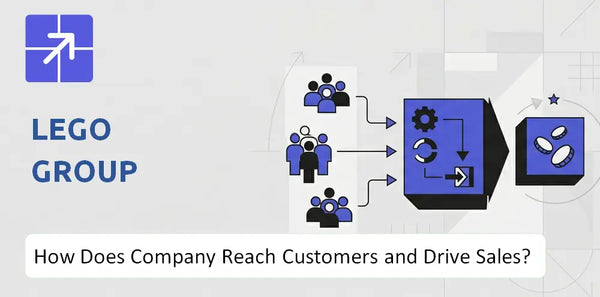
The LEGO Group leans on flagship stores, e-commerce, and media-driven product drops to accelerate conversion; in 2025, targeted campaigns and store experiences shortened purchase cycles and lifted average order value.
Who Does LEGO Group Want to Sell To?
The LEGO Group wants to sell to two core audiences: children aged 3 – 12 focused on play and development, and adults – Collectors/AFOLs – purchasing high-ticket sets and display pieces; the company also pursues Digital-First Families to convert screen engagement into physical sales.
 Main Customer Group: Kids and Caregivers
The primary target is children aged 3 – 12 and their caregivers; LEGO markets developmental play, creativity, and educational value through modular sets, licensed play themes, and age-tiered learning lines to drive repeat purchases and lifetime customer relationships.
Additional Target Segments: Adult Fans and Digital Families
AFOLs (Adult Fans of LEGO) generated approximately 28 percent of 2025 revenue via premium LEGO Icons and Architecture sets; Digital-First Families are reached through gaming partnerships (LEGO Fortnite ecosystem with 100M+ active users) and digital-first marketing to turn screen time into physical product demand.
Market Positioning: Premium Play and Collectible Design
LEGO positions itself as a premium toy and collectible brand, blending educational play with high-design collector pieces; distribution spans direct-to-consumer LEGO stores and e-commerce plus broad retail partners to optimize the lego distribution channels and lego omnichannel retail approach.
Why the Positioning Works: Brand Trust and Diverse Offerings
Strong brand equity, licensed partnerships, and a two-tier product mix (mass-market playsets and premium Icons) boost margins and conversion in the lego sales funnel; CRM, loyalty programs, and targeted promotions help convert demand across retail and online, while collaborations and fandoms amplify organic reach. See Mission, Vision, and Values of LEGO Group Company for corporate context: Mission, Vision, and Values of LEGO Group Company
LEGO Group SWOT Analysis
- Complete SWOT Breakdown
- Fully Customizable
- Editable in Excel & Word
- Professional Formatting
- Investor-Ready Format

How Does LEGO Group Get in Front of Customers?
The LEGO Group gets in front of customers through a coordinated omnichannel presence: branded retail stores, major wholesale partners, and content-driven marketing that turns cultural relevance into purchase intent. It combines physical temples of the brand with digital-first programs and first-party data to drive awareness, demand, and conversion.

Branded Retail Stores as Primary Acquisition Engine
The global estate of over 1,100 LEGO branded retail stores (early 2026) acts as a high-intent acquisition channel; stores function as experiential showrooms that convert browsers into buyers and feed the sales funnel with repeat DTC (direct-to-consumer) transactions.
Digital Marketing and Online Reach
LEGO uses paid search, social ads, YouTube content, email automation, apps, and platform distribution to reach shoppers; the LEGO Insiders loyalty program surpassed 40 million members by 2025, providing rich first-party data for personalized CRM and conversion optimization.
Wholesale and Marketplace Distribution Access
Major retail partners – Amazon, Walmart, Target – and specialty toy retailers provide broad shelf and online marketplace coverage, complementing direct-to-consumer sales and ensuring wide availability across geographies and customer segments.
Content-to-Commerce Demand Generation
Theatrical releases, streaming shows, branded shorts, and social content act as perpetual ads that drive demand for licensed sets; licensing and co-branding tie-ins (films, franchises) amplify reach and provide sustained promotional lift.
Customer Acquisition Efficiency
High-intent in-store traffic, combined with first-party loyalty data and targeted digital spend, lowers acquisition cost and raises conversion – LEGO's DTC mix and Insiders-driven personalization improve lifetime value and repeat purchase rates.
Most Important Reach Advantage in 2025/2026
The combination of over 1,100 stores and a 40 million-member loyalty base is LEGO's largest scale advantage – this omnichannel footprint and first-party data enable precise segmentation, omnichannel retail experiences, and efficient conversion across ages and collectors.
See company context in this article: History and Background of LEGO Group Company
LEGO Group Business Model Canvas
- One-time Payment
- No Research Needed – Save Hours of Work
- Built by Experts, Trusted by Consultants
- Instant Download, Ready to Use
- 100% Editable, Fully Customizable

How Does LEGO Group Turn Attention Into Sales?
LEGO Group turns attention into sales by creating time-limited demand, premium direct channels, and loyalty-driven repeat purchases; scarcity, exclusivity, and tiered pricing drive buy-now behavior and higher-average baskets.
Core Sales Model: Direct-led omnichannel retail
LEGO sells via owned digital channels (LEGO.com), branded stores, and wholesale retail partners; Direct-to-Consumer (DTC) plus partner-led retail balance full-margin sales and scale across markets.
Pricing and Monetization Logic: Tiered pricing and premium exclusives
Pricing mixes everyday sets and premium DTC exclusives priced commonly between $200 and $850, with seasonal promotions and bundle offers to lift conversion and average order value.
Conversion and Purchase Drivers: Scarcity, exclusivity, and loyalty mechanics
Refreshing roughly 50 percent of the portfolio annually creates retirement-driven urgency; exclusive DTC sets and limited runs increase conversion at owned channels while brand-store experiences and retail availability support mass conversion.
Repeat Revenue or Customer Expansion: Loyalty, digital integration, and AOV uplift
The LEGO Insiders loyalty program boosts repeat purchases via points and Gift-with-Purchase incentives, increasing AOV and purchase frequency; integrating physical set registration with exclusive digital content raises lifetime value for digital-native users.
Conversion tactics in practice: DTC stores capture full retail margin on high-ticket exclusives – driving higher gross margin per order – while wholesale and big-box distribution extend reach; loyalty-driven promotions reduce CAC and raise repeat rates.
Key metrics and mechanics to note: roughly 50 percent annual portfolio refresh; DTC exclusive set prices commonly range $200 – $850; loyalty and GWP programs increase AOV and frequency – LEGO reports stable high-margin mix via direct channels in fiscal 2025 performance reviews.
For a deeper operational and revenue breakdown, see How LEGO Group Company Works and Makes Money.
LEGO Group Marketing Mix
- Complete Marketing Mix Analysis
- Effortlessly Communicate Your Business Strategy
- Investor-Ready Format
- 100% Editable and Customizable
- Clear and Structured Layout

How Strong Does LEGO Group's Commercial Engine Look Going Forward?
The LEGO Group's commercial engine enters 2025/2026 with clear momentum: projected mid-to-high single-digit revenue growth and industry-leading operating margins near 27%. Key supports include brand strength, regionalized manufacturing scale, and deep digital-physical integration; risks include raw-material inflation and logistics volatility.
Brand equity and product assortment that sustain demand
Global brand recognition, diversified product lines (kids, adults, licensed sets), and loyalty programs drive repeat purchases and premium pricing; adult fan spending and collector drops boost average order value and margin. Retail and direct-to-consumer channels remain complemented by strong licensing and co-branding that lift visibility and sales conversion.
Omnichannel distribution and targeted marketing efficiency
LEGO's omnichannel retail mix – own stores, e-commerce, wholesale, and experiential pop-ups – supports a robust lego sales funnel and high e-commerce conversion rates; CRM-driven segmentation and influencer/fandom programs improve acquisition and retention. Regional factories in Virginia and Vietnam lower lead times and support faster replenishment across lego distribution channels.
Commodity and logistics exposure that could compress margins
Rising resin and packaging costs and container-rate volatility can pressure gross margins despite pricing power; supply-chain disruptions risk stock-outs that harm the lego omnichannel customer experience. Transitioning to sustainable materials adds capex and unit-cost risk during roll-out.
Sales and marketing outlook for 2025/2026
Outlook is strong and adaptable: projected mid-to-high single-digit revenue growth vs. global toy market ~2 – 3% and operating margin around 27%, supported by a debt-free balance sheet and aggressive capex in regional plants. Effective use of lego marketing strategy, targeted promotions, CRM, and experiential events should sustain conversion and premium pricing.
Relevant datapoints: 2025 guidance points to revenue growth mid-to-high single digits, operating margin ~27%, zero net debt, and significant capex for Virginia and Vietnam expansions; see detailed analysis in Growth Outlook of LEGO Group Company.
LEGO Group Boston Consulting Group Matrix
- Built by Experts, Trusted by Consultants
- Structured for Consultants, Students, and Founders
- 100% Editable in Microsoft Word & Excel
- Instant Digital Download – Use Immediately
- Compatible with Mac & PC – Fully Unlocked

Related Blogs
- What Is the History of LEGO Group Company and How Did It Evolve?
- What Is the Competitive Landscape of LEGO Group Company and How Does It Compete?
- What Is the Growth Outlook of LEGO Group Company and Where Is It Heading?
- How Does LEGO Group Company Work and What Drives Its Business Model?
- What Do the Mission, Vision, and Core Values of LEGO Group Company Reveal?
- Who Are the Core Customers in LEGO Group Company's Target Market?
- Who Owns LEGO Group Company Today and Who Holds Control?
Frequently Asked Questions
LEGO Group wants to sell to children aged 3-12, their caregivers, adult collectors and AFOLs, and Digital-First Families. The blog says the company combines developmental play, premium collector sets, and digital engagement to turn interest into physical product sales.
Disclaimer
All information, articles, and product details provided on this website are for general informational and educational purposes only. We do not claim any ownership over, nor do we intend to infringe upon, any trademarks, copyrights, logos, brand names, or other intellectual property mentioned or depicted on this site. Such intellectual property remains the property of its respective owners, and any references here are made solely for identification or informational purposes, without implying any affiliation, endorsement, or partnership.
We make no representations or warranties, express or implied, regarding the accuracy, completeness, or suitability of any content or products presented. Nothing on this website should be construed as legal, tax, investment, financial, medical, or other professional advice. In addition, no part of this site - including articles or product references - constitutes a solicitation, recommendation, endorsement, advertisement, or offer to buy or sell any securities, franchises, or other financial instruments, particularly in jurisdictions where such activity would be unlawful.
All content is of a general nature and may not address the specific circumstances of any individual or entity. It is not a substitute for professional advice or services. Any actions you take based on the information provided here are strictly at your own risk. You accept full responsibility for any decisions or outcomes arising from your use of this website and agree to release us from any liability in connection with your use of, or reliance upon, the content or products found herein.