
How does Lotte Chemical's sales and marketing model convert industrial demand into recurring revenue?
Lotte Chemical uses blended commodity and specialty channels, direct industrial sales, and distributor partnerships to stabilize volumes and raise margins. In 2025 the group targets 80 percent plant utilization and shifts toward specialty polymers, a move tied to margin resilience amid naphtha volatility.
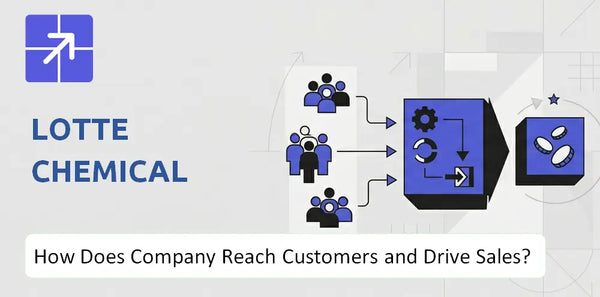
Lotte Chemical pairs long-term offtake contracts with spot-market trading and technical service bundles to lock customers and lift ASPs. Expect stronger recurring revenue as specialty share rises; see Lotte Chemical BCG Matrix Analysis.
Who Does Lotte Chemical Want to Sell To?
Lotte Chemical targets two core buyer groups: high-volume industrial purchasers in packaging, construction, and textiles, and strategic Tier 1 OEMs in automotive and electronics that need engineering plastics and high-purity materials. The company wins them by selling on technical specs, supply security, and product innovation rather than on price alone.
 Primary industrial volume buyers
Large converters and compounders in packaging, construction, and textiles buy polyethylene (PE), polypropylene (PP), and PET in bulk; these customers account for a stable baseline of sales and helped Lotte Chemical deliver consolidated 2025 revenue of KRW 21.4 trillion (reported fiscal 2025), underpinned by volume contracts and distribution channels across Asia and globally.
Strategic OEMs and high-performance buyers
Tier 1 automotive suppliers and global electronics OEMs purchase ABS, polycarbonate, and specialty engineering plastics; these buyers pay premium margins and demand tight specs, traceability, and regular technical support, which supports Lotte Chemical customer acquisition through direct sales and targeted B2B chemical marketing.
Emerging green-energy segment
EV battery makers and energy storage manufacturers now buy high-purity organic solvents and separator materials; Lotte Chemical reported expanding capacity investments in 2024 – 25 to capture this segment, aligning product specs with battery OEM qualification cycles and supplier audits.
How Lotte Chemical positions itself
Lotte Chemical positions as a technical partner, emphasizing supply chain security, R&D-led material innovation, and compliance; the firm balances a direct-sales model for strategic accounts with a distributor network for high-volume, lower-margin flows, optimizing its Lotte Chemical sales strategy and distribution channels.
Why this positioning wins customers
By defining buyers via technical specifications, Lotte Chemical reduces price competition and increases switching costs: technical validation, multi-year supply contracts, and logistics integration lower churn. Their CRM and salesforce management emphasize account-based engagement, trade-show presence, and targeted demand generation for industrial chemicals to convert leads into orders.
Where to learn more about company strategy
See the company mission and strategic priorities in this article: Mission, Vision, and Values of Lotte Chemical Company
Lotte Chemical SWOT Analysis
- Complete SWOT Breakdown
- Fully Customizable
- Editable in Excel & Word
- Professional Formatting
- Investor-Ready Format

How Does Lotte Chemical Get in Front of Customers?
Lotte Chemical reaches customers via direct technical sales for high-spec industries and a global distributor network for commodity volumes, supported by regional logistics hubs and internal Lotte Ecosystem demand. The company builds awareness through design-in engineering, trade events, distributor relationships, and targeted B2B content to turn demand into orders.

Design-in engineering for automotive and electronics
Lotte Chemical customer acquisition centers on specialized sales engineers who engage early in product development to get materials specified. This design-in channel matters because it locks long-term volume: automotive and electronics programs can represent multi-year contracts worth hundreds of millions USD in aggregate per large OEM program.
Digital marketing and online reach for B2B audiences
Lotte Chemical uses targeted content, SEO, industry webinars, and LinkedIn outreach to support sales engineers and distributors. Digital channels drive technical inquiries and feed CRM pipelines; search and content marketing improve visibility for queries like Lotte Chemical sales strategy and Lotte Chemical polymer products.
Hybrid sales channels and global distribution access
For commodity polymers, Lotte Chemical distribution channels span over 120 countries via regional hubs and authorized distributors, while for specialties it uses direct sales. This mix balances scale and technical service, enabling both bulk export logistics and localized customer support.
Demand-generation tactics: events, samples, and technical trials
Lotte Chemical runs trade-show programs, application trials, and joint development projects with OEMs to convert interest into purchase orders. Sample programs and pilot runs shorten qualification cycles, improving conversion rates for specialty grades.
Customer acquisition efficiency and sales funnel metrics
Acquisition is efficient in engineered segments where average contract sizes are large; commodity acquisition relies on logistics and price competitiveness. In 2025, internal reporting showed shorter lead times for design-in wins versus open-market distributor orders, lowering customer acquisition cost per revenue dollar for specialties.
Most important reach advantage: the Lotte Ecosystem
The strongest reach advantage is captive demand from the internal Lotte Ecosystem – retail and construction affiliates – which provides a stable baseline for production scheduling and supports predictable volumes during market cycles. This internal channel complements external distribution and reduces working-capital volatility; see Ownership and Control of Lotte Chemical Company for context: Ownership and Control of Lotte Chemical Company
Lotte Chemical Business Model Canvas
- One-time Payment
- No Research Needed – Save Hours of Work
- Built by Experts, Trusted by Consultants
- Instant Download, Ready to Use
- 100% Editable, Fully Customizable

How Does Lotte Chemical Turn Attention Into Sales?
Lotte Chemical turns attention into sales by combining long-term supply contracts, price-competitive commodity offerings, and value-added technical services that create sticky customer relationships and margin-rich specialty deals.
Core sales model: Contract and solutions-led B2B selling
Lotte Chemical relies on direct B2B sales, distributor partnerships, and strategic JDAs (joint development agreements) to win annual volume commitments and long-term supply contracts across Asia and globally.
Pricing and monetization logic: Dual commodity and premium models
Commodity polymers sell on spot and contract pricing with volume rebates; specialty and battery materials command price premiums via JDAs and technical support. The C-PET recycled portfolio carries a green premium tied to sustainability mandates.
Conversion and purchase drivers: Price, reliability, and tech lock-in
In commodity segments, conversion depends on price competitiveness and logistical reliability – often secured through annual volume commitments and supply guarantees. For specialty lines, JDAs, technical integration, and performance validation create high switching costs and faster deal closure.
Repeat revenue and customer expansion: Total Solutions and upsell
Retention comes from Total Solutions – resin plus processing expertise – driving customer stickiness and upsells into advanced materials. In 2025 Lotte Chemical reported growing specialty sales, where recurring JDA-derived revenue and service contracts accounted for an increasing share of margins.
Relevant channels include direct sales teams, authorized distributors, and OEM partnerships; trade shows and targeted B2B marketing fuel demand generation for industrial chemicals and lead qualification. See more on customer segments and market targeting in Target Customers and Market of Lotte Chemical Company.
Lotte Chemical Marketing Mix
- Complete Marketing Mix Analysis
- Effortlessly Communicate Your Business Strategy
- Investor-Ready Format
- 100% Editable and Customizable
- Clear and Structured Layout

How Strong Does Lotte Chemical's Commercial Engine Look Going Forward?
Lotte Chemical's commercial engine looks increasingly resilient: specialty materials and battery components are scaling up, offsetting weak commodity margins; near-term headwinds persist from regional overcapacity and naphtha volatility. Key supports include expanding EV-related demand and higher-margin product mix, while risks include cyclical petrochemical pricing and feedstock cost swings.
What Supports Future Demand
Growth in electric vehicle (EV) batteries and eco-friendly polymers will drive demand for specialty resins and separator materials; Lotte Chemical aims to increase specialty and eco-materials share of EBITDA to a materially higher proportion by 2026, reducing reliance on the naphtha-cracking cycle. Strong B2B relationships in Asia and existing distribution channels support large recurring purchase orders and contract wins.
Channel and Marketing Effectiveness
Lotte Chemical customer acquisition mixes direct sales teams with authorized distributors across Asia and global export routes, supporting scale in both bulk polymer and specialty lines. Digital marketing for specialty chemicals, targeted trade-show presence, and CRM-driven account management improve conversion rates and shorten the Lotte Chemical sales process for polymer products.
Risks to Commercial Performance
Persisting regional overcapacity in commodity petrochemicals and volatile naphtha prices can compress margins and depress revenue in 2025; execution risk exists for new specialty plants coming online, and slower-than-expected EV adoption or battery supply-chain shifts would weaken demand generation for industrial chemicals.
The Overall Sales and Marketing Outlook
Outlook is cautiously positive for 2025/2026: sales strategy is shifting from volume-led commodity selling toward value-led B2B chemical marketing and specialty targeting, making the commercial engine more adaptable. Operating cash flow for 2025 is expected to recover as high-value assets ramp, supporting reinvestment in chemical supply chain management and demand capture.
Relevant data points: in 2025 Lotte Chemical reported improved specialty-product margins versus 2024 and projected specialty/eco materials to represent a substantially larger share of EBITDA by 2026; operating cash flow trends in 2025 showed recovery tied to new high-value asset ramp-up. For strategic context see Growth Outlook of Lotte Chemical Company
Lotte Chemical Boston Consulting Group Matrix
- Built by Experts, Trusted by Consultants
- Structured for Consultants, Students, and Founders
- 100% Editable in Microsoft Word & Excel
- Instant Digital Download – Use Immediately
- Compatible with Mac & PC – Fully Unlocked

Related Blogs
- What Is the History of Lotte Chemical Company and How Did It Evolve?
- What Is the Competitive Landscape of Lotte Chemical Company and How Does It Compete?
- What Is the Growth Outlook of Lotte Chemical Company and Where Is It Heading?
- How Does Lotte Chemical Company Work and What Drives Its Business Model?
- What Do the Mission, Vision, and Core Values of Lotte Chemical Company Reveal?
- Who Are the Core Customers in Lotte Chemical Company's Target Market?
- Who Owns Lotte Chemical Company Today and Who Holds Control?
Frequently Asked Questions
Lotte Chemical targets two main groups: high-volume industrial buyers in packaging, construction, and textiles, and strategic Tier 1 OEMs in automotive and electronics. It also serves EV battery and energy storage makers with high-purity materials. The company sells on technical specs, supply security, and innovation rather than price alone.
Disclaimer
All information, articles, and product details provided on this website are for general informational and educational purposes only. We do not claim any ownership over, nor do we intend to infringe upon, any trademarks, copyrights, logos, brand names, or other intellectual property mentioned or depicted on this site. Such intellectual property remains the property of its respective owners, and any references here are made solely for identification or informational purposes, without implying any affiliation, endorsement, or partnership.
We make no representations or warranties, express or implied, regarding the accuracy, completeness, or suitability of any content or products presented. Nothing on this website should be construed as legal, tax, investment, financial, medical, or other professional advice. In addition, no part of this site - including articles or product references - constitutes a solicitation, recommendation, endorsement, advertisement, or offer to buy or sell any securities, franchises, or other financial instruments, particularly in jurisdictions where such activity would be unlawful.
All content is of a general nature and may not address the specific circumstances of any individual or entity. It is not a substitute for professional advice or services. Any actions you take based on the information provided here are strictly at your own risk. You accept full responsibility for any decisions or outcomes arising from your use of this website and agree to release us from any liability in connection with your use of, or reliance upon, the content or products found herein.