
How does London Stock Exchange Group's sales and marketing model turn data subscriptions into repeat revenue?
London Stock Exchange Group shifts sales toward subscription data and cloud-delivered analytics, leaning on the Microsoft partnership to scale distribution and embed services into client workflows. This matters as 2025 recurring revenue trends showed data upweighting versus transaction fees.
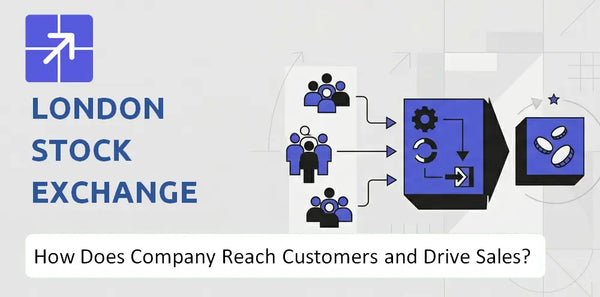
Focus sales on enterprise accounts and platform integrations to shorten procurement cycles; tie pricing to usage and outcomes. See product detail: London Stock Exchange Group BCG Matrix Analysis
Who Does London Stock Exchange Group Want to Sell To?
London Stock Exchange Group wants to sell to large institutional clients – buy-side and sell-side firms – and corporates that need market data, trading, clearing, and corporate services; it aims to win them via workflow-aligned products, cloud APIs, and direct enterprise sales.
 Primary institutional customers
Global asset managers, hedge funds, and investment banks are the main targets because they buy high-value market data, indices, execution, and clearing. LSEG drives London Stock Exchange Group customer acquisition through enterprise sales teams, LSEG Workspace deployments, and direct API access for quant desks.
Additional target segments
Corporate treasuries, CFO offices, and listed issuers use treasury management, ESG reporting, and capital-raising tools. By 2025 LSEG expanded adoption among quantitative developers and data scientists consuming cloud datasets via APIs, accelerating LSEG market data sales.
Market positioning
London Stock Exchange Group positions itself as an integrated market infrastructure and data provider spanning front-, middle-, and back-office workflows. The go-to-market combines direct sales, channel partnerships, cloud distribution, and event-driven outreach to capture workflow-led buying.
Why the positioning works
Buyers value single-vendor integration, real-time data, and clearing scale: LSEG reported full-year 2025 revenues of £4.7bn with recurring data and analytics contribution driving retention; this underpins LSEG partnerships and distribution channels and supports cross-selling into client stacks.
For a deeper look at strategic growth and target markets see Growth Outlook of London Stock Exchange Group Company
London Stock Exchange Group SWOT Analysis
- Complete SWOT Breakdown
- Fully Customizable
- Editable in Excel & Word
- Professional Formatting
- Investor-Ready Format

How Does London Stock Exchange Group Get in Front of Customers?
London Stock Exchange Group gets in front of customers via a hybrid model: platform distribution (LSEG Workspace and Microsoft integrations) plus a direct, consultative sales force and FTSE Russell brand reach to generate awareness, drive demand, and convert institutional and corporate buyers.

LSEG Workspace: Primary acquisition engine
LSEG Workspace delivers market data and analytics to professional desktops, acting as the main acquisition funnel by embedding product into daily workflows and driving recurring subscriptions; in FY 2025 Workspace and data subscriptions contributed materially to market data revenue growth.
Microsoft partnership and platform distribution
The 2025 Microsoft integration embeds LSEG data into Teams and Excel, creating low-friction access inside productivity tools so users encounter LSEG analytics in situ, increasing trial-to-paid conversion and expanding reach into enterprise accounts.
Direct sales for Capital Markets and Post Trade
LSEG uses a consultative direct-sales team for exchanges, clearing houses, and large issuers; these teams engage regulators and members, negotiate multi-year contracts, and drove double-digit backlog wins in 2025 for Post Trade services.
FTSE Russell as a brand ambassador
FTSE Russell indices act as a marketing engine: benchmark dominance attracts passive and active institutional asset managers, supporting index licensing and data sales; index-linked product fees and licensing remained a key driver of institutional leads in 2025.
Digital marketing and content distribution
LSEG deploys targeted digital campaigns, SEO, email nurture, and thought leadership content to capture buy-side and sell-side intent; platform APIs and the Microsoft tie amplify organic reach and reduce paid CAC for market data sales.
Events, roadshows, and client outreach
Roadshows, industry conferences, and regulator roundtables remain high-impact demand-gen tactics for large-ticket Capital Markets deals; these events converted strategic pipeline deals that represented a meaningful share of 2025 trading venue contract wins.
Sales channels, partnerships, and marketplaces
Alongside direct sales, LSEG leverages cloud partners, reseller agreements, and Microsoft's marketplace to distribute data products and APIs, widening distribution and supporting enterprise onboarding across regions.
Demand generation tactics and conversion levers
Trials inside Excel/Teams, freemium index widgets, bespoke pilot programs, and co-selling with Microsoft are primary tactics; pilots convert at higher rates for enterprise clients, shortening sales cycles noted in 2025.
Customer acquisition efficiency
Embedding data into existing workflows via Microsoft reduced marginal CAC for desk-based users in 2025, while direct sales keep CAC high for large infrastructure deals; overall, blended customer acquisition economics improved year-over-year.
Most important reach advantage in 2025/2026
The Microsoft partnership, combined with LSEG Workspace and FTSE Russell's benchmark status, is the strongest reach advantage – embedding data into Microsoft tools scales exposure across millions of users and converts workflow presence into paid subscriptions.
For context on competition and how these channels compare within the market, see Competitive Landscape of London Stock Exchange Group Company
London Stock Exchange Group Business Model Canvas
- One-time Payment
- No Research Needed – Save Hours of Work
- Built by Experts, Trusted by Consultants
- Instant Download, Ready to Use
- 100% Editable, Fully Customizable

How Does London Stock Exchange Group Turn Attention Into Sales?
London Stock Exchange Group turns attention into sales by embedding its market data and post-trade services into clients' core workflows, converting one-off interest into high-margin Annual Subscription Value (ASV) and sticky, mission-critical contracts.
Core sales model: Direct enterprise and partner-led subscriptions
London Stock Exchange Group customer acquisition relies on direct enterprise sales complemented by partner-led distribution and strategic alliances; primary channels are institutional sales teams, reseller partnerships, and platform integrations.
Pricing and monetization logic: Shift to recurring ASV
LSEG sales strategy centers on recurring Annual Subscription Value and usage-based billing for data feeds and clearing, supplemented by tiered pricing where basic data access upgrades to AI analytics, cloud storage, and value-added services.
Conversion and purchase drivers: Embedding, trust, and switching costs
Conversion hinges on embedding market data into trading and risk systems, demonstrated uptime SLAs, and regulatory-aligned post-trade clearing; these create high switching costs and client trust that accelerate purchase decisions.
Repeat revenue and customer expansion: Retention, upsell, cross-sell
In fiscal 2025 LSEG reported a retention rate above 95 percent; upsell uses tiered packages to move clients from data to advanced AI analytics and cloud, while cross-selling links Data and Analytics with Post Trade to capture more of client spend.
Sales execution combines targeted enterprise outreach, events and roadshows, digital account-based marketing, and a structured onboarding process that demonstrates ROI quickly so clients commit to multi-year ASV contracts; see Mission, Vision, and Values of London Stock Exchange Group Company for context.
London Stock Exchange Group Marketing Mix
- Complete Marketing Mix Analysis
- Effortlessly Communicate Your Business Strategy
- Investor-Ready Format
- 100% Editable and Customizable
- Clear and Structured Layout

How Strong Does London Stock Exchange Group's Commercial Engine Look Going Forward?
London Stock Exchange Group's commercial engine looks strong for 2025/2026, driven by cloud migration, an AI analytics push, and deep recurring-revenue streams; key strengths offset pressure from Bloomberg and S&P Global, while execution risks and trading-volume cyclicality remain. Main support: recurring data sales, Microsoft synergy, and expansion into emerging markets; main weakness: competition and integration risk.
What Supports Future Demand
High recurring revenue – over 70% of 2025 total income – is the backbone of London Stock Exchange Group customer acquisition, giving predictable cash flow. Cloud migration and the Microsoft partnership boost scalability and speed to market for AI-enabled analytics, improving LSEG sales strategy and product-market fit.
Channel and Marketing Effectiveness
LSEG go-to-market leverages direct enterprise sales, channel partners, and data-distribution networks to reach institutional clients; roadshows and events complement digital marketing tactics used by LSEG for client acquisition. Targeted client segmentation and account-based selling sustain LSEG market data sales and cross-selling into trading platforms.
Risks to Commercial Performance
Competition from Bloomberg and S&P Global pressures pricing and feature parity; integration risk from cloud migration and Microsoft alliance could slow rollout. Equity-trading volume volatility still affects non-recurring trading income, and slower-than-expected AI monetization would reduce projected margin gains.
The Overall Sales and Marketing Outlook
Outlook is strong and adaptable: management guides imply total income growth of 7 – 9% in 2025/2026 and EBITDA margins moving toward 49 – 51% by late 2026, driven by cloud efficiencies and higher-margin data/analytics, supporting LSEG customer retention and upsell strategies across regions.
See additional ownership context in this article: Ownership and Control of London Stock Exchange Group Company
London Stock Exchange Group Boston Consulting Group Matrix
- Built by Experts, Trusted by Consultants
- Structured for Consultants, Students, and Founders
- 100% Editable in Microsoft Word & Excel
- Instant Digital Download – Use Immediately
- Compatible with Mac & PC – Fully Unlocked

Related Blogs
- What Is the History of London Stock Exchange Group Company and How Did It Evolve?
- What Is the Competitive Landscape of London Stock Exchange Group Company and How Does It Compete?
- What Is the Growth Outlook of London Stock Exchange Group Company and Where Is It Heading?
- How Does London Stock Exchange Group Company Work and What Drives Its Business Model?
- What Do the Mission, Vision, and Core Values of London Stock Exchange Group Company Reveal?
- Who Are the Core Customers in London Stock Exchange Group Company's Target Market?
- Who Owns London Stock Exchange Group Company Today and Who Holds Control?
Frequently Asked Questions
London Stock Exchange Group sells mainly to large institutional clients and corporates. Its core buyers include asset managers, hedge funds, investment banks, corporate treasuries, CFO offices, and listed issuers. The article says it targets these groups with workflow-aligned products, cloud APIs, and direct enterprise sales.
Disclaimer
All information, articles, and product details provided on this website are for general informational and educational purposes only. We do not claim any ownership over, nor do we intend to infringe upon, any trademarks, copyrights, logos, brand names, or other intellectual property mentioned or depicted on this site. Such intellectual property remains the property of its respective owners, and any references here are made solely for identification or informational purposes, without implying any affiliation, endorsement, or partnership.
We make no representations or warranties, express or implied, regarding the accuracy, completeness, or suitability of any content or products presented. Nothing on this website should be construed as legal, tax, investment, financial, medical, or other professional advice. In addition, no part of this site - including articles or product references - constitutes a solicitation, recommendation, endorsement, advertisement, or offer to buy or sell any securities, franchises, or other financial instruments, particularly in jurisdictions where such activity would be unlawful.
All content is of a general nature and may not address the specific circumstances of any individual or entity. It is not a substitute for professional advice or services. Any actions you take based on the information provided here are strictly at your own risk. You accept full responsibility for any decisions or outcomes arising from your use of this website and agree to release us from any liability in connection with your use of, or reliance upon, the content or products found herein.