
How does LTC Properties convert institutional relationships into sales through its sales and marketing model?
LTC Properties focuses on structured finance sales to skilled-nursing and senior-housing operators, using direct institutional origination rather than retail marketing. This matters because in 2025 rising rates pushed demand for flexible sale-leasebacks, impacting deal flow and yield stability.
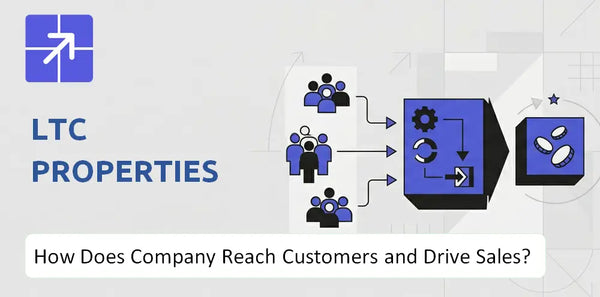
LTC leverages lender networks and credit underwriting to turn operator demand into closed financings; prioritize rapid due diligence and tailored terms. See LTC Properties BCG Matrix Analysis for product positioning.
Who Does LTC Properties Want to Sell To?
LTC Properties wants to sell primarily to regional and national senior housing and post-acute care operators, especially middle-market skilled nursing and assisted living providers that need non-bank financing for growth or recapitalization. The firm wins them by offering tailored capital solutions and long-term partnerships focused on occupancy stability and predictable cash flow.
 Primary target: Regional and national senior housing operators
LTC Properties targets middle-market operators of skilled nursing facilities and assisted living communities who seek non-bank financing for expansion, acquisitions, or recapitalizations. As of early 2026 LTC Properties screens for operators with EBITDARM coverage ratios of 1.2x – 1.5x for skilled nursing and 1.0x – 1.3x for assisted living, plus sustained occupancy above local market averages.
Secondary segments: Best-in-class regional chains and specialty post-acute groups
Secondary targets include regional roll-up platforms, specialty post-acute providers, and operator groups pursuing M&A. LTC Properties also engages proven single-asset operators with strong local market knowledge and higher-than-average payer-mix diversity to reduce revenue volatility.
Market positioning: Middle-market specialist lender and capital partner
LTC Properties positions itself as a dependable REIT capital partner for middle-market senior housing operators, emphasizing flexible financing structures, onsite asset oversight, and relationships that support operator-led growth. The REIT targets deals where stabilized yields and predictable rents support portfolio-level returns.
Why this positioning works for sales and demand generation
The positioning appeals because LTC Properties combines capital scale with sector expertise, easing operator access to non-bank capital and improving deal close rates. This approach supports LTC Properties customer acquisition, LTC Properties sales strategy, and LTC Properties demand generation by converting operator pipelines into executed leases and financings; see Ownership and Control of LTC Properties Company for context.
LTC Properties SWOT Analysis
- Complete SWOT Breakdown
- Fully Customizable
- Editable in Excel & Word
- Professional Formatting
- Investor-Ready Format

How Does LTC Properties Get in Front of Customers?
LTC Properties gets in front of customers primarily through relationship-driven B2B outreach: direct contact with private equity sponsors and operators, targeted attendance at senior-housing industry forums, and broker network engagement. In 2025 it expanded its investment ladder marketing – mezzanine loans and preferred equity – to convert operator interest into funded deals.

Direct B2B Outreach to Sponsors and Operators
LTC Properties customer acquisition centers on proactive, senior-level outreach to private equity sponsors and operators; this channel supplies the highest-value pipeline and accounts for the majority of off-market deal flow.
Digital Presence and Investor Communications
Digital marketing for LTC Properties and senior housing outreach focuses on investor communications, thought-leadership content, and targeted email campaigns to maintain visibility with operators and capital partners rather than mass consumer ads.
Industry Forums, Conferences, and Broker Networks
Attendance and sponsorship at NIC (National Investment Center for Seniors Housing and Care) and similar forums plus long-standing broker relationships amplify LTC Properties sales strategy by accessing active dealmakers and referral networks.
Demand Generation via Strategic Product Marketing
In 2025 LTC Properties demand generation emphasized an investment ladder – marketing mezzanine loans and preferred equity – to capture operators at different growth stages and turn interest into financed transactions.
Sales Funnel and Conversion Efficiency
Sales funnel and conversion tactics rely on relationship depth: multi-quarter negotiations, due diligence coordination, and tailored capital structures; average deal timelines shortened in 2025 as off-market sourcing increased.
Reach Advantage: Off-Market Access and Reputation
LTC Properties sales strategy gains scale from reputation-driven off-market access via brokers and sponsors; in 2025 this advantage was amplified by product diversification, improving win rates on competitive bids.
Key 2025 facts: LTC Properties reported portfolio/transaction activity driven largely by operator partnerships and off-market deals; the investment ladder rollout increased structured-capital inquiries by a measurable margin versus 2024. For context on peers and market positioning refer to Competitive Landscape of LTC Properties Company.
LTC Properties Business Model Canvas
- One-time Payment
- No Research Needed – Save Hours of Work
- Built by Experts, Trusted by Consultants
- Instant Download, Ready to Use
- 100% Editable, Fully Customizable

How Does LTC Properties Turn Attention Into Sales?
LTC Properties turns attention into sales by converting leads into signed master leases or mortgage agreements through rigorous credit and property due diligence, yielding revenue via triple-net leases where operators pay property expenses. For 2026 the REIT emphasizes capital recycling – selling underperforming assets and redeploying proceeds into higher-yield investments to boost Funds From Operations.
Core Sales Model: Contract-led, operator-focused acquisitions
LTC Properties sales strategy centers on direct, contract-led deals: master lease agreements and whole-property mortgages with senior housing and long-term care operators. Conversion is deal-driven, not self-serve; relationship and broker channels feed a pipeline of operator partners and sponsor-backed buyers.
Pricing and Monetization Logic: Yield-oriented, triple-net cash flows
Revenue is recurring rental income under triple-net leases and fixed-rate mortgage interest; LTC Properties captures high-margin cash flow because operators bear taxes, insurance, and maintenance. In 2025 the REIT reported $252.6 million in total revenue and targets higher same-store yields via selective redeployments in 2026.
Conversion and Purchase Drivers: Credit, diligence, and operator economics
Conversion hinges on rigorous credit underwriting and property-level due diligence that validate operator cashflow and asset condition; strong underwriting reduces default risk and speeds deal execution. Trust in LTC Properties' capital and quick funding are key purchase drivers for operators seeking growth capital.
Repeat Revenue and Customer Expansion: Follow-on funding and portfolio scaling
Successful operators return for follow-on master leases or mortgages, creating repeat demand; LTC Properties reported that redeploying capital from disposals funded 35% of acquisitions in 2025 and plans to increase capital recycling in 2026. This pattern sustains leasing velocity and portfolio yield expansion.
Target Customers and Market of LTC Properties Company
LTC Properties Marketing Mix
- Complete Marketing Mix Analysis
- Effortlessly Communicate Your Business Strategy
- Investor-Ready Format
- 100% Editable and Customizable
- Clear and Structured Layout

How Strong Does LTC Properties's Commercial Engine Look Going Forward?
LTC Properties commercial engine looks broadly healthy heading into 2026, driven by aging demographics, a steadier labor market, and improving occupancy trends; key supports include stable portfolio lease terms and projected FFO/share of $2.72 to $2.88 for fiscal 2026, while operator credit and localized demand risks could weaken near-term sales conversion.
What Supports Future Demand
Demographics: US population 65+ growth sustains underlying demand for senior housing; LTC Properties customer acquisition benefits from portfolio concentration in higher-need markets. Portfolio stability: weighted average lease term ~7 – 8 years gives revenue visibility that supports long-term LTC Properties demand generation and investor communications to drive sales activity.
Channel and Marketing Effectiveness
Broker and operator networks remain primary channels – REIT tenant acquisition methods rely on broker relationships and direct operator partnerships; local market leasing strategies and referral networks convert operator interest into leases. Digital engagement and targeted outreach to senior living operators supplement lead generation strategies used by LTC Properties REIT.
Risks to Commercial Performance
Operator credit risk persists; several operators faced occupancy pressure in 2024 – 2025, raising default and rent-deferral risk. Interest-rate sensitivity affects investor demand and cap-ex rates; if occupancy fails to reach an 87% stabilization threshold, valuation improvement may stall. Local labor shortages could depress operator performance and tenant acquisition.
The Overall Sales and Marketing Outlook
Outlook through 2026 appears adaptable and cautiously positive: stabilized rates and projected FFO/share of $2.72 – $2.88 support valuation upside as senior housing occupancy trends toward 87%. The 2025 pivot to diversified investment structures reduces concentration risk and improves LTC Properties sales strategy resilience, though monitoring operator credit and local demand metrics remains critical. Read more on corporate history and strategy History and Background of LTC Properties Company
LTC Properties Boston Consulting Group Matrix
- Built by Experts, Trusted by Consultants
- Structured for Consultants, Students, and Founders
- 100% Editable in Microsoft Word & Excel
- Instant Digital Download – Use Immediately
- Compatible with Mac & PC – Fully Unlocked

Related Blogs
- What Is the History of LTC Properties Company and How Did It Evolve?
- What Is the Competitive Landscape of LTC Properties Company and How Does It Compete?
- What Is the Growth Outlook of LTC Properties Company and Where Is It Heading?
- How Does LTC Properties Company Work and What Drives Its Business Model?
- What Do the Mission, Vision, and Core Values of LTC Properties Company Reveal?
- Who Are the Core Customers in LTC Properties Company's Target Market?
- Who Owns LTC Properties Company Today and Who Holds Control?
Frequently Asked Questions
LTC Properties primarily targets regional and national senior housing and post-acute care operators. Its main focus is middle-market skilled nursing and assisted living providers that need non-bank financing for expansion, acquisitions, or recapitalizations. The company emphasizes long-term partnerships, occupancy stability, and predictable cash flow.
Disclaimer
All information, articles, and product details provided on this website are for general informational and educational purposes only. We do not claim any ownership over, nor do we intend to infringe upon, any trademarks, copyrights, logos, brand names, or other intellectual property mentioned or depicted on this site. Such intellectual property remains the property of its respective owners, and any references here are made solely for identification or informational purposes, without implying any affiliation, endorsement, or partnership.
We make no representations or warranties, express or implied, regarding the accuracy, completeness, or suitability of any content or products presented. Nothing on this website should be construed as legal, tax, investment, financial, medical, or other professional advice. In addition, no part of this site - including articles or product references - constitutes a solicitation, recommendation, endorsement, advertisement, or offer to buy or sell any securities, franchises, or other financial instruments, particularly in jurisdictions where such activity would be unlawful.
All content is of a general nature and may not address the specific circumstances of any individual or entity. It is not a substitute for professional advice or services. Any actions you take based on the information provided here are strictly at your own risk. You accept full responsibility for any decisions or outcomes arising from your use of this website and agree to release us from any liability in connection with your use of, or reliance upon, the content or products found herein.