
How does Mary Kay Inc. convert its decentralized direct-selling sales and marketing model into repeatable revenue?
Mary Kay Inc. uses a global network of independent beauty consultants to acquire customers through personalized, referral-led selling, cutting retail CAPEX and digital CAC. This matters as 2025 saw persistent CAC inflation across beauty channels, favoring low-capex direct models.
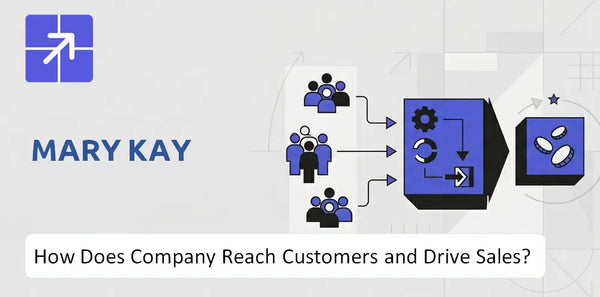
Consultants drive trials, subscriptions, and reorders via demos and social selling; incentives and rank-based commissions sustain recruitment and retention. See product-level positioning: Mary Kay BCG Matrix Analysis
Who Does Mary Kay Want to Sell To?
Mary Kay Inc. targets two linked groups: women aged 25 – 55 who buy skincare and color cosmetics, and entrepreneurial recruits – mainly Gen Z and Millennial women – seeking flexible income. The firm wins them via personalized service, party-plan and social selling, and a growing digital recruitment and e-commerce push.
 Primary consumer: women 25 – 55
Mary Kay marketing focuses on women aged 25 to 55 who prioritize personalized skincare regimens and high-performance color cosmetics; this cohort accounted for approximately 70 percent of brand volume in 2025, driving product development and promotional spend toward trial, sampling, and repeat-purchase mechanics.
Additional segment: gig – economy recruits
Mary Kay Inc. targets Gen Z and Millennial women as independent beauty consultants offering flexible income. Internal demographics through March 2026 show nearly 42 percent of new consultant sign-ups are under 30, reflecting a strategic pivot to a younger, digitally native sales force supporting social selling Mary Kay and virtual parties.
Market positioning: personalized direct selling plus digital
Mary Kay positions itself between prestige and accessible mass-market cosmetics by combining the Mary Kay direct selling model and a growing Mary Kay e-commerce strategy; 2025 channel mix shows consultants-driven direct sales remain dominant while online orders grew mid-teens year-over-year.
Why this positioning works
The message of personalized service, product sampling, and income opportunity appeals to both buyers and recruits; consultant-led demonstrations, party-plan events, and CRM follow-up lift conversion and repeat purchase rates, while social media and virtual party tactics expand reach and lower recruitment CAC.
For deeper market and customer detail see Target Customers and Market of Mary Kay Company
Mary Kay SWOT Analysis
- Complete SWOT Breakdown
- Fully Customizable
- Editable in Excel & Word
- Professional Formatting
- Investor-Ready Format

How Does Mary Kay Get in Front of Customers?
Mary Kay Inc. reaches customers via a hybrid phygital model: about 3.8 million Independent Beauty Consultants drive relationship selling while digital tools, apps, and social selling on TikTok and Instagram amplify reach and demand.

Independent Beauty Consultants: The Primary Acquisition Channel
Mary Kay marketing centers on a direct selling model where 3.8 million Independent Beauty Consultants convert personal networks into customers. This peer-to-peer approach matters because consultants act as local micro-influencers, creating trust-driven conversions with low corporate media spend.
Digital Marketing and Online Reach
Mary Kay sales strategy blends apps, social, and e-commerce: the Mary Kay Interactive Mirror App drove a 25 percent increase in user engagement through 2025, while consultants use TikTok and Instagram for localized social selling and virtual parties.
Sales Channels and Distribution Access
Mary Kay direct selling model relies on consultant-led direct sales plus online ordering and corporate e-commerce portals; consultants host in-person parties, virtual parties, and use marketplaces selectively to expand access.
Demand Generation Tactics
Demand is driven by product sampling at parties, seasonal promotions, consultant-hosted events, and influencer-style short-form content. Consultants running localized campaigns decentralize marketing and push conversions with trial and demo strategies.
Customer Acquisition Efficiency
Acquisition leverages low fixed marketing cost via consultant commissions; with 3.8 million consultants, CAC is effectively lowered by peer referrals and repeat party sales, improving lifetime value when consultants use CRM follow-up and digital tools.
Most Important Reach Advantage
The decentralised consultant network is the key reach advantage in 2025/2026: it combines trust-based party plan sales, social selling Mary Kay tactics, and the Mary Kay Interactive Mirror App to scale targeted awareness without heavy national ad spend. See the company mission and culture here: Mission, Vision, and Values of Mary Kay Company
Mary Kay Business Model Canvas
- One-time Payment
- No Research Needed – Save Hours of Work
- Built by Experts, Trusted by Consultants
- Instant Download, Ready to Use
- 100% Editable, Fully Customizable

How Does Mary Kay Turn Attention Into Sales?
Mary Kay Inc. turns attention into sales through a wholesale-to-retail, consultant-led direct selling model that pairs product trial with recurring skincare replenishment and upfront consultant inventory purchases to convert interest into immediate revenue.
Core sales model: Consultant-led direct sales and sampling
Mary Kay marketing relies on Mary Kay independent beauty consultant networks, party-plan events, and virtual parties to deliver samples and demonstrations that drive purchases. The Mary Kay direct selling model combines in-person parties, social selling Mary Kay, and an omnichannel Mary Kay e-commerce strategy operated by consultants.
Pricing and monetization logic: Wholesale-to-retail plus commission tiers
Consultants buy inventory at wholesale and resell at retail prices, creating immediate cash flow for Mary Kay Inc. Revenue is monetized via product margins, consultant starter-kit sales, and a multi-tiered commission structure that rewards sales volume and leadership.
Conversion and purchase drivers: Sampling, replenishment cadence, and recruitment
Try-before-you-buy sampling and demos boost trust and conversion; Mary Kay product sampling and trial strategies produce conversion rates well above typical beauty e-commerce averages. In fiscal 2025 skincare represented 54 percent of revenue, supported by predictable 60-to-90-day replenishment cycles.
Repeat revenue and customer expansion: Replenishment and team growth
Recurring skincare purchases drive high customer lifetime value; consultants use CRM practices for customer retention and follow up to convert leads to repeat customers. Recruitment strategies to drive sales growth expand selling capacity, since consultants' upfront purchases ensure immediate company cash flow and align incentives to build teams.
For detailed operational and financial context see How Mary Kay Company Works and Makes Money
Mary Kay Marketing Mix
- Complete Marketing Mix Analysis
- Effortlessly Communicate Your Business Strategy
- Investor-Ready Format
- 100% Editable and Customizable
- Clear and Structured Layout

How Strong Does Mary Kay's Commercial Engine Look Going Forward?
Mary Kay Inc.'s commercial engine looks resilient entering 2025/2026, supported by geographic diversification, digital maturity, and a private, debt-free balance sheet that enables long-term investment; risks include regulatory scrutiny of the direct selling model and slower adoption among older consultants.
Geographic expansion and digital investment support demand
Growth will be driven by Asia-Pacific and Latin America, which together contributed roughly +60 percent of incremental units in 2024 – 2025 regional performance; continued rollout of Mary Kay marketing tools and an estimated 3.5 percent revenue growth for 2026 underpins the outlook.
Channel and marketing effectiveness
Mary Kay sales strategy now pairs the Mary Kay direct selling model with social selling Mary Kay and e-commerce strategy enhancements; AI-driven personalized marketing raised consultant productivity by 18 percent year-over-year, improving customer acquisition and conversion via virtual parties and online selling tactics.
Risks to commercial performance
Primary risks include regulatory and legal scrutiny of compensation plans, uneven digital adoption among Mary Kay independent beauty consultant cohorts, and currency/market volatility in Latin America and APAC that could erode local revenue in 2025/2026.
Overall sales and marketing outlook for 2025/2026
Outlook is cautiously strong: the omnichannel strategy combining consultants and online sales, plus CRM practices for customer retention and trial strategies like product sampling, position Mary Kay Inc. to retain market share, provided the firm sustains consultant training programs for converting leads to repeat customers and manages regulatory exposure; see Competitive Landscape of Mary Kay Company for context: Competitive Landscape of Mary Kay Company.
Mary Kay Boston Consulting Group Matrix
- Built by Experts, Trusted by Consultants
- Structured for Consultants, Students, and Founders
- 100% Editable in Microsoft Word & Excel
- Instant Digital Download – Use Immediately
- Compatible with Mac & PC – Fully Unlocked

Related Blogs
- What Is the History of Mary Kay Company and How Did It Evolve?
- What Is the Competitive Landscape of Mary Kay Company and How Does It Compete?
- What Is the Growth Outlook of Mary Kay Company and Where Is It Heading?
- How Does Mary Kay Company Work and What Drives Its Business Model?
- What Do the Mission, Vision, and Core Values of Mary Kay Company Reveal?
- Who Are the Core Customers in Mary Kay Company's Target Market?
- Who Owns Mary Kay Company Today and Who Holds Control?
Frequently Asked Questions
Mary Kay primarily targets women aged 25 to 55 who buy skincare and color cosmetics. It also targets Gen Z and Millennial women who want flexible income as Independent Beauty Consultants. The article says these two groups are linked by personalized service, product sampling, and a growing digital sales approach.
Disclaimer
All information, articles, and product details provided on this website are for general informational and educational purposes only. We do not claim any ownership over, nor do we intend to infringe upon, any trademarks, copyrights, logos, brand names, or other intellectual property mentioned or depicted on this site. Such intellectual property remains the property of its respective owners, and any references here are made solely for identification or informational purposes, without implying any affiliation, endorsement, or partnership.
We make no representations or warranties, express or implied, regarding the accuracy, completeness, or suitability of any content or products presented. Nothing on this website should be construed as legal, tax, investment, financial, medical, or other professional advice. In addition, no part of this site - including articles or product references - constitutes a solicitation, recommendation, endorsement, advertisement, or offer to buy or sell any securities, franchises, or other financial instruments, particularly in jurisdictions where such activity would be unlawful.
All content is of a general nature and may not address the specific circumstances of any individual or entity. It is not a substitute for professional advice or services. Any actions you take based on the information provided here are strictly at your own risk. You accept full responsibility for any decisions or outcomes arising from your use of this website and agree to release us from any liability in connection with your use of, or reliance upon, the content or products found herein.