
How does Mativ Holdings, Inc. convert its technical B2B sales and marketing model into repeatable revenue?
Mativ Holdings, Inc. sells high-performance polymers and fiber solutions through targeted technical sales and channel partnerships, where application expertise drives contracts and pricing. This matters because Mativ reported increased demand in filtration and protective films in 2025, supporting margin recovery.
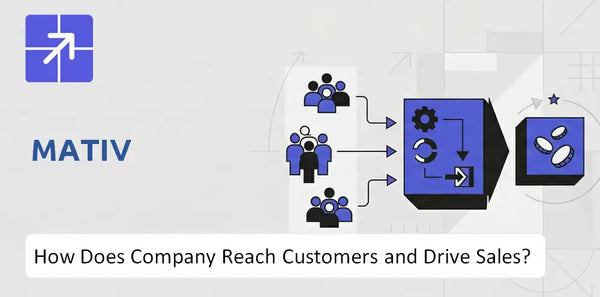
Mativ links R&D-led pilots to multi-year supply agreements and field sales teams to shorten sales cycles and protect EBITDA margins of 18% – 20%. See product positioning in Mativ BCG Matrix Analysis.
Who Does Mativ Want to Sell To?
Mativ Holdings, Inc. targets Tier 1 and Tier 2 OEMs, industrial converters, and specialized distributors in high-stakes end markets – water and air filtration, healthcare, and automotive protection – selling high-performance membranes, release liners, and specialty substrates where reliability and regulatory compliance drive purchases.
 Primary Customers: OEMs and Converters
Mativ company marketing focuses on Tier 1 and Tier 2 OEMs and large industrial converters that integrate membranes and specialty substrates into critical systems; these buyers value technical validation, long-term supply, and regulatory-compliant materials. Mativ sales strategy emphasizes direct technical sales, application testing, and long-term contracts to secure sticky demand.
Additional Segments: Distributors and Niche Industrials
Specialized distributors and niche industrial end-users (medical device suppliers, filtration packagers) are secondary targets; Mativ demand generation uses targeted lead lists, trade show engagement, and distributor onboarding to expand reach. These channels reduce sales cycles for smaller-volume, high-margin orders.
Market Positioning: High-Performance, Low-Variance Supply
Mativ positions itself as a supplier of engineered materials where failure risks carry financial or safety costs; pricing is less elastic in these segments, so the go-to-market strategy blends technical account management and performance guarantees. The company highlights manufacturing scale and a global footprint to address OEM procurement requirements.
Why This Positioning Works
Focusing on sticky industrial applications yields more stable demand and lower churn; for example, filtration and healthcare contracts often span multiple years and specify stringent quality metrics. Mativ customer acquisition pairs account-based marketing with distributor support and CRM-driven pipeline management to convert technical interest into orders. See more on Ownership and Control of Mativ Company Ownership and Control of Mativ Company.
Mativ SWOT Analysis
- Complete SWOT Breakdown
- Fully Customizable
- Editable in Excel & Word
- Professional Formatting
- Investor-Ready Format

How Does Mativ Get in Front of Customers?
Mativ Holdings, Inc. reaches customers via technical direct sales for engineered spec-ins and a global distribution network plus digital procurement for industrial and packaging buyers, building awareness through engineering engagement, channel partnerships, and centralized multinational account teams.

Spec-in Engineering Sales
Mativ company marketing centers on engineering-led outreach where technical sales teams and application engineers embed materials during product design, securing placement in customer bills of materials and shortening procurement cycles.
Digital Procurement and Online Reach
Mativ leverages digital procurement interfaces, content, and email to support Mativ digital marketing strategies for industrial customers, driving qualified leads and enabling direct order flow through ERP and e-procurement integration.
Global Distribution and Channel Partners
For high-volume industrial and packaging markets, Mativ sales strategy uses a distributor and reseller network plus global logistics to maintain steady supply; in 2025 the unified footprint provides a single point of contact for multinational accounts.
Demand Generation: Events and Technical Content
Mativ demand generation relies on trade shows, technical webinars, case studies, and targeted account-based marketing to nurture procurement teams and R&D buyers; these tactics convert awareness into test orders and pilots.
Customer Acquisition Efficiency
Mativ customer acquisition is efficient where spec-in wins occur: conversion rates rise when engineering engagement starts in design phase, reducing downstream sales touchpoints and lowering procurement lead time by weeks.
Key Reach Advantage: Unified Global Footprint
The most important advantage is Mativ go-to-market strategy consolidation: a single global account team in 2025 streamlines discovery and order routing for multinational customers, improving responsiveness and supporting cross-border contracts; see Growth Outlook of Mativ Company for context.
Mativ Business Model Canvas
- One-time Payment
- No Research Needed – Save Hours of Work
- Built by Experts, Trusted by Consultants
- Instant Download, Ready to Use
- 100% Editable, Fully Customizable

How Does Mativ Turn Attention Into Sales?
Mativ Holdings, Inc. turns attention into sales by securing specification lock-in and multi-year supply agreements, then converting trials into production through customized pilot runs and rapid prototyping that shorten customers' time-to-market.
Core sales model: specification-led direct and contract sales
Mativ company marketing targets OEMs and converters via direct sales and technical account teams that win long-term contracts. Sales execution centers on specification placement, trade-show technical outreach, and distributor support to embed materials into manufacturing bills of materials.
Pricing and monetization logic: pass-throughs plus TCO offers
Mativ sales strategy for 2025 – 2026 uses raw material pass-through clauses to preserve margins and indexed pricing to inputs; the company also sells on total-cost-of-ownership (TCO) terms, leveraging scale to offer competitive landed-cost proposals to procurement teams.
Conversion and purchase drivers: pilots, speed, and switching costs
Conversion hinges on customized pilot runs, rapid prototyping, and technical validation – moves that reduce customer time-to-market and raise switching costs. Specification lock-in and multi-year supply agreements drive procurement confidence and shorten sales cycles for repeat orders.
Repeat revenue and expansion: contract renewals and embedded BOMs
Once specified, customers typically remain due to high requalification costs; Mativ secures recurring revenue via multi-year agreements and expands share through application engineering, new-grade introductions, and upsells tied to volume discounts and service-level commitments.
Key 2025 facts: specification-driven orders represent a majority of industrial volume, multi-year contracts often span 3 – 5 years, and pass-through clauses helped protect gross margins during 2025 input volatility – supporting stable adjusted margins relative to peers. See How Mativ Company Works and Makes Money for broader context: How Mativ Company Works and Makes Money
Mativ Marketing Mix
- Complete Marketing Mix Analysis
- Effortlessly Communicate Your Business Strategy
- Investor-Ready Format
- 100% Editable and Customizable
- Clear and Structured Layout

How Strong Does Mativ's Commercial Engine Look Going Forward?
Mativ Holdings, Inc.'s commercial engine looks solid entering 2025/2026, driven by ~100 million dollars of realized merger synergies, disciplined portfolio moves, and focus on resilient end-markets; upside comes from 2 – 4% organic growth and industrial destocking recovery, while cyclicality and integration risks could temper near-term gains.
What Supports Future Demand
Concentration in life sciences and sustainable packaging boosts product-market fit and recurring orders; R&D-led specialty products improve margin capture and provide a defensive mix against cyclical industrial end-markets.
Channel and Marketing Effectiveness
Direct B2B sales, distributor and reseller network expansion, and targeted account-based marketing (ABM) improve conversion rates; digital demand generation and CRM-driven pipeline management shorten sales cycles for industrial customers.
Risks to Commercial Performance
Exposure to cyclicality in packaging and industrial customers, potential delays in converting R&D into commercial products, and integration execution risk after divestitures could pressure near-term revenue growth.
The Overall Sales and Marketing Outlook
Outlook is cautiously positive: with target net debt-to-EBITDA moving toward 2.5x by year-end 2025 and projected organic growth of 2 – 4%, Mativ company marketing and Mativ sales strategy should convert specialized offerings into durable cash flow and market share gains through 2026. Read the company mission and values here: Mission, Vision, and Values of Mativ Company
Mativ Boston Consulting Group Matrix
- Built by Experts, Trusted by Consultants
- Structured for Consultants, Students, and Founders
- 100% Editable in Microsoft Word & Excel
- Instant Digital Download – Use Immediately
- Compatible with Mac & PC – Fully Unlocked

Related Blogs
- What Is the History of Mativ Company and How Did It Evolve?
- What Is the Competitive Landscape of Mativ Company and How Does It Compete?
- What Is the Growth Outlook of Mativ Company and Where Is It Heading?
- How Does Mativ Company Work and What Drives Its Business Model?
- What Do the Mission, Vision, and Core Values of Mativ Company Reveal?
- Who Are the Core Customers in Mativ Company's Target Market?
- Who Owns Mativ Company Today and Who Holds Control?
Frequently Asked Questions
Mativ primarily sells to Tier 1 and Tier 2 OEMs and large industrial converters. It also serves specialized distributors and niche industrial end-users in filtration, healthcare, and automotive protection, where technical validation, regulatory compliance, and long-term supply matter most.
Disclaimer
All information, articles, and product details provided on this website are for general informational and educational purposes only. We do not claim any ownership over, nor do we intend to infringe upon, any trademarks, copyrights, logos, brand names, or other intellectual property mentioned or depicted on this site. Such intellectual property remains the property of its respective owners, and any references here are made solely for identification or informational purposes, without implying any affiliation, endorsement, or partnership.
We make no representations or warranties, express or implied, regarding the accuracy, completeness, or suitability of any content or products presented. Nothing on this website should be construed as legal, tax, investment, financial, medical, or other professional advice. In addition, no part of this site - including articles or product references - constitutes a solicitation, recommendation, endorsement, advertisement, or offer to buy or sell any securities, franchises, or other financial instruments, particularly in jurisdictions where such activity would be unlawful.
All content is of a general nature and may not address the specific circumstances of any individual or entity. It is not a substitute for professional advice or services. Any actions you take based on the information provided here are strictly at your own risk. You accept full responsibility for any decisions or outcomes arising from your use of this website and agree to release us from any liability in connection with your use of, or reliance upon, the content or products found herein.