
How does Mitsubishi Heavy Industries' sales and marketing model convert large-capex projects into recurring revenue?
Mitsubishi Heavy Industries targets utility, industrial, and defense buyers via direct sales, long-term contracts, and service agreements; reputation and engineering delivery win multi-year projects. By March 2026, revenue focus shifted to energy transition and defense, supporting a projected 5 trillion yen revenue base.
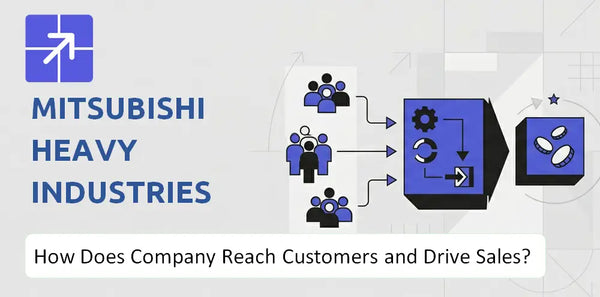
Mitsubishi Heavy Industries bundles equipment sales with maintenance and retrofit contracts to lock in aftermarket margins and predictable cash flow; prioritize early-stage engineering bids to shorten sales cycles. See Mitsubishi Heavy Industries BCG Matrix Analysis
Who Does Mitsubishi Heavy Industries Want to Sell To?
Mitsubishi Heavy Industries wants to sell to three high-value institutional buyer groups: national defense agencies, global utilities/IPP customers, and private industrial operators in logistics, cold chain, and aviation. The company wins by selling total cost of ownership, technological sovereignty, and integrated lifecycle service agreements through targeted Mitsubishi Heavy Industries sales strategy and customer acquisition channels.
 Primary buyer: National governments and defense agencies
Japan's Ministry of Defense and allied national navies drive demand for naval vessels, missile systems, and fighter components; defense contracts accounted for a material share of MHI's Aerospace, Defense & Space backlog in 2025, with Tokyo defense procurement spending rising year-on-year by about 6% (FY2025 budgets). Mitsubishi Heavy Industries targets procurement and tender bidding processes, emphasizing security of supply and domestic content.
Secondary segments: Utilities and carbon solutions
Global utility providers and independent power producers (IPP) seek high-efficiency Gas Turbine Combined Cycle plants and CCUS (carbon capture, utilization, and storage) projects to meet 2030/2050 targets; MHI's Power Systems orders and service contracts reflected growth in 2025, with > €2bn in announced long-term plant and CCUS project pipeline. Sales efforts focus on EPC tenders, Mitsubishi Heavy Industries B2B sales, and after-sales service contracts.
Tertiary buyers: Private industrial operators
Logistics firms, cold-chain operators, and airlines buy automated machinery, HVAC systems, and aero-engine components; MHI targets procurement leads from major integrators and OEMs, with spare-parts and maintenance revenue > 20% of relevant division service sales in 2025. Digital platforms and distributor network and channel partners support lead generation for HVAC and power divisions.
Market positioning: High-tech, lifecycle-focused partner
Mitsubishi Heavy Industries positions as a technological and lifecycle partner rather than a low-cost vendor, emphasizing TCO (total cost of ownership), long-term maintenance contracts, and technological sovereignty; pricing strategy for industrial equipment prices premium but secures multi-year service revenues and aftermarket margins.
Why this positioning works
Large institutional buyers prioritize reliability, support, and sovereign supply chains; MHI converts demand into closed deals via tender expertise, trade shows exhibitions and events strategy, and bespoke financing/EPC offers. For readers, see Competitive Landscape of Mitsubishi Heavy Industries Company for context on competitors and market share dynamics: Competitive Landscape of Mitsubishi Heavy Industries Company
How MHI reaches these buyers
Channels include direct Mitsubishi Heavy Industries marketing channels (tender desks and government relations), digital marketing strategies for industrial clients, distributor network and channel partners, and participation in global trade shows. Key metrics: FY2025 commercial backlog and long-term services pipeline drove > ¥1.2tn in secured orders across power, aerospace, and defense segments.
Mitsubishi Heavy Industries SWOT Analysis
- Complete SWOT Breakdown
- Fully Customizable
- Editable in Excel & Word
- Professional Formatting
- Investor-Ready Format

How Does Mitsubishi Heavy Industries Get in Front of Customers?
Mitsubishi Heavy Industries gets in front of customers through direct institutional sales for large projects, regional distributor networks for machinery, strategic engineering partnerships, and digital platforms that promote Mission Net Zero and pilot hydrogen projects. It uses trade shows, government procurement channels, and targeted technical consortia to generate demand and convert it into contracts.

Direct Institutional Sales for Large Projects
Mitsubishi Heavy Industries sales strategy centers on direct bids and relationship-led sales for energy and infrastructure EPC contracts, where single deals often exceed USD 500 million in revenue. These institutional channels matter because they secure multi-year project pipelines and long lead-time procurement awards.
Digital Marketing and Technical Content for Industrial Buyers
Mitsubishi Heavy Industries digital marketing strategies for industrial clients use white papers, technical webinars, and targeted LinkedIn and search campaigns to reach engineers and procurement teams. The firm highlights Mission Net Zero case studies and hydrogen pilot results to nurture leads through content and email sequences.
Distributor Network and Regional Sales Hubs
For industrial machinery and HVAC, Mitsubishi Heavy Industries customer acquisition relies on an international distributor network and regional sales hubs in North America and Southeast Asia, enabling faster deployment and local after-sales service. Channel partners often handle installation and warranty contracts under the company's reseller program.
Events, Trade Shows, and Government Procurement
Mitsubishi Heavy Industries trade shows exhibitions and events strategy includes global defense exhibitions and energy conferences; government-to-government procurement remains key for aerospace and defense sales. These events generate qualified RFPs and support tender bidding processes.
Demand Generation: Pilots, Consortia, and Technical Demonstrations
The company creates demand via pilot projects in hydrogen (electrolyzers, turbines) and technical consortia with utilities and EPCs, converting demonstration success into EPC contracts. These tactics shorten procurement cycles and increase win rates on follow-on projects.
Customer Acquisition Efficiency and Sales Funnel
Mitsubishi Heavy Industries sales funnel for heavy machinery and power systems is long and capital-intensive; conversion relies on technical validation and financing solutions. In 2025, project wins in power systems and hydrogen pilots improved conversion rates, with order backlog reported at ¥2.4 trillion (approx USD 17 billion) supporting near-term bookings.
Most Important Reach Advantage: Global EPC Reputation
The strongest reach advantage is Mitsubishi Heavy Industries' global EPC and defense reputation combined with a multi-region distributor footprint, enabling scale and trust in B2B and B2G sales. This reputation drives large tender wins and aftersales maintenance contracts that extend lifetime revenue.
For customer segmentation, procurement processes, and channel-level detail see this related piece: Target Customers and Market of Mitsubishi Heavy Industries Company
Mitsubishi Heavy Industries Business Model Canvas
- One-time Payment
- No Research Needed – Save Hours of Work
- Built by Experts, Trusted by Consultants
- Instant Download, Ready to Use
- 100% Editable, Fully Customizable

How Does Mitsubishi Heavy Industries Turn Attention Into Sales?
Mitsubishi Heavy Industries turns attention into sales by selling integrated hardware-plus-service solutions, converting inquiries into firm orders through long-term service agreements and project financing support that smooths large-capex deals. The approach emphasizes lifecycle revenue, value-based pricing for proprietary tech, and disciplined conversion visible in a >6.8 trillion yen order backlog as of early 2026.
Core sales model: Hardware plus Service and Project Sales
Mitsubishi Heavy Industries sales strategy centers on direct, contract-led B2B selling of gas turbines, compressors, and power systems bundled with long-term service agreements (LTSA). Sales teams, regional offices, and partner-led channels close multi-year contracts and turnkey project deals across energy, aerospace, and industrial markets.
Pricing and monetization logic: Value-based and recurring revenue
Pricing shifts from one-time equipment sales to value-based pricing reflecting proprietary carbon capture and hydrogen-firing tech; monetization mixes initial hardware margins with higher-margin recurring LTSA fees and performance-based payments. Project financing and export-credit facilitation lower buyer capex hurdles and accelerate deal close.
Conversion and purchase drivers: Trust, financing, and tech differentiation
Conversion relies on technical fit, proven performance, and Mitsubishi Heavy Industries customer acquisition via trade shows, tender bidding, and direct field engineering support. Strong credit ratings and partnerships with Japanese export credit agencies help convert leads into signed contracts by offering competitive financing and risk mitigation.
Repeat revenue and customer expansion: LTSAs and service-led growth
After-sales service and spare-parts logistics drive retention and upsells; LTSA renewals, performance service upgrades, and retrofits for hydrogen readiness expand lifetime customer value. The service mix produces recurring margins significantly above initial hardware, turning installed bases into predictable revenue streams.
Key metrics: order backlog stood at over 6.8 trillion yen in early 2026, LTSA and services contribution to long-term revenue is growing, and project financing collaborations shorten sales cycles for large international projects. See How Mitsubishi Heavy Industries Company Works and Makes Money for broader context on Mitsubishi Heavy Industries sales funnel for heavy machinery and power systems.
Mitsubishi Heavy Industries Marketing Mix
- Complete Marketing Mix Analysis
- Effortlessly Communicate Your Business Strategy
- Investor-Ready Format
- 100% Editable and Customizable
- Clear and Structured Layout

How Strong Does Mitsubishi Heavy Industries's Commercial Engine Look Going Forward?
The commercial engine at Mitsubishi Heavy Industries looks robust entering fiscal 2026, driven by a record backlog and strong demand in energy and defense; inflation and aerospace supply constraints remain notable downside pressures. Primary drivers include gas-power tailwinds, Japan's defense spending surge, improved pricing power, and a target operating margin near 8 percent.
What Supports Future Demand
Energy Systems benefit from a global gas-power resurgence, giving Mitsubishi Heavy Industries sales strategy clear product-market fit; Defense and Space order intake jumped in 2024 – 2025 after Japan doubled planned defense spending, creating high-visibility revenue for 2025/2026. Strong backlog – record-high orders reported for FY2025 – supports predictable near-term revenue and effective Mitsubishi Heavy Industries customer acquisition via long-cycle B2B sales.
Channel and Marketing Effectiveness
Direct sales, tenders, and global distributor network drive large-ticket conversions; Mitsubishi Heavy Industries marketing channels combine trade shows, targeted proposals, and digital platforms for industrial buyers to feed the sales funnel. After-sales service and maintenance contracts (aftersales maintenance contracts and service plans) boost lifetime value and repeat procurement in power systems and HVAC.
Risks to Commercial Performance
Raw-material inflation and supply-chain bottlenecks in aerospace can compress margins and delay deliveries, hurting Mitsubishi Heavy Industries B2B sales timing; tender-based procurement creates pricing pressure in competitive segments. FX volatility and geopolitical shifts could also alter international sales expansion and market entry plans.
The Overall Sales and Marketing Outlook
Outlook for 2025/2026 is strong and adaptable: management targets an operating profit margin approaching 8 percent under its mid-term plan, and the mix shift to higher-margin energy and defense orders implies high-quality earnings growth. High backlog visibility and dominant positioning in energy transition markets support conversion into closed deals, while continued focus on pricing strategy for industrial equipment and customer relationship management practices will determine realized upside.
For corporate governance context see the related analysis on Ownership and Control: Ownership and Control of Mitsubishi Heavy Industries Company
Mitsubishi Heavy Industries Boston Consulting Group Matrix
- Built by Experts, Trusted by Consultants
- Structured for Consultants, Students, and Founders
- 100% Editable in Microsoft Word & Excel
- Instant Digital Download – Use Immediately
- Compatible with Mac & PC – Fully Unlocked

Related Blogs
- What Is the History of Mitsubishi Heavy Industries Company and How Did It Evolve?
- What Is the Competitive Landscape of Mitsubishi Heavy Industries Company and How Does It Compete?
- What Is the Growth Outlook of Mitsubishi Heavy Industries Company and Where Is It Heading?
- How Does Mitsubishi Heavy Industries Company Work and What Drives Its Business Model?
- What Do the Mission, Vision, and Core Values of Mitsubishi Heavy Industries Company Reveal?
- Who Are the Core Customers in Mitsubishi Heavy Industries Company's Target Market?
- Who Owns Mitsubishi Heavy Industries Company Today and Who Holds Control?
Frequently Asked Questions
Mitsubishi Heavy Industries focuses on three main buyer groups: national defense agencies, global utilities and IPP customers, and private industrial operators. It sells to these groups by emphasizing total cost of ownership, technological sovereignty, and long-term lifecycle service agreements rather than low upfront pricing.
Disclaimer
All information, articles, and product details provided on this website are for general informational and educational purposes only. We do not claim any ownership over, nor do we intend to infringe upon, any trademarks, copyrights, logos, brand names, or other intellectual property mentioned or depicted on this site. Such intellectual property remains the property of its respective owners, and any references here are made solely for identification or informational purposes, without implying any affiliation, endorsement, or partnership.
We make no representations or warranties, express or implied, regarding the accuracy, completeness, or suitability of any content or products presented. Nothing on this website should be construed as legal, tax, investment, financial, medical, or other professional advice. In addition, no part of this site - including articles or product references - constitutes a solicitation, recommendation, endorsement, advertisement, or offer to buy or sell any securities, franchises, or other financial instruments, particularly in jurisdictions where such activity would be unlawful.
All content is of a general nature and may not address the specific circumstances of any individual or entity. It is not a substitute for professional advice or services. Any actions you take based on the information provided here are strictly at your own risk. You accept full responsibility for any decisions or outcomes arising from your use of this website and agree to release us from any liability in connection with your use of, or reliance upon, the content or products found herein.