
How does Next plc convert traffic across its sales and marketing model into profitable orders?
Next plc mixes store reach with a digital-first marketing funnel and built-in credit and logistics to convert visitors into buyers. This matters because by March 2026 Next reported a sector-leading operating margin near 21 percent, showing infrastructure beats pure brand push.
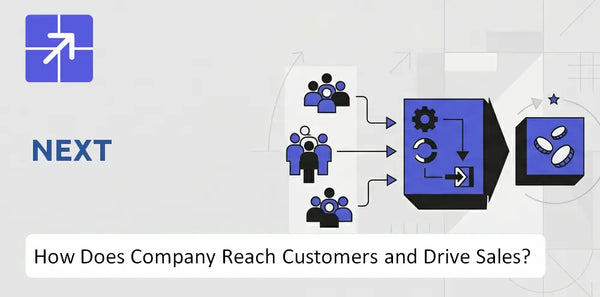
Focus marketing on high-conversion channels, use same-day fulfilment where possible, and expand partner listings to monetize traffic faster; see Next BCG Matrix Analysis for framework-aligned product priorities.
Who Does Next Want to Sell To?
Next plc targets resilient middle market UK shoppers – families and professionals who value quality-for-price across apparel, footwear, and home goods – and aims to convert repeat demand into sales via Nextpay and omnichannel touchpoints.
 Main customer group: Aspirational middle market families and professionals
Next plc focuses on UK-based households with steady incomes who prioritize value and durability; these buyers generate high repeat purchase rates, aided by the Nextpay credit facility that in 2025 supported an estimated over 25% repeat-buy share in core apparel categories.
Additional target segments: Younger, brand-conscious shoppers and higher-income households
Through the Label division aggregating 1,000+ third-party brands, Next plc reaches younger and higher-income demographics without inventory trend risk, increasing basket depth and capturing a larger share of household wallet across fashion and homewares.
Market positioning: One-stop omnichannel value-plus assortment
Next plc positions itself as a value-to-quality, omnichannel retailer – combining strong online retail sales channels with c. 500 stores and a fulfillment network – to convert demand across web, app, and stores into purchases efficiently.
Why this positioning works: Repeatable conversion and lower inventory risk
The mix of Nextpay-driven repeat buyers, Label third-party brands, and omnichannel customer reach improves conversion rate optimization and demand generation to sales conversion; in 2025 Next reported strong gross margin resilience and steady online penetration above 60% of total sales, supporting predictable cash flows. See Growth Outlook of Next Company for context.
Next SWOT Analysis
- Complete SWOT Breakdown
- Fully Customizable
- Editable in Excel & Word
- Professional Formatting
- Investor-Ready Format

How Does Next Get in Front of Customers?
Next plc reaches customers through a blend of 450 physical stores, a market-leading online platform, and a data-driven marketing engine that turns awareness into purchases across omnichannel touchpoints.

Store network as primary acquisition channel
Physical stores act as high-visibility showrooms and click-and-collect hubs; they processed nearly 50 percent of online orders in early 2026, driving footfall and immediate conversions.
Digital marketing and online reach
Next focuses on high-intent search, paid media, and personalized CRM to a database of over 8.5 million active customers, using email, apps, and retargeting to push prospects down the marketing funnel.
Sales channels and distribution access
The Total Platform initiative embeds Next plc services into partners like FatFace and Reiss, expanding retail sales channels and marketplace access through integrated fulfilment and shared storefront distribution.
Demand generation tactics
Campaigns combine seasonal promotions, targeted email flows, and social retargeting; stores host product drops and events to convert awareness into purchases in-store and online.
Customer acquisition efficiency
High-repeat rates from the 8.5M customer base and store-led click-and-collect lower acquisition cost per order; conversion rate optimization focuses on personalized offers and streamlined checkout to reduce cart abandonment.
Most important reach advantage
The integrated omnichannel model – physical stores plus a dominant online platform and a large CRM – gives Next plc the strongest advantage for scaling customer acquisition and converting demand to sales in 2025 – 2026.
Further reading on ownership and strategic reach: Ownership and Control of Next Company
Next Business Model Canvas
- One-time Payment
- No Research Needed – Save Hours of Work
- Built by Experts, Trusted by Consultants
- Instant Download, Ready to Use
- 100% Editable, Fully Customizable

How Does Next Turn Attention Into Sales?
Next converts attention into sales by combining revolving credit through Nextpay, same – day logistics promises, and a third – party Label marketplace that drives higher average order value and retention.
Core sales model: omnichannel retail plus marketplace
Next plc sells direct via stores and online, and hosts third – party sellers through its Label marketplace; omnichannel customer reach ties in-store traffic to digital conversion and partner-led sales.
Pricing and monetization logic: product margin, marketplace commissions, credit income
Revenue comes from retail margins, Label commissions (now >30% of online brand turnover in 2025/2026), logistics fees and a robust credit interest income stream from Nextpay that increases average order value and lifetime customer value.
Conversion and purchase drivers: fast delivery, flexible credit, UX focus
Key drivers are the buy – by – midnight/delivered – tomorrow logistics promise in the UK, Nextpay revolving credit that raises conversion rate optimization, and a refined online interface emphasizing Label offerings to turn demand generation to sales conversion.
Repeat revenue and customer expansion: returns efficiency and credit retention
High efficiency returns reduce friction and keep margins intact; Nextpay promotes repeat purchases via revolving credit leading to industry – leading retention rates and elevated lifetime value. For 2025/2026, third – party sales and credit interest meaningfully boost recurring revenue.
Conversion mechanics in practice: Nextpay increases AOV and conversion; the logistics engine supports same/next – day delivery – both measurable levers in the marketing funnel strategies and retail sales channels mix; Label marketplace expands assortment and monetizes partner inventory while conversion rate optimization focuses on checkout flow and returns handling. See more on operational mechanics How Next Company Works and Makes Money.
Next Marketing Mix
- Complete Marketing Mix Analysis
- Effortlessly Communicate Your Business Strategy
- Investor-Ready Format
- 100% Editable and Customizable
- Clear and Structured Layout

How Strong Does Next's Commercial Engine Look Going Forward?
Next plc's commercial engine looks resilient heading into 2026, driven by diversified revenue from retail and the Total Platform and a projected group profit before tax above £1.1 billion. Key supports include scale in omnichannel customer reach and disciplined capital allocation; interest-rate – sensitive UK demand and supply-chain cost pressure could weaken momentum.
What Supports Future Demand
Brand strength and high-margin full-price sales in UK and international online markets underpin demand generation to sales conversion. Total Platform adds B2B e-commerce and logistics income, diversifying revenue and improving unit economics.
Channel and Marketing Effectiveness
Omnichannel customer reach – store network plus international online – boosts acquisition and retention; digital marketing and personalization improve conversion rate optimization and reduce cart abandonment. Investments in checkout flow and retargeting lift demand conversion to sales.
Risks to Commercial Performance
UK consumer discretionary sensitivity to interest rates and inflation could compress volumes and average spend. Competitive pressure from pure-play e-tailers, potential platform scaling issues, and higher logistics costs threaten margins and marketing ROI.
The Overall Sales and Marketing Outlook
Outlook for 2025/2026 is strong and adaptable: scale and the Total Platform create a durable moat, supporting market-share gains and shareholder returns via dividend and buybacks while enabling focused marketing funnel strategies and analytics-driven customer acquisition strategy.
Key metrics to watch: £1.1bn projected PBT for 2026, online sales proportion (historically mid-50s% of group turnover), and marketing spend as a percentage of sales – moves here will signal shifts in customer reach efficiency and demand-to-sales conversion. See History and Background of Next Company for context.
Next Boston Consulting Group Matrix
- Built by Experts, Trusted by Consultants
- Structured for Consultants, Students, and Founders
- 100% Editable in Microsoft Word & Excel
- Instant Digital Download – Use Immediately
- Compatible with Mac & PC – Fully Unlocked

Related Blogs
- What Is the History of Next Company and How Did It Evolve?
- What Is the Competitive Landscape of Next Company and How Does It Compete?
- What Is the Growth Outlook of Next Company and Where Is It Heading?
- How Does Next Company Work and What Drives Its Business Model?
- What Do the Mission, Vision, and Core Values of Next Company Reveal?
- Who Are the Core Customers in Next Company's Target Market?
- Who Owns Next Company Today and Who Holds Control?
Frequently Asked Questions
Next targets resilient middle market UK shoppers, especially families and professionals who want quality-for-price across apparel, footwear, and home goods. It also reaches younger brand-conscious shoppers and higher-income households through the Label division, while Nextpay helps drive repeat buying and demand conversion.
Disclaimer
All information, articles, and product details provided on this website are for general informational and educational purposes only. We do not claim any ownership over, nor do we intend to infringe upon, any trademarks, copyrights, logos, brand names, or other intellectual property mentioned or depicted on this site. Such intellectual property remains the property of its respective owners, and any references here are made solely for identification or informational purposes, without implying any affiliation, endorsement, or partnership.
We make no representations or warranties, express or implied, regarding the accuracy, completeness, or suitability of any content or products presented. Nothing on this website should be construed as legal, tax, investment, financial, medical, or other professional advice. In addition, no part of this site - including articles or product references - constitutes a solicitation, recommendation, endorsement, advertisement, or offer to buy or sell any securities, franchises, or other financial instruments, particularly in jurisdictions where such activity would be unlawful.
All content is of a general nature and may not address the specific circumstances of any individual or entity. It is not a substitute for professional advice or services. Any actions you take based on the information provided here are strictly at your own risk. You accept full responsibility for any decisions or outcomes arising from your use of this website and agree to release us from any liability in connection with your use of, or reliance upon, the content or products found herein.