
How does Nike Inc.'s sales and marketing model convert brand demand into repeatable revenue?
Nike Inc. blends direct-to-consumer channels with selective wholesale to sustain premium pricing and broad reach. This matters because Nike's 2025 pivot to re-engage wholesale partners followed slower DTC growth, impacting revenue mix and inventory turns. See product: Nike BCG Matrix Analysis
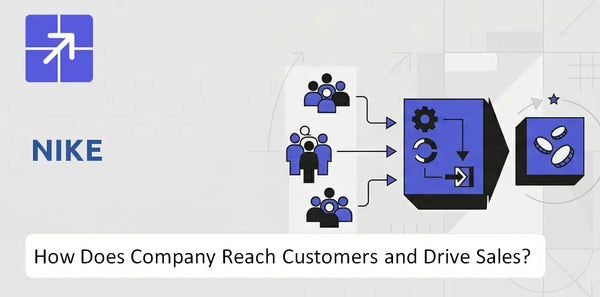
Nike Inc. pushes digital personalization, retail assortments, and partner alignment to speed conversion and reduce markdowns; expect continued focus on Nike Membership and wholesale margins into 2026.
Who Does Nike Want to Sell To?
Nike Inc. targets three core groups: performance athletes needing technical gear, lifestyle consumers – especially Gen Z and Millennials – and emerging wellness enthusiasts focused on everyday fitness. The company aims to win them through product innovation, cultural relevance, and expanded women's and running offerings that convert interest into purchases.
 Primary: High-Performance Athletes
Nike prioritizes runners, basketball players, and global football athletes who demand technical superiority. By FY2025 Nike Inc. increased R&D and category investment in running and football, supporting sustained ASP (average selling price) premium and on-field credibility.
Secondary: Lifestyle Consumers (Gen Z and Millennials)
Volume comes from lifestyle buyers who treat footwear as a cultural asset; Gen Z and Millennials drive commercial scale via drops, collaborations, and influencer partnerships. Nike marketing strategy funnels social buzz into e-commerce and DTC (direct-to-consumer) sales, where FY2025 DTC revenue remained a key margin driver.
Adjacent: Emerging Wellness Enthusiasts
Everyday runners and women's fitness grew as strategic priorities by 2025; women's fitness expanded at 1.5 times the rate of the men's category, representing a multi-billion dollar opportunity reflected in targeted product lines and marketing spend.
Market Positioning
Nike positions itself as the premium performance-and-fashion brand across sport and lifestyle. Its Nike omnichannel retail strategy for converting demand combines signature product drops, athlete endorsements, and a unified digital storefront to protect brand equity and margins.
Why This Positioning Works
Nike customer acquisition mixes high-profile athlete endorsements, influencer partnerships, and data-driven personalization in the Nike mobile app and loyalty program to boost conversion and retention. In FY2025, targeted digital ads, email marketing and CRM strategies increased online conversion rates and supported a higher share of full-price sales.
Supporting Evidence and Actions
Nike digital marketing and distribution channels focus on DTC growth; by 2025 digital sales and Nike-owned retail continued to capture a substantial portion of revenue, improving gross margin. See this company overview for strategy context: Mission, Vision, and Values of Nike Company
Nike SWOT Analysis
- Complete SWOT Breakdown
- Fully Customizable
- Editable in Excel & Word
- Professional Formatting
- Investor-Ready Format

How Does Nike Get in Front of Customers?
Nike Inc. reaches customers through a hybrid marketplace model: a Direct-first approach via SNKRS and Nike.com plus revitalized wholesale partnerships and high-profile marketing. The company builds awareness with athlete sponsorships and events, generates demand via apps and campaigns, and converts sales through omnichannel fulfillment and personalization.

Direct-to-consumer (DTC) and SNKRS app drive premium demand
Nike Direct is the primary acquisition channel, contributing approximately 46 percent of total revenue in early 2026. SNKRS and Nike.com deliver high-margin sales and control over product launches, pricing, and customer data, so Nike can capture value that wholesalers historically kept.
Digital marketing and app-first engagement
Nike uses paid search, social ads, email CRM, and the SNKRS/Nike apps to target customers. Email and membership-driven pushes, plus app notifications, lift conversion; Nike reported strong digital growth with e-commerce representing a growing share of net sales through 2025.
Wholesale partnerships and retail footprint for discovery
Nike maintains relationships with Foot Locker, JD Sports, and global retailers to preserve reach among casual shoppers and international markets. Physical Nike-owned stores and wholesale partners together enable discovery and drive omnichannel conversions.
Campaigns, athlete endorsements, and event sponsorships
Nike spends roughly 8 – 10 percent of revenue on marketing, anchored by elite endorsements and global sponsorships tied to the 2024 Paris Olympics legacy and the run-up to the 2026 FIFA World Cup. Limited drops, experiential pop-ups, and influencer partnerships create urgency and social buzz.
Customer acquisition efficiency and LTV focus
Nike improves acquisition efficiency by shifting toward Direct sales and personalization via membership data; higher average order value and repeat purchases from Nike membership increase lifetime value. Investments in CRM and app features reduce reliance on broad paid acquisition.
Most important reach advantage: data-rich DTC ecosystem
Nike's biggest advantage is its data from Nike Direct, apps, and memberships, which enables targeted offers, personalized product drops, and efficient retargeting at scale in 2025/2026. See more on Ownership and Control of Nike Company Ownership and Control of Nike Company
Nike Business Model Canvas
- One-time Payment
- No Research Needed – Save Hours of Work
- Built by Experts, Trusted by Consultants
- Instant Download, Ready to Use
- 100% Editable, Fully Customizable

How Does Nike Turn Attention Into Sales?
Nike Inc. turns attention into sales via a data-rich membership ecosystem, scarcity-driven drops, and omnichannel fulfillment that link digital touchpoints to physical Nike Well Collective stores, boosting Average Order Value and repeat purchases.
Core sales model: Direct-to-consumer led with wholesale reach
Nike marketing strategy centers on direct-to-consumer retail (e-commerce, SNKRS, Nike app, Owned stores) plus partner-led wholesale distribution. Digital-first sales funnel funnels traffic into owned channels where margins and data capture are highest.
Pricing and monetization logic: Tiered, scarcity, and premium pricing
Nike sales strategy uses one-time product sales with premium pricing on limited drops, bundled offerings, and seasonal markdowns. Membership perks (free shipping, early access) and limited releases raise willingness to pay and reduce price elasticity.
Conversion and purchase drivers: Personalization, scarcity, and convenience
Nike digital marketing and Nike omnichannel retail strategy for converting demand rely on personalized recommendations from its membership data (over 500 million members as of 2025), SNKRS scarcity mechanics that create brand heat, and Nike mobile app and loyalty program driving purchases via push notifications and exclusive drops.
Repeat revenue and customer expansion: Membership-driven loyalty
Nike customer acquisition feeds retention: membership benefits (free shipping, early access) cut cart abandonment and lift repeat rates; personalized emails and CRM saw higher AOV and frequency – Nike reports DTC revenue growth, and repeat buyers drive a meaningful share of online sales.
SNKRS drops and influencer partnerships convert attention into purchases by using scarcity and social proof; omnichannel fulfillment (buy online pick up in store, ship-from-store) aligns Nike distribution channels to meet demand quickly and preserve sales. See more on operational mechanics in How Nike Company Works and Makes Money.
Nike Marketing Mix
- Complete Marketing Mix Analysis
- Effortlessly Communicate Your Business Strategy
- Investor-Ready Format
- 100% Editable and Customizable
- Clear and Structured Layout

How Strong Does Nike's Commercial Engine Look Going Forward?
Nike Inc.'s commercial engine enters mid-2026 with renewed momentum: product innovation and higher full-price sell-throughs support growth, while competition and macro pressures remain moderating risks.
Product innovation and brand strength support future demand
Accelerated product pipeline – Air Max DN and new Pegasus iterations – drove stronger sell-through in 2025; Nike marketing strategy and athlete endorsements continue to convert awareness into purchases, supporting mid-single-digit revenue growth guidance for 2025/2026.
Channel and marketing effectiveness
Nike's omnichannel retail strategy for converting demand combines Nike direct-to-consumer strategy and wholesale reach; digital sales rose as a share of revenue in 2025, improving margins via Nike e-commerce tactics, mobile app and loyalty program driving purchases and higher lifetime value.
Risks to commercial performance
Competition from premium niche brands (On, Hoka) pressures performance running share; inventory and supply chain disruptions remain tail risks for timely fulfillment – Nike supply chain role in meeting customer demand is critical, and promotional mix could dilute margins if sell-through slows.
Overall sales and marketing outlook
The sales and marketing outlook for 2025/2026 appears adaptable and improving: stronger full-price innovation, higher digital penetration, and refined Nike customer acquisition via influencer partnerships and data-driven Nike personalization and customer engagement strategies should lift EBIT margins and revenue growth, per the Growth Outlook of Nike Company.
Nike Boston Consulting Group Matrix
- Built by Experts, Trusted by Consultants
- Structured for Consultants, Students, and Founders
- 100% Editable in Microsoft Word & Excel
- Instant Digital Download – Use Immediately
- Compatible with Mac & PC – Fully Unlocked

Related Blogs
- What Is the History of Nike Company and How Did It Evolve?
- What Is the Competitive Landscape of Nike Company and How Does It Compete?
- What Is the Growth Outlook of Nike Company and Where Is It Heading?
- How Does Nike Company Work and What Drives Its Business Model?
- What Do the Mission, Vision, and Core Values of Nike Company Reveal?
- Who Are the Core Customers in Nike Company's Target Market?
- Who Owns Nike Company Today and Who Holds Control?
Frequently Asked Questions
Nike targets performance athletes, lifestyle consumers, and emerging wellness enthusiasts. The company focuses on runners, basketball players, and global football athletes first, while also winning Gen Z, Millennials, and everyday fitness buyers through product innovation, cultural relevance, and expanded women's and running offerings.
Disclaimer
All information, articles, and product details provided on this website are for general informational and educational purposes only. We do not claim any ownership over, nor do we intend to infringe upon, any trademarks, copyrights, logos, brand names, or other intellectual property mentioned or depicted on this site. Such intellectual property remains the property of its respective owners, and any references here are made solely for identification or informational purposes, without implying any affiliation, endorsement, or partnership.
We make no representations or warranties, express or implied, regarding the accuracy, completeness, or suitability of any content or products presented. Nothing on this website should be construed as legal, tax, investment, financial, medical, or other professional advice. In addition, no part of this site - including articles or product references - constitutes a solicitation, recommendation, endorsement, advertisement, or offer to buy or sell any securities, franchises, or other financial instruments, particularly in jurisdictions where such activity would be unlawful.
All content is of a general nature and may not address the specific circumstances of any individual or entity. It is not a substitute for professional advice or services. Any actions you take based on the information provided here are strictly at your own risk. You accept full responsibility for any decisions or outcomes arising from your use of this website and agree to release us from any liability in connection with your use of, or reliance upon, the content or products found herein.