
How does Nippon Life Insurance Company's hybrid sales and marketing model convert customer demand into paid policies?
Nippon Life Insurance Company blends trusted agent relationships with digital channels to sell life and longevity products, focusing on capital-efficient offerings. This matters as solvency margin remained above 1,000% into 2026, supporting product innovation amid Japan's aging market and persistent low rates. Nippon Life BCG Matrix Analysis
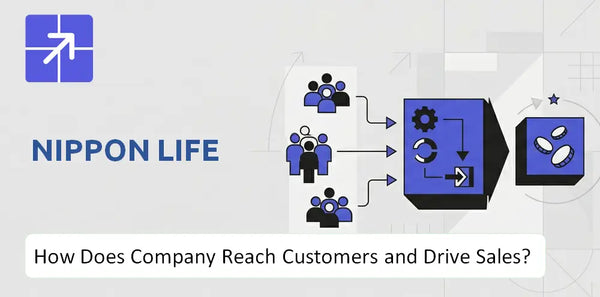
Nippon Life boosts conversions by targeting advisers with CRM tools and direct digital journeys for younger customers; expect tighter agent KPIs and more online onboarding to lift retention and lower acquisition costs.
Who Does Nippon Life Want to Sell To?
Nippon Life Insurance Company targets three precise buyer groups: the aging silver market, digitally native younger customers, and corporate/institutional clients, aiming to turn demand into long-term relationships through Total Life Support and tailored distribution. The 2025 strategy prioritizes wealth preservation, health services, and group benefits to increase lifetime customer value.
 Main customer: aging silver market
Nippon Life focuses on Japan's elderly – about 30 percent of the population – selling nursing-care riders, medical and long-term care products, and inheritance-linked policies; these products aim to reduce longevity risk and preserve intergenerational wealth.
Additional targets: digitally native young adults
Through Hanasaku Life, Nippon Life markets simplified, low-cost medical and cancer insurance via independent agencies and digital channels to capture millennials and Gen Z, aiming to lower acquisition cost and boost conversion rates from online quote to purchase.
Commercial segment: corporate and institutional clients
Nippon Life serves over 200,000 corporate clients with group life, employee pensions, and asset management, using bancassurance partnerships and dedicated institutional sales teams to secure large-premium, low-churn accounts.
Market positioning: Total Life Support
Nippon Life positions itself as a long-term partner for health and wealth, shifting from pure mortality protection to integrated services – pension solutions, medical care, and inheritance planning – to increase cross – sell and retention.
Why this positioning works
Japan's demographics and corporate demand make Total Life Support relevant; combining Nippon Life marketing, bancassurance partnerships, insurance agents, CRM analytics, and Hanasaku Life lowers acquisition costs and raises average premium per customer while supporting retention and cross – sell.
See company culture and strategic framing in this Mission, Vision, and Values of Nippon Life Company
Nippon Life SWOT Analysis
- Complete SWOT Breakdown
- Fully Customizable
- Editable in Excel & Word
- Professional Formatting
- Investor-Ready Format

How Does Nippon Life Get in Front of Customers?
Nippon Life Insurance Company reaches customers through a mix of high-touch sales reps, expanded bancassurance partnerships, digital engagement via the Nissay App and health platforms, plus urban retail consultation outlets, driving awareness, demand, and walk-in conversions.

Field Sales: 50,000 Sales Representatives (Nissay Ladies)
The primary acquisition engine is a 50,000-strong sales representative force providing high-touch consulting across every prefecture; this direct sales model remains central to Nippon Life marketing and Nippon Life customer acquisition because it converts complex needs into policies through face-to-face trust-building.
Digital Marketing and App-Led Engagement
Nippon Life uses the Nissay App plus integrated health-tracking platforms to capture daily attention, push personalized offers, and feed leads into CRM; these channels support Nippon Life digital marketing strategies for insurance and improve online quote to purchase conversion rates.
Bancassurance and Bank Partnerships
By 2025, Nippon Life bancassurance partnerships with major regional and mega-banks account for a significant portion of new individual annuity sales, expanding Nippon Life distribution channels and providing broad retail access through bank branches and digital bank platforms.
Urban Retail Outlets and Walk-In Consultations
Strategic retail outlets in high-traffic urban areas offer walk-in consultation services that bridge digital discovery and face-to-face closing for professionals, enhancing Nippon Life sales strategy by shortening the sales funnel and raising conversion rates.
Demand Generation Tactics
Marketing mixes include localized campaigns tied to bank partners, app engagement nudges, seminars hosted by Nissay Ladies, and health-promotion incentives; these tactics drive lead volume and support Nippon Life customer retention and cross – sell tactics.
Customer Acquisition Efficiency
Field sales plus bancassurance deliver efficient acquisition: face-to-face leads convert at materially higher rates, while app-driven leads lower cost per lead; Nippon Life use of CRM and analytics in 2025 optimizes lead routing and improves agent productivity.
Most Important Reach Advantage
The combination of a 50,000-agent nationwide sales force and deep bancassurance ties is Nippon Life's strongest scalable reach advantage in 2025, supported by digital engagement that keeps prospective customers in the funnel between contact and purchase. Read more on target segments in this article: Target Customers and Market of Nippon Life Company
Nippon Life Business Model Canvas
- One-time Payment
- No Research Needed – Save Hours of Work
- Built by Experts, Trusted by Consultants
- Instant Download, Ready to Use
- 100% Editable, Fully Customizable

How Does Nippon Life Turn Attention Into Sales?
Nippon Life converts attention into sales through a Face-to-Face x Digital hybrid model where agents use proprietary tablets for real-time simulations and tailored recommendations, turning initial interest into policies within one or two meetings.
Core sales model: Face-to-Face x Digital hybrid
Direct sales via salaried and tied agents supported by digital tools drives conversions; bancassurance and partner-led selling add institutional distribution reach.
Pricing and monetization logic: premium-based and rider bundling
Revenue comes from recurring insurance premiums, rider add – ons, and commissions; medical and nursing-care riders boost average premium and grew 4.5 percent in 2025.
Conversion and purchase drivers: tailored simulations and trust
Proprietary tablet simulations let agents demonstrate policy outcomes in real time, shortening sales cycles; persistent agent relationships and brand trust lift close rates.
Repeat revenue and expansion: high persistency and cross – sell focus
Nippon Life sustains renewals via Nissay Plus loyalty benefits and claimant management, achieving a 13 – month persistency near 92 percent, while cross – selling increases wallet share.
Nippon Life marketing and Nippon Life customer acquisition rely on agent-led interactions enhanced by CRM analytics and tablet demos; institutional conversions rest on asset management strength – Nippon Life Insurance Company managed over 80 trillion yen in total assets at the 2025 fiscal year – end – used to offer competitive pricing and stability for large clients. For further corporate context see Ownership and Control of Nippon Life Company
Nippon Life Marketing Mix
- Complete Marketing Mix Analysis
- Effortlessly Communicate Your Business Strategy
- Investor-Ready Format
- 100% Editable and Customizable
- Clear and Structured Layout

How Strong Does Nippon Life's Commercial Engine Look Going Forward?
Nippon Life Insurance Company's commercial engine looks resilient heading into 2025/2026, supported by a higher-yielding interest-rate backdrop and international expansion that offsets domestic demographic decline. Key strengths: improved investment returns, product repricing toward protection, and digital underwriting; key weaknesses: legacy low-yield blocks and high fixed cost of a large physical sales force.
What Supports Future Demand
Nippon Life marketing benefits from a rising Japanese policyholder yield as the BoJ normalizes rates, lifting investment margins; overseas operations now add roughly 15 percent of group core net profit and support premium stability. Strong brand recognition and broad bancassurance partnerships maintain retention and cross-sell opportunities.
Channel and Marketing Effectiveness
Distribution remains omnichannel: a large agency force plus bancassurance and digital channels drive Nippon Life customer acquisition. Ongoing investments in automated underwriting and CRM analytics aim to boost online quote-to-purchase conversion rates and lower acquisition cost per policy.
Risks to Commercial Performance
Structural risk from maintaining a massive physical sales force keeps expense ratios elevated; legacy low-yield policies still pressure spread income until fully run-off. Geographic expansion risks include execution in India, Australia, and the US and potential FX headwinds.
The Overall Sales and Marketing Outlook
Outlook is positive and adaptable for 2025/2026: margin expansion is likely as new protection-type products replace low-yield savings policies, and digital policy management scales. Continued focus on Nippon Life sales strategy – agent training, bancassurance partnerships, and targeted digital marketing – should sustain premium income despite population decline; still monitor cost discipline and legacy liabilities.
How Nippon Life Company Works and Makes Money
Nippon Life Boston Consulting Group Matrix
- Built by Experts, Trusted by Consultants
- Structured for Consultants, Students, and Founders
- 100% Editable in Microsoft Word & Excel
- Instant Digital Download – Use Immediately
- Compatible with Mac & PC – Fully Unlocked

Related Blogs
- What Is the History of Nippon Life Company and How Did It Evolve?
- What Is the Competitive Landscape of Nippon Life Company and How Does It Compete?
- What Is the Growth Outlook of Nippon Life Company and Where Is It Heading?
- How Does Nippon Life Company Work and What Drives Its Business Model?
- What Do the Mission, Vision, and Core Values of Nippon Life Company Reveal?
- Who Are the Core Customers in Nippon Life Company's Target Market?
- Who Owns Nippon Life Company Today and Who Holds Control?
Frequently Asked Questions
Nippon Life mainly targets Japan's aging silver market, digitally native younger customers, and corporate or institutional clients. The company uses Total Life Support to turn those needs into long-term relationships through wealth preservation, health services, pensions, and group benefits.
Disclaimer
All information, articles, and product details provided on this website are for general informational and educational purposes only. We do not claim any ownership over, nor do we intend to infringe upon, any trademarks, copyrights, logos, brand names, or other intellectual property mentioned or depicted on this site. Such intellectual property remains the property of its respective owners, and any references here are made solely for identification or informational purposes, without implying any affiliation, endorsement, or partnership.
We make no representations or warranties, express or implied, regarding the accuracy, completeness, or suitability of any content or products presented. Nothing on this website should be construed as legal, tax, investment, financial, medical, or other professional advice. In addition, no part of this site - including articles or product references - constitutes a solicitation, recommendation, endorsement, advertisement, or offer to buy or sell any securities, franchises, or other financial instruments, particularly in jurisdictions where such activity would be unlawful.
All content is of a general nature and may not address the specific circumstances of any individual or entity. It is not a substitute for professional advice or services. Any actions you take based on the information provided here are strictly at your own risk. You accept full responsibility for any decisions or outcomes arising from your use of this website and agree to release us from any liability in connection with your use of, or reliance upon, the content or products found herein.