
How does OTP Bank's sales and marketing model convert regional demand into measurable revenue across 11 markets?
OTP Bank pairs localized relationship banking with centralized digital sales channels to win customers and scale cross-border integration. This matters because OTP reported ROE above 18% in early 2026, signaling efficient capital use and strong fee and lending margins.
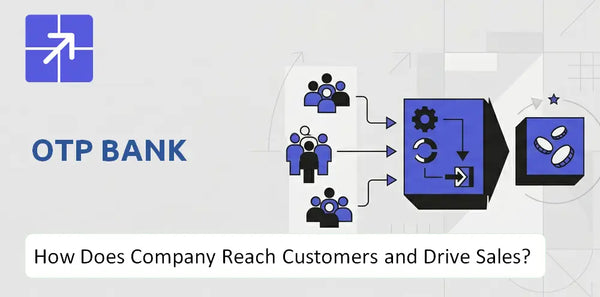
Focus campaigns on high-value segments and use digital onboarding to shorten acquisition cycles; OTP's unified CRM and retail APIs cut time-to-sale and boost cross-sell ratios. See product analysis: OTP Bank BCG Matrix Analysis
Who Does OTP Bank Want to Sell To?
OTP Bank wants to sell to the growing Central and Eastern European middle class and to Small and Medium-Sized Enterprises (SMEs), plus underserved consumers in new markets; the bank wins them with a mix of retail lending, mortgages, and tailored SME treasury products backed by digital and branch channels.
 Main retail and SME customers
OTP Bank primarily targets the expanding CEE middle class – in Hungary it held over 25 percent market share in retail lending in 2025, focusing on high-margin consumer loans and mortgages – and SMEs, which drive regional GDP and demand for trade finance and treasury solutions.
Adjacent and underbanked segments
Secondary segments include affluent and high-net-worth clients for wealth products and first-time banked populations in expansion markets such as Uzbekistan, where OTP Bank pursues first-mover advantages as formal financial inclusion rises through 2026.
Market positioning
OTP Bank positions itself as a full-service regional leader combining a large branch network with digital banking marketing and targeted CRM segmentation; in 2025 the group reported strong retail loan growth and continued SME revenue share gains across core markets.
Why this positioning works
The blend of branch reach, mobile app strategies to acquire customers, cross-selling banking products, and focused OTP Bank customer acquisition campaigns raises conversion: tailored offers and SME trade-finance packages match real demand while digital channels lower onboarding friction.
For more on ownership and strategic direction see Ownership and Control of OTP Bank Company
OTP Bank SWOT Analysis
- Complete SWOT Breakdown
- Fully Customizable
- Editable in Excel & Word
- Professional Formatting
- Investor-Ready Format

How Does OTP Bank Get in Front of Customers?
OTP Bank reaches customers through a balanced omnichannel mix: roughly 1,400 branches plus a strong digital ecosystem where over 85% of routine transactions run through mobile apps. The bank drives awareness with CRM-driven personalized offers, point-of-sale partnerships, and targeted digital campaigns that convert demand into sales.

Branch-led advisory as the main acquisition channel
Branches remain the primary channel for complex sales and advisory, converting high-value products like mortgages and wealth management. Local branch advisors anchor relationships that yield higher cross-sell: branch-originated customers typically buy multiple products.
Digital marketing and app-first engagement
OTP Bank marketing emphasizes a Digital First, Human Plus approach: mobile app, web, email, search, and paid social drive acquisition and retention. Over 85% of routine transactions occur in the app, lowering cost-to-serve and enabling scalable push offers.
Sales channels and strategic partnerships
Retail partnerships and automotive dealers place OTP Bank financing at point of sale for high-ticket purchases, while corporate and SME teams access customers via direct sales and broker networks. These partnerships increase originations for consumer lending.
Demand generation tactics
OTP runs targeted CRM campaigns, time-limited promotions, and co-branded dealer offers to trigger purchases. Real-time analytics surface offers based on spending patterns, improving conversion at the moment of financial need.
Customer acquisition efficiency
Combining app-driven onboarding with branch advisory reduces acquisition cost for routine accounts while preserving lifetime value for complex clients. CRM-triggered personalization increases product uptake and shortens sales cycles.
Most important reach advantage in 2025/2026
The hybrid model – 1,400 branches plus an app handling > 85% of routine transactions – gives OTP Bank scale and precision: physical trust for advisory and digital speed for volume acquisition.
For detailed segmentation and target markets see Target Customers and Market of OTP Bank Company
OTP Bank Business Model Canvas
- One-time Payment
- No Research Needed – Save Hours of Work
- Built by Experts, Trusted by Consultants
- Instant Download, Ready to Use
- 100% Editable, Fully Customizable

How Does OTP Bank Turn Attention Into Sales?
OTP Bank turns attention into sales by tightly integrating banking, insurance, asset management, and pension offers into one purchase funnel, using proprietary scoring and fast in-app approvals to convert interest into revenue within minutes for existing clients.
Core sales model: omnichannel main-bank conversion
OTP Bank uses retail branches plus digital channels (mobile app, online banking) for direct sales and self-serve sign-ups; relationship managers target high-value and SME clients for contract sales and wealth management mandates.
Pricing and monetization logic: margin-volume balance
Pricing blends net interest margins and fee income; NIMs have stabilized around 3.9 percent in the current rate environment while volume-based incentives and bundled fees drive recurring revenue from deposits, insurance premiums, and asset management AUM fees.
Conversion and purchase drivers: fast approvals and relevance
Conversion hinges on a proprietary credit scoring engine using alternative data to approve loans faster than local peers; existing customers often receive approvals in minutes via the mobile app, increasing conversion rates and reducing drop-off.
Repeat revenue and customer expansion: Main Bank strategy
OTP Bank secures retention through bundled service packages and a Main Bank strategy; industry-leading digital interfaces raise switching costs, supporting upsell of insurance, pensions and asset management to an existing deposit base and improving lifetime value.
Key mechanics: cross-selling banking products to depositors, mobile app strategies to acquire customers and approve credit, and targeted OTP Bank marketing plus CRM and customer segmentation strategy that feed personalized offers; see Competitive Landscape of OTP Bank Company for context: Competitive Landscape of OTP Bank Company
OTP Bank Marketing Mix
- Complete Marketing Mix Analysis
- Effortlessly Communicate Your Business Strategy
- Investor-Ready Format
- 100% Editable and Customizable
- Clear and Structured Layout

How Strong Does OTP Bank's Commercial Engine Look Going Forward?
OTP Bank's commercial engine enters 2025/2026 with solid momentum: a Common Equity Tier 1 ratio above 16.5 percent and a cost-to-income ratio under 43 percent that support growth while geographic diversification and AI-driven automation can lower customer acquisition costs; regional geopolitics remain a downside risk.
What Supports Future Demand
Brand recognition across Central and Eastern Europe, wide branch network strategy and a growing digital banking marketing footprint drive reach and trust; cross-selling banking products via CRM segmentation boosts wallet share, with 2025 retail loan growth outpacing deposits in several markets.
Channel and Marketing Effectiveness
OTP Bank marketing blends branch sales, mobile app strategies and targeted digital campaigns; AI-enabled customer journey mapping and personalized offers improve conversion, lowering acquisition costs while mobile app and online channels drive a larger share of new retail customers in 2025.
Risks to Commercial Performance
Geopolitical stress in core markets can hit lending and deposits; if inflation reaccelerates, net interest margin pressure and higher credit costs could blunt sales; execution risk on AI automation and CRM rollout may delay expected operating leverage.
The Overall Sales and Marketing Outlook
Outlook is cautiously positive: OTP Bank sales strategy should outperform as inflation stabilizes and regional GDP averages about 3.2 percent in 2025 – 26, supported by digital marketing channels for customer acquisition and improved sales conversion rate improvement tactics; still, monitoring geopolitical and credit trends is key.
Further context and historical positioning are available in the History and Background of OTP Bank Company
OTP Bank Boston Consulting Group Matrix
- Built by Experts, Trusted by Consultants
- Structured for Consultants, Students, and Founders
- 100% Editable in Microsoft Word & Excel
- Instant Digital Download – Use Immediately
- Compatible with Mac & PC – Fully Unlocked

Related Blogs
- What Is the History of OTP Bank Company and How Did It Evolve?
- What Is the Competitive Landscape of OTP Bank Company and How Does It Compete?
- What Is the Growth Outlook of OTP Bank Company and Where Is It Heading?
- How Does OTP Bank Company Work and What Drives Its Business Model?
- What Do the Mission, Vision, and Core Values of OTP Bank Company Reveal?
- Who Are the Core Customers in OTP Bank Company's Target Market?
- Who Owns OTP Bank Company Today and Who Holds Control?
Frequently Asked Questions
OTP Bank mainly targets the growing Central and Eastern European middle class and Small and Medium-Sized Enterprises. It also serves affluent clients and underserved consumers in expansion markets, using retail lending, mortgages, and SME treasury products to match those customer needs.
Disclaimer
All information, articles, and product details provided on this website are for general informational and educational purposes only. We do not claim any ownership over, nor do we intend to infringe upon, any trademarks, copyrights, logos, brand names, or other intellectual property mentioned or depicted on this site. Such intellectual property remains the property of its respective owners, and any references here are made solely for identification or informational purposes, without implying any affiliation, endorsement, or partnership.
We make no representations or warranties, express or implied, regarding the accuracy, completeness, or suitability of any content or products presented. Nothing on this website should be construed as legal, tax, investment, financial, medical, or other professional advice. In addition, no part of this site - including articles or product references - constitutes a solicitation, recommendation, endorsement, advertisement, or offer to buy or sell any securities, franchises, or other financial instruments, particularly in jurisdictions where such activity would be unlawful.
All content is of a general nature and may not address the specific circumstances of any individual or entity. It is not a substitute for professional advice or services. Any actions you take based on the information provided here are strictly at your own risk. You accept full responsibility for any decisions or outcomes arising from your use of this website and agree to release us from any liability in connection with your use of, or reliance upon, the content or products found herein.