
How does Paysafe's sales and marketing model convert specialized payments demand into recurring merchant and consumer revenue?
Paysafe targets high-friction verticals with a multi-channel sales approach combining direct enterprise sales, partner channels, and digital self-serve funnels. This matters because its strategy drove over $150 billion in transaction volume by early 2026 and supports adjusted EBITDA margins above 30%. See Paysafe BCG Matrix Analysis for product positioning insight.
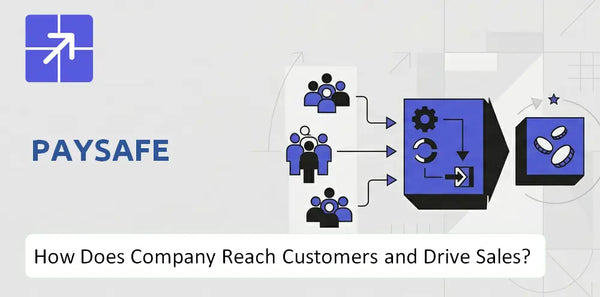
Paysafe leans on account teams plus ISV and PSP partnerships to embed payments, reducing churn and speeding onboarding; prioritize compliance-heavy verticals to justify premium pricing and higher lifetime value.
Who Does Paysafe Want to Sell To?
Paysafe sells to two linked audiences: regulated B2B merchants in iGaming, online sports betting, and specialized e-commerce needing high authorization and risk controls, and B2C users – privacy-conscious or underbanked digital spenders via eCash and digital wallets. The company wins by optimizing authorization rates, cross-border capability, and focused customer acquisition for high-LTV segments.
 Main enterprise merchants
Paysafe targets high-growth, regulated merchants in online sports betting, iGaming, and niche e-commerce where banks limit service. These merchants value high authorization rates, advanced risk management, and compliant payments to maximize conversion and reduce chargebacks.
Consumers: privacy and cross-border spenders
On the B2C side, Paysafe focuses on privacy-conscious and underbanked users through eCash and the Skrill and Neteller digital wallets, especially high-frequency spenders who need cross-border transfers, fast payouts, and secure checkout.
Market positioning: trusted regulated payments partner
Paysafe positions itself as a specialist payments stack for regulated verticals and global digital-wallet consumers, emphasizing compliance, payment conversion optimization, and omnichannel payment integration to capture merchant and consumer flows.
Why that positioning works
The message resonates because Paysafe delivers measurable outcomes: improved authorization and lower fraud losses, faster merchant onboarding, and wallet features that lift transaction frequency – key to retention and higher lifetime value in the US iGaming market and European commerce hubs.
Paysafe customer acquisition relies on channel mixes: targeted B2B sales into regulated industries, partnerships with iGaming platforms and affiliate networks, and digital marketing for Skrill/Neteller; management reported wallet active accounts grew materially through 2025 while US iGaming transactions rose as regulation expanded. See Mission, Vision, and Values of Paysafe Company for corporate context.
Paysafe SWOT Analysis
- Complete SWOT Breakdown
- Fully Customizable
- Editable in Excel & Word
- Professional Formatting
- Investor-Ready Format

How Does Paysafe Get in Front of Customers?
Paysafe reaches customers through a hybrid distribution mix: direct enterprise sales and ISV partnerships for Merchant Solutions, a physical eCash network of over 750,000 retail points, and embedded Digital Wallet integrations plus a large affiliate marketing network to capture buyers at checkout.

Enterprise & ISV Partnerships Drive Merchant Acquisition
Paysafe uses a direct enterprise sales force to win large merchants and integrates via Independent Software Vendors (ISVs) to place Paysafe payment solutions directly into merchant operations software, shortening onboarding and increasing conversion during the merchant onboarding process for higher conversions.
Digital Marketing and Checkout Embeds
For Digital Wallets, Paysafe leverages paid media, affiliate networks, email and platform distribution to drive awareness and uses direct checkout integrations – embedded visibility at point of intent – to boost payment conversion optimization and reduce cart abandonment.
Retail Footprint and eCash Distribution
Paysafe maintains over 750,000 eCash retail distribution points globally, enabling cash-to-digital on-ramps and wide reach into unbanked or cash-preferring segments – an omnichannel payment strategy that complements online channels.
Demand Generation: Affiliates, Promotions, and Merchant Co-Marketing
Main tactics include affiliate marketing to drive wallet sign-ups, merchant co-marketing for embedded checkouts, promotional cash-load incentives in eCash outlets, and targeted digital payment marketing campaigns to capture intent at checkout.
Customer Acquisition Efficiency Metrics
Paysafe measures acquisition via pay-per-conversion affiliate costs, enterprise LTV (lifetime value) versus sales CAC (customer acquisition cost), and checkout conversion lift from embedded integrations; publicly reported 2025 segment trends show continued wallet growth and steady merchant ARR expansion.
Primary Reach Advantage in 2025: Embedded Checkout Presence
The strongest reach advantage is embedded visibility – Paysafe appears as a primary payment option at the moment of transaction across thousands of merchants, converting intent into sales more efficiently than pre-checkout discovery channels; see Ownership and Control of Paysafe Company for ownership context Ownership and Control of Paysafe Company.
Paysafe Business Model Canvas
- One-time Payment
- No Research Needed – Save Hours of Work
- Built by Experts, Trusted by Consultants
- Instant Download, Ready to Use
- 100% Editable, Fully Customizable

How Does Paysafe Turn Attention Into Sales?
Paysafe turns attention into sales by removing friction at onboarding and offering localized payment methods that boost acceptance and conversion; transaction fees, FX spreads, and merchant charges convert volume into revenue while integrated products drive repeat use.
Core sales model: partner-led and platform sales
Paysafe sells via direct B2B sales, partnerships with iGaming and e – commerce platforms, and self-serve onboarding for SMBs; enterprise contracts and APIs support integrated, partner-led adoption.
Pricing and monetization logic: per-transaction and service fees
Paysafe monetizes through transaction-based fees, currency conversion spreads, and merchant service charges, plus gateway and value-added service fees; in 2025 the group held a take rate near 1.10 percent.
Conversion and purchase drivers: frictionless onboarding and localized payments
Conversion hinges on a streamlined merchant onboarding process and a wide set of localized payment methods (Skrill, Paysafecard, card, local e – wallets) that reduce cart abandonment and lift acceptance rates across markets.
Repeat revenue and expansion: cross – pollination and retention
Cross-sell between business units drives high-margin repeat volume: iGaming integrations increase consumer use of Skrill and Paysafecard; deep API integrations and regulatory licenses sustain >90 percent merchant retention and high switching costs.
Paysafe customer acquisition relies on channel partnerships, targeted digital payment marketing, and platform integrations; measured ROI in 2025 reflected stable revenue per transaction and growing wallet-funded activity via Skrill and Paysafecard. See related market mapping in Target Customers and Market of Paysafe Company.
Paysafe Marketing Mix
- Complete Marketing Mix Analysis
- Effortlessly Communicate Your Business Strategy
- Investor-Ready Format
- 100% Editable and Customizable
- Clear and Structured Layout

How Strong Does Paysafe's Commercial Engine Look Going Forward?
Paysafe's commercial engine looks resilient going into 2026, driven by a sales-led culture, disciplined expansion, and improving capital efficiency; primary supports include mid-single-digit organic revenue growth and a net debt-to-adjusted EBITDA trend toward 3.0x. Main headwinds are secular declines in cash-dependent eCash retail and regulatory risks in new markets.
Regulatory licenses and niche positioning support demand
Paysafe's regulated payments infrastructure and market-specific licenses create a durable moat, helping Paysafe customer acquisition in regulated verticals like iGaming and digital entertainment. The rapid US iGaming legalization drives outsized addressable market growth, offsetting long-term retail eCash declines.
Omnichannel channels and sales-led marketing effectiveness
Sales-led execution plus partner channels (white-labels, ISVs, and operators) and targeted digital payment marketing appear effective, delivering consistent merchant onboarding and conversion optimization. Using PaySafe payment solutions APIs and integrations improves online sales conversion and reduces cart abandonment for e-commerce clients.
Risks: cash decline, regulatory shifts, and competitive commoditization
Retail eCash faces secular decline as physical cash usage drops; regulatory reversals or licensing delays in the US or EU could slow growth. Broader commoditization pressures on general-purpose processors remain, though Paysafe's niche focus mitigates some risk.
Overall sales and marketing outlook for 2025/2026
The outlook is stable to positive: expect continued mid-single-digit organic revenue growth and improving capital metrics toward 3.0x net debt/adjusted EBITDA in 2026, with high operational stability for 2025/2026. Paysafe's focused B2B sales strategies and partnerships position it to capture regulated digital entertainment spend and sustain Paysafe payment solutions revenue growth.
See a deeper analysis in the Growth Outlook of Paysafe Company
Paysafe Boston Consulting Group Matrix
- Built by Experts, Trusted by Consultants
- Structured for Consultants, Students, and Founders
- 100% Editable in Microsoft Word & Excel
- Instant Digital Download – Use Immediately
- Compatible with Mac & PC – Fully Unlocked

Related Blogs
- What Is the History of Paysafe Company and How Did It Evolve?
- What Is the Competitive Landscape of Paysafe Company and How Does It Compete?
- What Is the Growth Outlook of Paysafe Company and Where Is It Heading?
- How Does Paysafe Company Work and What Drives Its Business Model?
- What Do the Mission, Vision, and Core Values of Paysafe Company Reveal?
- Who Are the Core Customers in Paysafe Company's Target Market?
- Who Owns Paysafe Company Today and Who Holds Control?
Frequently Asked Questions
Paysafe primarily sells to regulated B2B merchants and B2C digital spenders. On the merchant side, it focuses on iGaming, online sports betting, and specialized e-commerce. On the consumer side, it serves privacy-conscious and underbanked users through eCash and digital wallets like Skrill and Neteller.
Disclaimer
All information, articles, and product details provided on this website are for general informational and educational purposes only. We do not claim any ownership over, nor do we intend to infringe upon, any trademarks, copyrights, logos, brand names, or other intellectual property mentioned or depicted on this site. Such intellectual property remains the property of its respective owners, and any references here are made solely for identification or informational purposes, without implying any affiliation, endorsement, or partnership.
We make no representations or warranties, express or implied, regarding the accuracy, completeness, or suitability of any content or products presented. Nothing on this website should be construed as legal, tax, investment, financial, medical, or other professional advice. In addition, no part of this site - including articles or product references - constitutes a solicitation, recommendation, endorsement, advertisement, or offer to buy or sell any securities, franchises, or other financial instruments, particularly in jurisdictions where such activity would be unlawful.
All content is of a general nature and may not address the specific circumstances of any individual or entity. It is not a substitute for professional advice or services. Any actions you take based on the information provided here are strictly at your own risk. You accept full responsibility for any decisions or outcomes arising from your use of this website and agree to release us from any liability in connection with your use of, or reliance upon, the content or products found herein.