
How does Pembina Pipeline Company's sales and marketing model convert pipeline capacity and midstream services into stable revenue?
Pembina ties transportation, processing, and marketing to sell capacity and services to producers and refiners, reducing commodity exposure and boosting fee-based returns. In 2025 its expansion projects raised takeaway capacity, strengthening contract leverage and counterparty reliability.
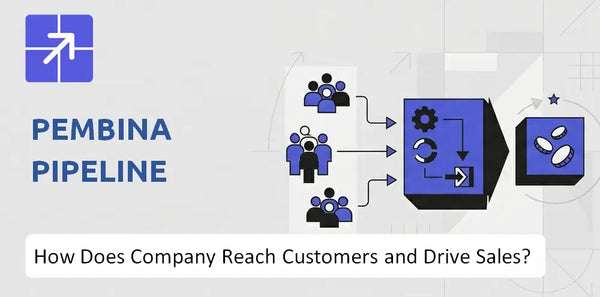
Pembina focuses on long-term take-or-pay contracts and third-party marketing to secure cash flow; prioritize contract mix and utilization to protect margins. See Pembina Pipeline BCG Matrix Analysis for product-level positioning.
Who Does Pembina Pipeline Want to Sell To?
Pembina Pipeline Corporation targets upstream E&P firms, integrated energy majors, and downstream industrial consumers, focusing on WCSB producers needing gathering and processing. It also pursues global LNG buyers via Cedar LNG, winning customers with long-term volume certainty and low-cost transport.
 Core buyers: Upstream producers and majors
Pembina primarily sells to Western Canadian Sedimentary Basin producers and integrated energy majors that need reliable gathering, processing, and takeaway capacity; these buyers value contract certainty and predictable midstream tariffs under Pembina Pipeline Company sales strategy.
Secondary segments: LNG exporters and industrials
The company targets global energy buyers and LNG exporters – notably Cedar LNG partners aiming at Asian markets – and downstream industrial consumers, including petrochemicals, refineries, and power generators seeking firm transportation and storage.
Market positioning: Neutral large-scale infrastructure partner
Pembina positions itself as a neutral, large-scale midstream operator that offers long-term contracts, integrated gathering-to-export pathways, and competitive tolling – key elements of its Pembina Pipeline customer outreach and Pembina Pipeline marketing channels.
Why the positioning wins business
Buyers choose Pembina for stable volumes, low unit transportation cost, and contractual predictability that reduce exposure to spot volatility; its commercial team emphasizes contract structuring, onboarding, and account management to convert demand into long-term commitments – see Ownership and Control of Pembina Pipeline Company for governance context.
Pembina Pipeline SWOT Analysis
- Complete SWOT Breakdown
- Fully Customizable
- Editable in Excel & Word
- Professional Formatting
- Investor-Ready Format

How Does Pembina Pipeline Get in Front of Customers?
Pembina Pipeline Corporation reaches industrial customers mainly through its physical pipeline network and commercial relationships, not retail marketing. It builds awareness via project open seasons, joint ventures, and direct B2B engagement, converting producer demand into long-term, take-or-pay contracts.

Main Acquisition Channel: Pipeline Footprint and Open Seasons
Pembina Pipeline Company sales strategy centers on its pipeline footprint as the acquisition engine; producers located in its catchment areas naturally route volumes to Pembina. During open seasons the Pembina commercial team secures long – term, take – or – pay agreements that lock in throughput and revenue for expansions like the Peace Pipeline projects.
Digital Marketing and Online Reach: Limited, Targeted Use
Pembina uses digital channels mostly for investor, stakeholder, and project communications rather than mass consumer marketing. The company publishes RFPs, project updates, and environmental reports online and leverages targeted email outreach and investor relations content to inform producers and shippers.
Sales Channels and Distribution Access: Direct B2B and Partnerships
Access comes via direct commercial negotiations with producers, refiners, and utilities, plus strategic partnerships and joint ventures. Examples include the Cedar LNG partnership with the Haisla Nation and third – party storage and terminal agreements that expand market access for customers.
Demand Generation Tactics: Open Seasons and Commercial Development
Pembina runs open seasons to quantify demand and secure binding commitments; it also conducts direct commercial outreach, site visits, and technical sessions with shippers. Project-level incentives and indexed toll structures are used to convert interest into signed capacity contracts.
Customer Acquisition Efficiency: High Upfront, Low Churn
Because contracts are long – duration and take – or – pay, Pembina shows efficient customer economics: acquisition costs are front – loaded but churn is low, enabling predictable cash flows. On recent projects, secured commitments often cover a majority of new capacity before construction.
Most Important Reach Advantage: Physical Network and JV Visibility
The strongest reach advantage is Pembina's expansive physical network plus strategic joint ventures that signal capability in export and low – carbon segments. In 2025 the company's pipeline and midstream assets continued to attract producers seeking stable transport and access to export markets like LNG.
Read more context on corporate positioning in this piece: Mission, Vision, and Values of Pembina Pipeline Company
Pembina Pipeline Business Model Canvas
- One-time Payment
- No Research Needed – Save Hours of Work
- Built by Experts, Trusted by Consultants
- Instant Download, Ready to Use
- 100% Editable, Fully Customizable

How Does Pembina Pipeline Turn Attention Into Sales?
Pembina Pipeline Company turns attention into sales by locking producers into contract-heavy agreements and offering bundled midstream services that push volumes onto its systems and stabilize cash flow. Fee-based contracts and marketing capture price spreads to convert interest into recurring revenue.
Contract – first Core Sales Model
Pembina Pipeline Company relies on direct B2B contracting with producers, refiners, and utilities; roughly 85 percent of adjusted EBITDA is from fee – based contracts, creating predictable cash flows and low volume exposure.
Pricing and Monetization Logic
Revenue comes from long – term transportation, processing and fractionation fees plus merchant marketing. Bundled service pricing captures value across gathering, processing and fractionation, and marketing captures basis and quality differentials to boost per – barrel revenue.
Conversion and Purchase Drivers
Conversion hinges on contract stability, integrated service fit, geographic connectivity to North American hubs, and trust from creditworthy counterparties. Sales teams negotiate term length, take – or – pay commitments, and fuel onboarding to shorten the path from interest to signed contract.
Repeat Revenue and Customer Expansion
Bundled services create stickiness and reduce producer churn; upsell comes from the marketing book and incremental capacity sales. The company targets a 70 – 75 percent payout ratio of fee – based distributable cash flow for 2025 – 2026 to align cash returns with stable fee revenue.
Marketing and trading teams monetize proprietary capacity across hubs, capturing spreads and converting physical throughput into additional revenue streams; see Target Customers and Market of Pembina Pipeline Company for customer segmentation and market context: Target Customers and Market of Pembina Pipeline Company
Pembina Pipeline Marketing Mix
- Complete Marketing Mix Analysis
- Effortlessly Communicate Your Business Strategy
- Investor-Ready Format
- 100% Editable and Customizable
- Clear and Structured Layout

How Strong Does Pembina Pipeline's Commercial Engine Look Going Forward?
Pembina Pipeline Company's commercial engine looks solid into 2025/2026, supported by fee – based growth from recent asset integrations and LNG pivot, while regulatory and environmental shifts could pressure volumes and margins.
What Supports Future Demand
The full integration of the Alliance Pipeline and Aux Sable assets (acquired 2024) plus Cedar LNG development underpin fee – based revenue growth; management guidance for 2025 EBITDA sits at CAD 4.35 billion to CAD 4.5 billion, reflecting scale and improved product – market fit for LNG and natural gas liquids customers.
Channel and Marketing Effectiveness
Pembina Pipeline customer outreach relies on direct B2B sales, long – term shipper contracts, and trading and marketing teams that convert demand into sales; digital account management and targeted outreach to refiners, power generators, and utilities improve retention and onboarding for shippers.
Risks to Commercial Performance
Regulatory approvals (project permitting) and carbon policy shifts could reduce pipeline throughput; commodity price swings and competition for LNG feedstock add volatility to the Pembina Pipeline Company sales strategy and pricing strategy for transportation and storage.
The Overall Sales and Marketing Outlook
Overall outlook is strong and adaptable: disciplined capital allocation, projected dividend growth of 5 – 6 percent annually, and incremental fee revenue from Cedar LNG and Peace Pipeline expansion support a buy – and – hold commercial profile; still, close monitoring of regulatory risk and customer segmentation for pipeline companies is needed. Read further analysis in this article on the company's outlook: Growth Outlook of Pembina Pipeline Company
Pembina Pipeline Boston Consulting Group Matrix
- Built by Experts, Trusted by Consultants
- Structured for Consultants, Students, and Founders
- 100% Editable in Microsoft Word & Excel
- Instant Digital Download – Use Immediately
- Compatible with Mac & PC – Fully Unlocked

Related Blogs
- What Is the History of Pembina Pipeline Company and How Did It Evolve?
- What Is the Competitive Landscape of Pembina Pipeline Company and How Does It Compete?
- What Is the Growth Outlook of Pembina Pipeline Company and Where Is It Heading?
- How Does Pembina Pipeline Company Work and What Drives Its Business Model?
- What Do the Mission, Vision, and Core Values of Pembina Pipeline Company Reveal?
- Who Are the Core Customers in Pembina Pipeline Company's Target Market?
- Who Owns Pembina Pipeline Company Today and Who Holds Control?
Frequently Asked Questions
Pembina Pipeline targets Western Canadian Sedimentary Basin producers, integrated energy majors, and downstream industrial consumers. It also pursues LNG buyers through Cedar LNG, focusing on customers that want reliable gathering, processing, transportation, and long-term volume certainty.
Disclaimer
All information, articles, and product details provided on this website are for general informational and educational purposes only. We do not claim any ownership over, nor do we intend to infringe upon, any trademarks, copyrights, logos, brand names, or other intellectual property mentioned or depicted on this site. Such intellectual property remains the property of its respective owners, and any references here are made solely for identification or informational purposes, without implying any affiliation, endorsement, or partnership.
We make no representations or warranties, express or implied, regarding the accuracy, completeness, or suitability of any content or products presented. Nothing on this website should be construed as legal, tax, investment, financial, medical, or other professional advice. In addition, no part of this site - including articles or product references - constitutes a solicitation, recommendation, endorsement, advertisement, or offer to buy or sell any securities, franchises, or other financial instruments, particularly in jurisdictions where such activity would be unlawful.
All content is of a general nature and may not address the specific circumstances of any individual or entity. It is not a substitute for professional advice or services. Any actions you take based on the information provided here are strictly at your own risk. You accept full responsibility for any decisions or outcomes arising from your use of this website and agree to release us from any liability in connection with your use of, or reliance upon, the content or products found herein.