
How does Thule Group's sales and marketing model convert brand strength into repeat purchases across channels?
Thule Group uses premium branding, channel diversification, and engineering-led marketing to keep high margins while expanding categories. In 2025 the firm grew availability in 138 markets and pushed car-seat and dog-transport ranges, supporting higher ASPs and stronger retail placements. See product strategy in Thule Group BCG Matrix Analysis
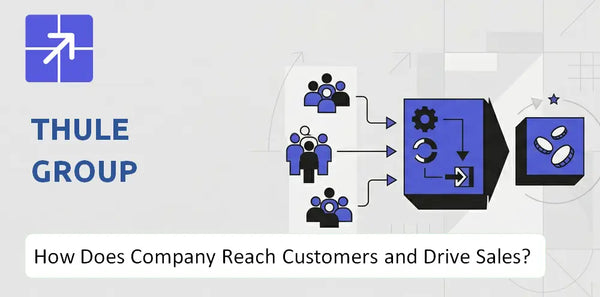
Focus omnichannel campaigns on high-value categories and train retail partners for premium positioning; prioritize inventory at top 20 markets to sustain conversion and preserve pricing power.
Who Does Thule Group Want to Sell To?
Thule Group wants to sell to affluent active-lifestyle consumers who pay premiums for safety, durability, and Scandinavian design; primary buyers are active families, outdoor adventurers, and urban professionals, with growing focus on Pet Parents and New Parents to capture more household discretionary spend.
 Core: Active Families and Safety – first Buyers
Active families seeking premium strollers, bike trailers, and car seats make up the largest revenue cohort; Thule Group targets those willing to pay a 20 to 30 percent premium for superior crash-test ratings and durable, aesthetically pleasing design.
Adjacents: Outdoor Adventurers and Urban Professionals
Outdoor adventurers buying specialized vehicle racks and bike carriers, plus urban professionals buying luggage and technical packs, are high-value segments driven by functionality and style; they account for a sizable portion of Thule Group marketing and Thule sales strategy spend.
Expansion: Pet Parents and New Parents
By early 2026 Thule Group expanded dog transport and car seat portfolios to increase share of household discretionary spending; this move targets Pet Parents and New Parents, aiming to lift average order value and cross – sell across categories.
Market Positioning: Premium Safety and Scandinavian Design
Thule Group positions itself as a premium outdoor and travel accessory brand emphasizing tested safety, longevity, and clean Scandinavian design; pricing reflects a 20 – 30 percent premium versus mass-market alternatives, supported by Thule distribution channels spanning retail partners, dealer networks, and direct-to-consumer e-commerce Thule efforts.
Why This Positioning Works
High-income segments respond to certified safety metrics (crash-test ratings), product longevity, and design – factors that reduce churn and justify premium pricing; combined omnichannel retail strategy and Thule digital marketing campaigns for roof racks and bike carriers convert demand to sales via retail training, CRM, and loyalty programs, while seasonal promotions and trade-show launches boost visibility.
Evidence and Channels
Thule Group uses a mix of Thule retail partnerships, dealer network sales and support, and Thule direct-to-consumer online sales strategy; recent 2025 channel mix (company filings) showed retail wholesale at roughly 55 percent of sales, DTC e-commerce 30 percent, and B2B/other 15 percent, highlighting how Thule reaches customers through retail partners and online channels to convert demand into sales. Read more on the brand evolution in this article: History and Background of Thule Group Company
Thule Group SWOT Analysis
- Complete SWOT Breakdown
- Fully Customizable
- Editable in Excel & Word
- Professional Formatting
- Investor-Ready Format

How Does Thule Group Get in Front of Customers?
Thule Group gets in front of customers through an omnichannel mix: specialty retail forms the backbone, DTC e-commerce is scaling, and partnerships with premium automotive OEMs and big outdoor retailers drive awareness and demand.

Specialty Retail as the Primary Acquisition Channel
Specialty retail accounts for approximately 68 percent of sales via about 30,000 points of sale worldwide in 2025, making dealer and partner shelves the main customer touchpoint during research and purchase.
Digital Marketing and Online Reach
Thule Group marketing emphasizes lifestyle integration across search, paid social, content, email, app experiences, and SEO/SEM to drive traffic; DTC e-commerce represents 20 percent of revenue in 2025, showing digital reach converts to sales.
Sales Channels and Distribution Access
Distribution mixes Thule Partner Stores, shop-in-shops in major outdoor chains like REI and Globetrotter, B2B OEM partnerships, marketplaces, and direct online sales to cover both consumer and commercial buyers at scale.
Demand Generation Tactics
Demand is driven by co-branded OEM programs, seasonal campaigns, influencer activations, product launches at trade shows, and in-store merchandising that targets research-phase shoppers and converts intent into purchase.
Customer Acquisition Efficiency
With 20 percent revenue from DTC and strong wholesale reach, acquisition mixes lower cost-per-acquisition via retail partner conversion while DTC enhances margin and lifetime value through CRM and loyalty initiatives.
Most Important Reach Advantage
The largest advantage is the scale of the retail partner network – 30,000 points of sale – combined with premium OEM partnerships that embed Thule into the purchase path for vehicles and outdoor gear buyers in 2025. Read more in the Growth Outlook of Thule Group Company.
Thule Group Business Model Canvas
- One-time Payment
- No Research Needed – Save Hours of Work
- Built by Experts, Trusted by Consultants
- Instant Download, Ready to Use
- 100% Editable, Fully Customizable

How Does Thule Group Turn Attention Into Sales?
Thule Group turns attention into sales through product-led trust and channel depth: continuous R&D drives premium launches that justify higher prices, while safety credentials and an extensive retail and DTC footprint convert interest into purchase.
Core sales model: omnichannel retail and partner-led distribution
Thule Group marketing relies on a mix of direct-to-consumer e-commerce Thule, retail partnerships, and a global dealer network sales and support model. Sales flow through outdoor retailers, OEM partnerships, Amazon and marketplaces, plus owned webstores and seasonal trade-show pushes.
Pricing and monetization logic: premium pricing backed by product differentiation
Thule sales strategy sets premium price points supported by continuous innovation; the firm reinvests approximately 5 percent of 2025 annual revenue into R&D. One-time product sales dominate, with higher-margin accessories and bundles improving average order value.
Conversion and purchase drivers: safety certification and product launches
Conversion is driven by verified safety testing at the Thule Test Center, a trust signal for high-ticket, safety-critical items like car seats and roof boxes. New launches and targeted Thule digital marketing campaigns for roof racks and bike carriers spike conversion rates during seasonality windows.
Repeat revenue and customer expansion: strong loyalty lowers acquisition cost
Internal metrics show a high repeat purchase rate: customers buying vehicle racks commonly return for compatible accessories, bike carriers, or luggage, reducing long-term customer acquisition cost and boosting lifetime value via upsells, cross-sell bundles, and CRM-driven loyalty programs.
Read more on target segments and distribution in this analysis: Target Customers and Market of Thule Group Company
Thule Group Marketing Mix
- Complete Marketing Mix Analysis
- Effortlessly Communicate Your Business Strategy
- Investor-Ready Format
- 100% Editable and Customizable
- Clear and Structured Layout

How Strong Does Thule Group's Commercial Engine Look Going Forward?
Thule Group's commercial engine looks resilient into 2026, driven by category diversification and restored bicycle demand; main supports are expanded juvenile and pet ranges and high EBIT margin, while weaker discretionary spending and channel disruption could pressure near-term growth.
Category diversification and brand strength support future demand
Integration of car seats and dog transport now adds meaningful topline lift; juvenile and pet categories helped lift 2025 revenues, supporting a projected organic growth range of 7 – 10 percent for 2025 – 2026. Strong brand recognition and product-market fit sustain pricing power and loyalty.
Omnichannel reach and targeted marketing drive conversions
Thule Group marketing blends retail partnerships, direct-to-consumer e-commerce Thule efforts, and dealer network support; effective omnichannel retail strategy and digital marketing campaigns for roof racks and bike carriers show high return on ad spend, boosting customer acquisition and repeat purchase rates.
Risks from macro and inventory dynamics
Macroeconomic pressure on discretionary spend and currency swings could dent retail sell-through; residual channel inventory or supply chain hiccups would reduce conversion despite strong demand. Competitive discounting and marketplace (Amazon) pricing also pose margin risk.
Sales and marketing outlook for 2025/2026
Outlook appears strong and adaptable: targeted R&D and sustained marketing funded by robust cash flow and a 20 percent EBIT margin target let Thule scale campaigns and product launches, while retailer training and point-of-sale tactics should solidify distribution conversion. See operational priorities in this company overview Mission, Vision, and Values of Thule Group Company.
Thule Group Boston Consulting Group Matrix
- Built by Experts, Trusted by Consultants
- Structured for Consultants, Students, and Founders
- 100% Editable in Microsoft Word & Excel
- Instant Digital Download – Use Immediately
- Compatible with Mac & PC – Fully Unlocked

Related Blogs
- What Is the History of Thule Group Company and How Did It Evolve?
- What Is the Competitive Landscape of Thule Group Company and How Does It Compete?
- What Is the Growth Outlook of Thule Group Company and Where Is It Heading?
- How Does Thule Group Company Work and What Drives Its Business Model?
- What Do the Mission, Vision, and Core Values of Thule Group Company Reveal?
- Who Are the Core Customers in Thule Group Company's Target Market?
- Who Owns Thule Group Company Today and Who Holds Control?
Frequently Asked Questions
Thule Group primarily wants to sell to affluent active-lifestyle consumers. Its main buyers are active families, outdoor adventurers, and urban professionals, with added focus on Pet Parents and New Parents. The brand sells safety, durability, and Scandinavian design at a premium price point
Disclaimer
All information, articles, and product details provided on this website are for general informational and educational purposes only. We do not claim any ownership over, nor do we intend to infringe upon, any trademarks, copyrights, logos, brand names, or other intellectual property mentioned or depicted on this site. Such intellectual property remains the property of its respective owners, and any references here are made solely for identification or informational purposes, without implying any affiliation, endorsement, or partnership.
We make no representations or warranties, express or implied, regarding the accuracy, completeness, or suitability of any content or products presented. Nothing on this website should be construed as legal, tax, investment, financial, medical, or other professional advice. In addition, no part of this site - including articles or product references - constitutes a solicitation, recommendation, endorsement, advertisement, or offer to buy or sell any securities, franchises, or other financial instruments, particularly in jurisdictions where such activity would be unlawful.
All content is of a general nature and may not address the specific circumstances of any individual or entity. It is not a substitute for professional advice or services. Any actions you take based on the information provided here are strictly at your own risk. You accept full responsibility for any decisions or outcomes arising from your use of this website and agree to release us from any liability in connection with your use of, or reliance upon, the content or products found herein.