
How does Under Armour's sales and marketing model shift from wholesale to DTC to restore premium positioning?
Under Armour is pivoting from volume-driven wholesale to a margin-focused Direct-to-Consumer model to rebuild price integrity and brand prestige. This matters because North America still supplies about 60% of revenue, and 2025 shifts show higher DTC mix and tighter promotional cadence.
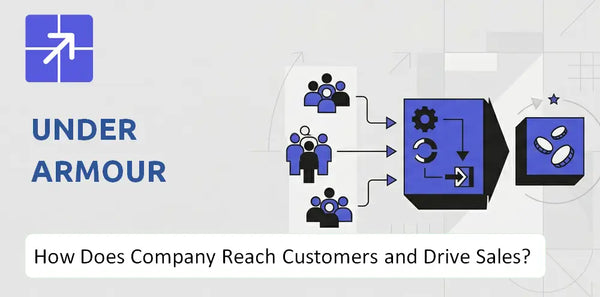
Focus marketing on product innovation, owned retail, and targeted digital acquisition to convert demand without discounting; see Under Armour BCG Matrix Analysis for product-level placement and margin levers.
Who Does Under Armour Want to Sell To?
Under Armour wants to sell to performance-focused athletes and serious fitness enthusiasts who prioritize technical gear over fashion; it aims to win high-school and collegiate athletes, HIIT practitioners, and competitive runners through performance-driven product and targeted channels.
 Primary customer: Varsity and competitive athletes
Under Armour targets high-school and collegiate athletes and competitive runners who value moisture-wicking fabrics, compression, and performance footwear; in FY2025 the brand reported continued emphasis on athletic apparel and footwear lines that drove its direct-to-consumer sales mix and supported premium ASPs in key categories.
Additional targets: Focused fitness enthusiasts and women's segment
Secondary audiences include HIIT and gym-goers who buy technical training wear and runners who purchase Hovr and specialty shoes; Under Armour is aggressively expanding its women's assortment to capture an underpenetrated growth lever and increase market share in female athletic wear.
Market positioning: Performance-first, premium technical gear
Under Armour positions itself as a performance brand rather than a lifestyle label, avoiding saturated casual segments; its Under Armour marketing and Under Armour sales strategy emphasize technical differentiation, athlete endorsements, and specialty footwear platforms like Curry Brand and Hovr.
Why this positioning works
The message lands because target buyers treat apparel as equipment: they pay premiums for tech fabrics and compression, boosting ASPs and conversion rates across Under Armour distribution channels; digital marketing, retail partnerships, and a stronger women's assortment are tactical levers to convert demand into sales and lift DTC revenue share.
Relevant datapoints: FY2025 channel mix shifted toward DTC and e-commerce with continued investment in Under Armour digital marketing and omnichannel retail strategy; targeted advertising, athlete endorsements, and product tech drove higher conversion on mobile and web, while wholesale and sporting-goods partnerships sustained reach. Read more on history and positioning in this piece: History and Background of Under Armour Company
Under Armour SWOT Analysis
- Complete SWOT Breakdown
- Fully Customizable
- Editable in Excel & Word
- Professional Formatting
- Investor-Ready Format

How Does Under Armour Get in Front of Customers?
Under Armour gets in front of customers via a hybrid distribution mix that prioritizes premium retail partners, direct-to-consumer e-commerce, and high-impact sports marketing. The company drives awareness through athlete endorsements and collegiate deals, captures first-party data via the UA Shop app and website, and targets Gen Z with social commerce and performance marketing.

Premium Retail Partnerships Drive Reach
Under Armour marketing centers on selective wholesale relationships – focusing on partners such as Dick's Sporting Goods and specialty athletic boutiques – to protect brand equity and improve in-store conversion. Exiting thousands of undifferentiated doors by early 2026 reduced low-margin exposure and concentrated sales in higher-performing touchpoints.
Digital Marketing and First-Party Data Engine
Under Armour digital marketing leans on the Under Armour e-commerce platform and the UA Shop app to collect first-party data and personalize offers; in 2025 DTC accounted for a growing share of revenue with online conversion improvements and higher average order value. Paid search, social ads, email, and app push drive traffic and retention.
Omnichannel Sales and Distribution Access
Under Armour distribution channels combine direct retail, wholesale, and e-commerce; the company operates flagship stores and shop-in-shops while relying on trusted wholesale partners for scale. International wholesale and select marketplaces supplement market penetration without diluting core retail partners.
Demand Generation via Sports Marketing
Demand is created through elite athlete endorsements, collegiate partnerships, event sponsorships, and targeted influencer programs that emphasize technical performance and Protect This House heritage. Seasonal campaigns and product drops drive urgency; in 2025 athlete-led activations remained central to brand visibility at the point of sweat.
Customer Acquisition Efficiency and Metrics
Under Armour measures efficiency via customer acquisition cost (CAC), online conversion rates, and repeat-purchase frequency from its app and site. By 2025 DTC growth and tightened wholesale mix improved gross margin contribution per customer and lowered blended CAC compared with peak 2021 levels.
Most Important Reach Advantage: First-Party Data
The UA Shop app and Under Armour e-commerce platform deliver the strongest reach advantage by enabling targeted social commerce, personalized promotions, and lifecycle marketing. This first-party data capability underpins performance marketing to Gen Z athletes and boosts conversion across channels; see Competitive Landscape of Under Armour Company for context Competitive Landscape of Under Armour Company.
Under Armour Business Model Canvas
- One-time Payment
- No Research Needed – Save Hours of Work
- Built by Experts, Trusted by Consultants
- Instant Download, Ready to Use
- 100% Editable, Fully Customizable

How Does Under Armour Turn Attention Into Sales?
Under Armour turns attention into sales by pushing full-price selling across channels and driving digital-first conversion through UA Rewards, scarcity-led footwear drops, and in-store technical selling that raises basket sizes.
Core sales model: Direct-to-consumer-led omnichannel
Under Armour primarily sells direct-to-consumer via e-commerce and Brand House stores, supported by wholesale relationships with sporting goods retailers; digital and retail combine to convert demand into purchases.
Pricing and monetization logic: Full-price focus with strategic scarcity
The company shifted toward full-price selling to protect margins and brand equity, uses limited-edition footwear drops and curated bundles, and captures higher ASPs (average selling prices) in footwear, which was ~25% of revenue in fiscal 2025.
Conversion and purchase drivers: Loyalty, scarcity, and retail expertise
UA Rewards increases conversion by offering early access to drops and exclusive content; advanced inventory systems cut outlet dependence so full-price SKU availability boosts sell-through, while Brand House staff use fit services and demos to convert high-intent shoppers into multi-item sales.
Repeat revenue and customer expansion: Loyalty and content-driven retention
UA Rewards drives repeat purchases and higher lifetime value via early-access drops and performance coaching; digital subscriptions and app engagement raise frequency – Under Armour reports that loyalty members convert at materially higher rates and account for a growing share of DTC revenue in 2025.
Under Armour marketing and Under Armour digital marketing converge: inventory management cut Friends and Family promotions in 2025, reducing discount exposure and preserving margin; footwear scarcity (heat model) yields rapid sell-through and supports higher ASPs; cross-selling and bundling in Brand House stores lift transaction value. See company culture context in Mission, Vision, and Values of Under Armour Company.
Under Armour Marketing Mix
- Complete Marketing Mix Analysis
- Effortlessly Communicate Your Business Strategy
- Investor-Ready Format
- 100% Editable and Customizable
- Clear and Structured Layout

How Strong Does Under Armour's Commercial Engine Look Going Forward?
Under Armour's commercial engine looks cautiously stronger heading into the 2025/2026 fiscal cycle, with margin recovery and international growth offsetting modest North American sales; success hinges on sustaining reduced promotions and product premiumization. Key supports include leaner costs and renewed performance innovation, while risks stem from intense competition in running and athleisure.
What Supports Future Demand
Under Armour marketing benefit: stronger gross margins driven by 150 – 200 basis points of projected expansion as promotional intensity falls, improving profitability per unit. International expansion (EMEA, APAC) targeting mid-to-high single-digit growth will diversify revenue beyond a 1 – 2 percent North American growth forecast, and renewed product innovation in core performance wear restores premium positioning.
Channel and Marketing Effectiveness
Under Armour distribution channels are shifting toward higher mix of direct-to-consumer and e-commerce, supporting margin recovery; the e-commerce channel growth rate accelerated in recent quarters and digital marketing and mobile app initiatives improve conversion and retention. Wholesale partnerships and retail partnerships remain critical for reach in sporting goods and department stores, while targeted advertising and influencer/athlete endorsements keep brand relevance.
Risks to Commercial Performance
Competitive pressure from incumbents and agile running niche entrants threatens share and forces discounting, which could erode the planned 150 – 200 bps margin gain. Supply chain or distribution inefficiencies could slow international momentum; sustained double-digit top-line growth remains unlikely near-term given modest North America demand and crowded pricing/promotional dynamics.
The Overall Sales and Marketing Outlook
The sales and marketing outlook for 2025/2026 is cautiously optimistic: marketing and DTC improvements make the commercial engine more profitable and adaptable, but top-line acceleration depends on converting international momentum and defending running/athleisure share. Read more on operational drivers in How Under Armour Company Works and Makes Money.
Under Armour Boston Consulting Group Matrix
- Built by Experts, Trusted by Consultants
- Structured for Consultants, Students, and Founders
- 100% Editable in Microsoft Word & Excel
- Instant Digital Download – Use Immediately
- Compatible with Mac & PC – Fully Unlocked

Related Blogs
- What Is the History of Under Armour Company and How Did It Evolve?
- What Is the Competitive Landscape of Under Armour Company and How Does It Compete?
- What Is the Growth Outlook of Under Armour Company and Where Is It Heading?
- How Does Under Armour Company Work and What Drives Its Business Model?
- What Do the Mission, Vision, and Core Values of Under Armour Company Reveal?
- Who Are the Core Customers in Under Armour Company's Target Market?
- Who Owns Under Armour Company Today and Who Holds Control?
Frequently Asked Questions
Under Armour focuses on performance-minded athletes and serious fitness enthusiasts. Its core audience includes high-school and collegiate athletes, competitive runners, HIIT practitioners, and gym-goers who value technical gear, moisture-wicking fabrics, compression, and performance footwear over casual fashion.
Disclaimer
All information, articles, and product details provided on this website are for general informational and educational purposes only. We do not claim any ownership over, nor do we intend to infringe upon, any trademarks, copyrights, logos, brand names, or other intellectual property mentioned or depicted on this site. Such intellectual property remains the property of its respective owners, and any references here are made solely for identification or informational purposes, without implying any affiliation, endorsement, or partnership.
We make no representations or warranties, express or implied, regarding the accuracy, completeness, or suitability of any content or products presented. Nothing on this website should be construed as legal, tax, investment, financial, medical, or other professional advice. In addition, no part of this site - including articles or product references - constitutes a solicitation, recommendation, endorsement, advertisement, or offer to buy or sell any securities, franchises, or other financial instruments, particularly in jurisdictions where such activity would be unlawful.
All content is of a general nature and may not address the specific circumstances of any individual or entity. It is not a substitute for professional advice or services. Any actions you take based on the information provided here are strictly at your own risk. You accept full responsibility for any decisions or outcomes arising from your use of this website and agree to release us from any liability in connection with your use of, or reliance upon, the content or products found herein.