
Who are CPI Card Group's core customers among U.S. banks and credit unions?
CPI Card Group serves thousands of regional banks and credit unions that outsource card issuance, favoring premium, sustainable, and instant-issuance solutions. This matters because the 2025 shift to eco-friendly cards and instant issuance drove a 12% revenue mix increase toward premium products.
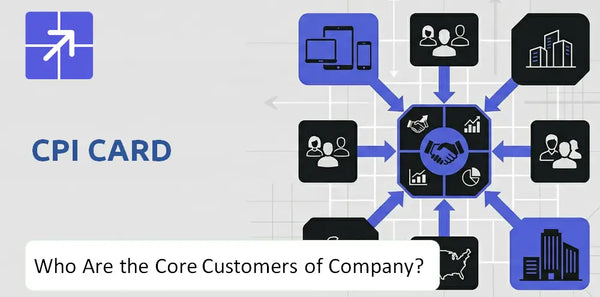
Focus on community banks offering card upgrades and instant issuance to retain clients; see CPI Card BCG Matrix Analysis for product strategy alignment.
Who Is CPI Card Trying to Win?
CPI Card Group targets roughly 10,000 community banks and credit unions that lack in-house card program infrastructure, plus large banks, fintechs, and niche institutional buyers needing specialized physical card and stored-value solutions.
 Primary: Community Banks and Credit Unions
About 10,000 U.S. community banks and credit unions rely on CPI Card Group for end-to-end Card-as-a-Service, EMV card issuance, personalization, fulfillment, and compliance support – these clients drive steady recurring revenue and high lifetime value.
Secondary: Tier 1 Banks and Large Programs
Large national banks and enterprise buyers use CPI Card Group for premium metal cards, high-volume prepaid and gift card programs, and specialized projects – these engagements produce high-margin, project-based revenue.
Fintechs, Neo-banks, and Digital-First Issuers
Fintech startups and neo-banks procure physical EMV and contactless cards as the last-mile bridge to customers; CPI Card Group aggressively targets this fast-growing segment, which expanded card volumes industry-wide by mid-2025.
Niche Institutional and Vertical Buyers
Retail, healthcare, transit, and government buyers account for stored-value, ID, and fare-card demand – examples include government ID card purchasers and transit agencies purchasing contactless fare cards, plus healthcare organizations ordering patient ID cards.
Customer Type and Market Role
CPI Card Group serves a mixed customer base of institutions and businesses: financial institution card procurement is core, while enterprise identity management buyers and merchant services providers drive adjacent flows.
Most Important Segment by Revenue
Community banks and credit unions are the most important segment by recurring revenue and scale; these clients account for the bulk of CPI Card Group's personalization and fulfillment volumes as of FY 2025, while fintechs show fastest growth.
For a deeper look at market positioning and growth drivers see Growth Outlook of CPI Card Company
CPI Card SWOT Analysis
- Complete SWOT Breakdown
- Fully Customizable
- Editable in Excel & Word
- Professional Formatting
- Investor-Ready Format

What Do CPI Card's Customers Care About Most?
Reliability, security, and speed-to-market drive CPI Card Group customers: financial institutions need Instant Issuance, buyers demand sustainable premium materials, and operations teams want integrated workflows that lower total cost of ownership and improve cardholder experience.

Instant, Secure Issuance
Card issuer clients prioritize Instant Issuance to deliver functional EMV or contactless cards in-branch immediately; Card@Once enables zero-day issuance and reduces time-to-card from days to minutes for in-person applicants.
Practical Buying Drivers: Speed, Cost, Compliance
Financial institution card procurement focuses on reliability, regulatory compliance, and lower total cost of ownership (TCO); integrated personalization and fulfillment workflows cut operational friction and reduce per-card cost.
Emotional and Brand Differentiation
Buyers seek premium materials and sustainable options – Second Wave recovered ocean-bound plastic cards – to signal environmental responsibility to Gen Z and Millennials and elevate brand prestige.
What Customers Value Most
Customers value secure, fast issuance plus materials that support ESG mandates; operationally they want end-to-end digital-to-physical workflows that improve cardholder experience and lower fulfilment cycle times.
Drivers of Loyalty and Repeat Demand
Repeat demand comes from consistent delivery of security certifications, predictable lead times, and the ability to customize (premium finishes, sustainable substrates); service-level continuity retains banks, credit unions, and government agencies.
Why Customers Choose CPI Card Group
CPI Card Group wins because it combines Instant Issuance capability, EMV/contactless expertise, and an expanding sustainable card portfolio – meeting procurement needs across banks, government ID buyers, healthcare card providers, and transit agencies. See Sales and Marketing Strategy of CPI Card Company for deeper context: Sales and Marketing Strategy of CPI Card Company
CPI Card Business Model Canvas
- One-time Payment
- No Research Needed – Save Hours of Work
- Built by Experts, Trusted by Consultants
- Instant Download, Ready to Use
- 100% Editable, Fully Customizable

Where Is Demand Strongest for CPI Card?
Demand is strongest in the U.S., which drives over 95% of revenue; growth is concentrated in SaaS-based instant issuance and domestic card replacement cycles, especially among credit unions and large retail issuers.
Main Market: U.S. Domestic Issuers
The U.S. domestic market accounts for more than 95% of CPI Card Company customers revenue, shielding the business from major FX swings and focusing demand where card issuer clients and financial institution card procurement are most active.
Secondary Markets: Retail, Government, Healthcare
Retailers order private-label credit and multi-use prepaid cards, government agencies purchase secure ID cards, and healthcare providers buy patient ID cards – each segment provides steady volumes and cross-selling opportunities.
Where CPI Card Company Is Strongest
CPI Card Company is strongest in reach and revenue mix with entrenched relationships among credit unions, large banks, and merchant services providers; these clients drive repeat orders for EMV and contactless cards and personalization services.
Fastest-Growing Demand Areas (2025 – 2026)
SaaS-based instant issuance installations grew at a steady double-digit CAGR into 2026, and contactless EMV replacement demand supports a 3 – 5 year refresh cycle across an estimated 1.2 billion active U.S. cards – boosting orders from credit unions, fintech startups, and transit agencies. See Competitive Landscape of CPI Card Company for context: Competitive Landscape of CPI Card Company
CPI Card Marketing Mix
- Complete Marketing Mix Analysis
- Effortlessly Communicate Your Business Strategy
- Investor-Ready Format
- 100% Editable and Customizable
- Clear and Structured Layout

How Does CPI Card Keep Its Audience Growing?
CPI Card Group grows audience by landing basic card orders and expanding into higher-margin services – digital delivery, complex personalization, and eco-friendly cards – while deep systems integration raises switching costs and boosts retention.
Land-and-Expand: converting card issuer clients into services partners
CPI Card Group targets card issuer clients and financial institution card procurement teams with core EMV and prepaid orders, then migrates them to digital card delivery, tokenization, and advanced personalization services to increase revenue per customer. In 2025 about 40% of new card shipments were eco-friendly, aiding wins versus legacy suppliers and attracting banks and credit unions sourcing EMV cards.
Customer Retention Drivers
Retention benefits from deep technical integrations – APIs, tokenization, and fulfillment workflows – that make switching costly for card personalization bureaus and merchant services providers. Long-term contracts, SLA-backed fulfillment for card issuer clients, and compliance with secure ID mandates reduce churn; Adjusted EBITDA margins are projected to stay in the 18 to 20% range in 2025 – 2026, supporting reinvestment in retention capabilities.
Loyalty, Repeat Demand, and Customer Depth
Repeat demand comes from renewal cycles at banks, credit unions, government agencies ordering secure ID cards, and healthcare card providers. CPS-managed personalization and fulfillment create ecosystem stickiness – clients order regular reissues, personalization runs, and campaign-based reloads for prepaid and loyalty cards. One clean stat: eco-friendly SKUs represent nearly 40% of new shipments, increasing wallet share among sustainability-focused issuers.
Strongest Growth Lever in 2025 – 2026
The top lever is mid-market reliability plus premium product innovation: combining dependable EMV production for banks and credit unions with higher-margin services (digital delivery, complex personalization, secure IDs) and eco-friendly offerings drives share gains. This aligns with sector demand for sustainability and immediate service delivery; professional judgment indicates CPI Card Group remains positioned to keep market leadership through 2026. Read more on operations and revenue drivers How CPI Card Company Works and Makes Money
CPI Card Boston Consulting Group Matrix
- Built by Experts, Trusted by Consultants
- Structured for Consultants, Students, and Founders
- 100% Editable in Microsoft Word & Excel
- Instant Digital Download – Use Immediately
- Compatible with Mac & PC – Fully Unlocked

Related Blogs
- What Is the History of CPI Card Company and How Did It Evolve?
- What Is the Competitive Landscape of CPI Card Company and How Does It Compete?
- What Is the Growth Outlook of CPI Card Company and Where Is It Heading?
- How Does CPI Card Company Work and What Drives Its Business Model?
- How Does CPI Card Company Reach Customers and Turn Demand into Sales?
- What Do the Mission, Vision, and Core Values of CPI Card Company Reveal?
- Who Owns CPI Card Company Today and Who Holds Control?
Frequently Asked Questions
CPI Card's core customers are community banks and credit unions that need card program infrastructure support. The company also serves large banks, fintechs, and niche institutional buyers that need physical card, stored-value, ID, or fare-card solutions.
Disclaimer
All information, articles, and product details provided on this website are for general informational and educational purposes only. We do not claim any ownership over, nor do we intend to infringe upon, any trademarks, copyrights, logos, brand names, or other intellectual property mentioned or depicted on this site. Such intellectual property remains the property of its respective owners, and any references here are made solely for identification or informational purposes, without implying any affiliation, endorsement, or partnership.
We make no representations or warranties, express or implied, regarding the accuracy, completeness, or suitability of any content or products presented. Nothing on this website should be construed as legal, tax, investment, financial, medical, or other professional advice. In addition, no part of this site - including articles or product references - constitutes a solicitation, recommendation, endorsement, advertisement, or offer to buy or sell any securities, franchises, or other financial instruments, particularly in jurisdictions where such activity would be unlawful.
All content is of a general nature and may not address the specific circumstances of any individual or entity. It is not a substitute for professional advice or services. Any actions you take based on the information provided here are strictly at your own risk. You accept full responsibility for any decisions or outcomes arising from your use of this website and agree to release us from any liability in connection with your use of, or reliance upon, the content or products found herein.