
How does CPI Card Group generate revenue by producing and personalizing payment cards for banks and issuers?
CPI Card Group makes and personalizes payment cards and secure ID products for banks and issuers, earning recurring revenue from replacement cycles and personalization services. This matters as card refresh rates and EMV/contactless upgrades drove a 2025 uptick in US card shipments and issuer spend.
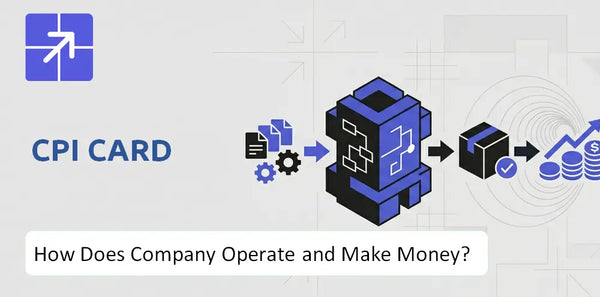
CPI's economics hinge on volume, regulatory security requirements, and personalization tech; monitor issuer contract renewals and card-replacement volumes. See product positioning in CPI Card BCG Matrix Analysis.
What Does CPI Card Actually Sell?
CPI Card Group sells high-security physical payment cards, instant-issuance hardware/software, card personalization and fulfillment, plus digital card and prepaid solutions; customers pay for secure card production, data embedding, on-site issuance, distribution, and lifecycle services.
 Core products and services
CPI Card Company manufactures EMV chip cards, dual-interface contactless cards, and the SustainPay line made from recycled ocean-bound plastic. It also sells chip personalization, secure mailing/fulfillment, Card@Once instant-issuance hardware and cloud software, digital card services, and prepaid solutions for retail and healthcare.
Who buys it
Primary buyers are banks and credit unions that need card issuance and branch instant-issuance, prepaid program managers and employers using payroll or benefits cards, retailers and healthcare payers needing gift or stored-value cards, plus government agencies for benefits distribution.
Value customers receive
Customers get secure EMV-compliant cards with embedded financial credentials, reduced time-to-card via Card@Once (instant issuance in minutes), end-to-end personalization and fulfillment, and integrated prepaid and digital-wallet capabilities that lower card replacement and distribution costs.
Why the offering stands out
CPI Card business model ties physical card manufacturing to services revenue from personalization, secure mail, and Card@Once SaaS/hardware – creating recurring revenue and higher margins. SustainPay targets ESG demand, and instant-issuance positions CPI Card Company ahead of many prepaid card providers on branch-level issuance.
In 2025 CPI Card Company reported continued growth in service-led revenue: personalization and fulfillment and Card@Once recurring fees represented a rising share of revenue versus pure card volume; card production volumes remain material, but the move to instant issuance and prepaid card services for employers drives higher ASPs and lifetime client value. See Growth Outlook of CPI Card Company for deeper context.
CPI Card SWOT Analysis
- Complete SWOT Breakdown
- Fully Customizable
- Editable in Excel & Word
- Professional Formatting
- Investor-Ready Format

How Does CPI Card Run Its Business Day to Day?
CPI Card Company runs day-to-day through PCI-certified manufacturing and fulfillment centers that process encrypted client data, personalize millions of payment cards, and deliver them via bulk shipments and instant-issue systems integrated into bank cores. Operations combine secure supply-chain sourcing, Card@Once SaaS instant issuance, and embedded onboarding with over 4,000 FI clients to maintain top-of-wallet presence.

Operating model and workflow
Daily ops run on secure, PCI-certified production lines that receive encrypted account feeds, queue personalization jobs, and route orders to either centralized fulfillment or instant issuance. Back-office systems monitor yield, SKUs, and SLAs to meet service-level commitments to banks and employers.
Product and service delivery
Clients access card printing and personalization services via API integrations, web portals, or the Card@Once SaaS. Large banks use batch fulfillment for millions of cards; credit unions and retailers use instant issuance at branch or POS for immediate customer activation.
Production, sourcing, and development
Manufacturing sources EMV chips, PVC and polymer substrates, and secure inks from vetted suppliers; teams manage semiconductor procurement and plastic resin inventory to avoid yield disruptions. R&D focuses on EMV, contactless, virtual cards, and firmware security updates.
Sales channels and distribution
Revenue flows through direct sales to financial institutions, partnerships with payroll processors and government agencies, and SaaS subscriptions for Card@Once. Distribution splits into centralized mail fulfillment and local instant-issue networks for same-day issuance.
Key assets, systems, and partnerships
Core assets include PCI-certified plants, encryption and key-management systems, Card@Once SaaS, and integrations into core banking platforms. Strategic suppliers of chips and plastics and partnerships with issuers and payroll processors underpin scale and reliability.
What makes the model work in practice
Predictable batch volumes plus on-demand instant issuance lower per-card costs and support diverse use cases like prepaid payroll cards and government disbursements. Embedded core-bank integrations reduce onboarding friction and secure recurring revenue from over 4,000 financial-institution clients.
Key 2025 facts: CPI Card Company reported handling personalization and fulfillment for over 7.5 million physical cards and provisioned 1.2 million instant-issue credentials via Card@Once in FY2025; supply-chain management reduced lead-time variance to 8 days on average; and PCI audits remain continuous across all plants. See related analysis on Sales and Marketing Strategy of CPI Card Company Sales and Marketing Strategy of CPI Card Company
CPI Card Business Model Canvas
- One-time Payment
- No Research Needed – Save Hours of Work
- Built by Experts, Trusted by Consultants
- Instant Download, Ready to Use
- 100% Editable, Fully Customizable

How Does Revenue Flow Through CPI Card?
Revenue at CPI Card Company flows from physical card sales, personalization and fulfillment fees, plus recurring processing from prepaid, debit and credit programs; demand becomes revenue via high-volume card orders, multi-year issuance contracts, and ongoing reload/processing activity.
Primary revenue: Card issuance and personalization
CPI Card Company earns most revenue selling and personalizing physical cards – magnetic stripe, chip and increasingly dual-interface contactless models – plus fulfillment and shipping. Higher ASPs for dual-interface and premium eco-friendly materials raised per-card margins in 2025, contributing to stronger gross margins.
Additional revenue: Prepaid processing and services
The Prepaid segment supplies recurring revenue by producing closed-loop retailer cards and by processing reloads, authorizations and settlement fees. Ancillary services include virtual cards, digital wallet integration, payroll card processing and card fulfillment for enterprise clients.
Pricing and monetization model
Monetization mixes one-time product sales (per-card ASP plus personalization/fulfillment fees) with recurring processing and service fees under multi-year contracts. Debit and Credit issuance uses contract-based order cadence tied to card expirations, new accounts and replacements; prepaid uses per-transaction and monthly processing fees.
What drives revenue most
Revenue is driven chiefly by the Debit and Credit segment, which represented the vast majority of net sales in 2025 through long-term issuer contracts and high-volume card replacement cycles. Growth in dual-interface contactless cards and premium eco-materials increased average selling price and margin, while prepaid processing provided steady recurring cash flow.
Selected 2025 figures: Debit and Credit issuance accounted for roughly ~70 – 80% of net sales; dual-interface ASPs rose by about 15 – 25% versus PVC cards; prepaid processing contributed ~15 – 25% of revenue, with recurring monthly processing fees forming a growing share. See Competitive Landscape of CPI Card Company for context: Competitive Landscape of CPI Card Company
CPI Card Marketing Mix
- Complete Marketing Mix Analysis
- Effortlessly Communicate Your Business Strategy
- Investor-Ready Format
- 100% Editable and Customizable
- Clear and Structured Layout

What Makes CPI Card's Model Sustainable or Fragile?
The CPI Card Company model is sustainable through high switching costs, security certifications, and steady demand from banks for physical and premium eco-cards, but it is fragile due to reliance on a 3 – 5 year replacement cycle, semiconductor supply risks, and secular digital-wallet adoption that could erode volumes over time.
High Switching Costs and Security Moat
CPI Card Company benefits from strong switching costs: card issuers certify suppliers for security (PCI, EMV, FIPS) and operational continuity, making migration costly. These certifications create a moat few prepaid card providers match, supporting 18 – 20% adjusted EBITDA margins in 2025.
Installed Base and Tailwinds
The company leverages over 15,000 Card@Once installations to lock in small-to-mid-sized banks and issuers, while demand for contactless and sustainable cards boosts premium pricing and recurring card personalization services revenue.
Key Dependencies and Supply Constraints
Revenue depends on a predictable 3 – 5 year card replacement cycle and concentrated semiconductor and chip-embossing supply chains; shortages or price spikes can compress margins and delay fulfillment for card printing and personalization process.
Durability Outlook for 2025 – 2026
Professional judgment for 2025/2026 is stable growth: CPI Card business model explained shows it should hold share in prepaid and payroll card processing while expanding in premium, sustainable cards; long-term exposure remains from digital wallet adoption but physical cards still serve as primary backup and branding tools for issuers. See company context: History and Background of CPI Card Company
CPI Card Boston Consulting Group Matrix
- Built by Experts, Trusted by Consultants
- Structured for Consultants, Students, and Founders
- 100% Editable in Microsoft Word & Excel
- Instant Digital Download – Use Immediately
- Compatible with Mac & PC – Fully Unlocked

Related Blogs
- What Is the History of CPI Card Company and How Did It Evolve?
- What Is the Competitive Landscape of CPI Card Company and How Does It Compete?
- What Is the Growth Outlook of CPI Card Company and Where Is It Heading?
- How Does CPI Card Company Reach Customers and Turn Demand into Sales?
- What Do the Mission, Vision, and Core Values of CPI Card Company Reveal?
- Who Are the Core Customers in CPI Card Company's Target Market?
- Who Owns CPI Card Company Today and Who Holds Control?
Frequently Asked Questions
CPI Card sells high-security physical payment cards, instant-issuance hardware and software, card personalization and fulfillment, and digital card and prepaid solutions. Customers pay for secure card production, data embedding, on-site issuance, distribution, and lifecycle services, which gives CPI Card both product revenue and recurring service revenue.
Disclaimer
All information, articles, and product details provided on this website are for general informational and educational purposes only. We do not claim any ownership over, nor do we intend to infringe upon, any trademarks, copyrights, logos, brand names, or other intellectual property mentioned or depicted on this site. Such intellectual property remains the property of its respective owners, and any references here are made solely for identification or informational purposes, without implying any affiliation, endorsement, or partnership.
We make no representations or warranties, express or implied, regarding the accuracy, completeness, or suitability of any content or products presented. Nothing on this website should be construed as legal, tax, investment, financial, medical, or other professional advice. In addition, no part of this site - including articles or product references - constitutes a solicitation, recommendation, endorsement, advertisement, or offer to buy or sell any securities, franchises, or other financial instruments, particularly in jurisdictions where such activity would be unlawful.
All content is of a general nature and may not address the specific circumstances of any individual or entity. It is not a substitute for professional advice or services. Any actions you take based on the information provided here are strictly at your own risk. You accept full responsibility for any decisions or outcomes arising from your use of this website and agree to release us from any liability in connection with your use of, or reliance upon, the content or products found herein.