
Who are Dream Unlimited Corp.'s core customers among institutional and urban renters?
Dream Unlimited Corp. targets institutional investors and urban renters in high-density Canadian markets; this matters because recurring fee income and sustainable infrastructure drove a 2025 shift toward alternative-asset management, improving revenue predictability. See strategic product: Dream BCG Matrix Analysis
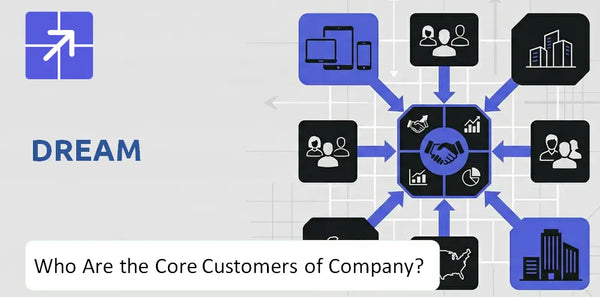
Focus on institutional capital and middle-income urban tenants; aligning projects with transit and ESG boosts occupancy and attracts long-term fees, reflecting Dream Unlimited Corp.'s 2025 repositioning.
Who Is Dream Trying to Win?
Dream Unlimited Corp. targets institutional capital, public-market investors, and end-users of its developments – pension and insurance funds, shareholders of Dream Industrial REIT and Dream Office REIT, and residential buyers and commercial tenants in master-planned and industrial projects.
 Institutional investors: primary capital partners
Dream seeks large institutional investors – pension funds, global insurers, and sovereign wealth funds – that commit to private funds for impact developments and renewable energy infrastructure because these relationships supply long-duration capital and drive over 50% of private fund target equity in recent fundraises.
Retail and public-market investors: listed vehicles
Retail and professional investors buying Dream Industrial REIT and Dream Office REIT provide liquidity and recurring fee income; combined market caps and FFO-backed distributions account for a material share of recurring revenue and investor base.
End-users: homeowners and commercial tenants
Homebuyers and tenants occupy the company's master-planned communities and industrial hubs, driving leasing velocity, NOI growth, and development exit economics; residential presales and industrial lease-up rates directly affect cashflow timing and valuation.
Secondary targets: public partners and municipalities
Municipal governments and agencies are targeted for public-private partnerships (P3s) in infrastructure and community development, supporting land assembly and permitting though they remain secondary to capital providers and end-users.
Customer type and market role
Dream serves a mixed market: institutional B2B clients (fund LPs, REIT investors), B2C end-users (homebuyers, tenants), and B2G partners (municipalities). The model blends asset management, development, and leasing to monetize across customer segments.
Most important segment by strategic value
The most important segment is institutional and high-net-worth capital providers, who supply large-scale, long-term funding and drive fee-related earnings; management guidance shows institutional commitments underpinning private fund targets and capital recycling.
For more on Dream's revenue mix and how capital partners fit the business model see How Dream Company Works and Makes Money
Dream SWOT Analysis
- Complete SWOT Breakdown
- Fully Customizable
- Editable in Excel & Word
- Professional Formatting
- Investor-Ready Format

What Do Dream's Customers Care About Most?
Dream Unlimited Corp. customers prioritize sustainability, transparent financials, and high-quality assets that deliver stable, risk-adjusted returns; institutional investors seek verified ESG outcomes, while residential buyers and commercial tenants focus on location, operational efficiency, and long-term appreciation.

Sustainability and ESG as a Core Need
Institutional partners demand verified net-zero pathways and measurable social impact through Dream Impact; in 2025, over 60% of capital commitments cited ESG screening as a must-have.
Practical Buying Drivers: Returns, Location, and Quality
Buyers choose Dream Unlimited Corp. for transit-oriented mixed-use assets that show superior rent growth; residential segments expect 5 – 7% annual appreciation in core markets and tenants prioritize modern specs that lower operating costs by 10 – 15%.
Emotional and Aspirational Appeal: Community and Lifestyle
Homebuyers value lifestyle amenities and walkable neighbourhoods; Dream's mixed-use developments sell on community design, prestige, and perceived safety – factors that shorten sales cycles and boost willingness to pay a premium.
What Customers Value Most: Professional Management and Transparency
Across core customers, professional asset management and clear reporting matter most; investors cite timely NAV updates and leasing metrics as decisive when allocating capital.
Loyalty Drivers and Repeat Demand
Consistent delivery of projected yields, strong tenant retention, and ESG progress sustain repeat capital; institutional re-ups correlate with meeting or exceeding targets – renewal rates above 70% in stabilized portfolios.
Why Customers Choose Dream Unlimited Corp.
Customers pick Dream Unlimited Corp. for a combination of sustainable credentials, transit-oriented asset strategy, and experienced management that together deliver predictable, risk-adjusted returns; see the company's positioning in this Growth Outlook of Dream Company.
Dream Business Model Canvas
- One-time Payment
- No Research Needed – Save Hours of Work
- Built by Experts, Trusted by Consultants
- Instant Download, Ready to Use
- 100% Editable, Fully Customizable

Where Is Demand Strongest for Dream?
Demand is strongest in industrial logistics and residential intensification across North America and Europe, with the Greater Toronto Area and key European logistics corridors the hottest pockets; Western Canada supplies high-margin land development opportunities.
Main Market: Greater Toronto Area and European Logistics Corridors
The target market concentrates on urban residential intensification in the Greater Toronto Area – driven by infill and impact projects – and on European logistics corridors where Dream Industrial REIT sees sustained leasing momentum and high rent growth.
Secondary Markets: Western Canada and Canadian Distribution Hubs
Western Canada delivers land development margins and suburban residential demand; Canadian distribution hubs (Toronto, Vancouver, Montreal, Calgary) sustain near – full occupancy for industrial assets, supporting core customers in e – commerce and third – party logistics.
Where Dream Unlimited Corp. Is Strongest
Dream Unlimited Corp. shows strength in portfolio mix: industrial (Dream Industrial REIT) and residential development drive revenues and occupancy. As of early 2026, Dream Industrial REIT reports occupancy near 98 percent, underpinning stable cash flows and validating the core customers – logistics operators and urban renters/homebuyers.
Where Demand Is Growing Fastest
Renewable energy infrastructure demand is accelerating in jurisdictions with aggressive decarbonization targets, creating new customer segments for clean – energy projects; industrial demand is expanding along European logistics corridors and Canadian distribution hubs in 2025 – 2026.
For context on corporate strategy and stakeholder focus, see Mission, Vision, and Values of Dream Company
Dream Marketing Mix
- Complete Marketing Mix Analysis
- Effortlessly Communicate Your Business Strategy
- Investor-Ready Format
- 100% Editable and Customizable
- Clear and Structured Layout

How Does Dream Keep Its Audience Growing?
Dream Unlimited Corp. grows its audience by scaling third-party asset management, recycling capital into high-return developments, and expanding a large residential and industrial pipeline to reach adjacent customer segments and improve partner retention.
Expanding the Customer Base Through Asset Management Scale
By growing fee-earning assets under management past $26 billion in 2025, Dream attracts institutional LPs and private investors seeking scale and diversification; expanding third-party AUM brings new buyer personas and broadens the target market beyond direct homebuyers to capital partners and REIT investors.
Customer Retention Drivers
Repeat commitments stem from a track record of mid-to-high teen internal rates of return (IRR) on developments, predictable capital recycling, and a development pipeline exceeding 9,000 residential units; these factors reduce churn among institutional partners and align with investor customer needs for consistent returns.
Loyalty, Repeat Demand, and Customer Depth
Dream deepens relationships via repeat project cycles, co-investment structures, and fee income growth that increase customer lifetime value by segment; industrial expansions and sustainability-focused real assets build ecosystem stickiness for both B2B and B2C stakeholders.
Strongest Growth Lever in 2025/2026
The primary growth lever is scaling fee-earning AUM while redeploying capital into high-conviction developments – this exploits Canada's housing supply-demand imbalance and the structural shift to sustainable real assets, positioning Dream for defensive growth and superior capital allocation mid-decade; see the company's History and Background of Dream Company for context.
Dream Boston Consulting Group Matrix
- Built by Experts, Trusted by Consultants
- Structured for Consultants, Students, and Founders
- 100% Editable in Microsoft Word & Excel
- Instant Digital Download – Use Immediately
- Compatible with Mac & PC – Fully Unlocked

Related Blogs
- What Is the History of Dream Company and How Did It Evolve?
- What Is the Competitive Landscape of Dream Company and How Does It Compete?
- What Is the Growth Outlook of Dream Company and Where Is It Heading?
- How Does Dream Company Work and What Drives Its Business Model?
- How Does Dream Company Reach Customers and Turn Demand into Sales?
- What Do the Mission, Vision, and Core Values of Dream Company Reveal?
- Who Owns Dream Company Today and Who Holds Control?
Frequently Asked Questions
Dream's core customers are institutional capital providers, public-market investors, and end-users of its developments. That includes pension and insurance funds, shareholders in Dream Industrial REIT and Dream Office REIT, plus residential buyers and commercial tenants in master-planned and industrial projects. Municipal partners also matter, but they are secondary.
Disclaimer
All information, articles, and product details provided on this website are for general informational and educational purposes only. We do not claim any ownership over, nor do we intend to infringe upon, any trademarks, copyrights, logos, brand names, or other intellectual property mentioned or depicted on this site. Such intellectual property remains the property of its respective owners, and any references here are made solely for identification or informational purposes, without implying any affiliation, endorsement, or partnership.
We make no representations or warranties, express or implied, regarding the accuracy, completeness, or suitability of any content or products presented. Nothing on this website should be construed as legal, tax, investment, financial, medical, or other professional advice. In addition, no part of this site - including articles or product references - constitutes a solicitation, recommendation, endorsement, advertisement, or offer to buy or sell any securities, franchises, or other financial instruments, particularly in jurisdictions where such activity would be unlawful.
All content is of a general nature and may not address the specific circumstances of any individual or entity. It is not a substitute for professional advice or services. Any actions you take based on the information provided here are strictly at your own risk. You accept full responsibility for any decisions or outcomes arising from your use of this website and agree to release us from any liability in connection with your use of, or reliance upon, the content or products found herein.